
Mindmap
Quantum Mechanics
Inhalt der Mindmap
Quantum Mechanics
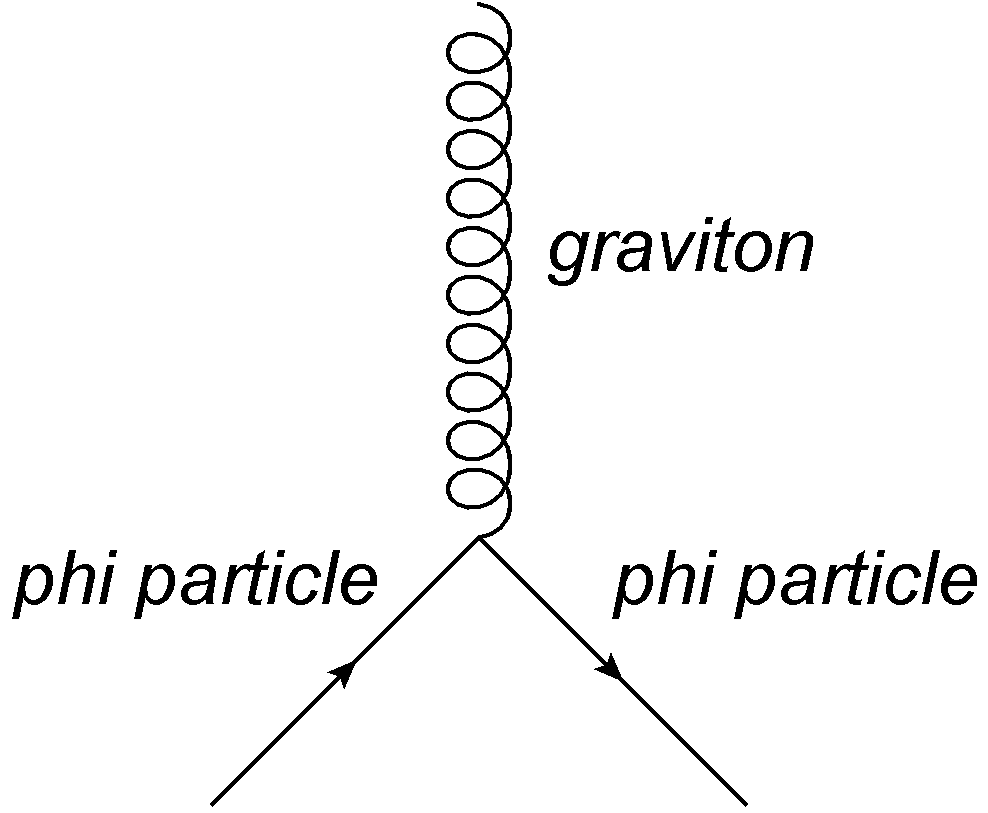
Gravity
- Force Carrier Particle
- Graviton
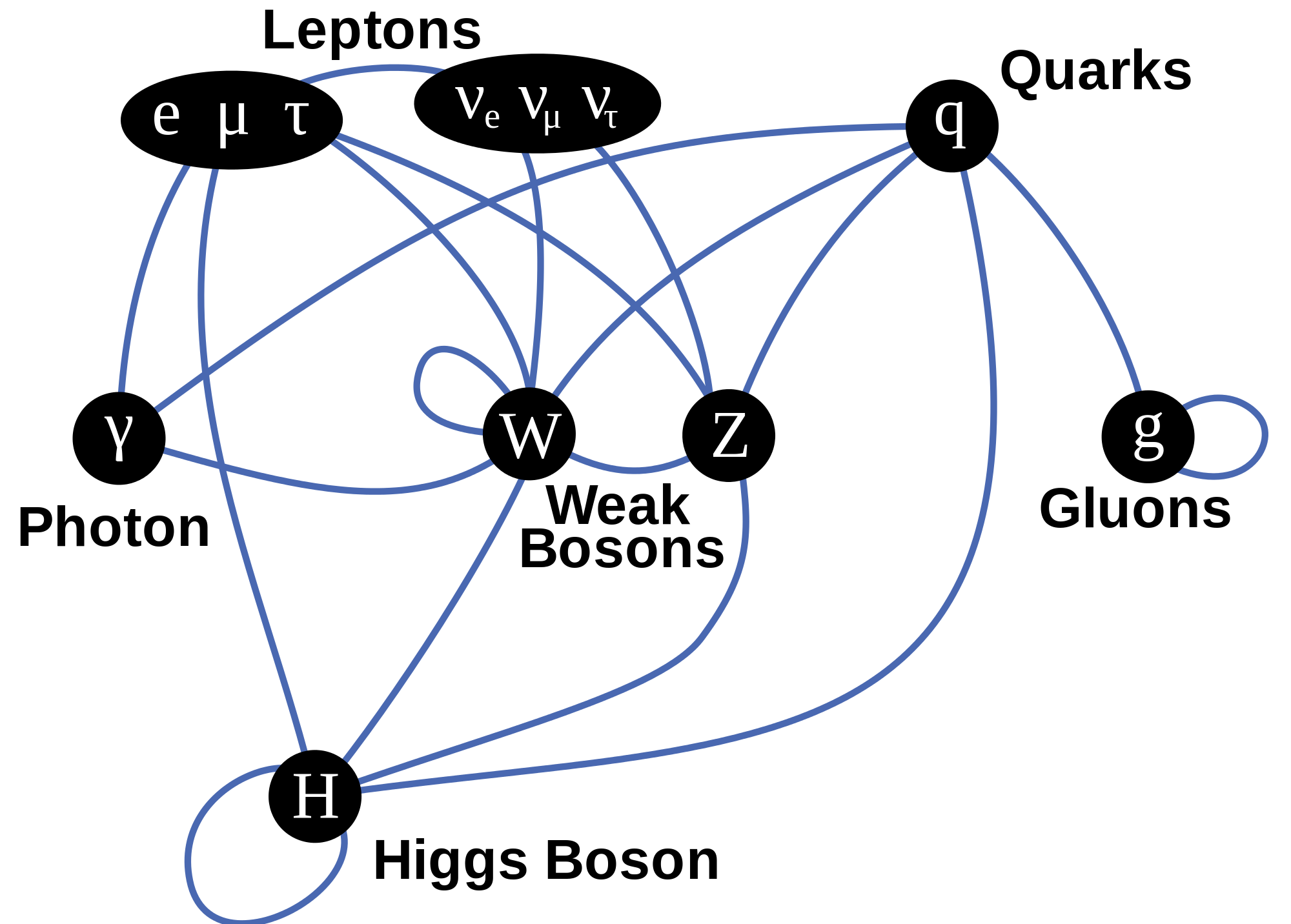
- Summary of Interactions
- Interaction
- Gravity
- Weak
- Electromagnetic
- Strong
- Electromagnetic
- Weak
- Gravity
- Carried by
- Graviton
- w+, w−, z °
- Photon
- Gluon
- Photon
- w+, w−, z °
- Graviton
- Acts on
- All
- Quarks and Leptons
- w+, w-
- Quarks and Gluons
- w+, w-
- Quarks and Leptons
- All
- Interaction
- Force Carrier Particle
The Standard Model
- A developed theory that explains what the world is and what holds it together
- Interactions
- 6 Quarks
- Usually viewed as 3 pairs
- Quark: Up Paired: Down
- Quark: Charm Paired: Strange
- Quark: Top Paired: Bottom
- Charges
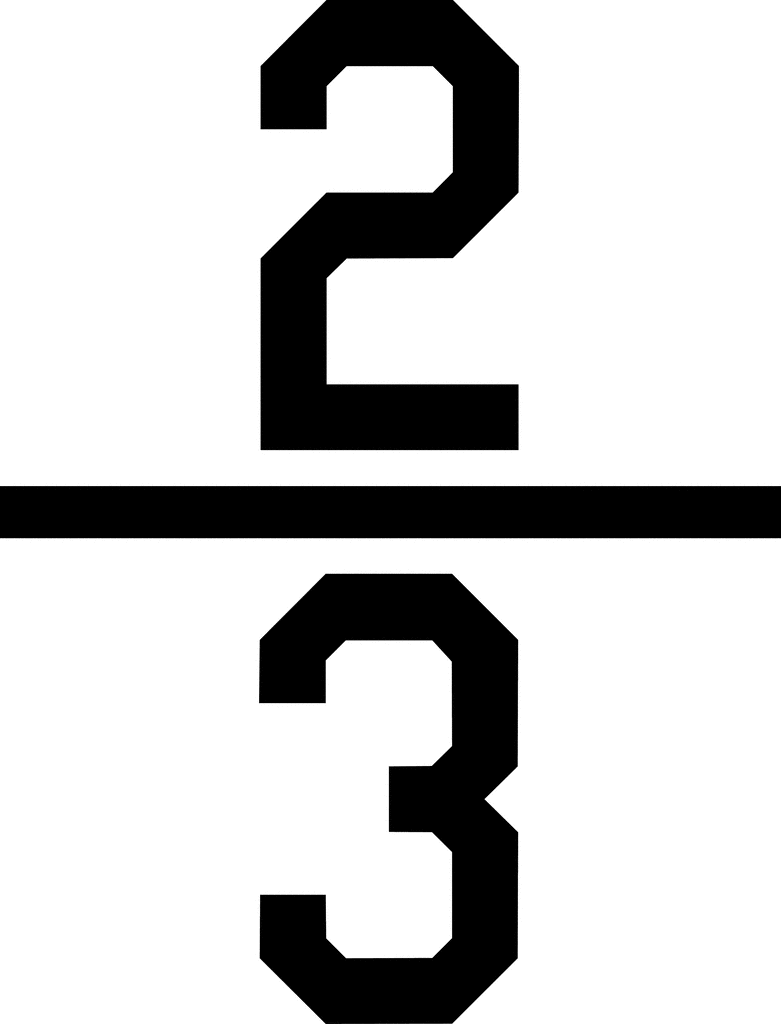
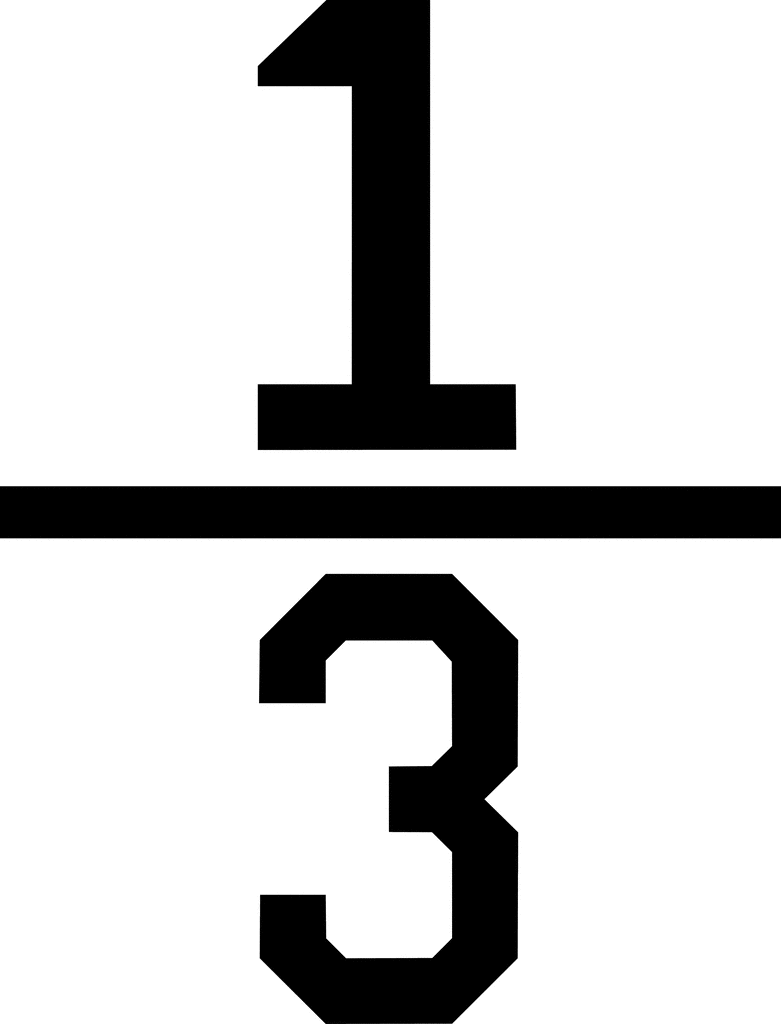
- Fractional electrical charges
- Quark: Positive Charge
- Paired: - Negative Charge
- Colour Charge
- Fractional electrical charges
- Usually viewed as 3 pairs
- 6 Leptons
- Electron
- Fore Carrier Particles
- Photon
- 6 Quarks
- Particles
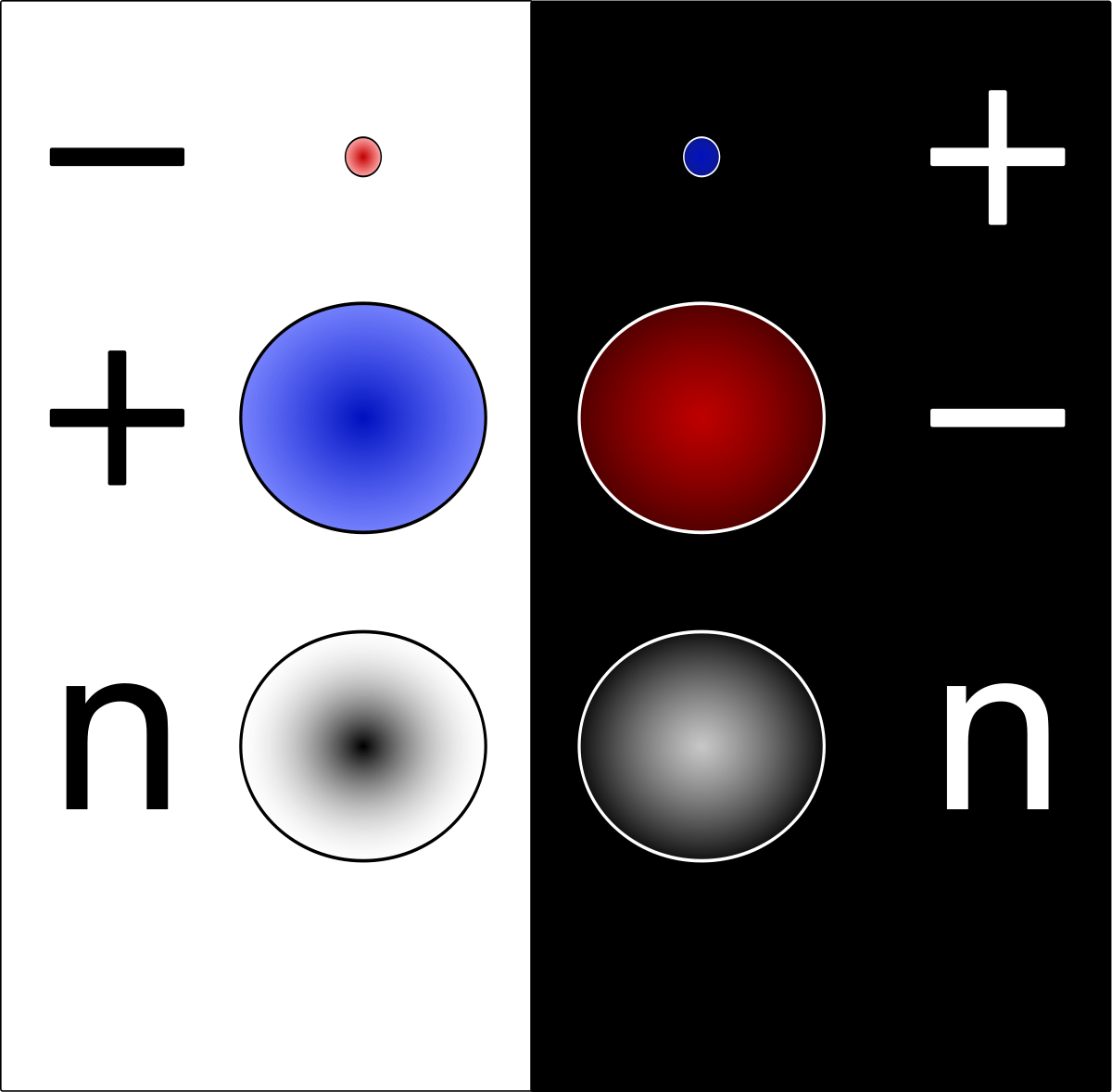
- Antimatter Particle (also known as Antiparticle)
- Behave like their corresponding matter particles
- But they have opposite charges
- Ex) Proton = Positive Antiproton = Negative
- Gravity affects all the same way
- Both particles have the same mass
- Matter Particle + Antimatter Particle = Annihilate into pure energy
- Corresponding particle of an Electron is a Positron
- But they have opposite charges
- Behave like their corresponding matter particles
- Antimatter Particle (also known as Antiparticle)
- Quarks
- Composite Particles
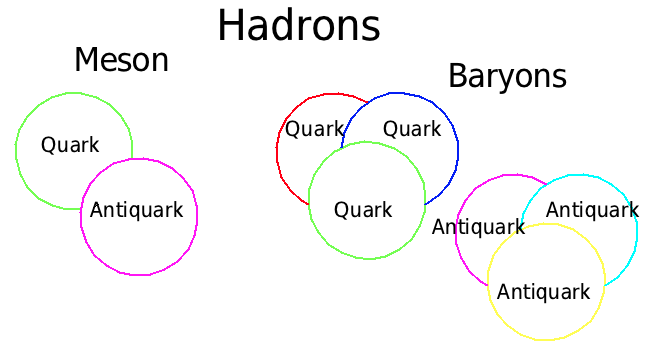
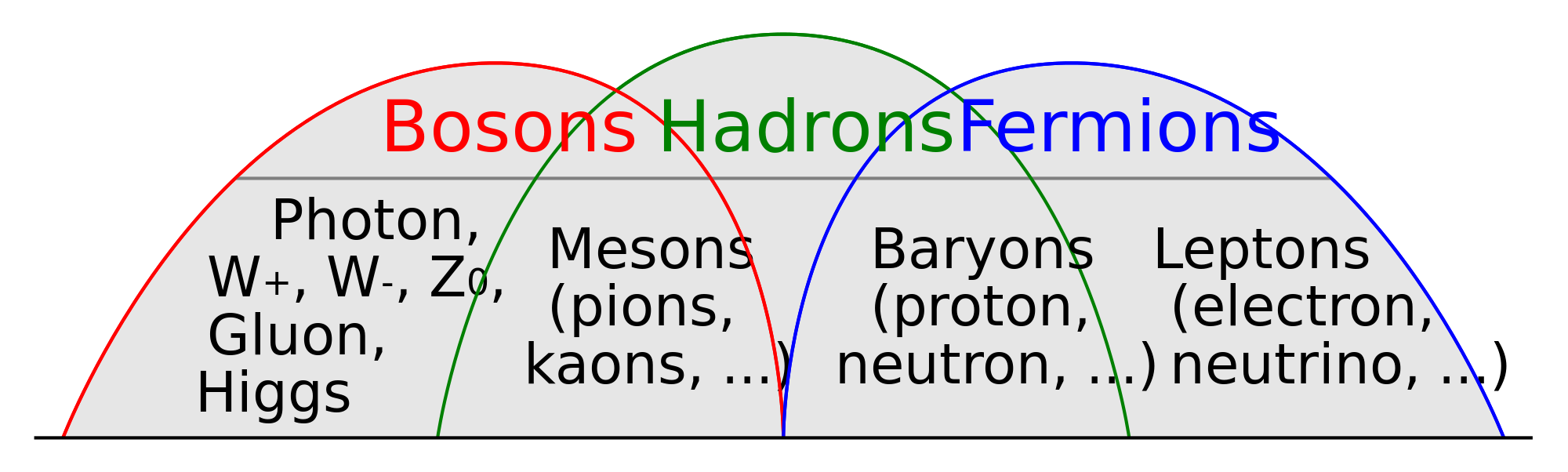
- Hadrons
- Have a full Net Inter Electric Charge
- No Net Colour Change
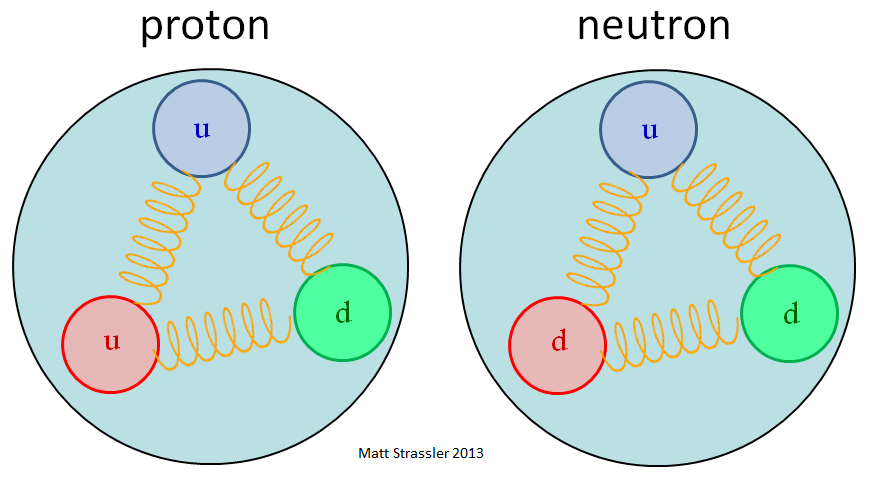
- Baryons
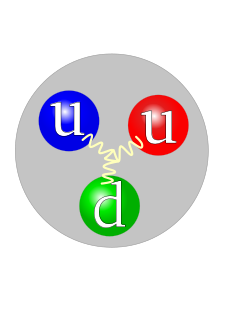
- Contain any 3 Quarks
- Ex) A proton (UUD) and a neutron (UDD)
- Contain any 3 Quarks
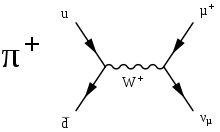
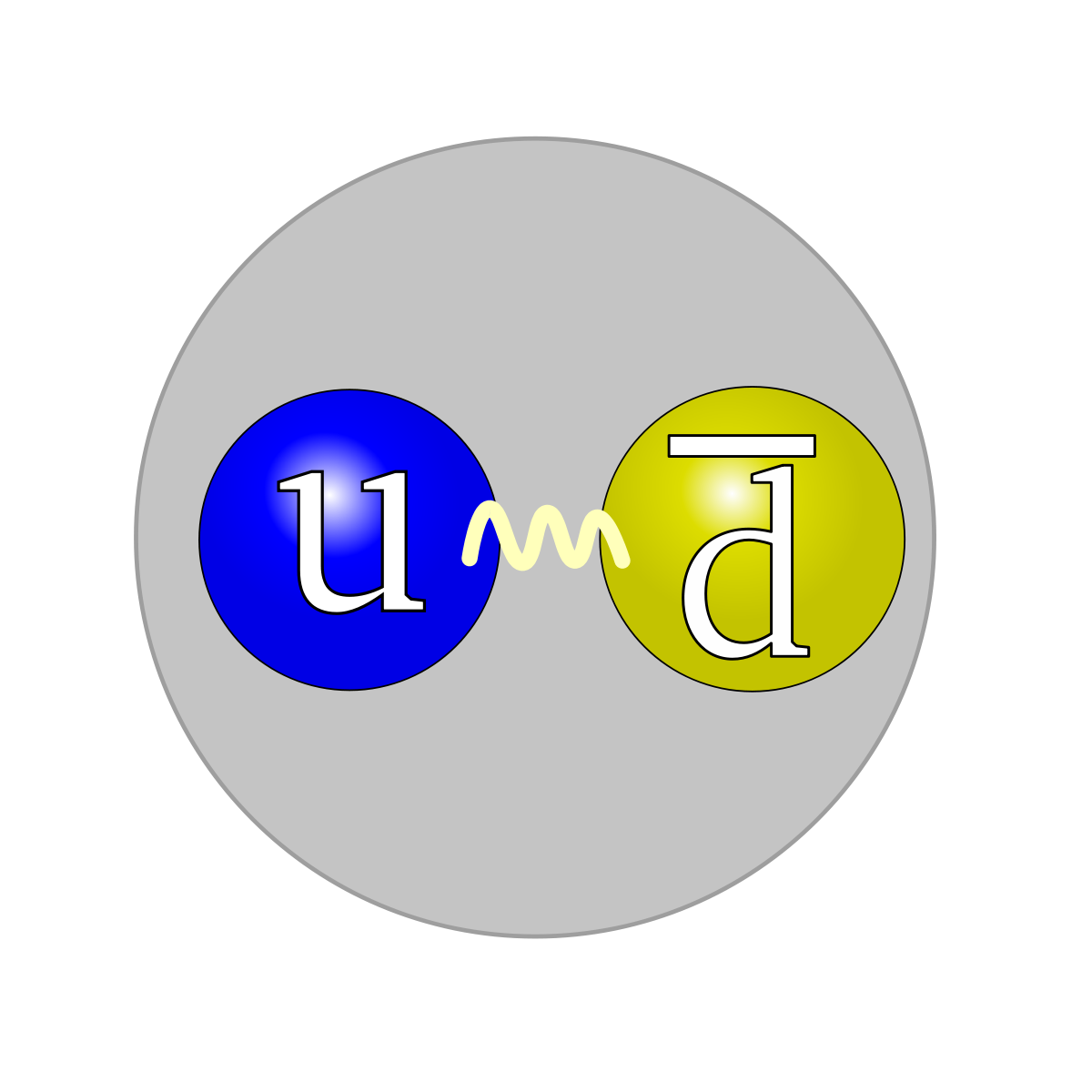
- Mesons
- Contain 1 Quark and 1 Antiquark
- Ex) Pion
- Contain 1 Quark and 1 Antiquark
- Matter Particles
- Leptons
- 6 of them
- 3 Charged
- Electron
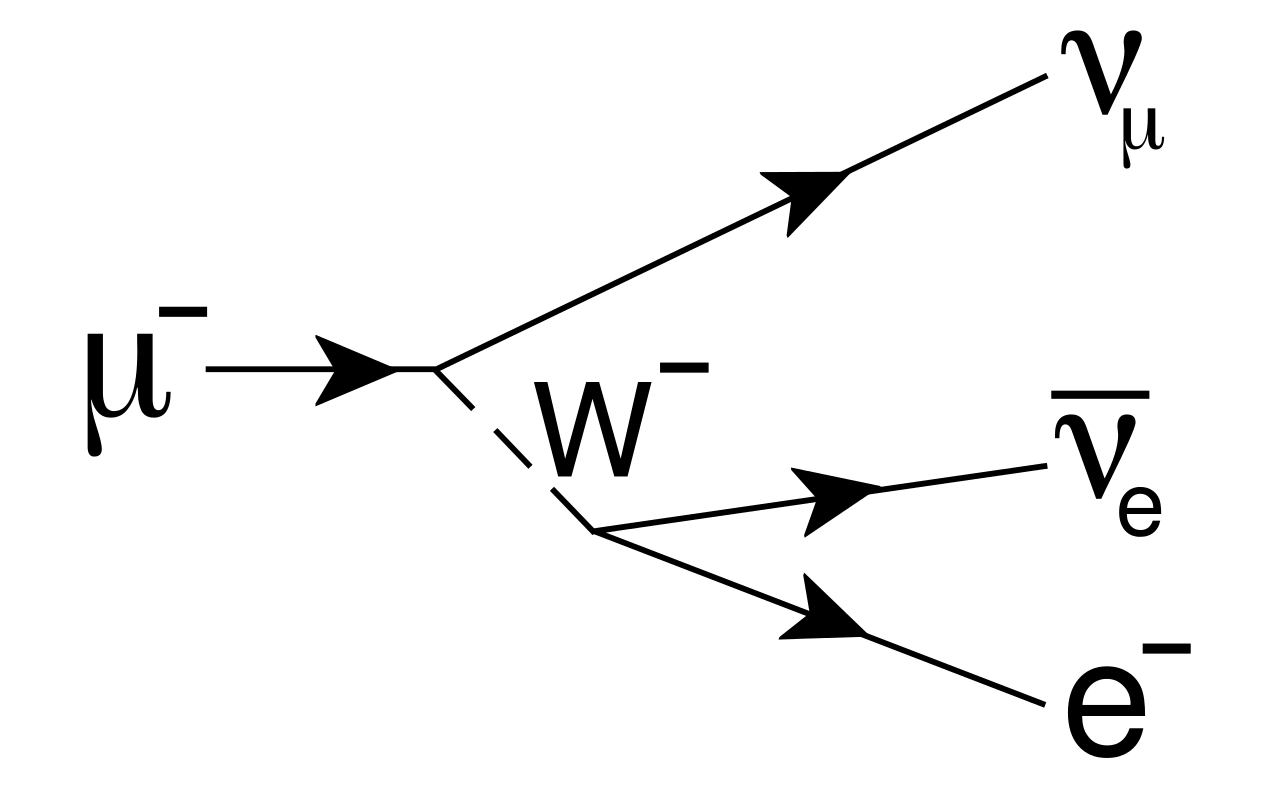
- Muon
- Tau
- Have more mass than Electrons
- 3 Uncharged
- Neutrinos
- Very little mass
- Don't interact with other matter
- Pass right through the Earth
- Neutrinos
- 3 Charged
- Act independently
- 6 of them
- Leptons
- Hadrons
- Composite Particles
Interactions
- 4 Interactions
- Make up all relationships in the Universe
- Attractive
- Repulsive Forces
- Decay
- Annihilation
- Used interchangeably (not always accurate)
- They are still different
- Used interchangeably (not always accurate)
- Include all the Force
- Passed between two particles
- Electromagnetic Force
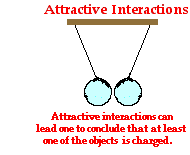
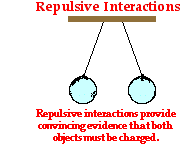
- Causes like-charged things to repel
- Causes opposite-charged things to attract
- Carrier Particle
- Photon
- Zero Mass
- Travel at 'The Speed of Light' in a vacuum
- Photon
- Electromagnetic Force
- Nucleus
- Binds
- Gravity
- EM Force
- Quarks
- Forms Hadrons
- Carrier Particle
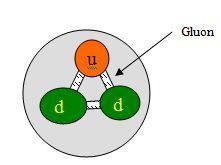
- Gluons
- Tightly 'Glue' Quarks together
- Exchange gluons when quarks are close enough
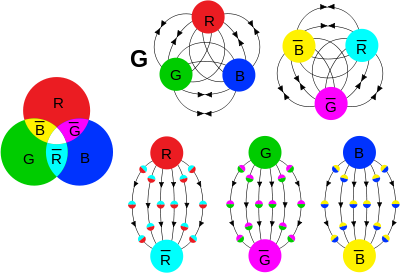
- Creates very strong colour forcefield to bind quarks
- Keep changing colour as they continue exchanging gluons
- Gluons
- Carrier Particle
- Forms Hadrons
- Colour Change
- Force is Very Strong
- Strong Force
- Holds Quarks together
- Holds Quarks together
- Strong Force
- Force is Very Strong
- Binds
- Passed between two particles
- Weak Interactions
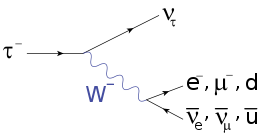
- Decay of massive Quarks and Leptons into Lighter versions
- Make up most of the common particles
- Most stable particles
- Changes Flavour when charged
- Weak Forces
- Equal to Electroweak/Electromotive Forces
- Decay of massive Quarks and Leptons into Lighter versions
- 4 Interactions
The Atom
- Objects that are simple and structureless
- Matter of the world is made of fundamental building blocks of nature
- Fundamental
- In ancient times, people thought the world was made of the 4 key elements - Earth, air, fire, and water
- From Greek thinker, Empedocles
- In ancient times, people thought the world was made of the 4 key elements - Earth, air, fire, and water
- Fundamental
- Matter of the world is made of fundamental building blocks of nature
- 99.99999% of an Atom's volume is just empty space
- From Democritus (400 BCE)
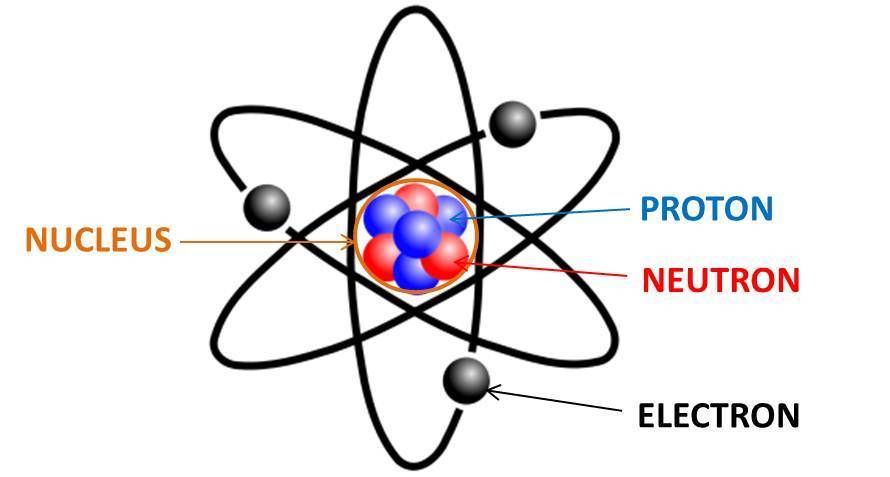
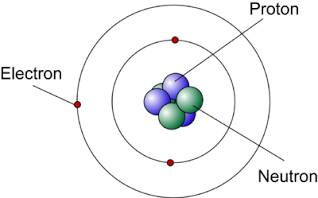
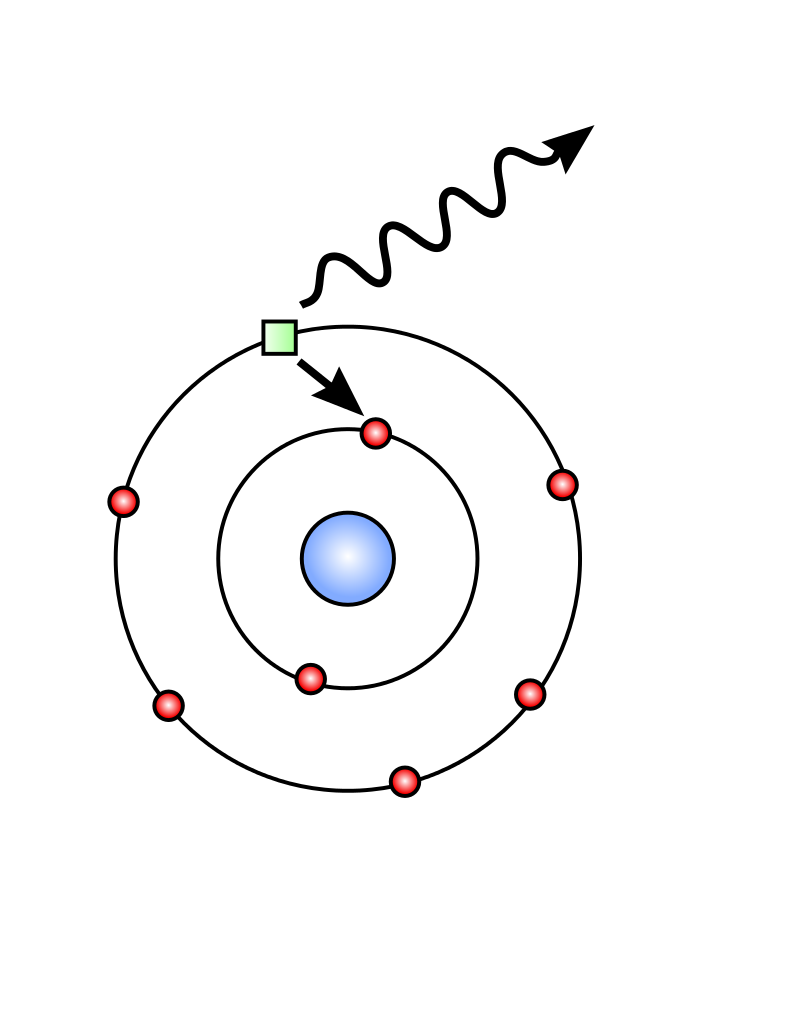
- Modern model of an Atom
- Electrons (in constant motion around the nucleus)
- Protons and Neutrons (jiggling inside the nucleus
- With Quarks
- Made of:
- A cloud of electrons with a negative charge (e-)
- Tiny, dense and positive nucleus
- Protons and Neutrons
- More fundamental than the four key elements
- Is it?
- With similar chemical properties that is able to categorize with elements in the periodic table
- Originally thought nucleus was fundamental was, but then later discovered that the nucleus was made of protons (positive charge and neutrons (no charge)
- Protons and neutrons are composed of quarks (smaller)
- Quarks are not made of anything
- Quarks and Electrons are fundamental
- Quarks are not made of anything
- Is it?
- Wave
- Objects that are simple and structureless
Pauli Exclusion Principle
- No 2 particles can be at the same place at the same time
- Fermions
- Includes
- Quarks
- Letons
- Most composite particles
- Includes
- Bosons
- Do not obey this law
- Force Carrier Particles
- Fermions
- Explains why we have Chemistry
- No 2 particles can be at the same place at the same time
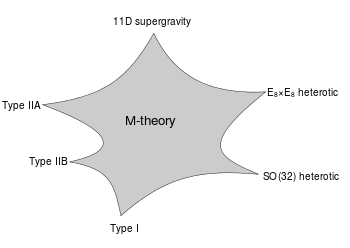
String Theory
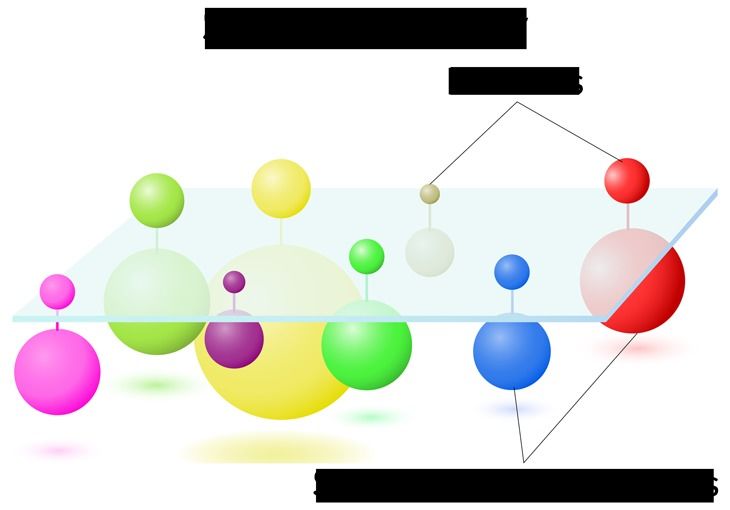
- May be additional "small" dimensions
- Particles are strings and membranes
- There may be more than 3 dimensions but we can't see it
- May be additional "small" dimensions
Supersymmetry
- Relationship between particles and force carriers
- None have been found yet
Dark Matter
- Matter that we can't see
- No one exactly knows what it is
- May be made of Neutralinos
Higgs Boson
- The last particle of each standard model
- Purpose is to confirm particle masses
- Bosons
- Really Big Particle
- Standard model may not have worked if Higgs Boson didn't exsist
Bilder und Dateien der Mindmap

Informationen
- Beschreibung
- Mindmap am Quantum Mechanics, erstellt von jhoy liwarin am 14/01/2018.
- Erstellt von
- jhoy liwarin · Jan 2018
- Aktualisiert
- 23 Jan 2018
- Aufrufe
- 3
- Bewertung