
Mindmap
Chlamydiae
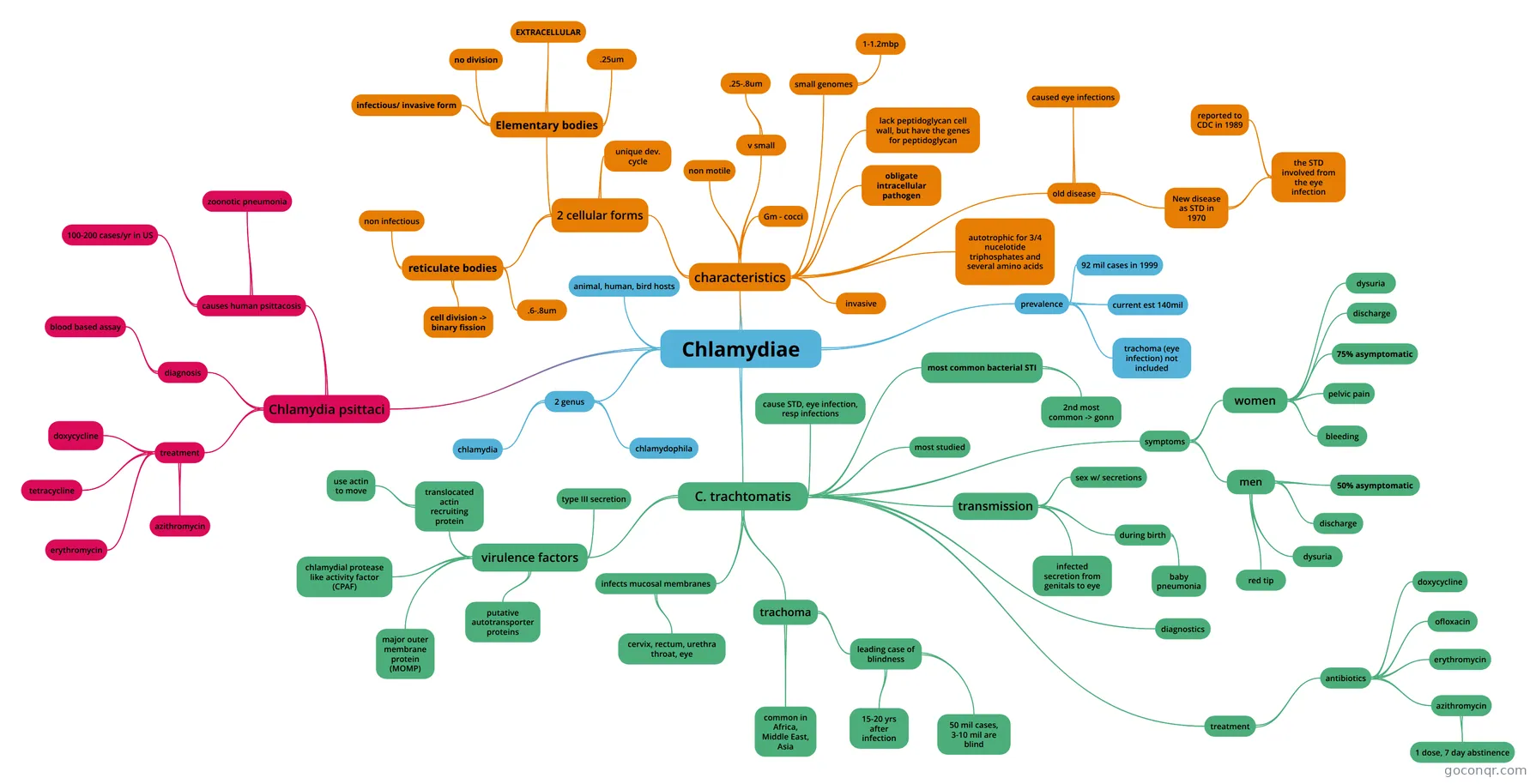
Mind map: Chlamydiae
Inhalt der Mindmap
Chlamydiae
characteristics
- Gm - cocci
- obligate intracellular pathogen
- 2 cellular forms
- Elementary bodies
- .25um
- infectious/ invasive form
- EXTRACELLULAR
- no division
- reticulate bodies
- .6-.8um
- cell division -> binary fission
- non infectious
- unique dev. cycle
- Elementary bodies
- invasive
- lack peptidoglycan cell wall, but have the genes for peptidoglycan
- non motile
- v small
- .25-.8um
- small genomes
- 1-1.2mbp
- autotrophic for 3/4 nucelotide triphosphates and several amino acids
- old disease
- caused eye infections
- New disease as STD in 1970
- the STD involved from the eye infection
- reported to CDC in 1989
- the STD involved from the eye infection
animal, human, bird hosts
C. trachtomatis
- most common bacterial STI
- 2nd most common -> gonn
- cause STD, eye infection, resp infections
- infects mucosal membranes
- cervix, rectum, urethra throat, eye
- transmission
- sex w/ secretions
- during birth
- baby pneumonia
- infected secretion from genitals to eye
- trachoma
- leading case of blindness
- 50 mil cases, 3-10 mil are blind
- 15-20 yrs after infection
- common in Africa, Middle East, Asia
- leading case of blindness
- most studied
- virulence factors
- type III secretion
- translocated actin recruiting protein
- use actin to move
- chlamydial protease like activity factor (CPAF)
- major outer membrane protein (MOMP)
- putative autotransporter proteins
- diagnostics
- treatment
- antibiotics
- doxycycline
- ofloxacin
- erythromycin
- azithromycin
- 1 dose, 7 day abstinence
- antibiotics
- symptoms
- women
- discharge
- dysuria
- pelvic pain
- bleeding
- 75% asymptomatic
- men
- discharge
- dysuria
- red tip
- 50% asymptomatic
- women
- most common bacterial STI
2 genus
- chlamydia
- chlamydophila
prevalence
- 92 mil cases in 1999
- current est 140mil
- trachoma (eye infection) not included
Chlamydia psittaci
- causes human psittacosis
- zoonotic pneumonia
- 100-200 cases/yr in US
- diagnosis
- blood based assay
- treatment
- doxycycline
- tetracycline
- azithromycin
- erythromycin
- causes human psittacosis
Informationen
- Beschreibung
- Science Mindmap am Chlamydiae, erstellt von Allison Ring am 16/05/2018.
- Erstellt von
- Allison Ring
- Aufrufe
- 3
- Bewertung
Mehr zu Chlamydia, Rickettsia, Mycoplasma and Spirochetes