
Mindmap
consumer bb
Inhalt der Mindmap
consumer bb
Customer behaviours
- External influences
- Culture & values
- Environment oriented values
- Self oriented values
- Factors influence non-verbal communication: Time Space Friendship Agreements Things Symbols Etiquette
- Is it a homogenous culture? What needs will the product fill? Can enough afford the product? What values are relevant to this product? What are the distribution, political and legal structures? How can the firm communicate about the product? What are the ethical implications?
- Demographic, social class & income
- Ref. grps & households
- Household decision making - info gatherer, influencer, decision maker, purchaser, consumer
- Conflict resolution: bargaining, impression management, use of authority, reasoning, [playing on emotions, additional info
- *trends in household consumption :increase in recycling, pet ownership and spending, info and communication tech use. + purchase of services
- Reference grp
- Types of grps (membership, degree of contact, attraction) - frequent/limit
- Nature of ref grp influence (info influence, normative influence*utilitarian*, identificaiton influence*value-expressive influence => sitaution-> behavior response->type of influence
- Types of grps (membership, degree of contact, attraction) - frequent/limit
- Aspirational ref. grp
- Non membership, positive attraction, exert strong influence
- degree of conformity to group norms is a function of: the visibility of the usage situation the level of commitment the individual feels to the group the relevance of the behaviour to the functioning of the group the individual's confidence in his or her own judgment in the area the necessity/non-necessity nature of the product.
- Strategies
- Informational, normative*to avoid/gain, identification *aspire to join
- Word of mouth/opinion leadership*similar demographics,public indiduation,high lvl of exposure, market maven(expert)
- Product sampling (for review, bloggers) opinion leaders*market research, retail*sales staff wear/use
- Strategies
- Marketing activities
- Culture & values
- Internal influences
- Needs,motivation & emotions*2
- Maslow
- physiological -> safety -> belongingness -> esteem -> self actualisation
- Mc guire
- 1. Cognitive preservation
- 2. Cognitive growth
- 3. Affective growth
- 4. Affective preservation
- Strategies
- Association technique
- Completion tech
- Construction tech
- Approach/avoidance
- Maslow
- Perceptions, learning & memory
- Nature of perception
- 1. Exposure
- 2. Attention
- Stimulus
- Involve 5 senses
- Individual
- Situation
- Stimulus
- 3. Interpretation
- Cognitive
- Affective (feelings)
- 4. Memory (longterm/shorterm)
- 5. Purchase & consumption
- Strategies
- 1.Retail strategy 2. Brand name and logo development 3.Media strategy 4.Advertisement and package design 5.Warning labels and package designs
- Random approach Selective approach Ads. Package design
- 1.Retail strategy 2. Brand name and logo development 3.Media strategy 4.Advertisement and package design 5.Warning labels and package designs
- Learning
- Conditioning
- Classical
- Dog react to bell
- Operant
- Trial, sampling
- Reinforce with rewards
- Classical
- Cognitive
- Iconic rote
- Repeating ads. (low involvement)
- Vicarious modelling
- Demo (high/low involvement)
- Reasoning
- Highest involvement
- Iconic rote
- General issue
- Extinction
- Brands generalisation
- Brands discriminisation
- Response environment *how to bring back memory
- Conditioning
- Memory
- Shortterm
- Elaborate activities
- Maintenance rehearsal
- Longterm
- Semantic
- Episodic
- Brand leverage
- Complement
- Substitute
- Transfer
- Image
- Shortterm
- Nature of perception
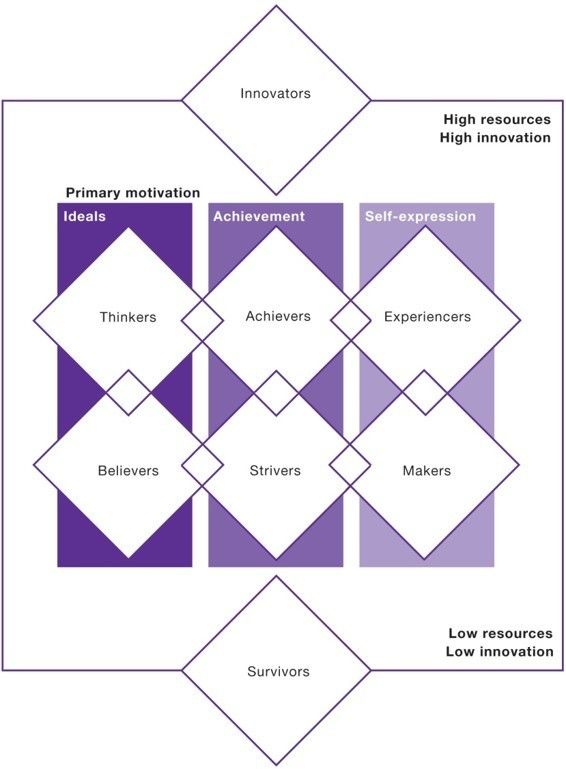
- Personality & lifestyle
- extroversion, instability, agreeableness, opening to experience*imaginative, appreciatve of art, conscientiousness *care, precise
- Brand personality
- sincerity, excitement, competence, sophistication, ruggedness
- Attitude*2
- Affective
- Classic conditioning, affect towards ads, mere exposure
- Cognitive
- Change belief, relative impt of belief, add new belief, change belief abt attributes of the ‘ideal’ brand
- Behavioural
- Alter purchase behavior directly, change in belief or improved knowledge base) - operant conditioning
- Source characteristics -trustworthiness -expertise celebrity source -should match product in some way -risky but v popular
- Multi-attribute model: 1. construct profile of a segment of consumer’s ideal lvl of performance 2. create product concept closely match profile 3. involve consumer rate the actual product
- Affective
- Needs,motivation & emotions*2
- Situational influences
- Types
- Communication
- Purchase
- Usage
- Disposal
- Influences
- Physical
- Temporal
- Social
- Task
- Antecedent
- Marketing strategies
- Segment alone/grp
- Stimulate 5 senses
- Reduce customers' effort
- Increase customers/ convenient
- Types
- Decision-process influences*3
- 1. Problem recognition
- Desired state
- Deficit = needs/want
- Opportunity = upgrade/add on
- Actual State
- Problem
- Active
- Inactive
- Marketing strategies
- 1. Gather data
- Activity Analysis
- Product Analysis
- Problem Analysis
- Human factors research
- Emotion research
- 2. React
- 1. Respond to consumers' problem
- 2. Activating problem recognition
- Influence desired/actual state
- 3. Time problem recognition
- 4. Suppress problem recognition
- 1. Gather data
- Desired state
- 2. Info search
- Types
- Internal
- External
- Personal (salesperson, email, word of mouth)
- Impersonal (Ads, media)
- factors that influence external searches
- Market characteristics
- No. of alt.
- Price range
- store distribution
- info. availability
- Product
- Price
- Differentiation
- Positive products
- Consumers
- Learning & experience
- Shopping orientation
- Social status/demographics
- Product involvment
- Perceived risk
- Situation
- Time
- Environment
- Market characteristics
- Exploratory (ongoing)
- Awareness set
- Positive (considered)
- Negative (avoided)
- Indifferent (backup)
- Types
- 3. Alt. evaluation
- Direct
- Indirect
- Projective technique (in relation to someone)
- Perceptual mapping (judge similar)
- Process
- 1. Criterias
- 2. Criterias' importance
- 3. Alt.
- Ways to determine consumers' judgment
- 1.Rank ordering scales 2.Semantic differential scales 3.Likert scales 4.Best-worst scales *constant sum scale *conjoint method
- 4. Outlet selection 5. Purchase
- Store brands
- Retail ads.
- Size of discount
- Reference
- Words accompany pricing
- In-store influences
- reminder purchases Impulse purchases Specifically planned decisions Generally planned decisions Substitute decisions Unplanned decisions In-store decisions *point of purchse *atmospherics *stockout situation
- Consumer characteristics
- Shopping orientation
- Perceived Risk
- Financial
- Social
- 6. Post-purchase activities
- Post purchase dissonance -degree of commitment -decision's importance -difficulty of choosing alt -individual’s tendency to experience anxiety
- Reduce ppd: -Confirm decision -salesperson follow up -warranties and guarantees -advertising
- Product dispoal
- 2nd hand
- Recycle
- Trade in
- Response
- Passive
- Voices
- Irates
- Activitists
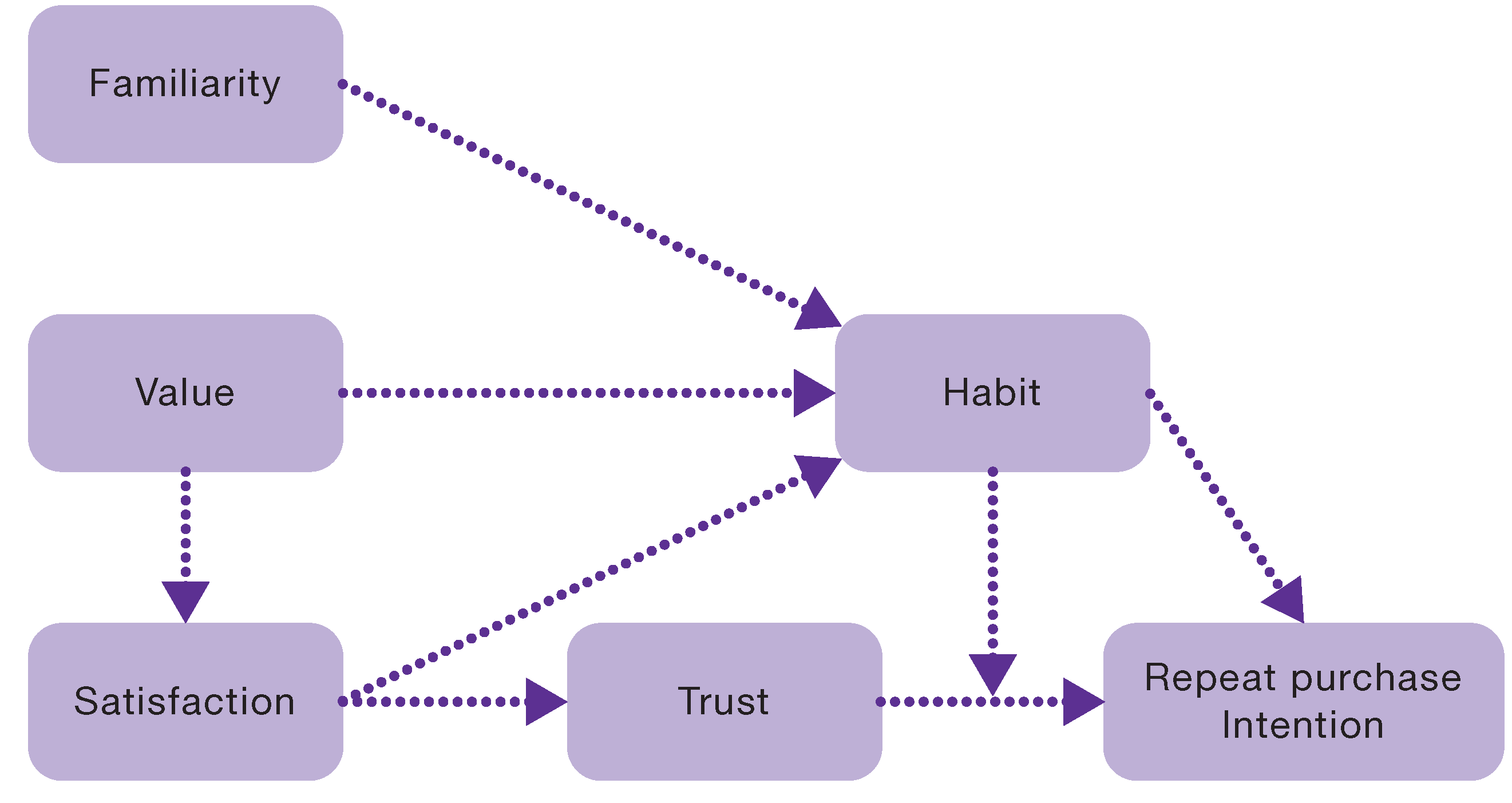
- Brand loyalty
- Value of customer loyalty: Increased purchases of the existing product Cross-purchases of your other products Price premium Reduced operating cost because of familiarity with your service system Positive word of mouth
- Strategies
- 1. developing a core product/service on which to build 2. customising the relationship to the individual customer 3.augmenting the core product/service with extra benefits 4.pricing in a manner that encourages loyalty marketing to employees so that they perform well for customers
- Post purchase dissonance -degree of commitment -decision's importance -difficulty of choosing alt -individual’s tendency to experience anxiety
- 1. Problem recognition
- External influences
Bilder und Dateien der Mindmap
Informationen
- Beschreibung
- Mindmap am consumer bb, erstellt von Damon Lin am 11/10/2018.
- Erstellt von
- Damon Lin
- Aufrufe
- 0
- Bewertung