
Consumer Behaviour
1,148 resources created by 753 users
This Consumer Behaviour page on GoConqr gathers community-made quizzes, mind maps, flashcards and notes, from learning and memory, attitudes and perception to social influence, culture and neuromarketing. It's built for university students and professional candidates revising a topic or filling gaps, and for teachers after ready-made material. There are over 1,100 resources here, including more than 70 quizzes, over 790 mind maps and more than 170 flashcards, all made by 700 or more contributors. Pick a topic, try a quiz to find your gaps, then build your own sets.
Select topic
- Consumer behaviour models and theories6
- Factors influencing consumer behaviour64
- Consumer types and market segmentation20
- Consumer motivation, personality and self-concept33
- Consumer perception and neuromarketing35
- Consumer learning and memory14
- Consumer attitudes and persuasion39
- Cultural influences on consumer behaviour36
- Social influences on consumer behaviour15
- Consumer decision-making process153
- Online and in-store shopping40
- Diffusion of innovation6
- Ethical consumption7
- Consumer behaviour and marketing strategy18
Top Consumer Behaviour resources
-
61 questionsTest 1 Chapter 1, 3, 5
-
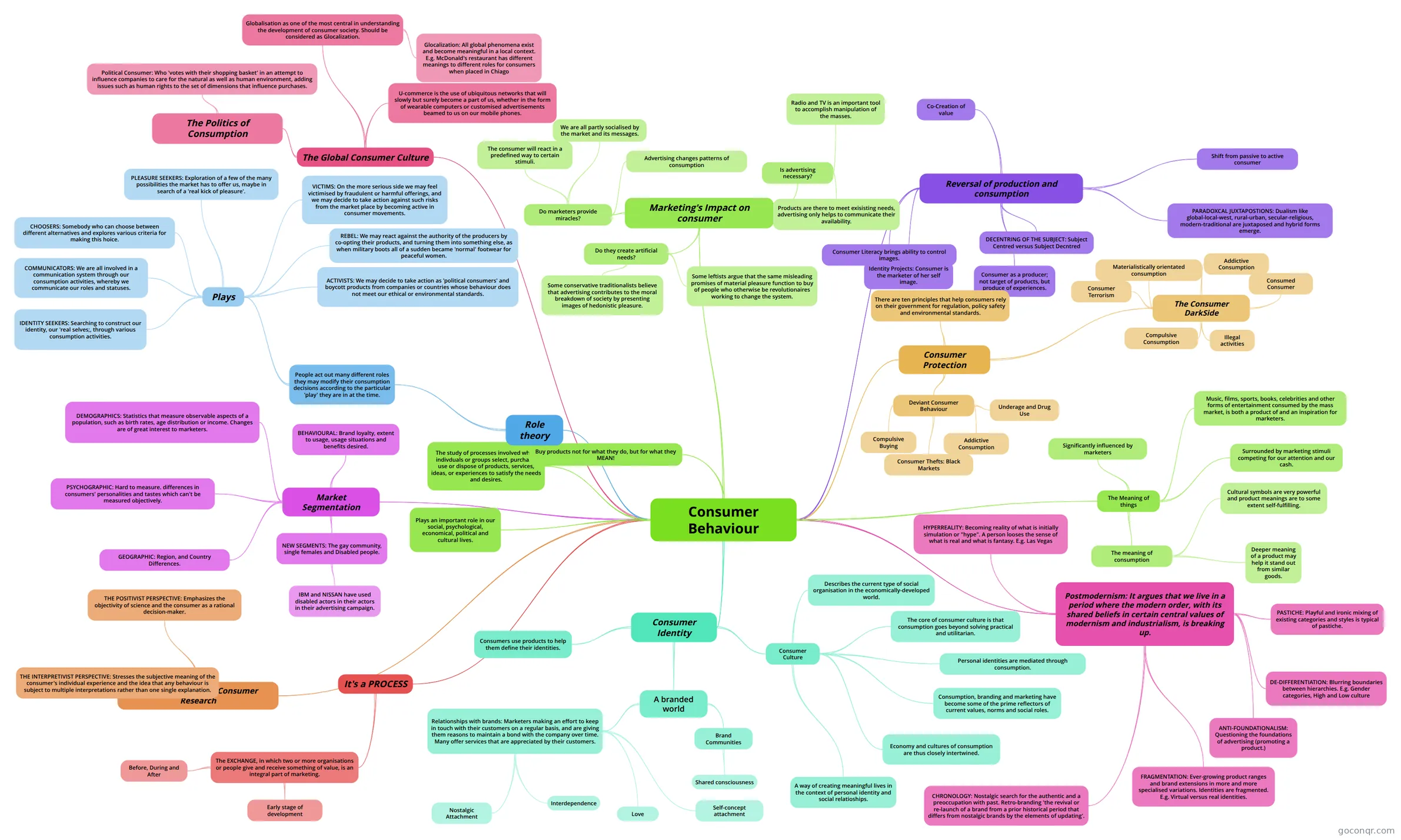 Mind map Consumer Behaviour
-
14 questionsIntroduction to Neuromarketing What is "neuromarketing"?
-
32 cardsCh3 - Consumer behaviour - Learning and Memory
-
26 cardsConsumer Behavior - Attitude Katz' attitude functions
-
Mind map Buyer Behaviour Buyer Behaviour in Marketing MindMap
-
20 questions7 Hemispheric lateralisation refers to:
-
Mind map Remembering Chet: theorizing the mythology of the self-destructive bohemian artist as self-producer and self-consumer in the market for romanticism
Quizzes
See all 78 quizzes-
61 questionsTest 1 Chapter 1, 3, 5
-
14 questionsIntroduction to Neuromarketing What is "neuromarketing"?
-
20 questions7 Hemispheric lateralisation refers to:
-
95 questionsConsumer Behavior Questions The marketing concept:
-
53 questionsConsumer Behaviour MidTerm What is the basic consumption process?
-
10 questionsLECTURE 3: THE 'WHYS' OF CONSUMPTION + THE BUYER DECISION PROCESS
-
32 questionsJbee exam
-
55 questionsMarketing - Quiz 5 Which of the following statements about the S-O-R (Stimulus, Organism, Response) model is not correct?
Mind maps
See all 820 mind maps-
Consumer Behaviour
-
Buyer Behaviour Buyer Behaviour in Marketing MindMap
-
Remembering Chet: theorizing the mythology of the self-destructive bohemian artist as self-producer and self-consumer in the market for romanticism
-
Sensory Marketing hgfhfghfg
-
Complex Decision Making Model: Information Processing
-
Activity 1. Consumer behaviour
-
consumer bb
-
Chapter 5 : Consumer Market Behavior
Flashcards
See all 173 flashcards-
32 cardsCh3 - Consumer behaviour - Learning and Memory
-
26 cardsConsumer Behavior - Attitude Katz' attitude functions
-
111 cardsUntitled
-
122 cardsConsumer Behavior Model of Motivation
-
34 cardsMKT - SW 4 - Consumer Behaviour Analysis / Business Markets (34) MKT - SW 4 - Consumer behaviour analysis / Business markets (5-Step: Understand the marketplace...)
-
28 cardsCelebrity Endorsement and Persuasion
-
35 cardsMKTG 101. 4. Consumer Behaviour Aspirational Reference Group
-
28 cardsMERC: Chapter 5 Consumer Buying Behavior
Flowcharts
See all 34 flowcharts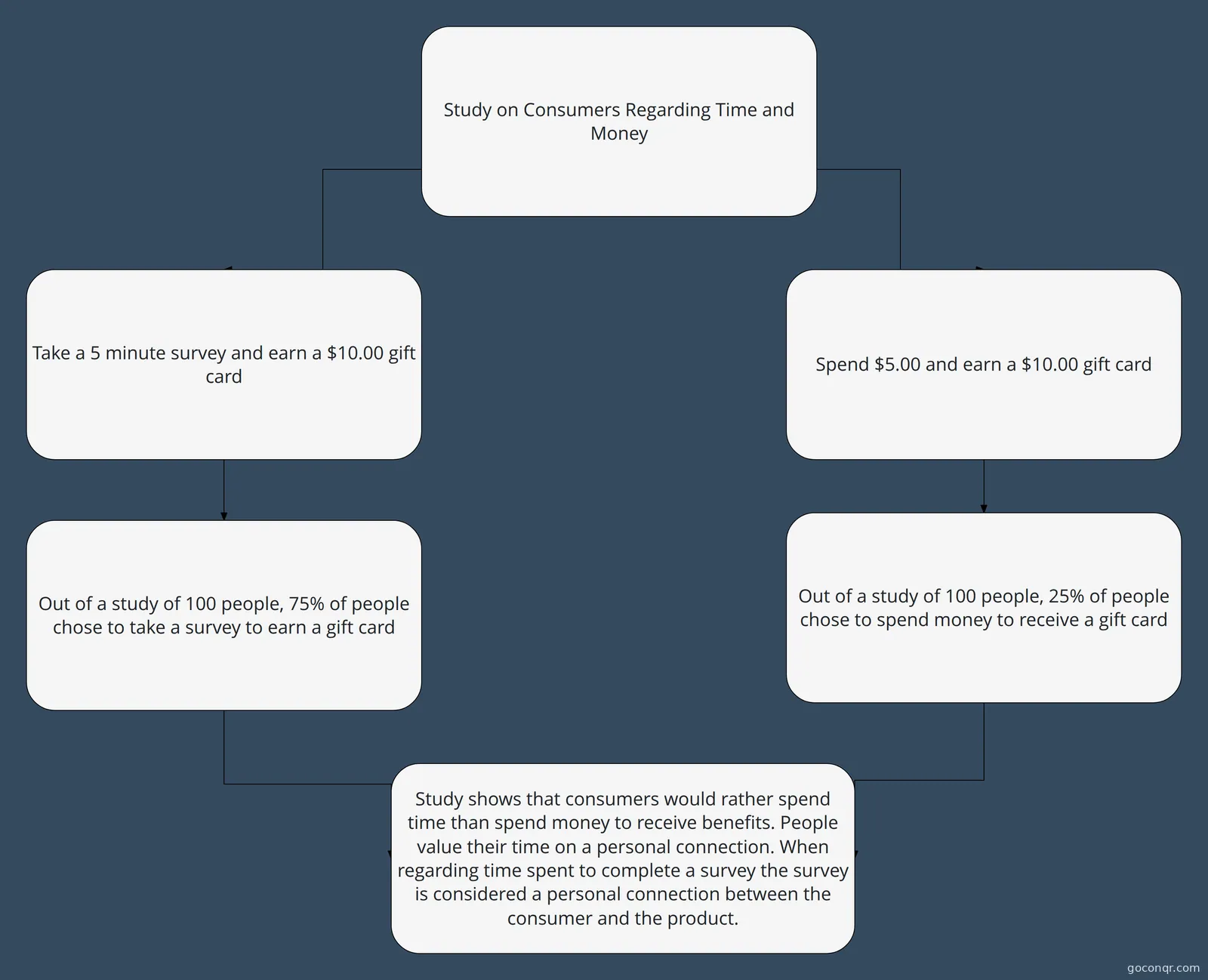
Notes
See all 32 notes-
Understanding Consumers Consumer Product Acquisition Process Motive Development Information Gathering Proposition Evaluation Proposition Selection Acquisition/Purchase Re-evaluation Use of Classical Conditioning in Marketing Jingles in adver...
-
Marketing 11 Chapter 2 Notes 2.1 Consumer Demand Consumer = person who uses a product Customer = person who buys a product Sometimes used interchangeably Customer not always a consumer Gatekeeper = normally a parent or guardian (a consumer who is...
-
Factors Affecting Consumer Decisons Financial Decisions: Consumers need to make the important decisions on how much of their income to save and spend. Consumers develop financial plans called budgets that outline intended income and spending over ...
-
Consumer Behaviour Consumer behaviour Marketers must understand consumer behaviour in order to satisfy their needs.Consumer behaviour: processes of individuals/groups actions to select/purchase goods/services/experiences to satisfy thei...
-
Chapter 1 - summary Consumer Behavior is the study of the processes involved when individuals / groups select, purchase, use/dispose of products, services, ideas or experiences to satisfy needs and desires. Theory used by marketers and a...
-
1_Chapter 1 - summary Consumer Behavior is the study of the processes involved when individuals / groups select, purchase, use/dispose of products, services, ideas or experiences to satisfy needs and desires. Theory used by marketers and a...
-
Chapter 2: Understanding How Consumers Make Purchase Decisions - creado desde un Mapa Mental Outlining the Decision-Making Process Customers Go Through a Five-Stage Decision-Making Process
-
Consumer Decision Process - created from Mind Map 1. Problem RecognitionHow consumers recognize the problem. Examples Malfunction of a current purchase Prompted in a variety of ways
Slides
See all 11 slidesTopics in Consumer Behaviour
More Marketing, advertising and sales topics
About Consumer Behaviour
GoConqr OriginalWhat this unit covers
The resources follow the usual path of a consumer behaviour course. The mind map Consumer Behaviour defines the field as the study of the processes involved when individuals or groups select, purchase, use or dispose of products, services, ideas or experiences to satisfy needs and desires. Around it sit lecture-by-lecture maps on motivation, perception, attitudes, decision making, culture and social influence.
Where to start
Begin with the mind maps Consumer Behaviour and Buyer Behaviour for the big picture and the types of buying behaviour. Then move to topic sets. The flashcards Consumer Behavior - Attitude cover Katz' attitude functions, the ABC Model of Attitudes and the hierarchy of effects. The deck Ch3 - Consumer behaviour - Learning and Memory asks about the five behavioural learning theories, repetition and extinction.
Using quizzes and maps together
Read a map first, then test yourself. The quiz Introduction to Neuromarketing looks at tools that measure the subconscious or implicit responses consumers hold about brands. The quiz Neuromarketing Methods: FMRI and EEG follows on from it. For broader checks, try Test 1, which starts from the definition of consumer behaviour, or the mid-term and exam quizzes further down the page.
- Read a map on one topic, such as perception or motivation.
- Take a quiz on the same topic and note what you missed.
- Go back to the map or flashcards for those gaps.
Going deeper
For decision making, the map Ch9: Judgment and Decision Making Based on High Effort covers emotions, values, attitudes and motivation. The flowchart 5 Step Consumer Decision Making Process gives a quick visual. Other maps look at reference groups, brand communities, the Persuasion Knowledge Model and the senses.
Where it fits
This unit belongs to the strand Understanding Markets and Customers, within Marketing, advertising and sales. Teachers can pick lecture-style maps for classes. Choose one topic today and see how far a single quiz takes you.
Frequently asked questions
Which resource should I open first?
Start with the mind map Consumer Behaviour, which sets out the definition and the main areas of the field. Then look at Buyer Behaviour for the types of buying behaviour. Once you have the outline, move to a topic flashcard deck or a quiz to check what stuck.
What do the mind maps cover?
There are over 790 of them. Many follow lecture or class sequences: motivation, perception, attitudes, communication, culture, social influence, decision making and satisfaction. Others look at single ideas such as the Persuasion Knowledge Model, emotions, shopping, the senses and Bottom of the Pyramid consumers.
Are there quizzes on neuromarketing?
Yes. Introduction to Neuromarketing asks what neuromarketing is and how its tools read subconscious, implicit responses to brands. Neuromarketing Methods: FMRI and EEG is a second quiz on the techniques. Try them after reading about perception and attitudes.
Are the resources free to use?
Yes. Every resource listed here is free to open, study and take, with no account needed. If you want to save quiz scores or make your own quizzes, mind maps, flashcards and notes, you can add a free account.
Who made these resources?
They were made by GoConqr users, not by GoConqr itself. More than 700 contributors have added material, which is why the sets follow different textbooks, lecture series and course styles. Check that a set matches your own syllabus.
What if I can't find my topic?
Look through the lecture, chapter and topic titles, since many sets are named that way, such as the decks on family, social class and culture. If nothing fits, you can make your own mind map or flashcards for it.