
Mindmap
FIRST TERM
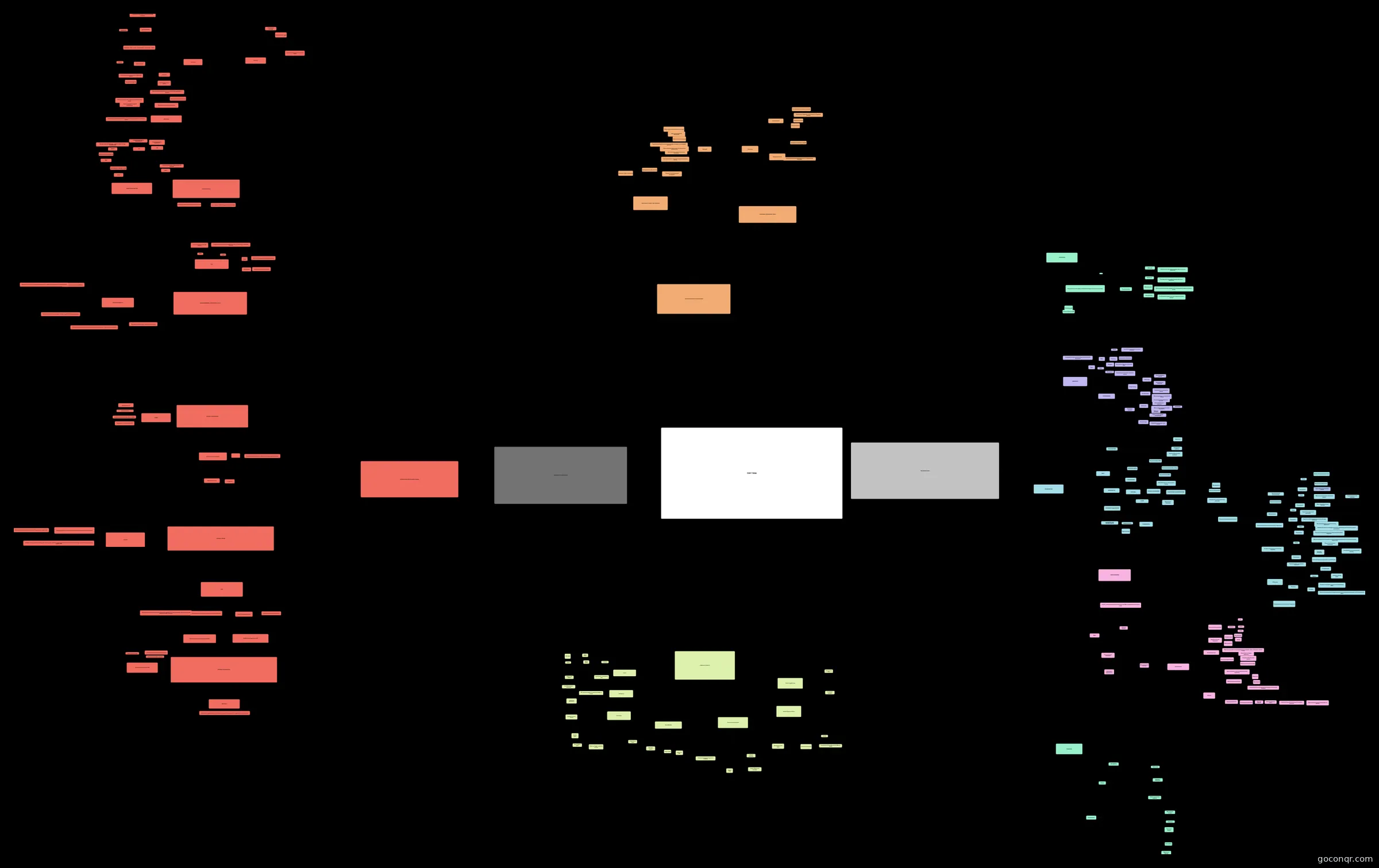
Mind map: The world today
Inhalt der Mindmap
FIRST TERM
THE WORLD TODAY
- GLOBALISATION
- WHY?
- HISTORICS EVENTS
- The fall of the Berlin Wall
- The dissolution of the Soviet Union
- The end of the Cold War
- CONSECUENCES
- Marked the start of a new period in history
- DISADVANTAGES
- International conflicts
- Migrations
- Urban and demographic problems
- HISTORICS EVENTS
- GOBALISATION
- LATE 1980's
- STEADILLY INCREASING
- ALL SOCIETIES IN A SINGLE SYSTEM
- They depend on
- Interact with each other
- Economically, socially, politically, culturally
- ALL SOCIETIES IN A SINGLE SYSTEM
- STEADILLY INCREASING
- LATE 1980's
- ECONOMIC GLOBALISATION
- CAUSE
- Expansion of Capitalism
- CONSEQUENCE
- Changed the map of global production
- Tertiarisation and financialisation
- Cause
- Steady rise in international trade
- Remuval of custom barriers
- Consequence
- hight mobility of production factord
- Cause
- Concentration of wealth
- Cause
- Manufacturing,financial and military powers
- Concentrated in rich countries
- Manufacturing,financial and military powers
- Consequence
- More inequality on lots of societies
- Cause
- Multinationals
- Cause
- Control of a large part of production
- Consquence
- Expansion of the networks into countries through subdiaries
- Cause
- Goverments bodies are now of secondary importance
- Cause
- Economic decisions are no longer exclusively controlled by governments or group of governments
- Governement bodies are now of secondary importance
- Consequence
- The power of large financial corporations and multinational companies
- Which can influence the decisions not only of all kinds of goernments, but also of international organiations
- Cause
- Economic inestability and increasing inequality
- Cause
- The growth of financial movements
- Unregulated financialisation of the economy
- Consequence
- Economic inestability
- Increased inequality between the rich and the poor.
- Cause
- Offshoring
- The high mobility of productive resources.
- Countries
- Emisor
- Unemployment
- loss of purchasing power
- Recepors
- To exploit cheap labour in places with limited labour rights.
- There has not always been an improvements in house hold purchasing power and living standards either
- Emisor
- Unemployement and loss of purchasing power
- Tertiarisation and financialisation
- Changed the map of global production
- CAUSE
- SCCIENTIFIC AND TECHNOLOGICAL
- Communications
- High technology
- WHY?
- CONFLICTS
- XX1 CENTURI
- Causes
- Economic differences
- Historic unresolved conflicts
- Intolerance
- Consequences
- GEopolitical tensions
- Civil conflicts
- Wasr between nations
- Territorial disputes
- Terrorims
- MIGRATION
- Large population movements of migrants with different motivations
- Types
- Why?
- Forced
- because of wars, persecution, natural disasters…
- Voluntary
- leave to seek a better future
- Forced
- Time
- Temporal
- They return to hom after a period of time
- Permanent
- Permanently stayed in the destination country
- Temporal
- Why?
- CONSEQUENCES
- Origin country
- Advantages
- Lots of remitances recived
- Overpupulation alleviated
- Disadvantages
- Proffesonals have to leave the country
- Most of pupulation are children and elderly.
- Advantages
- Destination countries
- Advantages
- Average age of the population is lowered
- Interaction between countries
- More productivity and the level of employment
- WORKFACE
- Culture is enriched
- Disadvantages
- Public services become overwhelmed
- Xenophobia and racism can be created
- Advantages
- Origin country
- URBAN PROBLEMS
- In 2007, it was estimated that more than half of the World´s population was living in cities.
- Why?
- Cities gives more advantages
- Employment opportunities
- More services and facilities
- Cities gives more advantages
- Constant Growth
- Disadvantages
- Enviromental degradation
- Pollution
- air
- water
- noise
- Pollution
- Supplies and waste magement
- Consume lots of
- Raw materials
- energy
- Waste problems
- Consume lots of
- Social segregation
- There are groups that are clearly different for economic, ethnic, religious or cultural reasons.
- Tend to live in specific areas
- Some ethnic o religious minorities
- Inmigrants from the same country
- Families with very low incomes
- Housing
- Inner city decline and the growth of the urban population
- More houses need to be built
- High prices
- High demand
- A generalised increase in the cost of housing in all developed countries
- Property speculation
- A lot of people need a house
- Grow the demand
- Need to build more huses
- increase in the cost of housing in all developed countries.
- Despite urban prosperity, large pockets of poverty
- increase in the cost of housing in all developed countries.
- Need to build more huses
- Grow the demand
- A lot of people need a house
- Enviromental degradation
- Why?
- In 2007, it was estimated that more than half of the World´s population was living in cities.
- POPULATION
- The population is the number of inhabitants living in an área at a certain time.
- 7.3 billion people
- will be 9.7 billion in 2050
- To undrstand this
- Birht rate
- : The birth rate is the number of people who are born in a population
- Death rate
- The death rate is the number of people who die in a population.
- Life expectancy
- It is the number of years a person is expected to live on average.
- Natural growth
- Natural growth tells us how a population has developed or changed in a specific period.
- Birht rate
- 7.3 billion people
- The population is the number of inhabitants living in an área at a certain time.
- GLOBALISATION
THE WORLD OF GLOBALISATION
- A WORLD IN CONFLICT
- Central and South America
- Drugs in Mexico and Colombia
- Paramilitary and guerrilla groups in Colombia
- USA and Cuba
- USA and Venezuela
- Russia's neighbouring
- To rewaken tensions
- Ukranian Civil war
- Africa's forgotten conflicts
- Coltan and ethnic group
- Boko Haram and Al Qaeda
- Unresolved conflicts in Morocco and Western Sahara
- Somalia
- The middle East
- Palestine and Israel
- Syrian Civil War
- 2003 Iraq's invasion
- ISlamic states
- Central Asia
- Iran VS USA VS Israel
- Extremist terrorist activity
- Tibetan and Uyghur separatist in China
- Nuclear power
- Pacific
- Try to control it the aliens os USA
- Tension with China
- Conflicts
- South Korea
- USA, Japan
- North Korea
- China
- South Korea
- Try to control it the aliens os USA
- Arab Spring
- 2011 revolutions agains the goverment began in Tunisia
- Dictatorial goverments
- Unstable economic conditions
- 2011 revolutions agains the goverment began in Tunisia
- Central and South America
- COUNTRIES AND LEVELS OF DEVELOPMENT
- INDICATORS TO CLASSIFY THE COUNTRIES
- Information about the economy
- Demographic and urban features
- The level of social and cultural development
- COUNTRIES BY DEVELOPMENT LEVELS
- Developed
- GDP per capita and consumption is very high
- Great cultural and social development
- Democratic political systems
- They have advantageous business relationships with respect to undeveloped countries
- Industrialized countries in which the tertiary sector predominates
- Rich nations that control international institutions
- The interests of their companies and governments are a priority
- Developing
- Underdelopment
- The consumption per person is very small
- They maintain dependency relationships with developed countries
- Political instability
- Poorly industrialized
- Emerging econimies
- HIGH RATES OF ECONOMIC GROWTH
- DEGREE OF INDSUTRAILIZATION SUPERIOR TO THE DEVELOPED COUNTRIES.
- Underdelopment
- Developed
- INDICATORS TO CLASSIFY THE COUNTRIES
- INTERNATIONAL DECISION-MAKING BODIES
- The United Nations
- includes every officially recognized state in the world
- It was created in 1945 following the Second World War.
- Functions
- Guarantee international security and peace
- Defense of human rights
- Humanitarian assistance
- Institutions
- general Assembly
- deliberation
- It is made up of representatives from all member countries.
- Security Council
- decision
- permanent: - China - Russia - United Kingdom - United States - France.
- Secretariat
- Proposing, putting into practice and supervising actions
- International Court of Justice
- Trying and settling case
- general Assembly
- LIMITATIONS
- Dependence on financial contributions
- Some countries do not pay on time
- Others use these contributions to try to influence the organisation´s decisions
- The enormous power held by the five countries with the power of veto on the Security Council
- The lack of armed forces to make sure its resolutions are obeyed
- This is compensated for by UN peacekeepers.
- Dependence on financial contributions
- ORGANS UNITED NATIONS
- FAO
- Food and Agriculture Orrganisation
- ILO
- INTERNATIONAL LABOUR ORGANIZATION
- UNESCO
- UNITED NATIONS EDUCATIONAL, SCIENTIFIC AND CULTURAL ORGANISATION
- WHO
- WORLD HEALTH ORGANISATION
- UNICEF
- UNITED NATIONS CHILDREN´S FUND
- UNHCR
- UNITED NATIONS HIGH COMMISSIONER FOR REFUGEES
- FAO
- NON-GOVERNMENTAL ORGANISATIONS (NGOs)
- Facts
- When
- In the final decades of the 20th century
- cause
- In response to the injustice and inequality en the world, especially in the poorest countries.
- origin
- The first NGOs appeared in developed countries
- Consequence
- Greater public awareness of issues
- When
- MAIN CHARACTERISTICS
- Most of their staff work as volunteers, although they do also have paid employees
- They are funded by membership fees and contributions from companies, institutions, and individuals
- They opérate independently of any governmental power
- They deal with a wide variety of problems
- NGOs work to solve one or more specific porblems and to respond to emergencies and natural disasters
- Facts
- REGIONAL ORGANISATIONS
- All the countries of the planet
- They meet and relate
- In organisms
- Promote political and economic cooperation of a large region of the world.
- They meet and relate
- NAMES
- African Union AU
- Association of Southeast Asian Nations ASEAN
- Organisation of American States OAS
- European Union EU
- All the countries of the planet
- INFORMAL FORUMS
- BRICS
- Group of emerging economies
- Brazil Russia India China South Africa
- They believe that international organisations should be reformed
- Should be reformed so that there is more proportional representation. This would reflect the influence of these countries on today´s economy
- Group of emerging economies
- G7 (1973)
- This group is made up of the countrires with the most economic and military power
- The United States Japan Germany The United Kingdom France Italy Canada
- G7 doesn´t have any decisión- making power, but the group´s proposals regarding policies and economics are often later put into practice by international organisations
- This group is made up of the countrires with the most economic and military power
- BRICS
- ECONOMIC ORGANISATIONS
- The World Trade Organisation WTO
- North American Free Trade Agreement NAFTA
- International Monetary Fund IMF
- Prevent financial crises
- It advises governments on economic matters
- Gives loans to members countries
- World Bank
- provide loans to governments so that they can carry out reform projects and programmes in their countries.
- The United Nations
- A WORLD IN CONFLICT
Informationen
- Beschreibung
- Mindmap am FIRST TERM, erstellt von VICTOR DELGADO LLAMAS am 13/12/2019.
- Erstellt von
- VICTOR DELGADO LLAMAS
- Aufrufe
- 2
- Verlauf
-
- Erstellt von Victor Delgado Llamas · 12 Dez 2019
- Kopiert von VICTOR DELGADO LLAMAS · 13 Dez 2019
- Bewertung