
Mindmap
Physics Unit 1
Inhalt der Mindmap
Physics Unit 1
1. Particles & Radiation
- 1. Atomic Structure
- Nucleus- Protons, Neutrons, Eclectrons
- Charge: (proton) +1.9x10⁻¹⁹, (electron) -1.9x10⁻¹⁹
- Mass: (proton) 1.67x10⁻²⁷, (neutron) 1.67x10⁻²⁷, (electron) 9.11x10⁻³¹
- Proton No. (Z) or Atomic No. (bottom No.)
- Nucleon No. (A) or Mass No. (top No.)
- Specific charge: Charge/mass (C kg^-1)
- Isotopes, same number of protons, different number of Neutrons
- Nucleus- Protons, Neutrons, Eclectrons
- 2. Stable & Unstable Nuclei
- Forces in Nucleus:
- Electromagnetic Force (causes Protons to repel),
- Gravitational Force (causes all nucleons to attract each other due to their mass),
- Strong Nuclear Force,(repulses <0.5 fm), (attracts 0.5-3 fm)
- (Gravitaional force is greater than Electromagnetoc Force, Another force to out weigh the balance)
- Nuclear Decay
- Alpha decay, (very big atoms): too big for Strong nuclear force to keep stable
- Proton No. -2, Nucleon No. -4
- Beta-minus decay, emission of electron and antineutrino, happens when an atom has too many nuetrons compared to protons, When a beta particle is emitted a neutron turns into a proton.
- Proton No. +1, Neutron No. nothing
- Alpha decay, (very big atoms): too big for Strong nuclear force to keep stable
- Forces in Nucleus:
- 3. Antiparticles & Photons
- Electromaggnetic Radiation
- Radio Waves, Micro Waves, Infra Red, Visible Light, Ultra Violet, X-Rays, Gamma Rays, (in increasing frequency/ decreasing wavelength)
- Photons: (wave packets)
- Energy carried by a photon (E): E=hf or E=hc/(landa)
- Where: E is energy carried by the photon,(J) h is planck's constant (6.63x10⁻³⁴),(Js) f is frequency of light,(Hz)
- Where: E is energy carried by the photon,(J) h is planck's constant (6.63x10⁻³⁴),(Js) c is speed of light (3x10^8), (ms^-1) (landa) is wavelength, (m)
- Energy carried by a photon (E): E=hf or E=hc/(landa)
- Antiparticles
- Proton - Antiproton
- Neutron - Antineutron
- Electron - Positron
- Electron Neutrino- Electron Antineutrino
- Pair Production
- When energy is converted into masss you get qual ammounts of matter and antimatter, (PP).
- Two protons coliding, producing proton- antiproton pair
- Electron-positron pair produced from a gamma ray photon
- Minimum energy needed for pair production: E(min)=2E0
- E(min) is minimum energy, (MeV) E0 is rest energy of particle produced, (MeV)
- Annihilation
- When a particle meets it's antiparticle they annhilate. All mass is converted to energy in the form of two gamma ray photons
- Calcuate minimun energy of photon produced: E(min)=E0
- where: E(min) is minimum energy of photon produced, (MeV) E0 is rest energy of particle (MeV)
- Electromaggnetic Radiation
- 4. Classification of Particles
- Hadrons
- Are affected by Strong interaction
- Not fundemental, made up of quarks
- Baryons
- Example, Protons & Neutrons
- All Baryons are unstable apart from Protons
- They all decay to Protons
- Antibaryons, are the Antiparticles of Baryons
- Mesons
- Interact with Baryons by the Strong force
- All are unstable
- Example, Pions & Kaons
- Leptons
- Leptons are Fundamental
- Example, Electrons, Muons & Neutrinos
- Not affected by Strong Force, only iteract by Weak and Graavitational
- Lepton and Baryon number must be conserved for an interaction to happen
- Hadrons
- 5. Quarks & Antiquarks
- 3 type of quarks: up, down, strange
- Quarks are fundamental
- Antiquarks, have the opposite properties to quarks
- All baryons are made up of 3 quarks. Proton-u,u,d Neutron-u,d,d
- All mesons are made of a quark and an antiquark
- Not possible to get a quark by itself, quark confinement
- Weak interaction
- Beta-minus deccay, a neutron changes to a proton, udd goes to uud
- Beta-plus decay, a positron is emmited and a proton changes to a neutron, uud goes to udd
- Conservations
- Charge
- Baryon No.
- Lepton No.
- Strangeness
- 6. Particle Interactions
- Particle exchange
- Repulsion
- Attraction
- Strong Interaction- Gluon, hadrons only, Electromagnetic interaction- Virtual Photon, Charged particles only, Weak Interaction- W+/W- bosons, all particels, Gravity- Graviton, all particles
- Feynman diagrams
- Beta-minus decay- N - P (W-) e-, antineutrino
- Beta-plus decay- P - N (W+) E+, netrino
- Electron Capture:P- N (W+), e- - neutrino
- Electron-Proton collision: P-N (W-), e- - neutrino
- Electromagnetic repulsion: e- - e-, (y) e-,e- (or all e+)
- Particle exchange
- 1. Atomic Structure
2. Electromagnetic Radiation & Quantum Phenomena
- 1. Photoelectric Effect
- The free electrons inside a metal absorb a photon and start to vibrate, if an electron absorbs enough energy the bonds holding it to the metal break and the slectron is relesed. the is the photoelectric effecgt and the electrons emitted are the photoelectrons.
- Conclusion 1: No photoelectrons are emmited if teh radiatin is below a certain frequency. This is the Threshold Frequency
- Conclusion 2: the photelectrons are emited with kinetic energy ranging from 0 to a maximum value. the The maximum value increases with the frequency of the radiation.
- Conclusion 3: The intesity if the radiation is the amount of energy per second hitting an area of metal. This doesn't affect the maximum value of energy.
- Conclusion 4: The number of photoelectrons emmited per se.cond is proportional to the intensity of the radiation
- Photoelectric Effect shows that light can't just act as a wave. as some of the observations, can't be explained by the wave theory.
- Threshold Frequency- Wave theory says the energy carried by the EM wave would be spread out equally. This would mean each free electron on teh surface of the metal would gain a bit of energy each, eventually each electron would have gained enough energy to leave the metal. So no matter wbat the frequency of the wave is the electrons would be emitted eventually. However electrons aren't emmited unless the frequency i abouve the threshold frequency.
- Kinetic energy of photoelectron: The kinetic energy should increase with intensity, wave theory can't explain why the kinetic energy depends on teh frequency in the photoelectric effect
- The Photon Madel (used to explain the photoelecctric effect)
- Work Function is the energy needed to break all of the electrons bonds in the metal
- Thershold Frequency = work function/ h
- Maximum Kinetic energy = hf-work function
- of Ek= 1/2 mvmax^2
- so hf= work function + 1/2 mvmax^2
- 2. Energy Levels in Atoms
- Electron Volt: Is the kinetic energy carried by an electron after it has been accelerated through a PD of 1 volt.
- 1 ev =1.6x10⁻¹⁹J
- Discrete energy levels in atoms
- Electrons in an atom can only exist in certain defined levels. The lowest state is the ground state. Atom is excited when one or more electrons are in higher level than the ground state.
- Electrons move down energy level by emitting a photon. As the transitions are definite only certain energy values of the photons can be emitted.
- Electron transitions
- The energy carried by a photon emitted after a transition is equal to the difference between the energy levels. movement of an electron to higher level is excitation.
- E1-E2= hf
- Ionisation: the removal of an electron from an atom
- Ionisation energy is the energy required to remove a electron from the ground state
- The energy carried by a photon emitted after a transition is equal to the difference between the energy levels. movement of an electron to higher level is excitation.
- Photon emission- Fluorescent spectra
- - Fluorescent tube contains mercury vapor at low pressure and 2 electrodes
- - At cathode large no. of electrons are released
- - Electrons are accelerated across a PD between the electrodes, some of the electrons collide with the gas atoms and ionises them
- - Producing more electrons
- - Some the electrons collide with the gas atoms, which become excited and emit photons of UV light when they start to return tot ground state.
- - The inside of the tube is covered when the UV photons excite the electrons of the atom in the coating, they emit visible light photons
- - The coating atoms are close together meaning that there are so many allowed transitions that all colours of the visible spectra are emitted so the light appears white.
- - The inside of the tube is covered when the UV photons excite the electrons of the atom in the coating, they emit visible light photons
- - Some the electrons collide with the gas atoms, which become excited and emit photons of UV light when they start to return tot ground state.
- - Producing more electrons
- - Electrons are accelerated across a PD between the electrodes, some of the electrons collide with the gas atoms and ionises them
- - At cathode large no. of electrons are released
- - Fluorescent tube contains mercury vapor at low pressure and 2 electrodes
- Electron Volt: Is the kinetic energy carried by an electron after it has been accelerated through a PD of 1 volt.
- 3. Wave-Particle Duality
- 1. Photoelectric Effect
3. Current Electricity
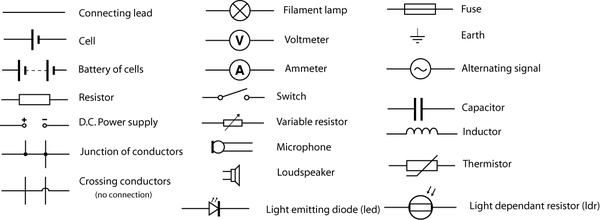
- 1.Circuit Diagrams
- 2. Current & Potential Dividers
- 6. Power & Electrical Energy
- 5. Resistivity & Superconductors
- 3. Resistance
- 4. I-V Charecteristics
- 10. Alternating Current
- 9.The Potential Divider
- 8. Conservation of Energy & Charge in Circuits
- 7. E.m.f & Internal Resistance
Bilder und Dateien der Mindmap
Informationen
- Beschreibung
- A-Level Physics (Unit 1) Mindmap am Physics Unit 1, erstellt von katherine.clark-1643 am 02/04/2015.
- Erstellt von
- katherine.clark-1643
- Aufrufe
- 0
- Bewertung