
Mindmap
DEVELOPMENTAL PSYCHOLOGY - Explanations of atttachment
Inhalt der Mindmap
DEVELOPMENTAL PSYCHOLOGY - Explanations of atttachment
Learning theory
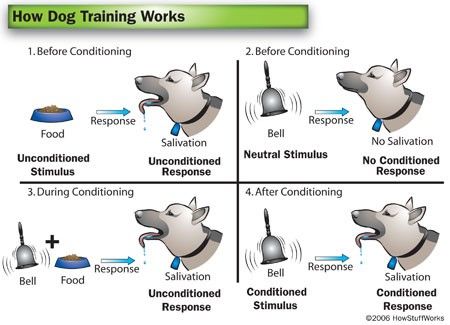
- Classical
- UCS produces UCR (before conditioning
- CS produces CR (after conditioning)
- Food is UCS, produces pleasure (UCR). Feeder (NS) becomes associated with food (UCS) and pleasure (CR) is associated with feeder.
- Association between individual and sense of pleasure is attachment bond
- Operant
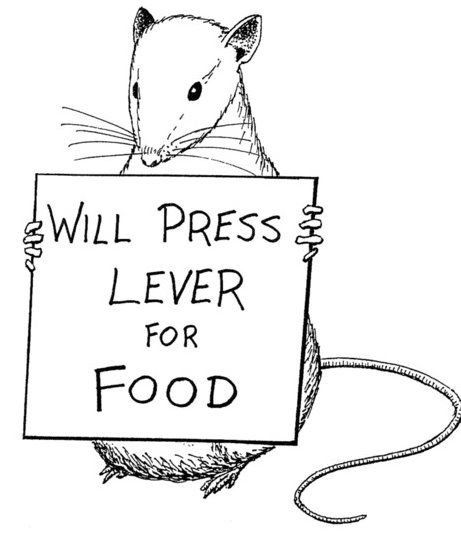
- Reinforcement + Punishment
- Dollard & Miller (1950)
- Hungry infant has drive to reduce that discomfort. Infant is fed, producing pleasure (reward). Food becomes primary reinforce. Supplier of food becomes secondary reinforce.
- Attachment occurs because child seeks person who can supply the reward.
- Hungry infant has drive to reduce that discomfort. Infant is fed, producing pleasure (reward). Food becomes primary reinforce. Supplier of food becomes secondary reinforce.
- Dollard & Miller (1950)
- Reinforcement + Punishment
- Lacks validity - studies on animals - oversimplified.
- However, behaviourists believe we are no different to animals.
- Evaluation
- Strengths
- Provides an adequate explanation of how attachments form. We do learn through association and reinforcement but food may not be the main reinforcer.
- Weaknessess
- Contact comfort is more important than food.
- Harlow's monkeys (1959).
- 2 wire mothers, 1 with feeding bottle and 1 covered in cloth.
- Monkeys spent most time with cloth covered mother and would cling to it when frightened.
- Harlow's monkeys (1959).
- Human studies also challenge the importance of food for attachment
- Schaffer and Emerson (1964).
- 60 babies from working-class homes in Glasgow.
- Infants were most attached to the person who was most responsive + interactive, not the one who fed them.
- Schaffer and Emerson (1964).
- Contact comfort is more important than food.
- Strengths
- Classical
Bowlby's theory (1969)
- Children have innate drive to become attached to caregiver. Adaptive because they increase likelihood of survival.
- Sensitive period
- 2nd quarter of the first year, as months pass it becomes increasingly difficult to form attachments.
- Caregiving is adaptive
- Social releasers e.g. smiling and crying elicit caregiving
- A secure base
- Attachment acts as a secure base from while child explores and safe haven to return to.
- Monotropy and hierarchy
- Primary attachment is monotropy.
- Infants become most attached to person who person who responds most sensitively to infant's social releasers
- The primary attachment figure provides the main foundation for emotional development, self esteem and later relationships.
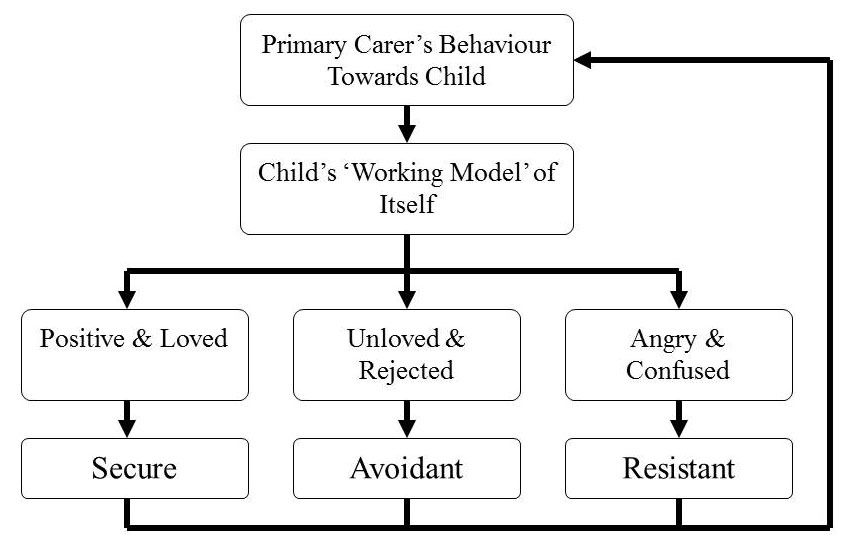
- Internal working model
- Cluster of concepts about relationships and what to expect from others.
- The continuity hypothesis
- There is a link between early attachment behaviour and later emotional behaviour
- Evaluation
- Strengths
- Research by Lorenz supports imprinting (goslings followed 1st moving object)
- Sensitive period
- Hodges and Tizard found that children who hadn't formed attachments later had difficulties with peers.
- Universality
- If attachment did evolve, then it would be found in all cultures.
- Tronick et al. (1992) studied an African tribe which lived in extended family groups and found that the infants still showed 1 primary attachment at 6 months.
- Monotropy and hierarchy
- Supported by Tronick et al.
- Schaffer and Emerson also found this. They also found little relationship between time spent and attachment - suggests quality is most important.
- Fathers are important: When monkeys only stayed with their mothers, they were socially abnormal (Harlow).
- Caregiver sensitivity
- Schaffer & Emerson observed that strongly attached infants had mothers who responded quickly.
- Harlow: wire mother left monkeys maladjusted.
- Carlson (1998) found that insensitive caregiving was associated with disorganised attachment.
- The continuity hypothesis
- The Minnesota longitudinal study fond continuity between early attachment and later emotional / social behaviour.
- Limitations
- Multiple attachments
- Grossmann & Grossmann (1991) did research on infant-father attachment and suggest that fathers have a key role in social development.
- Alternative explanation - the temperament hypothesis
- That certain personality / temperamental characteristics of the infant shape a mother's responsiveness.
- Born with it
- Thomas & Chess found: easy, difficult and easy to warm up.
- Belsky & Rovinne support this hypothesis
- Infants who were calmer and less anxious were more likely to be securely attached.
- Nachmias et al. found no such association.
- Multiple attachments
- Strengths
Bilder und Dateien der Mindmap

Informationen
- Beschreibung
- Mindmap am DEVELOPMENTAL PSYCHOLOGY - Explanations of atttachment, erstellt von Naomi Gbao am 05/04/2015.
- Erstellt von
- Naomi Gbao
- Aufrufe
- 35
- Tags
- Bewertung