
Mindmap
Sorting Techniques
Inhalt der Mindmap
Sorting Techniques
Decrease-and-conquer technique
- It is based on exploiting the relationship between a solution to a given instance of a problem and a solution to its smaller instance
- The three major variations of this technique are: 1- decrease by a constant, 2- decrease by a constant factor and 3- variable size decrease
- In the decrease-by-a-constant variation, the size of an instance is reduced by the same constant on each iteration of the algorithm
- The decrease-by-a-constant-factor technique suggests reducing a problem instance by the same constant factor on each iteration of the algorithm
- in the variable-size-decrease variety, the size-reduction pattern varies from one iteration of an algorithm to another.
- The three major variations of this technique are: 1- decrease by a constant, 2- decrease by a constant factor and 3- variable size decrease
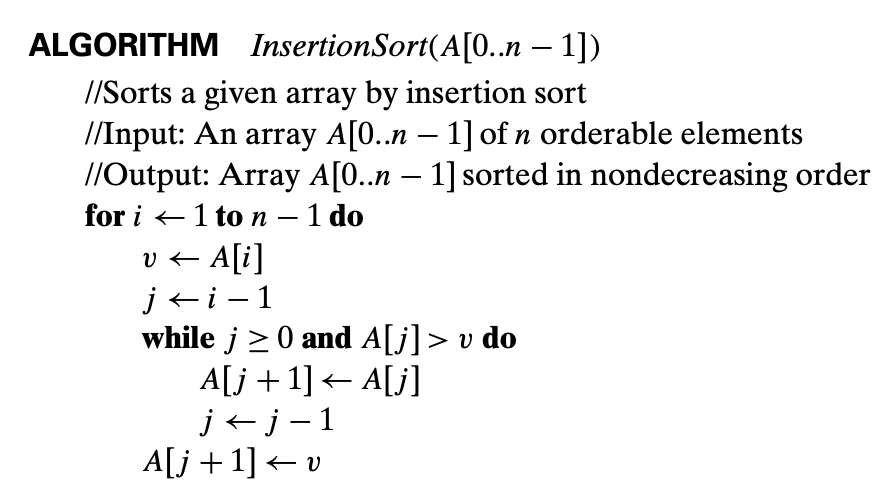
- Insertion Sort
- Though insertion sort is based on a recursive idea, it is more efficient to implement this algorithm bottom up
- Is done by scanning the sorted subarray from right to left until the first element smaller than or equal to A[n − 1] is encountered to insert A[n − 1] right after that element
- It is based on exploiting the relationship between a solution to a given instance of a problem and a solution to its smaller instance
Divide-and-conquer
- These algorithms work according to the following general plan: 1. A problem is divided into several subproblems of the same type, 2. The subproblems are solved, 3. If necessary, the solutions to the subproblems are combined to get a solution to the original problem.
- the time spent on executing this is usually (but not always) significantly smaller than solving a problem by a different method.
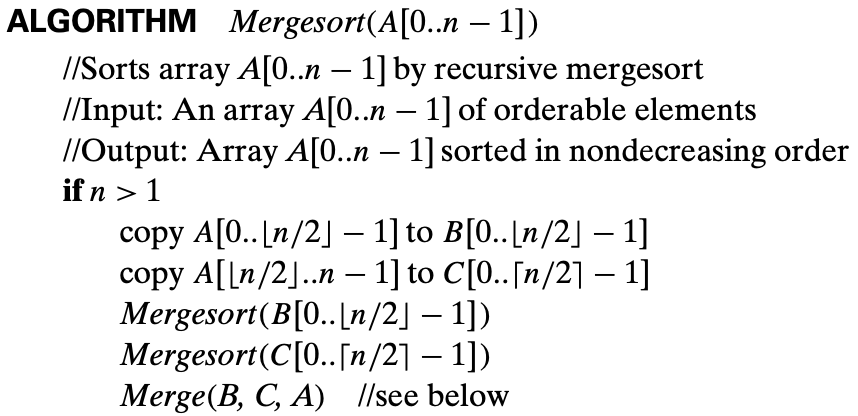
- Mergesort
- It sorts a given array A[0..n − 1] by dividing it into two halves A[0..⌊n/2⌋ − 1] and A[⌊n/2⌋..n − 1], sorting each of them recursively, and then merging the two smaller sorted arrays into a single sorted one.
- There are two main ideas leading to several variations of mergesort
- the algorithm can be implemented bottom up by merging pairs of the array’s elements, then merging the sorted pairs, and so on
- we can divide a list to be sorted in more than two parts, sort each recursively, and then merge them together
- There are two main ideas leading to several variations of mergesort
- The number of key comparisons made by mergesort in the worst case comes very close to the theoretical minimum2 that any general comparison-based sorting algorithm can have
- It sorts a given array A[0..n − 1] by dividing it into two halves A[0..⌊n/2⌋ − 1] and A[⌊n/2⌋..n − 1], sorting each of them recursively, and then merging the two smaller sorted arrays into a single sorted one.
- These algorithms work according to the following general plan: 1. A problem is divided into several subproblems of the same type, 2. The subproblems are solved, 3. If necessary, the solutions to the subproblems are combined to get a solution to the original problem.
Brute-force approach
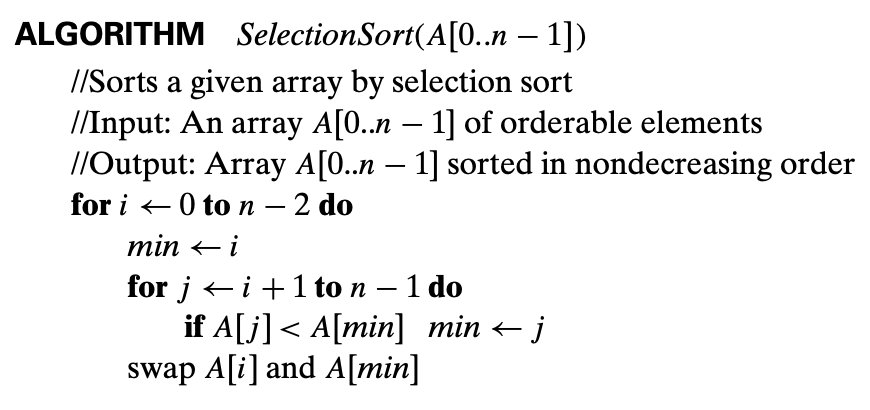
- Selection Sort
- It works by scanning the entire given list to find its smallest element and exchange it with the first element, doing this to all n-1 elements
- After n − 1 passes, the list is sorted
- It works by scanning the entire given list to find its smallest element and exchange it with the first element, doing this to all n-1 elements
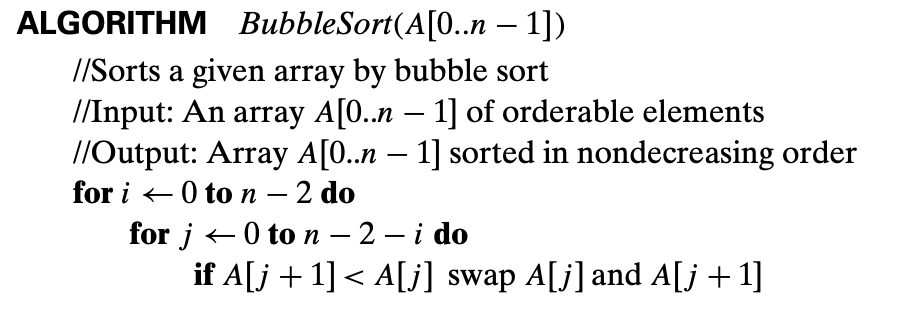
- Buble Sort
- It works by comparing adjacent elements of the list and exchange them if they are out of order
- By doing it repeatedly, we end up “bubbling up” the largest element to the last position on the list
- different of selection sort, the number of key swaps depends on the input
- It works by comparing adjacent elements of the list and exchange them if they are out of order
- Selection Sort
Bilder und Dateien der Mindmap
Informationen
- Beschreibung
- Mindmap am Sorting Techniques, erstellt von Sara Nicoly Ferreira Lins am 13/06/2021.
- Erstellt von
- Sara Nicoly Ferreira Lins
- Aufrufe
- 0
- Bewertung