
Mindmap
PILING
Inhalt der Mindmap
PILING
Functions
- transferring the load from the structure to the foundation at deeper depth when the soil's bearing capability is sufficient to support the structural load.
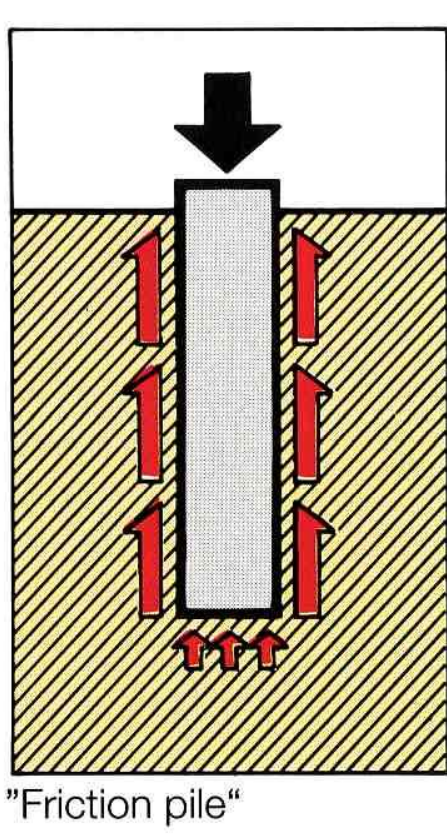
Friction piles
- in cohesive soil : skin friction transfer practically the whole load on the pile to the surrounding soil along the pile surface, with the pile toe transferring only a minor portion.
- In cohesionless soil; skin friction along the piles' surface transfers the applied load to the surrounding soil. The pile toe also carries a significant portion of the load. The relative density of the soil and the shape of the pile are the main factors that influence skin friction resistance.
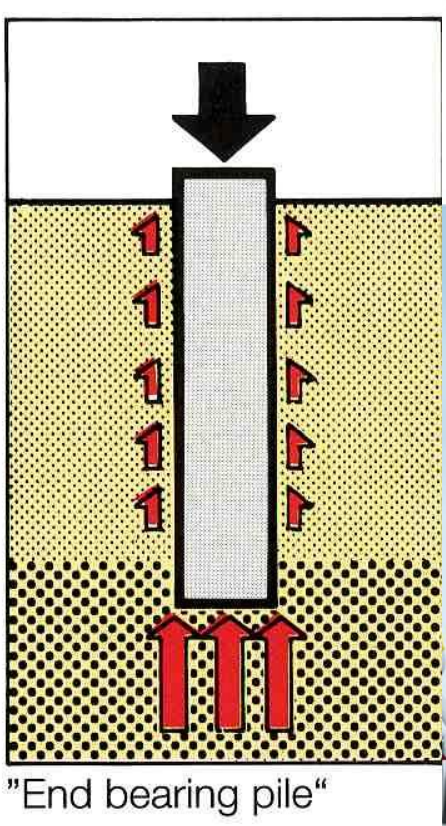
End bearing piles
- The applied load is carride from the pile to the surrounding soil primarily through the pile toe when piles are driven down to a layer with high bearing capacity
Classification of piles
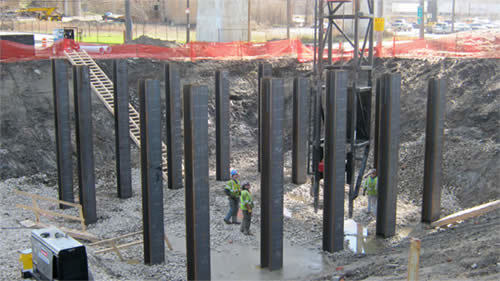
- Displacement piles: Piles are driven or pushed, vibrated or screwed into the ground, displacing the soil outwards and downwards but no materials are removed
- Driven piles - preformed unit driven into the soils by blows of hammer
- Materials
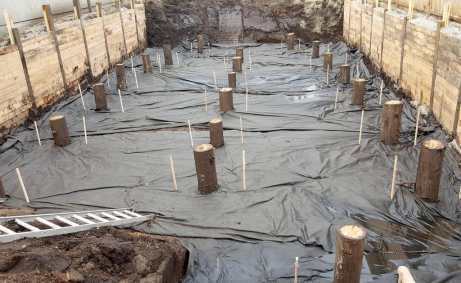
- Timber
- Characteristics
- 1. free from short / reverse bends, large / loose knots, slake splits & decay
- 2. uniform taper from the butt to tip
- 1. free from short / reverse bends, large / loose knots, slake splits & decay
- usually square sawn timber of sizez 225 x 225 to 600 x 600mm.
- easy to handle and driven by percussion or drop hammer
- timber pile not suitbale of driving through dense strata or strata with obstruction
- Characteristics
- Concrete
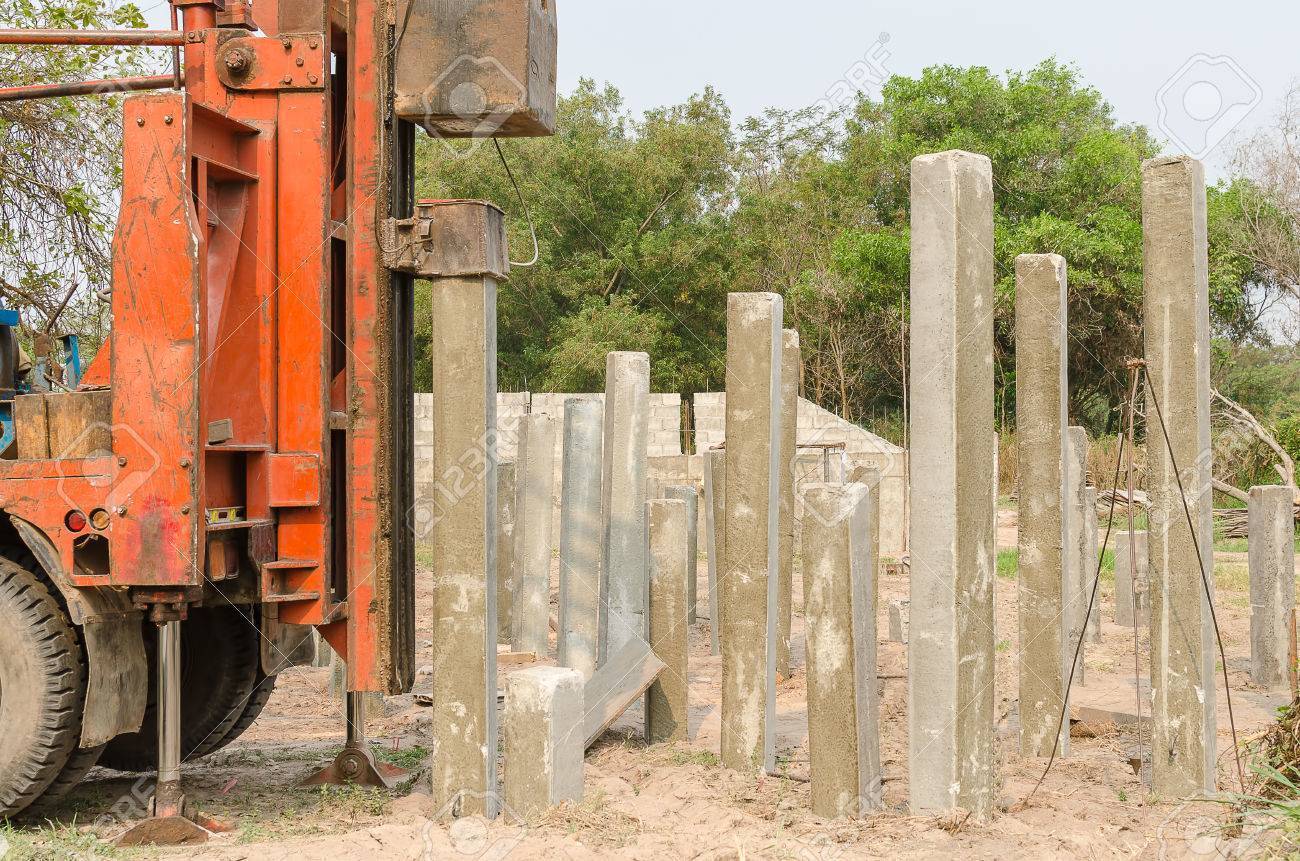
- lengths up to 18m with section sizez ranging from 250 x 250mm to 450 x 450mm carrying loadings up to 1000kN
- Problems (urban area)
- 1. transporting the complete length of pile through narrow / congested streets
- 2. the driving process - percussion can set up unacceptable noise / vibration
- Types
- 1. Precast Pretensioned Spun Concrete Piles - hollow pile by centrifugal spinning
- 2. Precast Reinforced Concrete Piles - reinforced with steel bars
- 3. Precast Pretensioned Concrete Piles - reinforced with pretensioned prestressing steel
- Steel
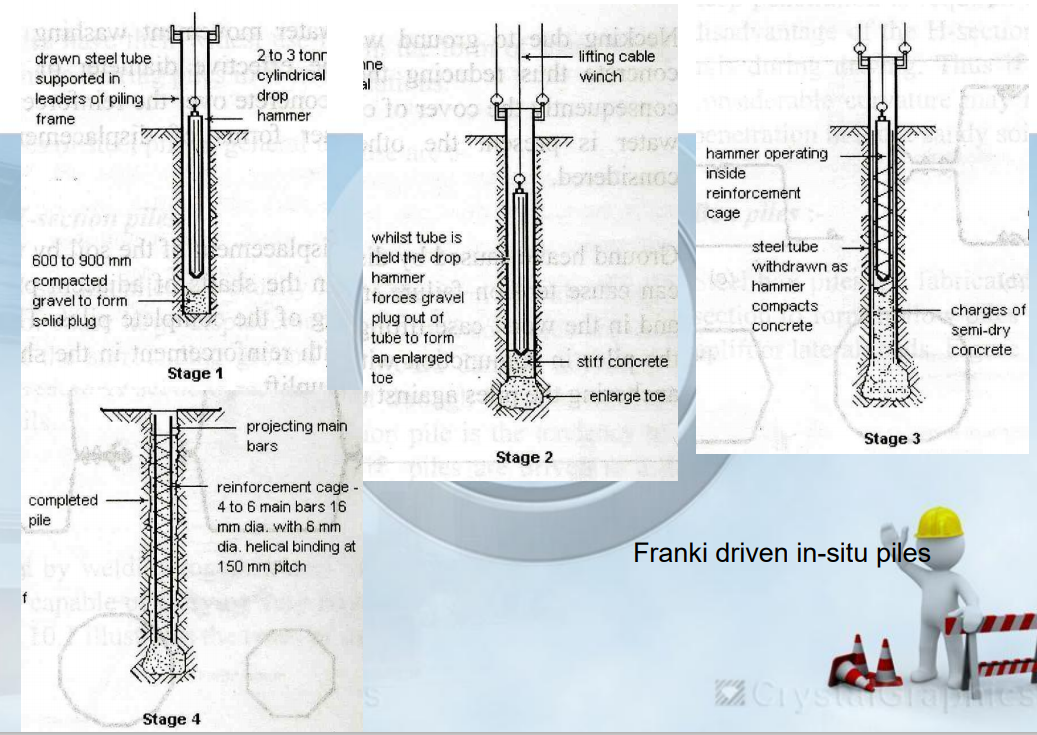
- DRIVEN and CAST IN PLACE PILES
- - suitable where the length of pile required varies.
- - economically formed in diameter of 300 to 600 mm and can carry loads of up to 1300 kN
- - required heavy piling rig, open level site and site where noise is restricted
- - economically formed in diameter of 300 to 600 mm and can carry loads of up to 1300 kN
- - suitable where the length of pile required varies.
- Types
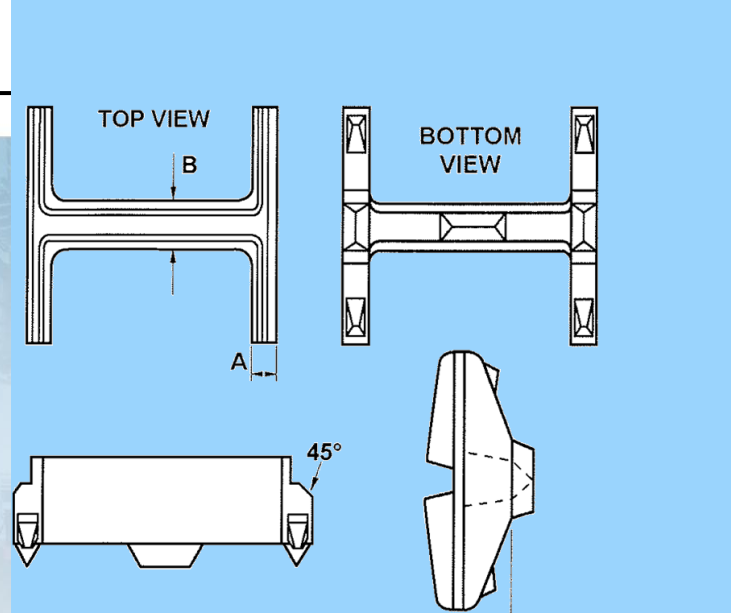
- H-section pile - in the form of wide flange sections
- disadvantage - tendency to bend on the weak axis during driving
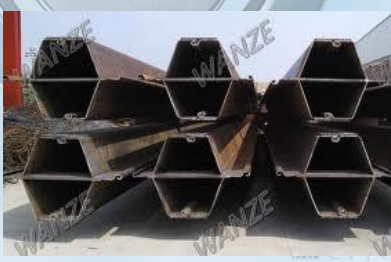
- Box piles - fabricated by welding together steel plates
- H-section pile - in the form of wide flange sections
- DRIVEN and CAST IN PLACE PILES
- Timber
- Materials
- Driven piles - preformed unit driven into the soils by blows of hammer
- Replacement piles: A hole is form in the ground by removal of material from the ground and thus material is displaced by a concrete material formed in the ground
- Composite Piles
- Prestcore pile - formed inside a line bored hole
- Shell pile - suitable in waterlogged and soft substrata
- Cased pile - using steel strip / plate; formed into a continuous helix
- Factors of selection piles
- 1. Durability - precast concrete pile suitable to use in marine condition, while timber is rejected
- 2. Ground Condition - influence the pile types and techniques
- 3. Location & type of structure
- BORED and CAST-IN-PLACES PILES
- Percussion Bored Piles - Suitable for clay / gravel
- Rotary Bored Piles - suitable for most cohesive soil; clay
- DRIVEN and CAST-IN- PLACE PILES
- 1. Necking - due to ground water movements washing away some of the concrete
- 2. Ground heave - caused by displacement of the soil by the drive tube
- 1. Rotary Drilling with kelly - cased
- used in all types of soil
- use where site conditions are restricted
- 2. Rotary Drilling with Kelly - Borehole supported by hydrostatics pressure
- 3. Rotary Drilling using twin rotary head - Front of Wall
- 4. Rotary drilling using flight auger - Continuous flight auger system
- Composite Piles
- Displacement piles: Piles are driven or pushed, vibrated or screwed into the ground, displacing the soil outwards and downwards but no materials are removed
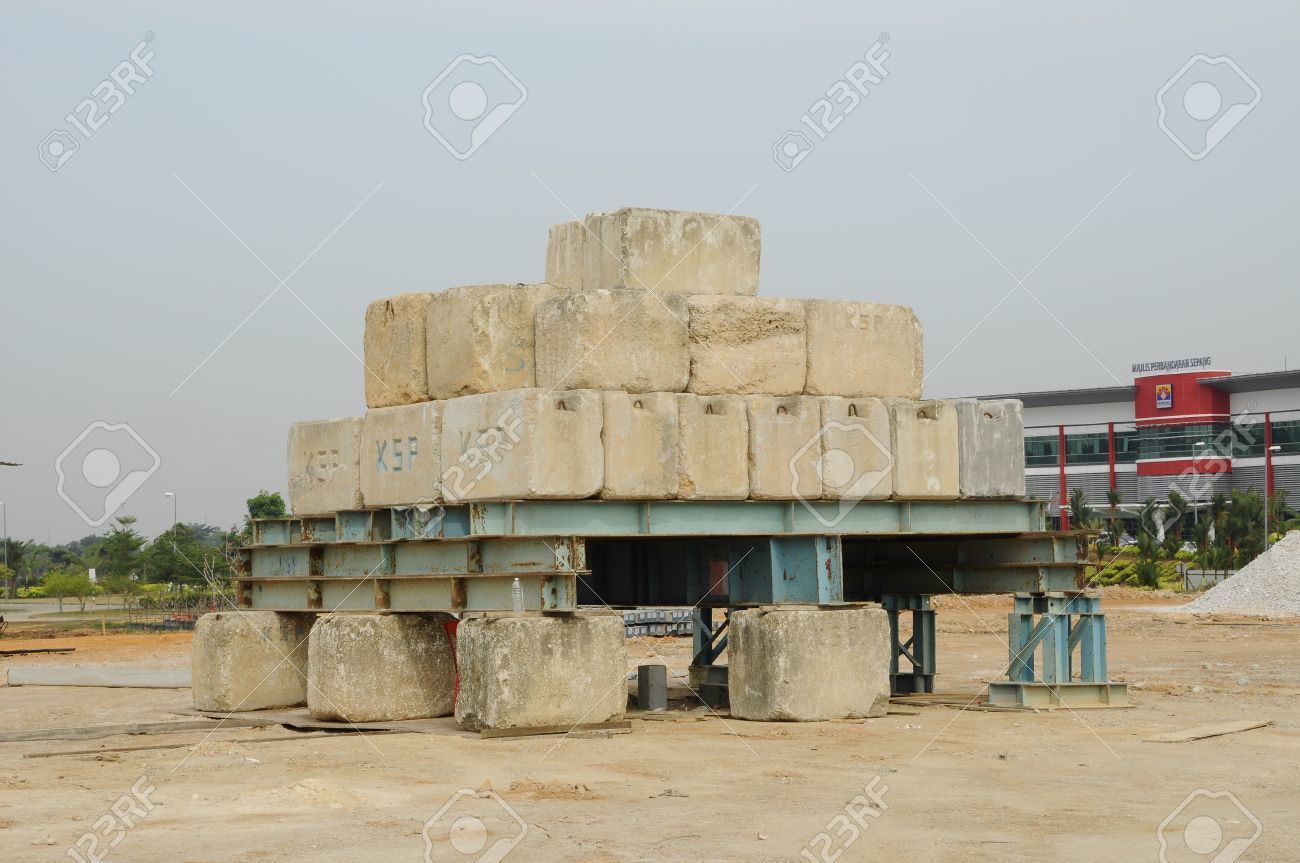
Load test
Bilder und Dateien der Mindmap
Informationen
- Beschreibung
- Mindmap am PILING, erstellt von izzati eliana am 15/06/2021.
- Erstellt von
- izzati eliana
- Aufrufe
- 0
- Bewertung