Mindmap
The 4 Cycles of Life
Inhalt der Mindmap
The 4 Cycles of Life
The Carbon Cycle
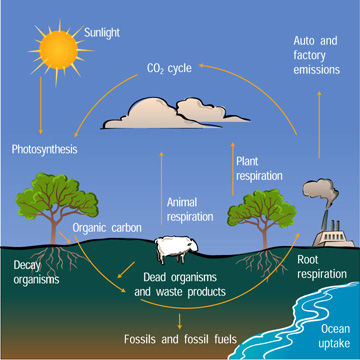
- Natural process of circulation of Carbon between the atmosphere and all living things.
- Forms 0.04% of the Earth's atmosphere
- Green Plants use Carbon Dioxide to make sugars and Oxygen
- The Carbon Cycle is the key mechanism by which energy from the sun is converted into chemical energy.
- Decomposers release Carbon Dioxide when decomposing dead organisms.
The Phosphorous Cycle
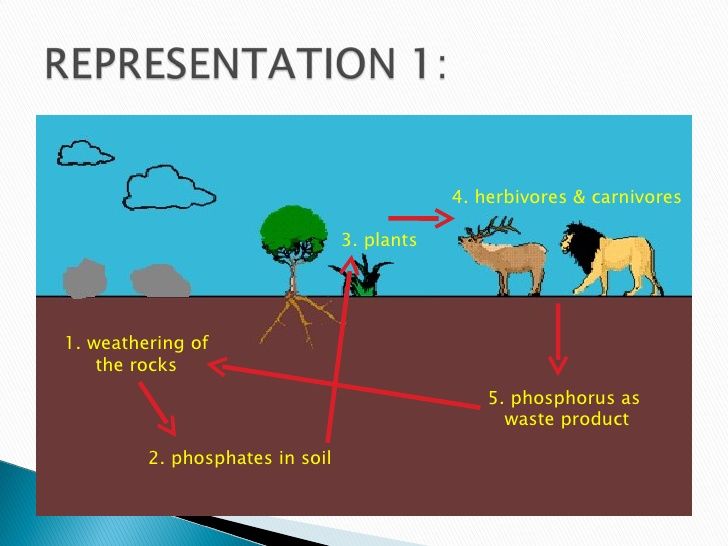
- Circulation of Phosphorous from rocks to living organisms and back again.
- Phosphorous is a very reactive element, usually found in rocks.
- The Phosphorous Cycle is way slower than all of the other cycles,
- Phosphate compounds in rocks are released as the rocks weather.
- Weathering is the breakdown of rocks by physical means and chemical means.
- The Phosphate dissolve in water and are taken up by plants for nutrients.
- When living organisms die, their phosphates are deposited back into the soil. Over very long periods, the soil forms rock and waits till erosion for the phosphate to get released.
- Phosphate compounds in rocks are released as the rocks weather.
The Water Cycle
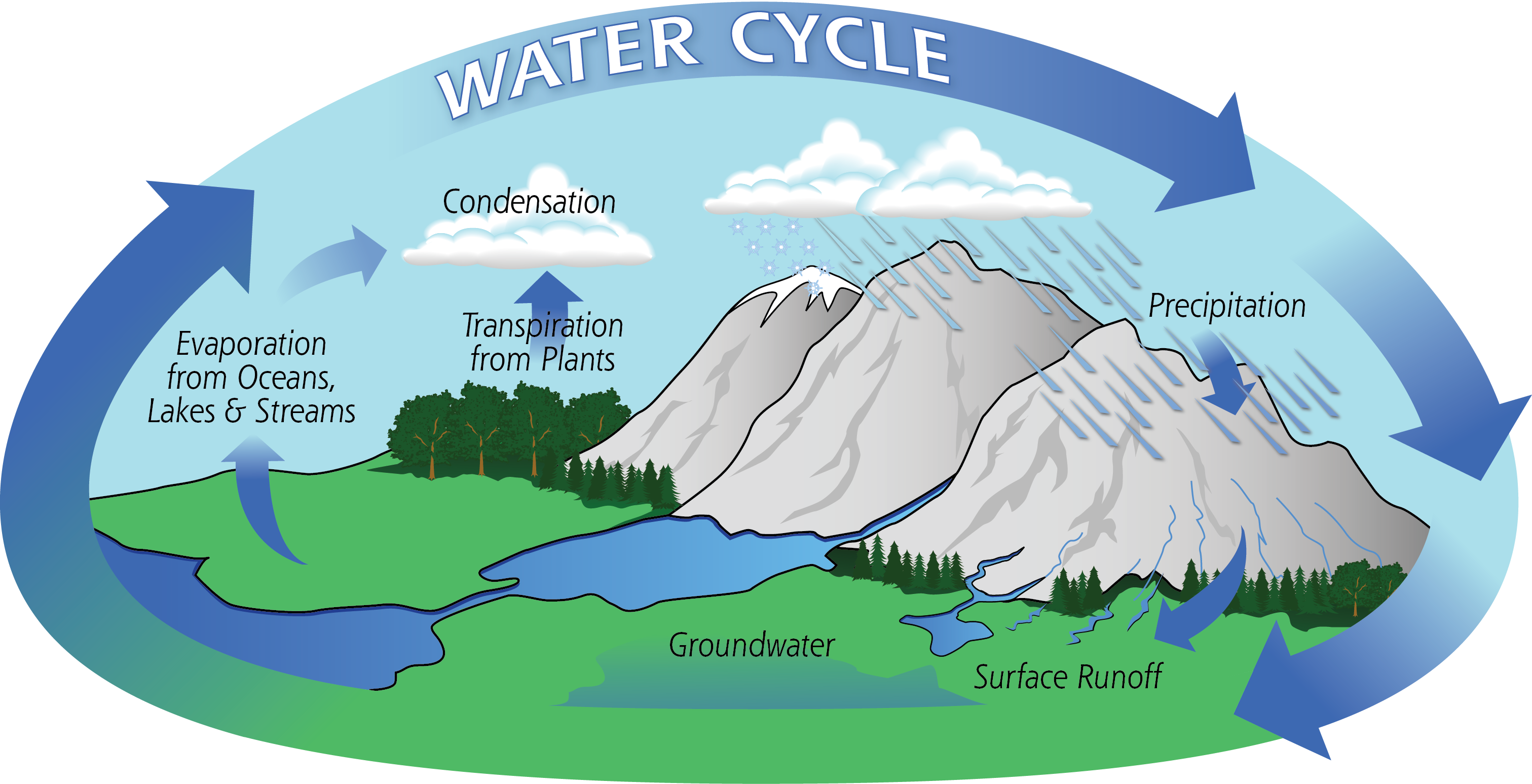
- The 3 main processes in Water Cycle are- Evaporation of Water, Condensation of Water vapour and finally precipitation.
- Water exists in three states - Solid (ice), Liquid and Gas(Water Vapour).
- The Water Cycle is driven by energy from the Sun.
- Ice is less dense than water, which means that it floats on water.
- Without the insulating layer offered by the ice surface, more and more of the ocean would freeze.
- The 3 main processes in Water Cycle are- Evaporation of Water, Condensation of Water vapour and finally precipitation.
The Nitrogen Cycle
- Most common gas in the air
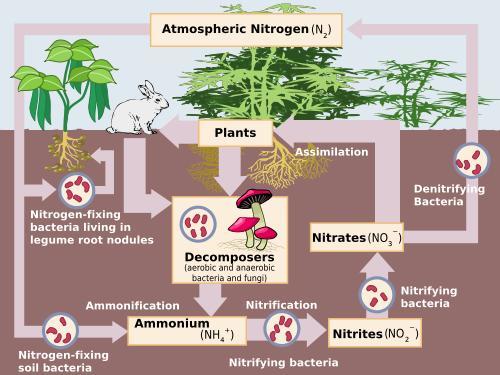
- Fixation is the process that makes Nitrogen available to all living Organisms.
- Fixation is the process that makes Nitrogen available to all living Organisms.
- Forms about 78% of the atmosphere
- Forms about 3% of the human body
- When Organisms die, the remains are broken down by decomposers, which release Nitrogen back to the atmosphere
- Forms about 3% of the human body
- Nitrogen cannot be directly absorbed by living things, it acts as its chemically inert.
- Nitrogen is fixed in the atmosphere by lightning, biologically by some bacteria and industrially in human processes to make fertilisers.
- Most common gas in the air