
Mindmap
Dairy Industry
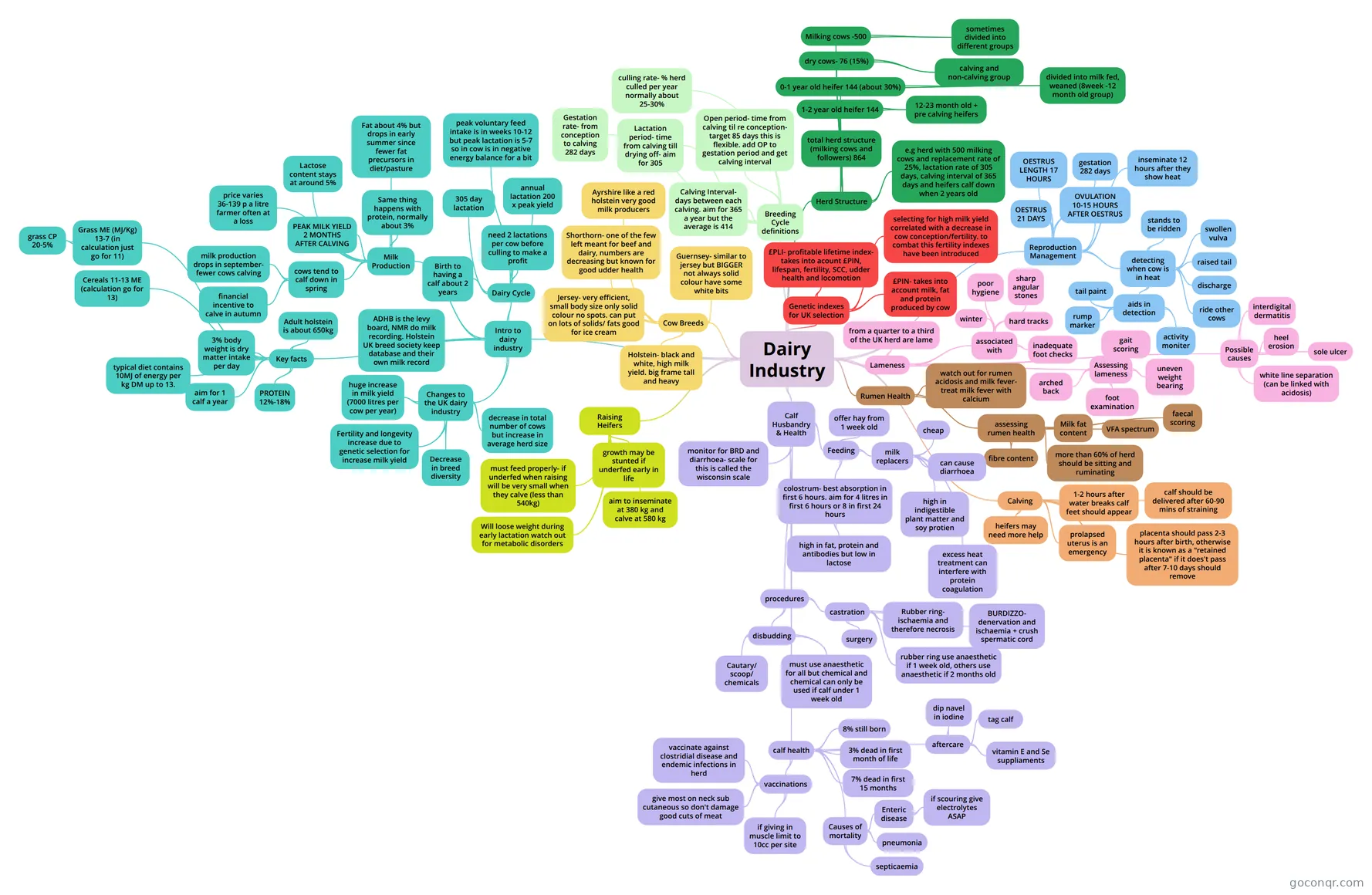
Mind map: Dairy industry
Inhalt der Mindmap
Dairy Industry
Intro to dairy industry
- ADHB is the levy board, NMR do milk recording. Holstein UK breed society keep database and their own milk record
- Changes to the UK dairy industry
- huge increase in milk yield (7000 litres per cow per year)
- Fertility and longevity increase due to genetic selection for increase milk yield
- Decrease in breed diversity
- decrease in total number of cows but increase in average herd size
- Milk Production
- cows tend to calf down in spring
- milk production drops in september- fewer cows calving
- financial incentive to calve in autumn
- PEAK MILK YIELD 2 MONTHS AFTER CALVING
- price varies 36-139 p a litre farmer often at a loss
- Lactose content stays at around 5%
- Fat about 4% but drops in early summer since fewer fat precursors in diet/pasture
- Same thing happens with protein, normally about 3%
- cows tend to calf down in spring
- Dairy Cycle
- Birth to having a calf about 2 years
- need 2 lactations per cow before culling to make a profit
- 305 day lactation
- annual lactation 200 x peak yield
- peak voluntary feed intake is in weeks 10-12 but peak lactation is 5-7 so in cow is in negative energy balance for a bit
- Key facts
- Adult holstein is about 650kg
- 3% body weight is dry matter intake per day
- aim for 1 calf a year
- typical diet contains 10MJ of energy per kg DM up to 13.
- PROTEIN 12%-18%
- Grass ME (MJ/Kg) 13-7 (in calculation just go for 11)
- grass CP 20-5%
- Cereals 11-13 ME (calculation go for 13)
Cow Breeds
- Holstein- black and white, high milk yield. big frame tall and heavy
- Jersey- very efficient, small body size only solid colour no spots. can put on lots of solids/ fats good for ice cream
- Shorthorn- one of the few left meant for beef and dairy, numbers are decreasing but known for good udder health
- Ayrshire like a red holstein very good milk producers
- Guernsey- similar to jersey but BIGGER not always solid colour have some white bits
Breeding Cycle definitions
- Calving Interval- days between each calving. aim for 365 a year but the average is 414
- Lactation period- time from calving till drying off- aim for 305
- Open period- time from calving til re conception- target 85 days this is flexible. add OP to gestation period and get calving interval
- Gestation rate- from conception to calving 282 days
- culling rate- % herd culled per year normally about 25-30%
Genetic indexes for UK selection
- £PIN- takes into account milk, fat and protein produced by cow
- £PLI- profitable lifetime index- takes into acount £PIN, lifespan, fertility, SCC, udder health and locomotion
- selecting for high milk yield correlated with a decrease in cow conception/fertility. to combat this fertility indexes have been introduced
Herd Structure
- e.g herd with 500 milking cows and replacement rate of 25%, lactation rate of 305 days, calving interval of 365 days and heifers calf down when 2 years old
- Milking cows -500
- sometimes divided into different groups
- dry cows- 76 (15%)
- calving and non-calving group
- 0-1 year old heifer 144 (about 30%)
- divided into milk fed, weaned (8week -12 month old group)
- 1-2 year old heifer 144
- 12-23 month old + pre calving heifers
- total herd structure (milking cows and followers) 864
Reproduction Management
- OESTRUS 21 DAYS
- OESTRUS LENGTH 17 HOURS
- OVULATION 10-15 HOURS AFTER OESTRUS
- gestation 282 days
- inseminate 12 hours after they show heat
- detecting when cow is in heat
- stands to be ridden
- swollen vulva
- raised tail
- discharge
- ride other cows
- aids in detection
- tail paint
- rump marker
- activity moniter
Lameness
- from a quarter to a third of the UK herd are lame
- associated with
- winter
- poor hygiene
- sharp angular stones
- hard tracks
- inadequate foot checks
- Assessing lameness
- gait scoring
- uneven weight bearing
- arched back
- foot examination
- Possible causes
- interdigital dermatitis
- heel erosion
- sole ulcer
- white line separation (can be linked with acidosis)
Rumen Health
- watch out for rumen acidosis and milk fever- treat milk fever with calcium
- assessing rumen health
- Milk fat content
- fibre content
- VFA spectrum
- more than 60% of herd should be sitting and ruminating
- faecal scoring
Calving
- 1-2 hours after water breaks calf feet should appear
- calf should be delivered after 60-90 mins of straining
- heifers may need more help
- prolapsed uterus is an emergency
- placenta should pass 2-3 hours after birth, otherwise it is known as a "retained placenta" if it does't pass after 7-10 days should remove
Calf Husbandry & Health
- Feeding
- colostrum- best absorption in first 6 hours. aim for 4 litres in first 6 hours or 8 in first 24 hours
- high in fat, protein and antibodies but low in lactose
- milk replacers
- can cause diarrhoea
- high in indigestible plant matter and soy protien
- excess heat treatment can interfere with protein coagulation
- cheap
- offer hay from 1 week old
- colostrum- best absorption in first 6 hours. aim for 4 litres in first 6 hours or 8 in first 24 hours
- monitor for BRD and diarrhoea- scale for this is called the wisconsin scale
- procedures
- disbudding
- Cautary/ scoop/ chemicals
- must use anaesthetic for all but chemical and chemical can only be used if calf under 1 week old
- castration
- Rubber ring- ischaemia and therefore necrosis
- BURDIZZO- denervation and ischaemia + crush spermatic cord
- surgery
- rubber ring use anaesthetic if 1 week old, others use anaesthetic if 2 months old
- disbudding
- calf health
- 8% still born
- 3% dead in first month of life
- 7% dead in first 15 months
- Causes of mortality
- Enteric disease
- if scouring give electrolytes ASAP
- pneumonia
- septicaemia
- Enteric disease
- vaccinations
- vaccinate against clostridial disease and endemic infections in herd
- give most on neck sub cutaneous so don't damage good cuts of meat
- if giving in muscle limit to 10cc per site
- aftercare
- dip navel in iodine
- tag calf
- vitamin E and Se suppliaments
- Feeding
Raising Heifers
- must feed properly- if underfed when raising will be very small when they calve (less than 540kg)
- Will loose weight during early lactation watch out for metabolic disorders
- growth may be stunted if underfed early in life
- aim to inseminate at 380 kg and calve at 580 kg
Informationen
- Beschreibung
- Year 1 (Animal Husbandry) Mindmap am Dairy Industry, erstellt von Clodagh Mullins am 22/05/2017.
- Erstellt von
- Clodagh Mullins
- Aufrufe
- 3
- Bewertung