
Mindmap
Data Mining - Decision Trees
Inhalt der Mindmap
Data Mining - Decision Trees
CLASSIFICATION TECHNIQUES
- C4.5 (and its Java implementation called J48)
- Naive Bayesian Classifier
- To-Do: 15 slides; starts 2. page 79
- ADVANTAGES: easy to implement, very efficient, good results in many applications
- DISADVANTAGES: Assumption: class conditional independence, therefore loss of accuracy when the assumption is seriously violated (those highly correlated data sets)
- Hunt's Algorithm
- To-Do
- many others like: Rule Induction; Bayesian Networks; Support Vector Machine, K-Nearest Neighbor, Neural Networks, Genetic Algorithms, Fuzzy Classification
Impurity functions
- used to decide the splitting attribute
- Entropy
- Gini
- To-Do
EVALUATION
- What to evaluate
- Predictive Accuracy
- Accuracy = (# of correct classifications) / (# of all cases) Error = 1 - Accuracy
- Accuracy is not suitable in some cases!
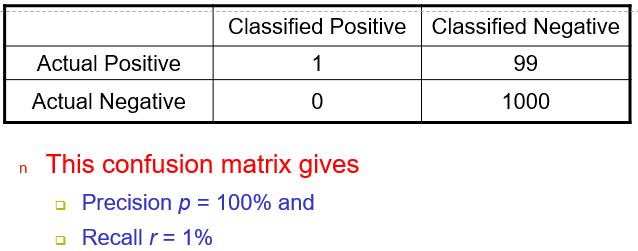
- Classifying skewed or highly imbalanced data, e.g., network intrusion and financial fraud detection, searching for documents of particular topic; we are interested only in the minority class. High accuracy does not mean any intrusion is detected. e.g., 1% intrusion. Achieve 99% accuracy by doing nothing. The class of interest is commonly called the positive class, and the rest negative classes.
- Efficiency
- time to construct the model or to use the model
- Robustness
- handling noise and missing values
- Scalability
- efficiency in disk-resident databases
- Interpret-ability
- understandable and insight provided by the model
- Compactness
- of the model: size of the tree, or the number of rules
- Predictive Accuracy
- Methods/Techniques
- Holdout set (Test set)
- Used when the data set is large. The available data set D is divided into two disjoint subsets: training set (learning a model) and test set (testing the model)
- Important: training set should not be used in testing and the test set should not be used in learning. Unseen test set provides a unbiased estimate of accuracy.
- Used when the data set is large. The available data set D is divided into two disjoint subsets: training set (learning a model) and test set (testing the model)
- N-fold cross-validation
- Used when the data set is not large. The available data is partitioned into n equal-size disjoint subsets. Use each subset as the test set and combine the rest n-1 subsets as the training set to learn a classifier. The procedure is run n times, which give n accuracies. The final estimated accuracy of learning is the average of the n accuracies. 10-fold and 5-fold cross-validations are common.
- Leave-one-out cross-validation
- Used when the data set is very small. It's a special case of cross-validation. Each fold of the cross validation has only a single test instance and all the rest of the data is used in training. If the original data has m instances, this is m-fold cross-validation
- Validation set
- The data set is divided into three subsets, a training set, a validation set and a test set.Used frequently for estimating parameters in learning algorithms (Cross-validation can be used too). The values that give the best accuracy on the validation set are used as the final parameter values.
- Holdout set (Test set)
- CLASSIFICATION MEASURES
- Precision and Recall
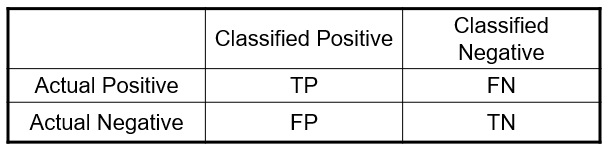
- Used in information retrieval and text classification. We use a confusion matrix to introduce them. Precision and Recall only measure classification on the positive class.
- Confusion Matrix
- TP: correctly classified positive instances FN: FP: TN:
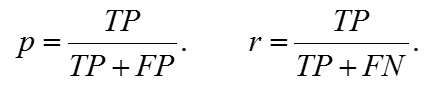
- Precision p = (correctly classified positive instances) / (total instances classified as positive)
- Recall r = (correctly classified positive instances) / (total number of actual positive instances in the test set.)
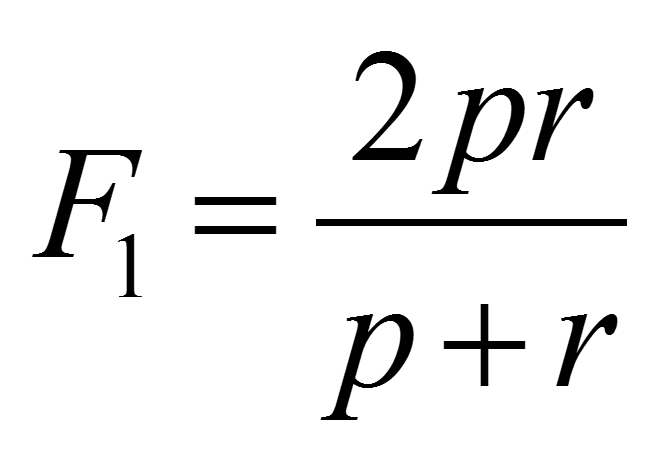
- F1-value (aka F1-score)
- It is hard to compare two classifiers using two measures. F1 score combines precision and recall into one measure.
- ROC curve
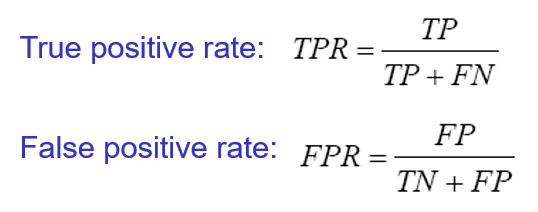
- Receive Operating Characteristics curve. It's a plot of TPR against FPR.
- Sensitivity
- Same as TPR
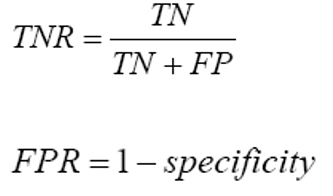
- Specificity
- True Negative Rate
- Precision and Recall
- What to evaluate
Bilder und Dateien der Mindmap
Informationen
- Beschreibung
- Mindmap am Data Mining - Decision Trees, erstellt von Matt C am 27/05/2017.
- Erstellt von
- Matt C · Mai 2017
- Aktualisiert
- 27 Mai 2017
- Aufrufe
- 0
- Bewertung