
11229812
Beschreibung

Mindmap von Francisco Guzman, aktualisiert more than 1 year ago

|
Erstellt von Francisco Guzman
vor etwa 8 Jahre
|
|
Forms of procurement procedures
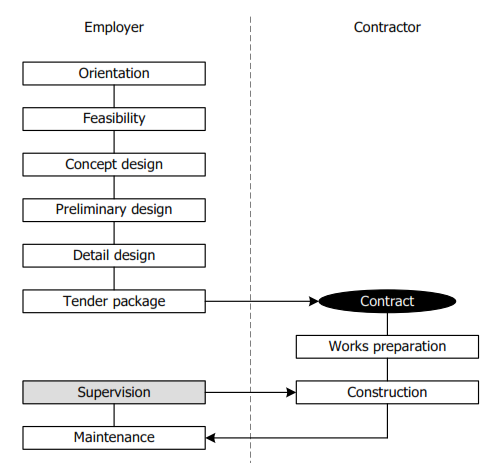
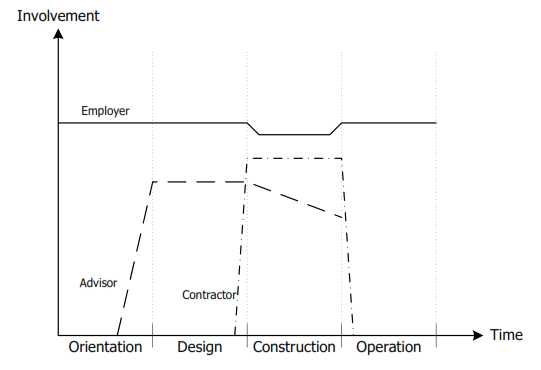
- Design Bid Build
- Characteristics
- Clear distinction between
employer and contractor
- Employer designs
and controls
- Contractor builds
- Employer designs
and controls
- Clear distinction between
employer and contractor
- Advantages
- No discussion, standard
contract clauses
- No discussion, standard
contract clauses
- Disadvantages
- The contractor doesn't
contribute in any other phase
- Irregularities between
design and construction
- The contractor doesn't
contribute in any other phase
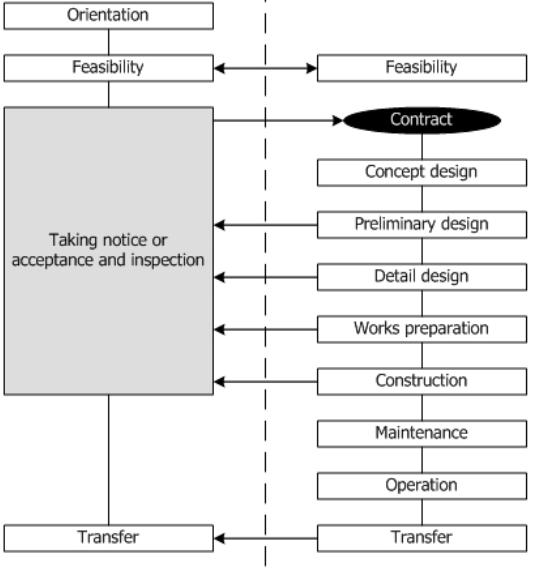
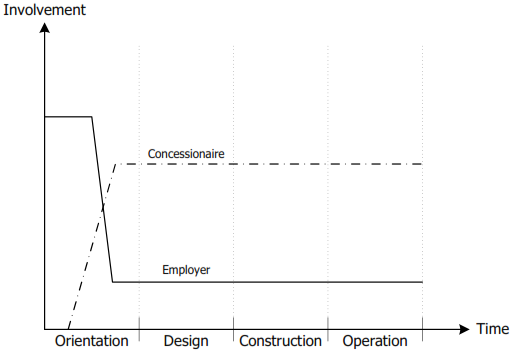
- Position in the
building process
- Liabilities
- Employer for
the design
- Contractor for
the construction
- Remains liable in case
of damages to the
project for a period of
time after construction
- Remains liable in case
of damages to the
project for a period of
time after construction
- Employer for
the design
- Characteristics
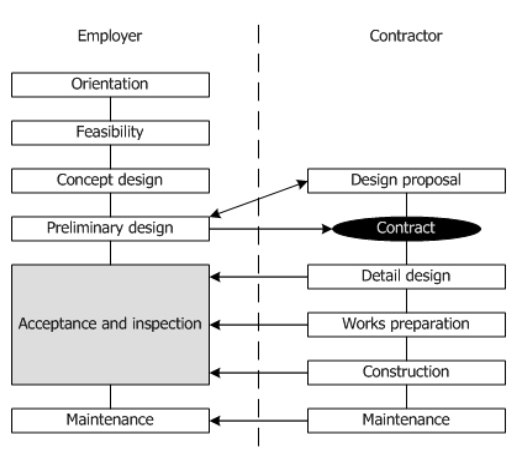
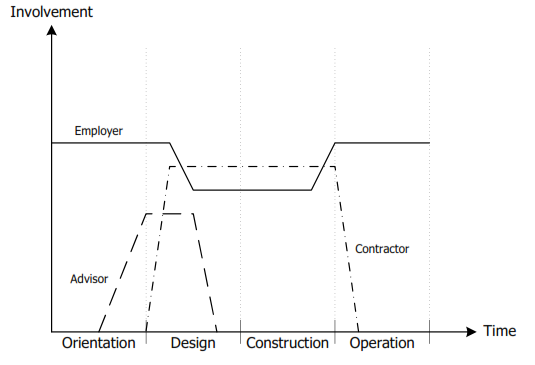
- Design-Build
- Characteristics
- Employers involvement concerns
mainly the definition and quality
assurance system of the project
- Employers involvement concerns
mainly the definition and quality
assurance system of the project
- Advantages
- Employer
- Deals with only one party
- Cost ant time estimates
are more reliable
- Consultancy costs
can be reduced
- Execution of
works is
improved
- Deals with only one party
- Contractor
- Put themselves
in a strategic
market position
- Project harmony
is improved,
design-construction
- Put themselves
in a strategic
market position
- Employer
- Disadvantages
- Employer
- Limited competition, not
many companies can do this
- Limited competition, not
many companies can do this
- Contractor
- All responsibilities
- All responsibilities
- Employer
- Position in the
building process
- Liabilities
- Unknowns belong
to the employer
- Uncertainties belong
to the contractor
- Unknowns belong
to the employer
- Characteristics
- Design-Build (with repayable performance)???
- Characteristics
- Most risks are assigned
to a single party
- Fixed price
based on an
initial concept
- Associated with some
preformance targets
- Price is based on
expected uncertainties,
but not unforseable ones
- Associated with some
preformance targets
- The employer prescribes how
performance will be measured
- The model relies on performance
measurements made during the
building process and completion
- Extra work is paid by a
predefined formula
taking possible
variations into account
- Extra work is paid by a
predefined formula
taking possible
variations into account
- Most risks are assigned
to a single party
- Advantages
- Employer
- He does not pay for
risks that do not occur
- There is competition
in a value-price basis
- He has influence
on the product
- He does not pay for
risks that do not occur
- Contractor
- Higher level
competition
- Less risks
- Higher level
competition
- Room for innovation
- Employer
- Liabilites
- Every party deals with their
own work, no overlapping
- Every party deals with their
own work, no overlapping
- Characteristics
- Build Operate Transfer
- Characteristics
- Similar to EPC model +
maintenance and
exploitation stages
- Consortium of parties
- Contractor
- Investor
- Operator
- Financer and/or
project developer
- Contractor
- Feasible when there is a
need for a project but
no funds to start it
- Similar to EPC model +
maintenance and
exploitation stages
- Advantages
- The government can
provide for a social need
without carrying the
financial burden for it
- Public facility obtained without
investing any funds in it
- The government can
provide for a social need
without carrying the
financial burden for it
- Disadvantages
- Depends on external factors
such as economy, politics,
social context and environment
- Depends on external factors
such as economy, politics,
social context and environment
- Liabilities
- All risks are responsibilities of the consortium
- All risks are responsibilities of the consortium
- Position in the
building process
- Characteristics
Medienanhänge
Möchten Sie kostenlos Ihre eigenen Mindmaps mit GoConqr erstellen? Mehr erfahren.