
Mindmap
Reading instruction: Early reading
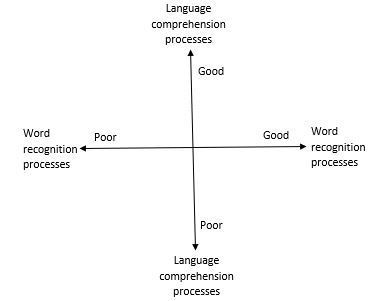
Inhalt der Mindmap
Reading instruction: Early reading
Whole language vs. phonics
- Phonics
- Involves directly teaching letter-sound correspondences
- Popular methods of instruction even in the 1800's
- A munber of phonics approaches used today bear close resemblance to those used in the past
- Early resistance to phonics
- Potential for boredom
- Specific texts from phonics programmes
- Influence of Gestallt psychology/ philosophy - holistic view of visual processing
- Potential for boredom
- Whole language
- Focus on contextual knowledge, contextual cues thought to be as useful as orthographic cues, reading development linked to language development, linked to progressive education - active child learners can figure things out for themselves
- Inappropriate cueing
- By pictures - purpose is to read and understand but picture may give an answer without understanding the question
- Blackout technique
- Cover inappropriate cue to see if understood the question
- Impact on reading instruction
- Encourages guessing based on meaning
- Emphasis on authentic literature - minimising phonics and phonics influenced texts
- Learning to read isn't a natural development
- Liberman and Liberman (1991)
- Learning to read is gained knowledge of teaching and practicing a convention for the written representation of a language
- Reading is not generally inherent in human development
- Liberman and Liberman (1991)
- Phonics
Simple view of reading
- Gough and Tunmer (1986)
- Reading = Decoding + comprehension
- Can be anywhere along the spectrum of both elements
- Reading = Decoding + comprehension
- Decoding alone is not sufficient, comprehension is also necessary. Comprehension alone is not sufficient, decoding is also necessary
- Gough and Tunmer (1986)
5 components of reading instruction
- 1. Phonemic awareness
- Recognising words are made up of different sounds, and being able to manipulate these sounds
- 2. Phonics
- Learning how these sounds corresponds to letters
- 3. Oral reading fluency
- Fluently reading text with expressiom
- 4. Vocabulary
- Understanding words in text through linking with oral vocabulary
- 5. Comprehension
- Directly teach strategies to comprehend
- 1. Phonemic awareness
National reading panel: phonics instruction
- Phonics-based approaches have been found to be effective in teaching early reading
- First graders who were taught phonics systematically were better able to decode and spell, and they showed significant improvement in their ability to comprehend text
- Assumption that younger children not ready for such instruction was not supported by data
- Effects of early and systematic phonics instruction was substantial
The role of pseudowords
- The purest measure of decoding is the ability to pronounce pseudowords
- The Government have introduced a non-word reading test to be administrated at the end of year 1, with a view to ensuring that children who need extra help are given it before it's too late
- 43% of teachers in the trial said the test had helped them identify children struggling who would otherwise have slipped through the net
Reaction from the UK literacy association
- To understand what we read we need to have the linguistic comprehension
- Without the ability to decode, no amount of linguistic comprehension will make a reader
- Important skill to be able to derive meaning from context, but should be able to decode the words in isolation
Ongoing resistance to phonics
- Deep/opaque orthography of English
- However doesn't preclude the use of phonic-based instruction when teaching English
- Prevailing resistance
- Still misconceptions of reading processes and people failing to understand the component skills involved in reading
- Insufficient training to deliver high quality phonics instruction
- Deep/opaque orthography of English
Reading instruction with SEN children
- Only 50.8% of SEN school teachers had received specific SEN teaching
- 61% had received some form of teaching in reading instruction
- Only 42.1% had received training specific to reading instruction for SEN children
- 61% had received some form of teaching in reading instruction
- Over 40% measure termly or twice annually, 10% only measured once annually
- Only 50.8% of SEN school teachers had received specific SEN teaching
Bilder und Dateien der Mindmap
Informationen
- Beschreibung
- EBBMiE Mindmap am Reading instruction: Early reading, erstellt von Lacey Jones am 01/01/2018.
- Erstellt von
- Lacey Jones · Jan 2018
- Aktualisiert
- 1 Jan 2018
- Aufrufe
- 0
- Bewertung