
Mindmap
organisational objectives
Inhalt der Mindmap
organisational objectives
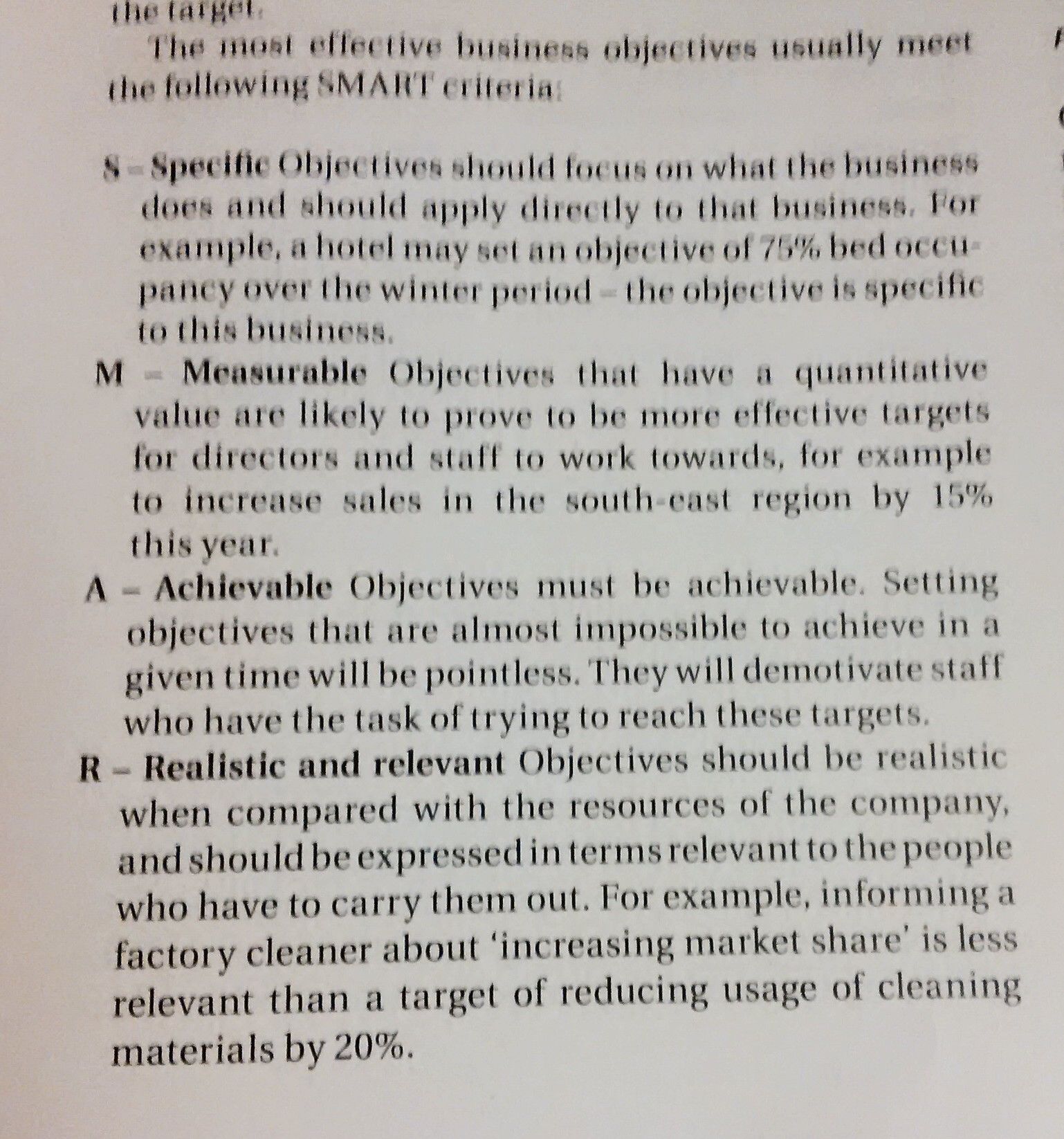
business aims help to direct, control & review success of business activity (the most effective business objectives meet the SMART criteria)
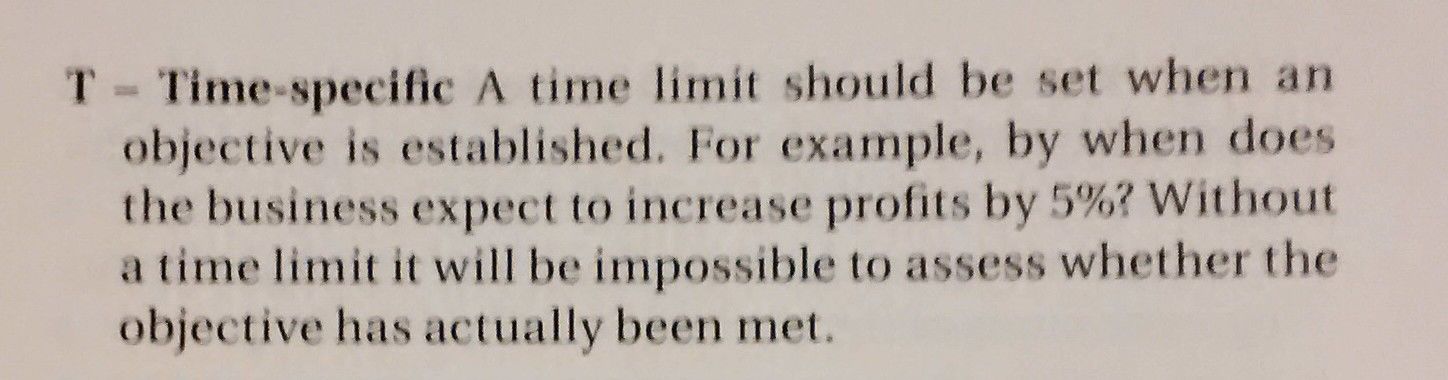
- S-pecific M-easurable A-chievable R-ealistic & relevant T-ime-specific
benefits of corporate aims: -they are the starting point for departmental objectives (on which effective management is based -they help develop a sense of purpose for the whole organisation if clearly & unambiguously communicated to the workforce -they allow assessments to be made after a while of how successfully the business has attained its goals -they provide the framework within which the plans/srategies of the business can be drawn up -having goals makes them work effectively & purposefully so customers would be attracted to them
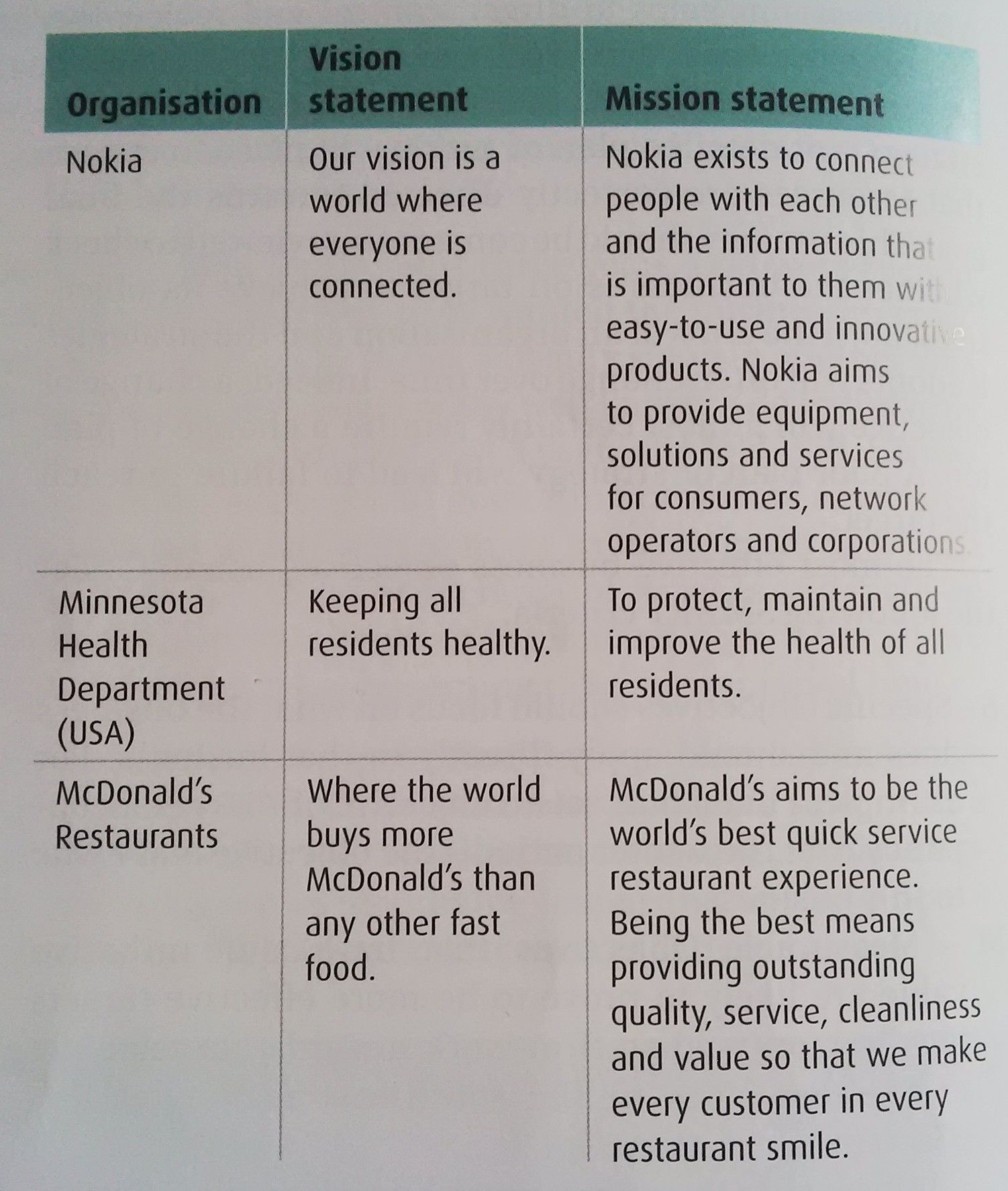
- mission statement - a statement of the businesses's core aims put in a way to motivate employees & encourages interest in outside groups. it usually answers these: -what do we do? -for whom do we do it? (benefits kind of similar to corp. aims)
- vision statement - a statement of what the business hopes to achieve in the long term
- arguments in favour of m&v statements: -they quckly inform outside groups what the business's central aim & vision are -they help motivate employees (e.g. when a business is looked upon as environmentally friendy, the employees will be associated with those positive qualities -where they include ethical statements, they help guide/direct employee behaviour -they help establish what the business is about in the eyes of other groups
- on the other hand, m&v statements are criticised for being: -too vague & unspecific(sometimes inapplicable) about the business or its future plans -based on a public relations exercise o make stakeholders 'like' or 'trust' the business -basically impossible to analyse or disagree with -rather lacking in detail so that two totally different businesses may have very similar mission statements
- arguments in favour of m&v statements: -they quckly inform outside groups what the business's central aim & vision are -they help motivate employees (e.g. when a business is looked upon as environmentally friendy, the employees will be associated with those positive qualities -where they include ethical statements, they help guide/direct employee behaviour -they help establish what the business is about in the eyes of other groups
- vision statement - a statement of what the business hopes to achieve in the long term
- mission statement - a statement of the businesses's core aims put in a way to motivate employees & encourages interest in outside groups. it usually answers these: -what do we do? -for whom do we do it? (benefits kind of similar to corp. aims)
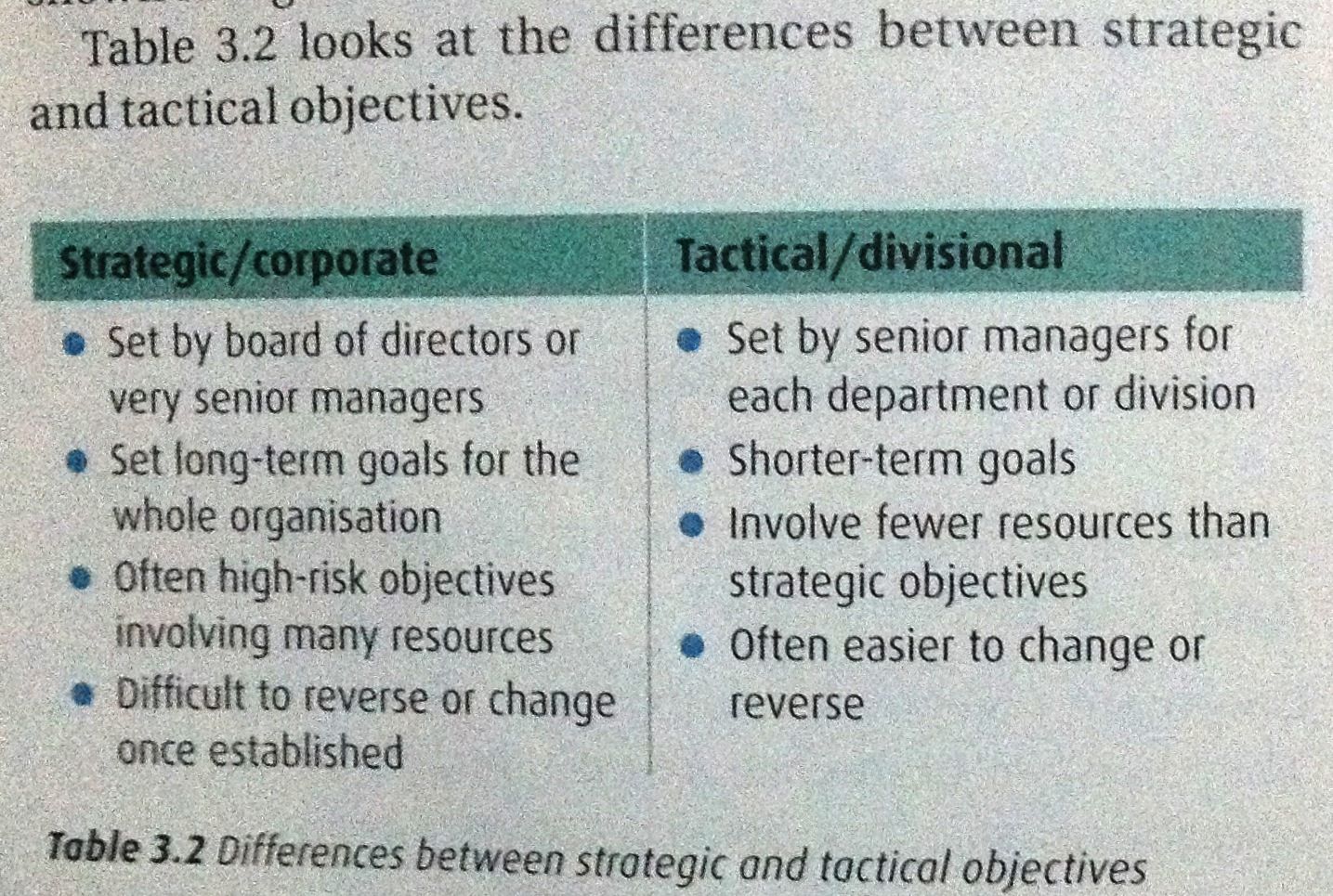
corporate(/strategic) objectives - targets that a business must reach to achieve its overall aim
- common objectives: -profit maximisation -meeting the minimum requirements for profit -growth -survival -increasing market share
- profit maximisation: maximum profit is achieved at the production level in which there is greatest positive difference between total revenue & total costs (profits are needed to reward investors in a business, finance further growth, for entrepreneurs to take risks)
- limits with profit maximisation: -high short-term profits may lead competitors to enter the market -many businesses seek to maximise sales to secure greatest market shares possible -owners of small businesses may be more concerned with issues of independence & keeping control rather than maximising profit -most business analysts assess business performance through the rate of profit returned on each dollar invested rather than total profit -stakeholders of a business have concerns other than profit maximisation e.g. job security, environmental concerns & this forces many businesses to modify their decisions, causing lower profit levels -practically, it is difficult to assess whether maximum profit has been achieved & constant changes to price and output in attempt to achieve it may lead to negative consumer reactions
- meeting the minimum requirements for profit: this is aiming to achieve enough profit but not willing to work flat out to make as much profit as possible (this is often the objective of owners of small businesses who want to make money/live comfortably but not work long hours to achieve that)
- growth: the growth of a business(i.e. in sales or output value) has benefits like: -larger firms are less likely to be taken over -managers may gain higher salaries &fringe benefit. Firms that do not attempt to grow may stop being competitive, may not look profitable to investors
- business objectives based on growth have limitations: -excessively rapid expansion can lead to cash-flow problems -sales growth might be achieved at the expense of lower profit -larger businesses can experience diseconomies of scale -using retained profits to finance growth may lead to lower short-term returns for shareholders -growth into new business areas & activities away from the businesses core activities can result in a loss of focus & direction for the business
- increasing market share: this is similar to business growth. It is also possible for an expanding business to suffer loss of market share i.e. when the market is growing at a faster rate than the business. Increasing market share indicates that the business's market mix is more successful than that of its competitors
- benefits of having the highest market share(being the brand leader): -retailers will be keen to stock & promote the best-selling brand -because retailers are so keen to stock it, profit margins offered to retailers may be lower than that offered by competing brands, this leaves more profit for the producer -effective promotional campaigns are often based on 'buy our product with confidence' because the business/company is the brand leader
- survival: probably the key objective of most new businesses, the high failure of new businesses means that survival in the first two years is an important aim, after the firm is established, other long-term objectives can be given focused on more
- benefits of having the highest market share(being the brand leader): -retailers will be keen to stock & promote the best-selling brand -because retailers are so keen to stock it, profit margins offered to retailers may be lower than that offered by competing brands, this leaves more profit for the producer -effective promotional campaigns are often based on 'buy our product with confidence' because the business/company is the brand leader
- increasing market share: this is similar to business growth. It is also possible for an expanding business to suffer loss of market share i.e. when the market is growing at a faster rate than the business. Increasing market share indicates that the business's market mix is more successful than that of its competitors
- business objectives based on growth have limitations: -excessively rapid expansion can lead to cash-flow problems -sales growth might be achieved at the expense of lower profit -larger businesses can experience diseconomies of scale -using retained profits to finance growth may lead to lower short-term returns for shareholders -growth into new business areas & activities away from the businesses core activities can result in a loss of focus & direction for the business
- growth: the growth of a business(i.e. in sales or output value) has benefits like: -larger firms are less likely to be taken over -managers may gain higher salaries &fringe benefit. Firms that do not attempt to grow may stop being competitive, may not look profitable to investors
- meeting the minimum requirements for profit: this is aiming to achieve enough profit but not willing to work flat out to make as much profit as possible (this is often the objective of owners of small businesses who want to make money/live comfortably but not work long hours to achieve that)
- limits with profit maximisation: -high short-term profits may lead competitors to enter the market -many businesses seek to maximise sales to secure greatest market shares possible -owners of small businesses may be more concerned with issues of independence & keeping control rather than maximising profit -most business analysts assess business performance through the rate of profit returned on each dollar invested rather than total profit -stakeholders of a business have concerns other than profit maximisation e.g. job security, environmental concerns & this forces many businesses to modify their decisions, causing lower profit levels -practically, it is difficult to assess whether maximum profit has been achieved & constant changes to price and output in attempt to achieve it may lead to negative consumer reactions
- profit maximisation: maximum profit is achieved at the production level in which there is greatest positive difference between total revenue & total costs (profits are needed to reward investors in a business, finance further growth, for entrepreneurs to take risks)
- common objectives: -profit maximisation -meeting the minimum requirements for profit -growth -survival -increasing market share
corporate social responsibility (CSR) - the concept applies to businesses that consider the interest of the society by taking responsibility for the impact of their decisions & activities on customers, communities, employees & the environment
- it is becoming increasingly important for business objectives to focus on meeting social responsibilities, reasons/consequences are: maximising short-term sales revenue( ) -maximising shareholder value( )
- some important issues relating to corporate objectives: -they must be based on & linked with the corporate aim -they should be SMART(list all when writing) -they should be communicated to employees & investors(when staff are informed of their own targets , the business is more likely to be sucesful -they form the framework for more specific departmental objectives
- conflicts between corporate objectives often occur, some common ones are: growth vs. profit(achieving higher sales by raising promotional expenses is likely to reduce short-term profits) -short-term vs. long-term(lower profits & cash flow may need to be accepted in the short term if managers decide to invest heavily in new technology or if the development of new products may lead to higher profits in the long run) -stakeholder conflicts( )
- factors determining corporate objectives: -corporate culture(this is the general code of behaviour & attitudes that influence the decision-making style of managers & employees in the business e.g. the business objectives of managers who value defeating rivalry and don't care about the environment & ones who are 'social or environment oriented will be very different
- -size & legal form of business: owners of small businesses may be concerned only with a satisficing profit level, while directors(not owners) such as in ltd & plc, might be more concerned with rapid business growth so as to increase the status & power of managers and also on bonuses, salaries, fringe benefits etc
- public sector or private sector businesses: public sector businesses tend not to have profit as a major objetive, they provide services like free education or health, so instead they have objectives like quality of service provided e.g. in the healthcare, they may measure the number of days a patient has to wait for an operation. on the other hand, private sector businesses usually have profit as their main goal
- well-established businesses: newly formed businesses would probably be driven by the desire to survive at all costs(as failure rate of very new firms is high), later on, when the business is well established, it may move on to pursue other objectives like growth & profit
- public sector or private sector businesses: public sector businesses tend not to have profit as a major objetive, they provide services like free education or health, so instead they have objectives like quality of service provided e.g. in the healthcare, they may measure the number of days a patient has to wait for an operation. on the other hand, private sector businesses usually have profit as their main goal
- -size & legal form of business: owners of small businesses may be concerned only with a satisficing profit level, while directors(not owners) such as in ltd & plc, might be more concerned with rapid business growth so as to increase the status & power of managers and also on bonuses, salaries, fringe benefits etc
- factors determining corporate objectives: -corporate culture(this is the general code of behaviour & attitudes that influence the decision-making style of managers & employees in the business e.g. the business objectives of managers who value defeating rivalry and don't care about the environment & ones who are 'social or environment oriented will be very different
- conflicts between corporate objectives often occur, some common ones are: growth vs. profit(achieving higher sales by raising promotional expenses is likely to reduce short-term profits) -short-term vs. long-term(lower profits & cash flow may need to be accepted in the short term if managers decide to invest heavily in new technology or if the development of new products may lead to higher profits in the long run) -stakeholder conflicts( )
- some important issues relating to corporate objectives: -they must be based on & linked with the corporate aim -they should be SMART(list all when writing) -they should be communicated to employees & investors(when staff are informed of their own targets , the business is more likely to be sucesful -they form the framework for more specific departmental objectives
- it is becoming increasingly important for business objectives to focus on meeting social responsibilities, reasons/consequences are: maximising short-term sales revenue( ) -maximising shareholder value( )
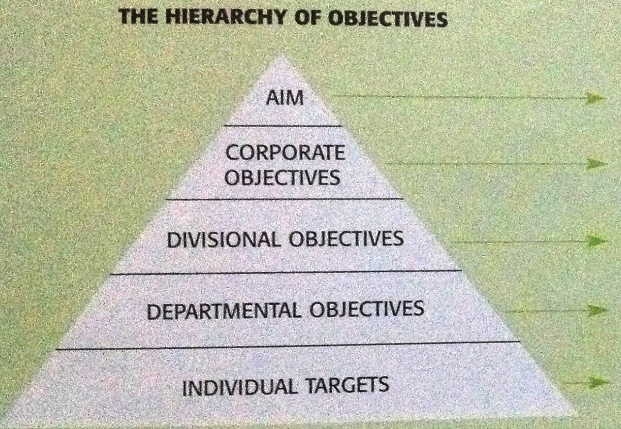
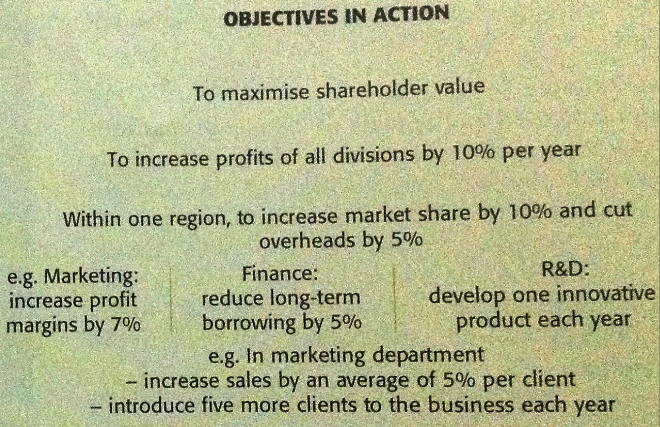
interrelated objectives, strategies & tactics: corporate objectives relate to the whole organisation & need to be broken down into specific tactical or operational aims for separate divisions
- tactical/operational objectives - short or medium-term goals which an organisation must achieve to attain its corporate objectives
- divisional, tactical objectives are set by senior managers to ensure: -co-ordination, unity, focus between all divisions(if not the organisation will appear unserious to outsiders) -consistency with strategic corporate objectives -adequate resources are provided to allow for the successful achievement of the objectives
- the division of corporate aims at every level in the organisation. Once divisional objectives have been established, they can be further divided into departmental objectives & then budgets and targets for the individual worker, this process is called management by objectives(MBO)
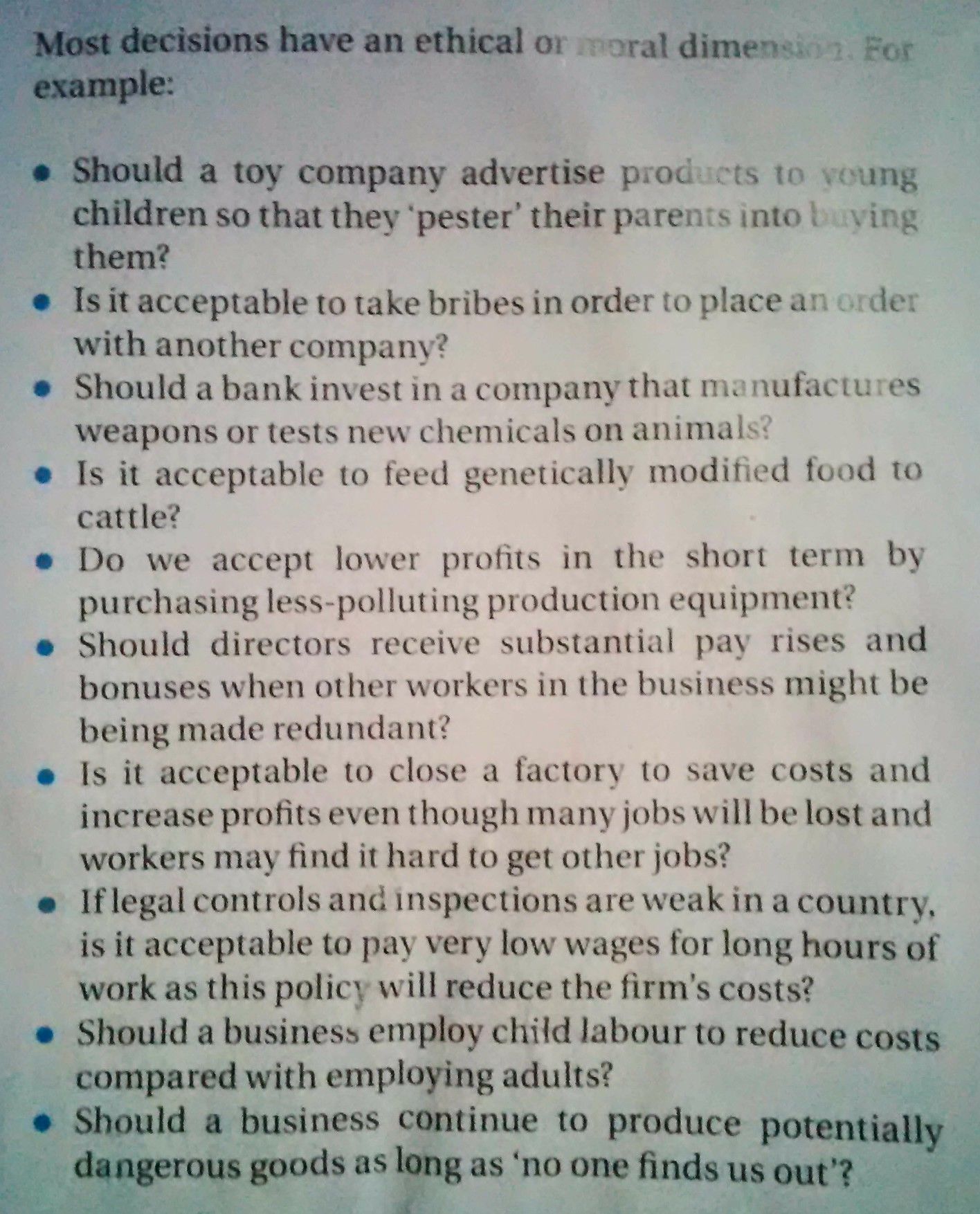
- ethical objectives - targets based on a moral code for business ethics - moral guidelines that determine decision-making
- ethical code(code of conduct) - a document detailing a company's rules & guidelines on staff behaviour that must be followed by all employees
- keeping to a strict ethical code in decision-making can be expensive in the short term e.g. -using ethical & fairtrade suppliers can add to costs -not taking bribes to secure contracts can mean losing out on significant sales -accepting that it's wrong to fix prices with competitors might lead to lower prices & profits -paying fair wages, even in very low-wage economies, raises costs & reduces the business' competitiveness against businesses that exploit workers
- however in the long term, there are substantial benefits from acting ethically e.g. -court cases which add to costs can be avoided -ethical policies will lead to good publicity & sales because they gain consumer loyalty -ethical business attract ethical consumers & as world pressure increases for CSR, this group of consumers will grow -ethical businesses are more likely to be awarded government contracts -well-qualified staff may be attracted to work with companies that have ethically & socially responsible policies
- keeping to a strict ethical code in decision-making can be expensive in the short term e.g. -using ethical & fairtrade suppliers can add to costs -not taking bribes to secure contracts can mean losing out on significant sales -accepting that it's wrong to fix prices with competitors might lead to lower prices & profits -paying fair wages, even in very low-wage economies, raises costs & reduces the business' competitiveness against businesses that exploit workers
- ethical code(code of conduct) - a document detailing a company's rules & guidelines on staff behaviour that must be followed by all employees
- ethical objectives - targets based on a moral code for business ethics - moral guidelines that determine decision-making
- the division of corporate aims at every level in the organisation. Once divisional objectives have been established, they can be further divided into departmental objectives & then budgets and targets for the individual worker, this process is called management by objectives(MBO)
- divisional, tactical objectives are set by senior managers to ensure: -co-ordination, unity, focus between all divisions(if not the organisation will appear unserious to outsiders) -consistency with strategic corporate objectives -adequate resources are provided to allow for the successful achievement of the objectives
- tactical/operational objectives - short or medium-term goals which an organisation must achieve to attain its corporate objectives
Bilder und Dateien der Mindmap
Informationen
- Beschreibung
- Mindmap am organisational objectives, erstellt von ob:) am 22/10/2014.
- Erstellt von
- ob:)
- Aufrufe
- 8
- Bewertung