
Business Aims, Objectives and Stakeholders
712 resources created by 587 users
This Business Aims, Objectives and Stakeholders page on GoConqr gathers community-made mind maps, flashcards, quizzes and notes, from mission statements and SMART objectives to stakeholder mapping and corporate culture. It's built for school students revising a topic, and for teachers after ready-made material, with a little for university students too. There are over 600 resources here, including more than 10 quizzes and over 500 mind maps, with GCSE, IGCSE, A-level and IB wording throughout. Pick a starting point, try a quiz, then make your own set.
Top Business Aims, Objectives and Stakeholders resources
-
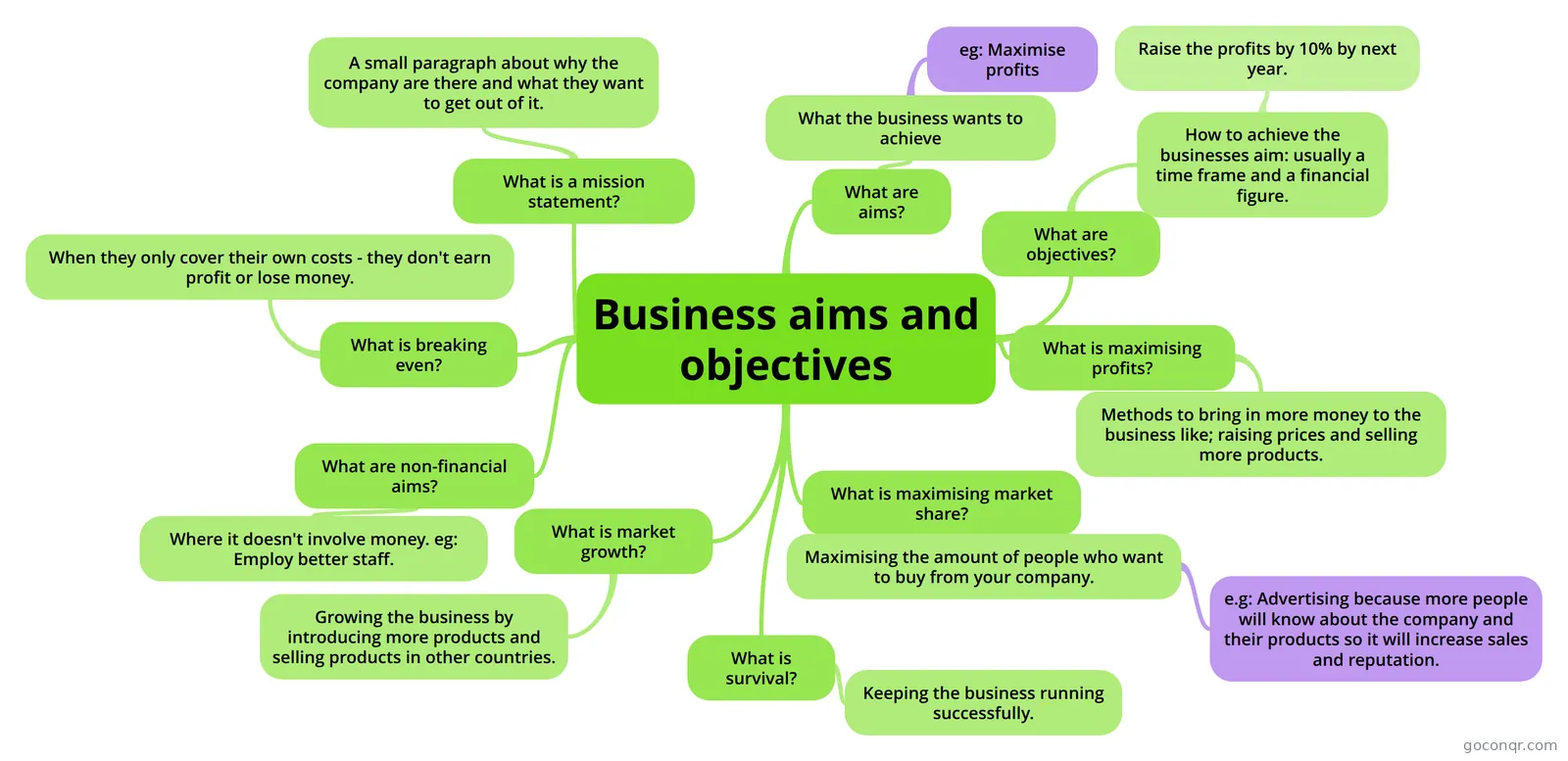 Mind map Business aims and objectives
-
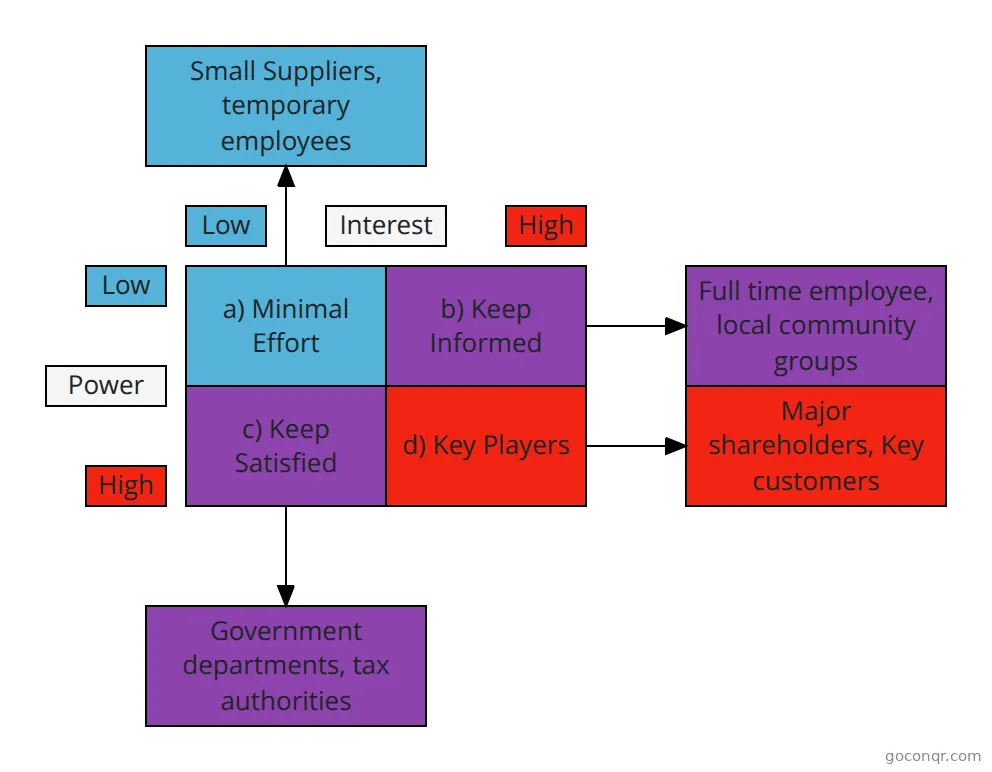 Flowchart Stakeholder Mapping - Mendelow's Matrix
-
10 questionsEdexcel IGCSE Business Studies Chapter quiz Ch 2 Why is an objective NOT important to a business?
-
Mind map stakeholders of Tesco
-
Mind map Stakeholders in Primark
-
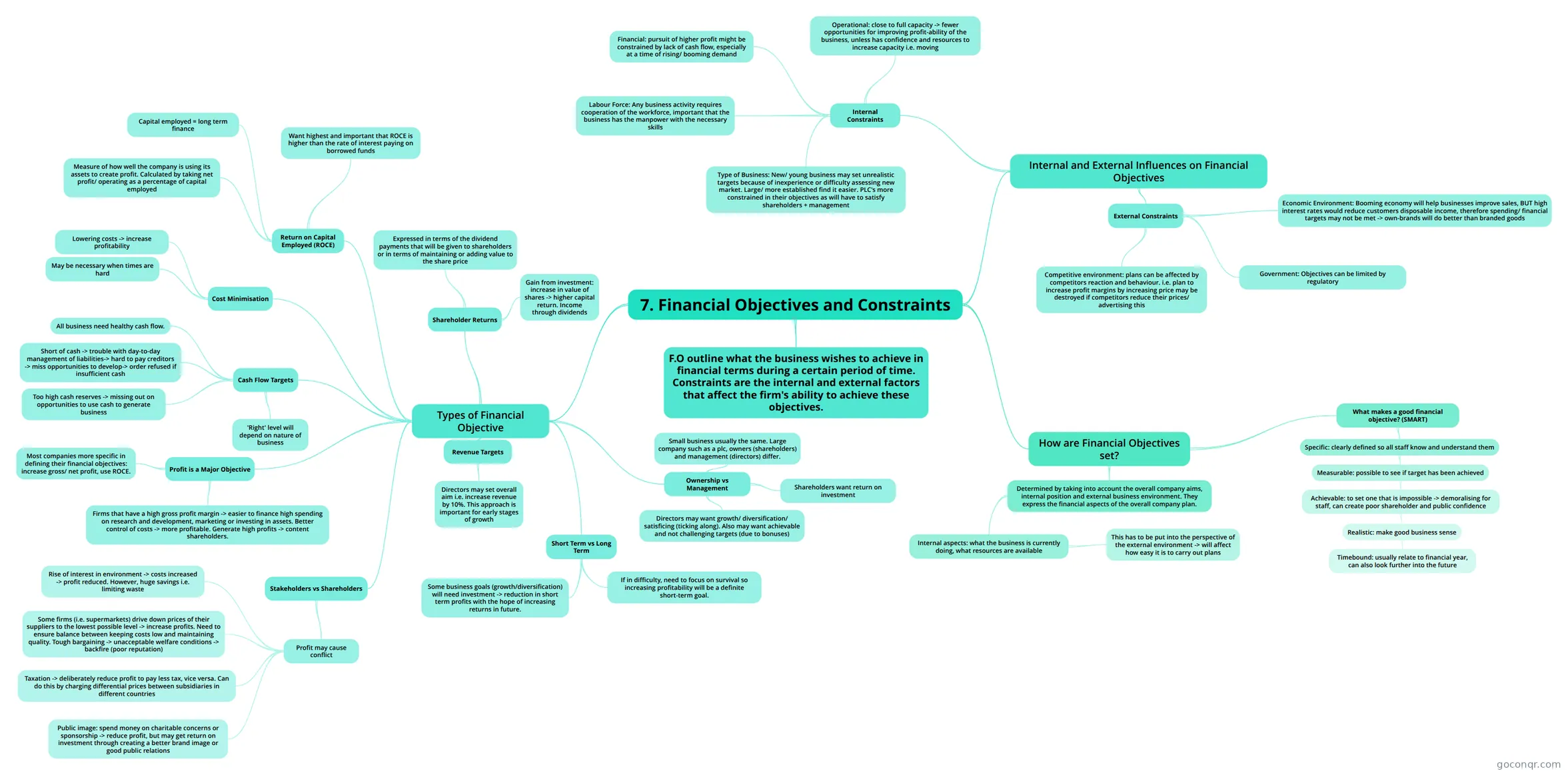 Mind map 7. Financial Objectives and Constraints
-
33 cardsWhat Is A Business? Why Does A Business Exist?
-
33 cardsApplied Business Revison cards What are SMART objectives ?
Quizzes
See all 19 quizzes-
10 questionsEdexcel IGCSE Business Studies Chapter quiz Ch 2 Why is an objective NOT important to a business?
-
11 questionsFramework for activity - Business Aims, Objectives and mission statements Which of these Business Aims is most likely to be for a business currently in its first year?
-
10 questionsChapter 2 Business Objective Does companies use business objectives to give them a purpose?
-
3 questionsSmart? Do you mean SMART? S in SMART means:
Mind maps
See all 528 mind maps
Flashcards
See all 142 flashcards-
33 cardsWhat Is A Business? Why Does A Business Exist?
-
33 cardsApplied Business Revison cards What are SMART objectives ?
-
13 cardsPeople In Business Flashcards. Flashcards revision for People in Business
-
12 cards3.2.3: Understanding the role and importance of stakeholders stakeholders, conflicts and mapping
-
15 cardsBusiness Objectives What is a stakeholder?
-
12 cardsStakeholders What are stakeholders?
-
11 cardsChapter 2 Test What is a mission statement? Give an example
-
8 cardsFramework for activity What are the main aims of businesses?
Flowcharts
Notes
See all 17 notes-
Power Matrix and Stakeholder Analysis The Power Matrix Stakeholder Analysis
-
Chapter 1 Why business exist Show what they can do Create income Growth Survival Create reputation Mission & Objectives-Mission is the aim for the business-Aim is a general statement of where a business is heading-Mission state...
-
Business objectives Key Definitions: Mission statement: a statement of the businesses's core aims, phrased in a way to motivate employees and to stimulate interest by outside groups e.g Google 'to organise the world's informati...
More Business administration and management (incl. project management) topics
About Business Aims, Objectives and Stakeholders
GoConqr OriginalWhat this page covers
The resources fall into two linked themes: what a business is trying to achieve, and who has an interest in it. The mind map Business aims and objectives starts with the basics. It asks what a mission statement is, describes it as a short explanation of why a company exists and what it wants to get out of it, and then defines aims as what the business wants to achieve.
Where to start
Begin with the aims and objectives mind map, then move to the organisational objectives map. It explains that aims help to direct, control and review business activity, and that the most effective objectives meet the SMART criteria. After that, turn to stakeholders. Several mind maps called Stakeholders define a stakeholder as a person or group with an interest in a business. They list examples such as owners, customers, employees, the community, creditors and suppliers.
- Read a mind map on aims and objectives.
- Work through a stakeholder map.
- Look at the Mendelow's Matrix flowchart.
- Test yourself with flashcards and quizzes.
Stakeholder mapping
The flowchart Stakeholder Mapping - Mendelow's Matrix sorts stakeholders by interest and power. Its four boxes are Minimal Effort, Keep Informed, Keep Satisfied and Key Players. Examples include local community groups, full-time employees, major shareholders and key customers. It is a handy way to see why different groups are treated differently.
Using quizzes and maps together
Read a map first, then take a quiz to see what stuck. The Edexcel IGCSE Business Studies chapter quiz for Chapter 2 checks the SMART letters and why objectives matter, and Smart? Do you mean SMART? gives more practice. Where an answer surprises you, go back to the map and add a note of your own. The flashcard decks on internal and external stakeholders are good for quick key-word recall.
Where it fits
This unit sits in the Business Foundations strand of Business administration and management (incl. project management). Pick a map or deck that matches your course, try a quiz, and then build your own revision set from what you find.
Frequently asked questions
Which resource should I open first?
Start with the mind map Business aims and objectives. It covers mission statements and aims in plain language. Then read the organisational objectives map for SMART criteria, and move on to the Stakeholders maps once you are comfortable with the basics.
What does the Mendelow's Matrix flowchart show?
It sorts stakeholders on two axes, interest and power. The four boxes are Minimal Effort, Keep Informed, Keep Satisfied and Key Players. Examples include local community groups, full-time employees, major shareholders and key customers, so you can see how each group might be treated.
Which exams are these resources linked to?
The listed resources mention GCSE Business, GCSE Business Studies, A-level Business, A-level Business Studies, IGCSE Business Studies and IB. Most of the material is at secondary level, with a smaller share for university study. Check your own specification to see how closely each item matches.
Can I practise SMART objectives here?
Yes. The Edexcel IGCSE Business Studies chapter quiz for Chapter 2 asks what each letter of SMART stands for. The quiz Smart? Do you mean SMART? gives further practice, and the organisational objectives mind map sets out the criteria to check against.
Are these resources free, and who made them?
Every resource listed here is free to open, study and take, with no account needed. They were made by GoConqr users, not by GoConqr itself. A free account saves your quiz scores and lets you create your own quizzes, mind maps, flashcards and notes.
What if I can't find the topic I need?
Try the related titles on the page, such as the notes on corporate aims, mission and culture, the mind map on financial objectives and constraints, or the notes on responsibilities to stakeholders and society. You can also make your own map or deck to fill the gap.