
Mindmap
B4: Food & Controlling Growth
Inhalt der Mindmap
B4: Food & Controlling Growth
Respiration
- How it works
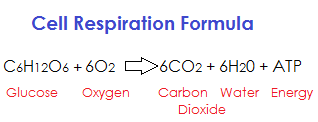
- The process of transferring energy from the breakdown of glucose. Plants make their own glucose through photosynthesis. Animals produce it by breaking down the biomass they get when they eat other organisms. Organisms need the energy transferred to survive so respiration happens continuously in every cell. The energy transferred can't be used directly by cells so it's used to make ATP, which stores energy. Cellular respiration involves different chemical reactions which are all controlled by enzymes. It is exothermic and transfers energy to the environment. Two types of respiration: aerobic and anaerobic.
- Aerobic Respiration
- Happens when there is plenty of oxygen available so it breaks down glucose and combines products with oxygen to make carbon dioxide and water. Most efficient way to transfer energy from glucose, produces lots of ATP. In eukaryotic cells, it mostly happens in mitochondria, which contains most of the enzymes needed to control aerobic respiration reactions. In prokaryotic cells, it happens in the cytoplasm.
- Investigating the Effect of Different Substrates
- You can investigate how the rate of respiration in yeast is affected by different substrates (glucose) by: Put a set volume and concentration of substrate solution in test tube. Put tube in a water bath set to 25C and add a set mass of yeast to the tube and stir for 2 minutes. Attach tube to a gas syringe and measure the volume of carbon dioxide produced in set amount of time. Divide the volume produced by the time taken, you can calculate the overall rate of respiration. Repeat with a different substrate and compare the two rates.
- How it works
Cell Cycle and Mitosis
- 2 Main Stages of the Cell Cycle
- Interphase
- In a cell that's not dividing, the DNA is all spread out on long strings and before it divides, the cell has to grow and increase the amount of subcellular structures. It then duplicates its DNA so there's one copy for each cell. The DNA is copied and forms X-shaped chromosomes. Each 'arm' is an exact copy of the other. Once its contents and DNA have been copied, the cell is ready for mitosis.
- Mitosis
- The chromosomes line up at the centre of the cell snd cell fibres pull them apart and the two arms of each go to opposite ends of the cell. Membranes form each of the sets of chromosomes and become the nuclei of the two new cells - nucleus has divided. The cytoplasm and cell membrane divide.
- Interphase
- Cancer is a Case of Uncontrolled Cell Divison
- Rate at which cells divide by mitosis is controlled by the cells' genes. If there's a change in one of the genes that controls cell division, a cell may start dividing uncontrollably which can result in a mass of abnormal cells (tumour). If it invades and destroys surrounding tissue it is called cancer which is a non-communicable disease.
- 2 Main Stages of the Cell Cycle
Sexual Reproduction and Meiosis
- Sexual Reproduction Produces Genetically Different Cells
- Sexual reproduction is where genetic information from two organisms is combines to produce offspring. A father and mother produce gametes, which only contain half the number of chromosomes of normal cells. At fertilisation, a male gamete fuses with a female one to produce a fertilised egg (zygote), which ends up with the full set of chromosomes. They zygote undergoes cell division and develops an embryo, which inherits characteristics from both parents as it's received a mixture of chromosomes from both parents.
- Gametes are Produced by Meiosis
- In humans, meiosis only happens in the reproductive organs. Before it begins, the cell goes through interphase. In the first division, the chromosomes line up in pairs in the centre of the cell and one chromosome from each pair came from both parents. The pairs are pulled apart, so each new cell ends up with one chromosome from each pair. The chromosome number pf each new cell will be half of the original cell and each new cell will have a mixture of both parents' chromosomes. In the second division, the chromosomes line up in the middle of the cell and the arms of them are pulled apart. You get four gametes and each only has a single set of chromosomes and are all genetically different.
- Sexual Reproduction Produces Genetically Different Cells
Anaerobic Respiration
- Doesn't Use Oxygen At All
- Not the best way to transfer energy form glucose because it transfers much less energy than aerobic - just 2 molecules of ATP are produced. Takes place in cytoplasm when there's very little/no oxygen.
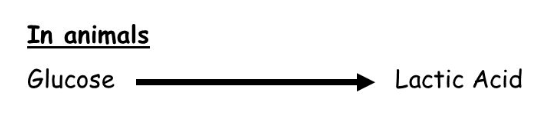
- Animals and Some Bacteria
- Glucose is only partially broken down and lactic acid is formed as a waste product.
- Plant and Some Microorganisms
- Doesn't Use Oxygen At All
Bilder und Dateien der Mindmap

Informationen
- Beschreibung
- GCSE Core Science Mindmap am B4: Food & Controlling Growth, erstellt von Blerta Morina am 08/04/2019.
- Erstellt von
- Blerta Morina
- Aufrufe
- 6
- Tags
- Bewertung