
Mindmap
CCNA1 TEL II CHAPTER 10 application layer
Inhalt der Mindmap
CCNA1 TEL II CHAPTER 10 application layer
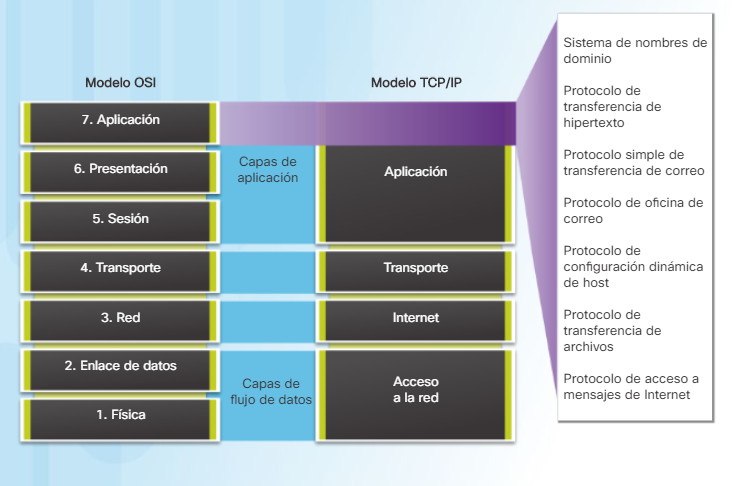
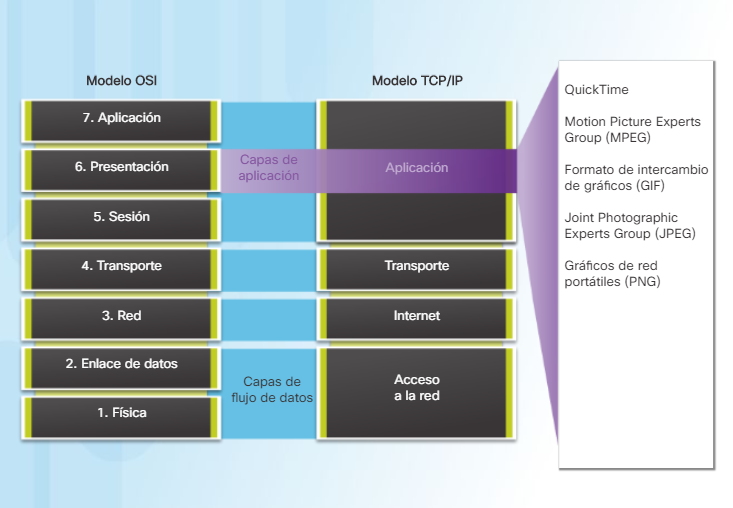
The application layer is the closest to the end user. As shown in the figure, it is the layer that provides the interface between the applications used for communication and the underlying network in which the messages are transmitted. Application layer protocols are used to exchange data between programs that run on the source and destination hosts. The top three layers of the OSI model (application, presentation and session) define functions of the single TCP / IP application layer.
- Layers of presentation and session
- Presentation layer
- The presentation layer has three main functions: Format the data of the source device, or present it, in a compatible manner so that the destination device receives it. Compress the data in such a way that the target device can decompress it. Encrypt the data for transmission and decrypt it upon receipt.
- The presentation layer has three main functions: Format the data of the source device, or present it, in a compatible manner so that the destination device receives it. Compress the data in such a way that the target device can decompress it. Encrypt the data for transmission and decrypt it upon receipt.
- Session layer
- As the name implies, the session layer functions create and maintain dialogs between the source and destination applications. The session layer handles the exchange of information to start the dialogs and keep them active, and to restart sessions that were interrupted or that were inactive for a prolonged period.
- Presentation layer
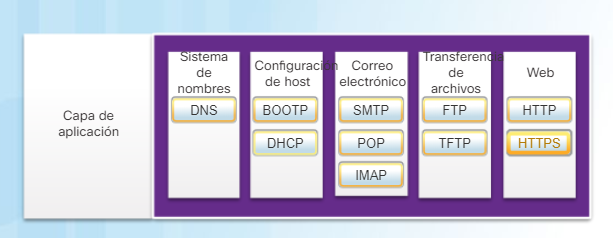
- TCP / IP application layer protocols
- The application layer protocols are used by both the source and target devices during a communication session. For communications to be carried out correctly, the application layer protocols that were implemented on the source and destination hosts must be compatible.
- The application layer protocols are used by both the source and target devices during a communication session. For communications to be carried out correctly, the application layer protocols that were implemented on the source and destination hosts must be compatible.
- Client-server model
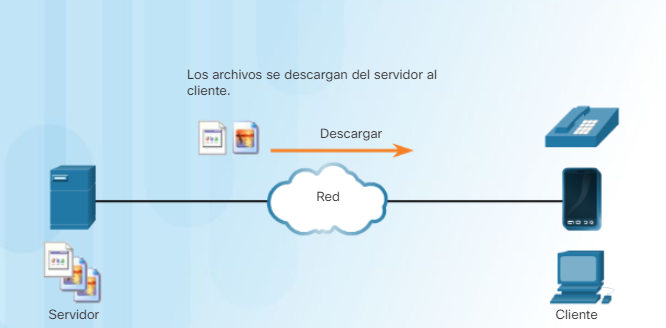
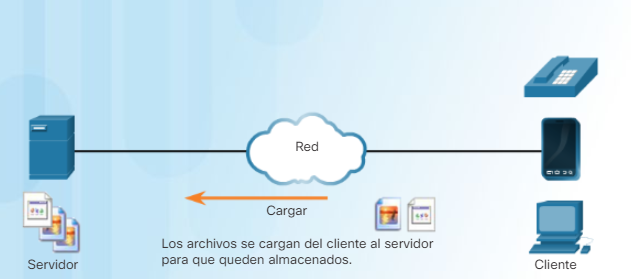
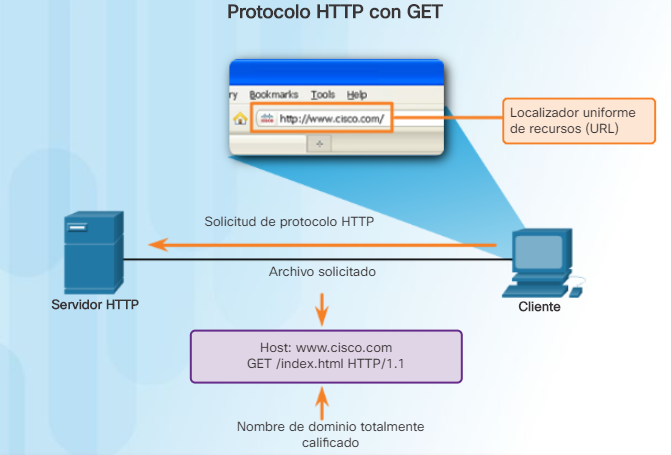
- The application layer protocols describe the format of requests and responses between clients and servers. In addition to the actual transfer of data, this exchange may also require user authentication and the identification of a data file to be transferred.
- The application layer protocols describe the format of requests and responses between clients and servers. In addition to the actual transfer of data, this exchange may also require user authentication and the identification of a data file to be transferred.
- Networks between pairs
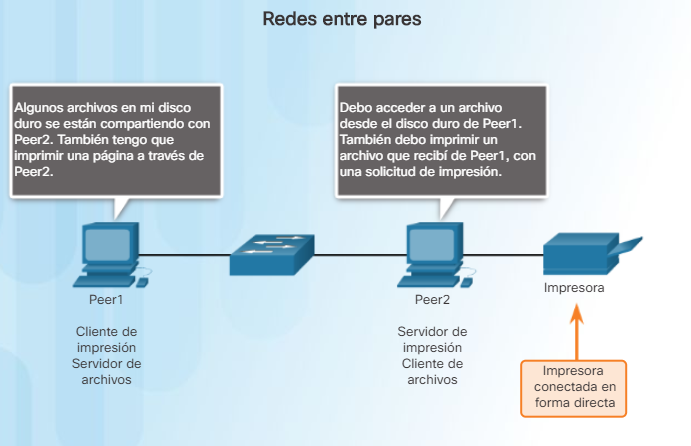
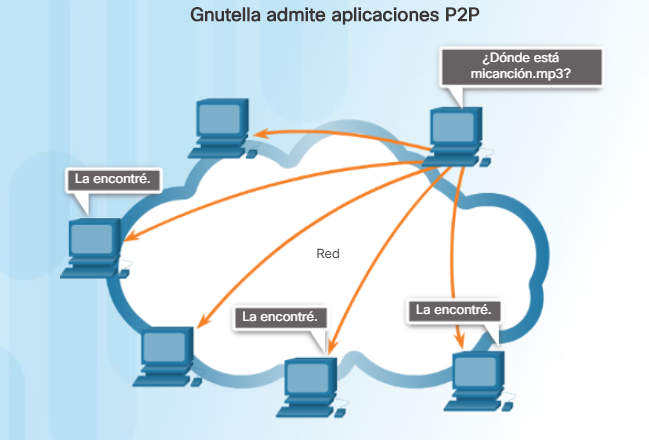
- In a P2P network, there are two or more PCs that are connected through a network and can share resources (such as printers and files) without having a dedicated server. Every connected terminal can work as a server and as a client. A team can assume the server role for one transaction while simultaneously operating as a client for another transaction. The client and server functions are established by request.
- In a P2P network, there are two or more PCs that are connected through a network and can share resources (such as printers and files) without having a dedicated server. Every connected terminal can work as a server and as a client. A team can assume the server role for one transaction while simultaneously operating as a client for another transaction. The client and server functions are established by request.
- Applications between pairs
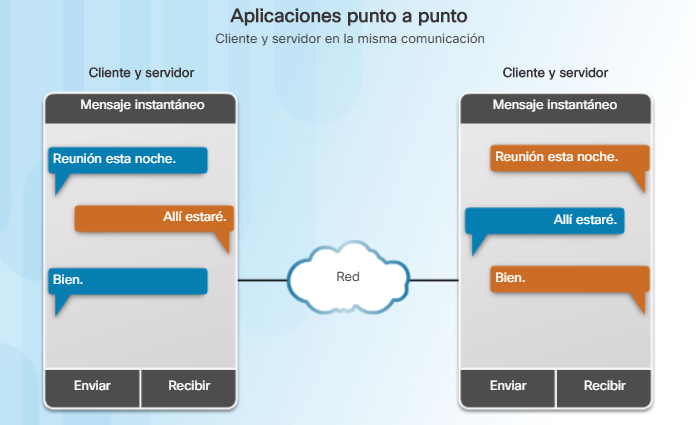
- Some P2P applications use a hybrid system where resource sharing is decentralized, but indexes that point to resource locations are stored in a centralized directory. In a hybrid system, each point accesses an index server to obtain the location of a resource stored at another point.
- Some P2P applications use a hybrid system where resource sharing is decentralized, but indexes that point to resource locations are stored in a centralized directory. In a hybrid system, each point accesses an index server to obtain the location of a resource stored at another point.
- Common P2P applications
- HTTP y HTTPS
- Email protocols
- Operation of SMTP
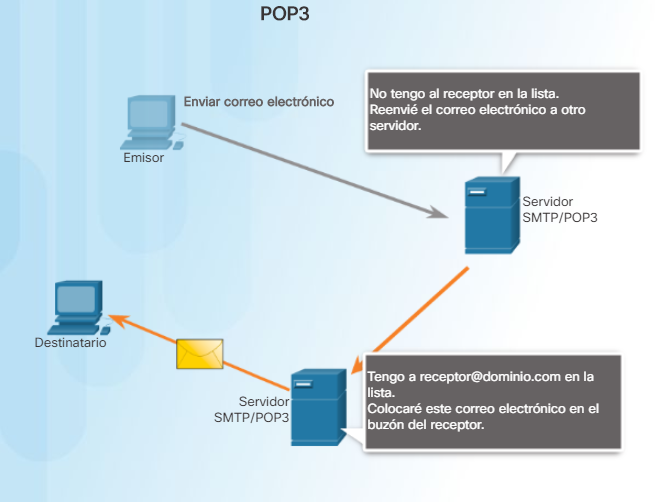
- Operation of POP
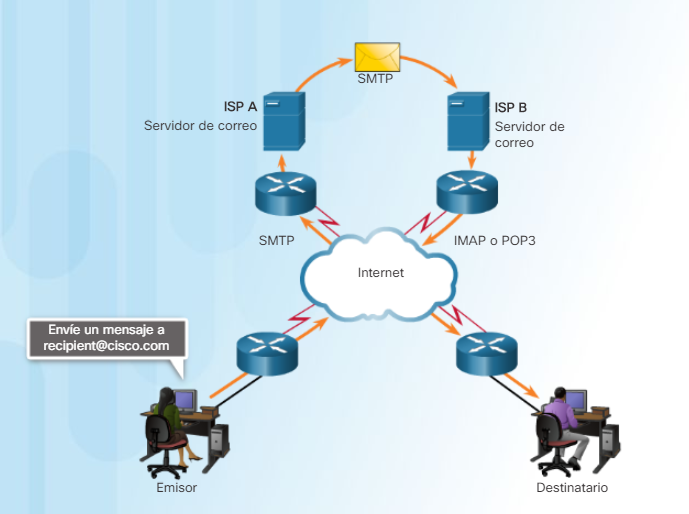
- POP is used by an application to retrieve email from a mail server. With POP, mail is downloaded from the server to the client and then deleted on the server. POP works in this way, by default.
- POP is used by an application to retrieve email from a mail server. With POP, mail is downloaded from the server to the client and then deleted on the server. POP works in this way, by default.
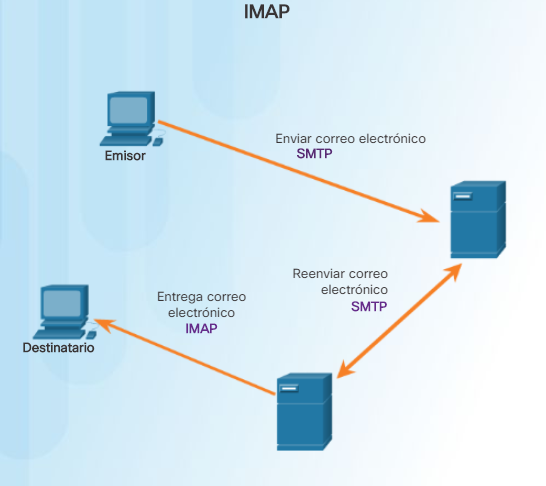
- Operation of IMAP
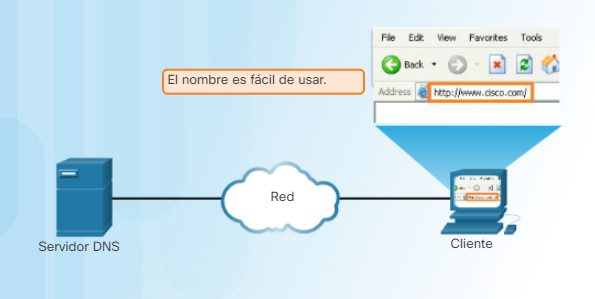
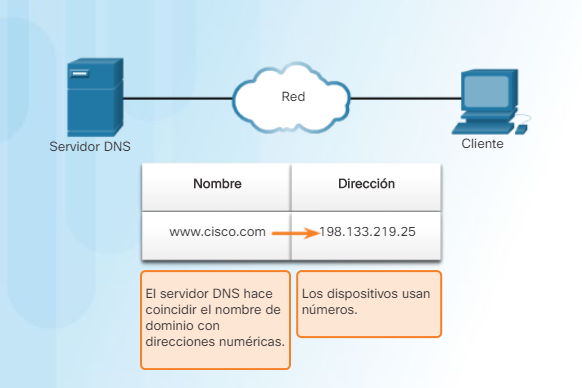
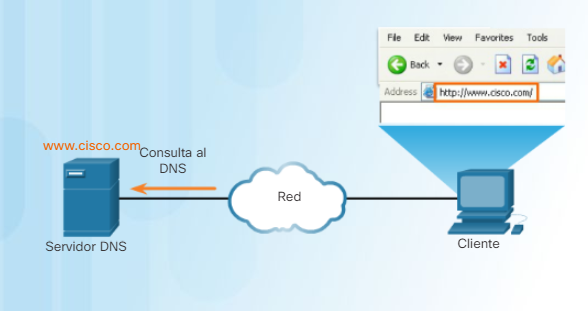
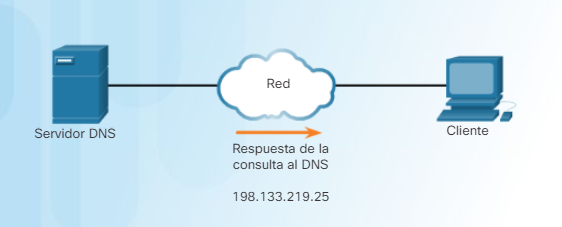
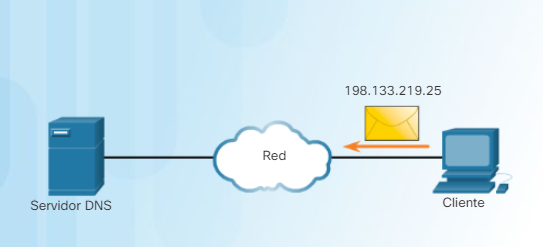
- Domain name service
- DNS Hierarchy
- The DNS protocol uses a hierarchical system to create a database that provides name resolution. The hierarchy is similar to an inverted tree with the root at the top and the branches below.
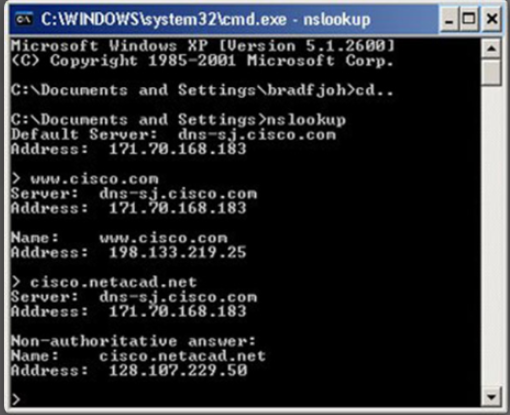
- The nslookup command
- Summary
- The application layer is responsible for direct access to the underlying processes that manage and transmit the communication through the human network. This layer serves as the origin and destination of communications through data networks. Applications, protocols and application layer services allow users to interact with the data network in a meaningful and effective way.
- Layers of presentation and session
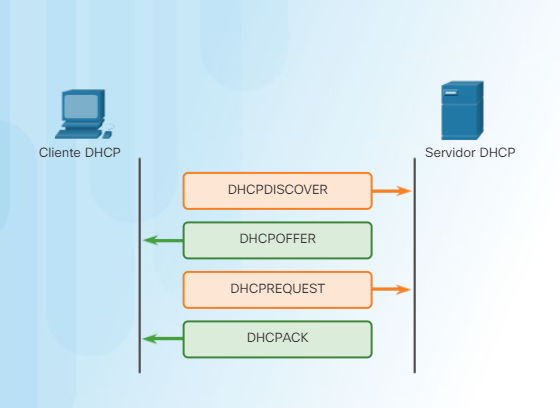
DHCP operation
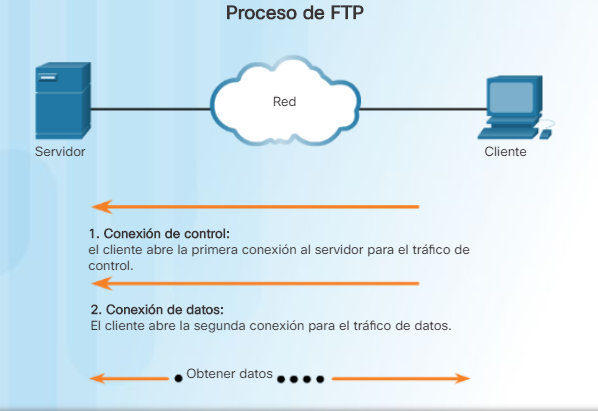
File Transfer Protocol
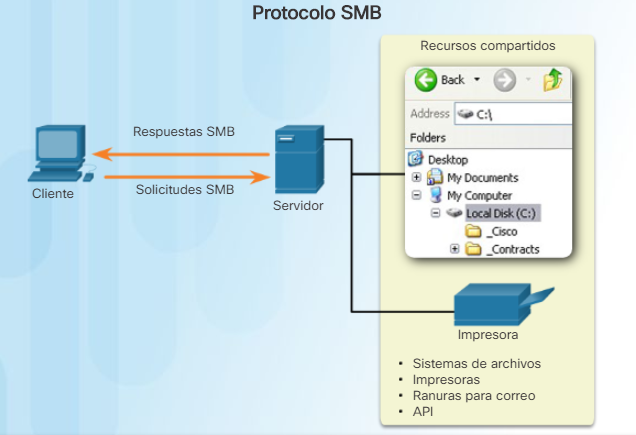
Server message block
Bilder und Dateien der Mindmap
Informationen
- Beschreibung
- Ingeniería Mindmap am CCNA1 TEL II CHAPTER 10 application layer, erstellt von DIEGO CAMACHO am 20/05/2019.
- Erstellt von
- DIEGO CAMACHO
- Aufrufe
- 0
- Bewertung