
Mindmap
Milo J
Inhalt der Mindmap
Milo J
Key Information
- 3 1/2 years old
- Small for his age
- Unhappy
- Fussy with food
- Can't go to the toilet by himself
- No eye contact
- Limited vocabulary
- Upset with strangers
- Attached to his mother
- Born at 34wks
- Not meeting his milestones
Mrs J
- Key Information
- Emigrated to the UK 1 year ago
- EAL
- Can't hold a full conversation
- 2 children
- Has spent a lot of time alone whilst her partner is at work
- At the GP Visit
- Appears unkempt
- Hair needs to be washed
- Smells of alcohol
- Appears unkempt
- RTA incident
- Hit by a car going at 10 mph
- Appeared drousy so was taken to A&E by ambulance
- Smelt of alcohol
- Appeared drousy so was taken to A&E by ambulance
- Wounds
- Lacerations to her right are and right side of face
- Do not need suturing
- Lacerations to her right are and right side of face
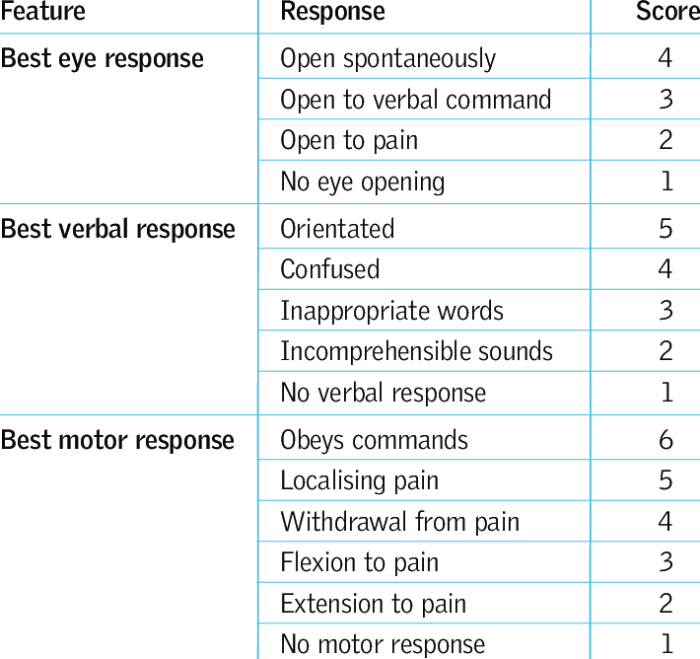
- GCS Scale
- Mrs J was marked 12 on arrival
- Improved to 15 half an hour later
- Mrs J was marked 12 on arrival
- Hit by a car going at 10 mph
- Concerns about whether she is coping
- Possible neglect
- Neglect is categorised into 4 groups
- Physical neglect: A child's basic needs, such as food, clothing or shelter, are not met or they aren't properly supervised or kept safe
- Educational neglect: A parent doesn't ensure their child is given an education
- Emotional neglect: A child doesn't get the nurture and stimulation they need. This could be through ignoring, humiliating, intimidating or isolating them
- Medical neglect A child isn't given proper health care. This includes dental care and refusing or ignoring medical recommendations
- Neglect is categorised into 4 groups
- Possible neglect
- Services to help understand the conversation
- Get a translator to sit in the consultation
- Translate the conversation so they can understand
- Translate the prescription or medicine information into their native language
- Get a translator to sit in the consultation
- Key Information
Child Development Milestones
- Parents are offered regular reviews by the health visitor to monitor their child's progression
- Developmental milestones act as checkpoints in a child's development to determine what the average child is able to do at a particular age
- The physical milestones pertain to the development of both the large and fine motor skills
- Milo can only walk 50m to the playground
- Cognitive milestones refer to the child's developmental abilities to think, learn, and solve problems
- Milo can't go to the toilet by himself
- Social and emotional milestones pertain to the child's ability to express their own emotion and respond to the social interaction they have with other people
- Milo is very attached to his mother and gets upset with strangers entering the home
- Communication and language milestones refer to a child's developing verbal and nonverbal communication skills
- Milo will only give one word answers , has a limited vocabulary and is difficult to engage with
- The physical milestones pertain to the development of both the large and fine motor skills
- Developmental milestones act as checkpoints in a child's development to determine what the average child is able to do at a particular age
- Things a child should be able to do by 3 1/2
- Run, climb and pedal a tricycle
- Walk upstairs on alternate feet and walk on tiptoe
- Use the toilet alone
- Talk clearly so anyone can understand them
- Tell the difference between boys and girls
- Sometimes play co-operatively with other children
- Build a tower of nine bricks and build a bridge with bricks
- Undo buttons and thread beads
- Enjoy playing with role play toys and dressing up
- Enjoy books
- Enjoy painting and may do ‘pretend’ writing
- Have fewer temper tantrums
- Global development delay
- The term 'developmental delay' or 'global development delay' is used when a child takes longer to reach certain development milestones than other children their age
- Usually when they do not meet 2 or more milestones
- Start of a diagnosis of a learning disability
- Usually when they do not meet 2 or more milestones
- Causes of GDD
- Genetic defect
- Downs Syndrome
- Fetal Alcohol Syndrome
- Fragile X Syndrome
- Severe medical problems that develop soon after birth
- Associated with prematurity
- Genetic defect
- The term 'developmental delay' or 'global development delay' is used when a child takes longer to reach certain development milestones than other children their age
- Parents are offered regular reviews by the health visitor to monitor their child's progression
Alcohol Consumption
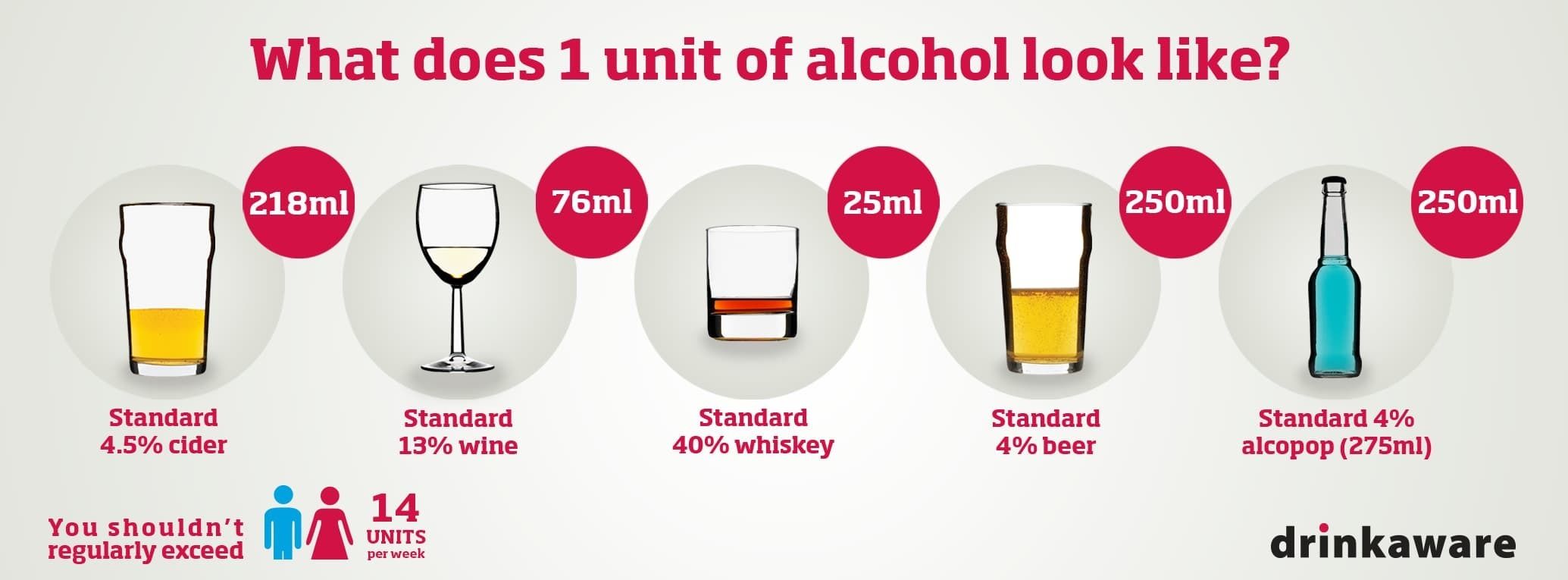
- Unit of alcohol
- One unit is 10ml or 8g of pure alcohol
- Because alcoholic drinks come in different strengths and sizes, units are a way to tell how strong your drink is
- It takes an average adult around an hour to process one unit of alcohol so that there's none left in their bloodstream, although this varies from person to person
- UK safe driving limits
- In England, Wales and Northern Ireland, the alcohol limit for drivers is 80 milligrammes of alcohol per 100 millilitres of blood, 35 micrograms per 100 millilitres of breath, or 107 milligrammes per 100 millilitres of urine
- The alcohol limit for drivers in Scotland has been different to the rest of the UK since 2014. The limit is 50 milligrammes of alcohol per 100 millilitres of blood, 22 micrograms of alcohol per 100 millilitres of breath, and 67 milligrammes per 100 millilitres of urine
- Statistics about alcohol use in the UK
- In England there are an estimated 586,780 dependent drinkers
- Only 18% are receiving treatment
- 24% of adults in England and Scotland regularly drink over the Chief Medical Officer’s low-risk guidelines
- Alcohol is a causal factor in more than 60 medical conditions
- Including mouth, throat, stomach, liver and breast cancers; high blood pressure, cirrhosis of the liver; and depression
- Accounts for an estimated 1.2 million hospital admissions related to alcohol consumption
- 7.2% of all hospital admissions
- Accounts for an estimated 1.2 million hospital admissions related to alcohol consumption
- Britain has one of the highest rates of Foetal Alcohol Syndrome (FASD) in the world
- An estimated 61.3 cases per 10,000 births
- 44th worst in Europe
- The global average is 15 per 10,000 births
- An estimated 61.3 cases per 10,000 births
- Including mouth, throat, stomach, liver and breast cancers; high blood pressure, cirrhosis of the liver; and depression
- In England there are an estimated 586,780 dependent drinkers
- Unit of alcohol
Foetal Alcohol Syndrome and the Effects of Other Drugs on Babies
- Cause of FASD
- When the mother drinks during pregnancy, some of the alcohol in the mother's blood can pass into the placenta
- The baby can't process alcohol as well as the mother can, which means it can damage cells in their brain, spinal cord and other parts of their body, and disrupt their development in the womb
- When the mother drinks during pregnancy, some of the alcohol in the mother's blood can pass into the placenta
- Symptoms of FASD
- Smaller than average head
- Poor growth
- Smaller than average at birth
- Be shorter than average as an adult
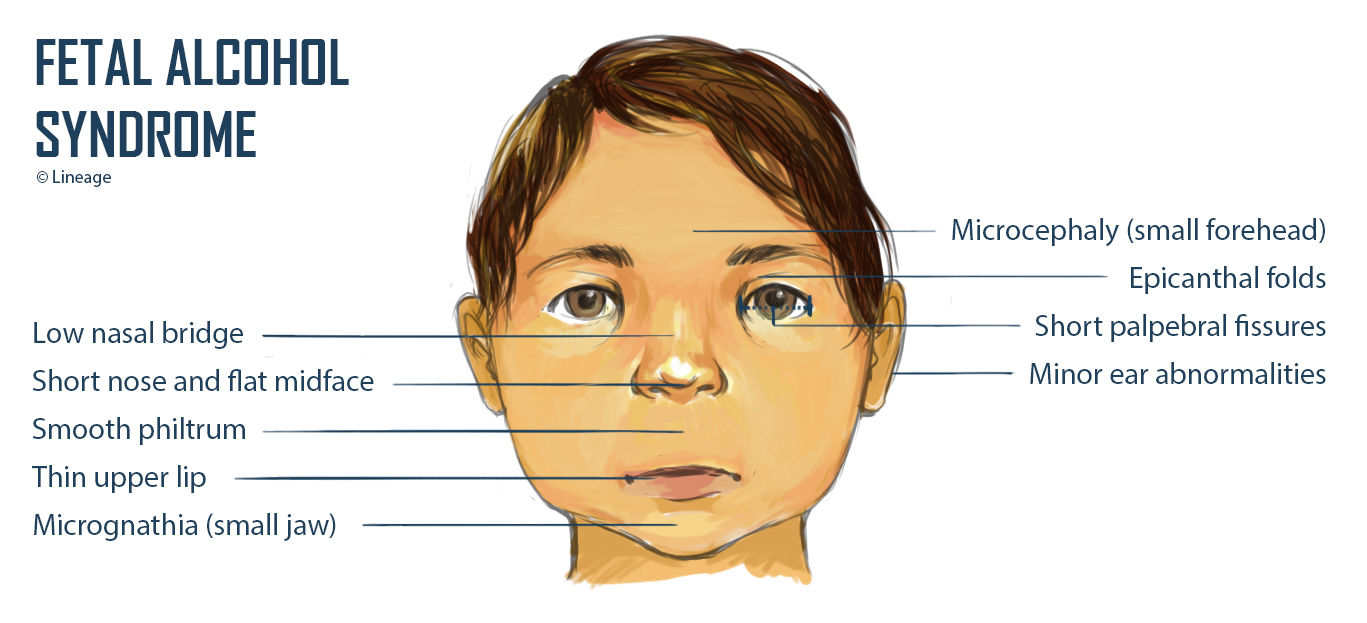
- Distinctive facial features
- Small eyes, a thin upper lip, and a smooth area between the nose and upper lip
- Become less noticable with age
- Small eyes, a thin upper lip, and a smooth area between the nose and upper lip
- Movement and coordination problems
- Cerebal palsy
- Learning difficulties
- Hearing and vision problems
- Problems with the liver, kidneys and heart
- Treatment for FASD
- Early diagnosis is important
- Get the right support
- There is no particular treatment for foetal alcohol syndrome, and the damage to the child's brain and organs can't be reversed
- Early diagnosis is important
- Preventing FASD
- Foetal alcohol syndrome is completely avoidable if you don't drink alcohol while you're pregnant
- The risk is higher the more you drink, although there's no proven "safe" level of alcohol in pregnancy
- Foetal alcohol syndrome is completely avoidable if you don't drink alcohol while you're pregnant
- Teratogens
- Teratogens are substances that may produce physical or functional defects in the human embryo or fetus after the pregnant woman is exposed to the substance
- Exposure to the teratogen affects the fetus or embryo in a variety of ways
- This depends on the duration of exposure, the amount of teratogenic substance, and the stage of development the embryo or fetus is in during the exposure
- Teratogens may affect the embryo or fetus in a number of ways, causing physical malformations, problems in the behavioral or emotional development of the child, and decreased intellectual quotient (IQ) in the child
- Examples
- Alcohol, smoking and recreational drugs (marijuana, cocaine, amphetamine)
- Medicines
- Aminopterin (anti-tumour), valproic acid (anti-epileptic), warfarin , ACE inhibitors (for high BP), diazipan (anti-anxiety) and hormone tbased medication are all prescribed medicines that are teratogens or can cause birth defects
- Cause of FASD
Bilder und Dateien der Mindmap
Informationen
- Beschreibung
- Mindmap am Milo J, erstellt von Laura Maynard am 09/01/2020.
- Erstellt von
- Laura Maynard
- Aufrufe
- 1
- Bewertung