
Child Development
355 resources created by 258 users
This Child Development page on GoConqr gathers community-made mind maps, flashcards, quizzes and notes, from types of family and pregnancy to milestones and play. It's built for school students revising for GCSE Child Development or GCSE Health and Social Care, and for teachers after ready-made material. There are over 340 resources here, including more than 240 mind maps, over 80 flashcards and 8 quizzes, mostly at secondary level. Pick a topic, try a quiz to spot your gaps, then make your own set.
Select topic
- Conception, Pregnancy and Childbirth24
- Developmental Milestones and Assessment20
- Infant Development Milestones38
- Toddler Development Milestones21
- Childhood Development Milestones31
- Areas of Development7
- Physical and Motor Development17
- Cognitive Development6
- Social and Emotional Development9
- Stages and Types of Play7
- Factors Affecting Development10
- Families and Parenting22
- Child Nutrition and Feeding7
- Child Health, Needs and Care20
Top Child Development resources
-
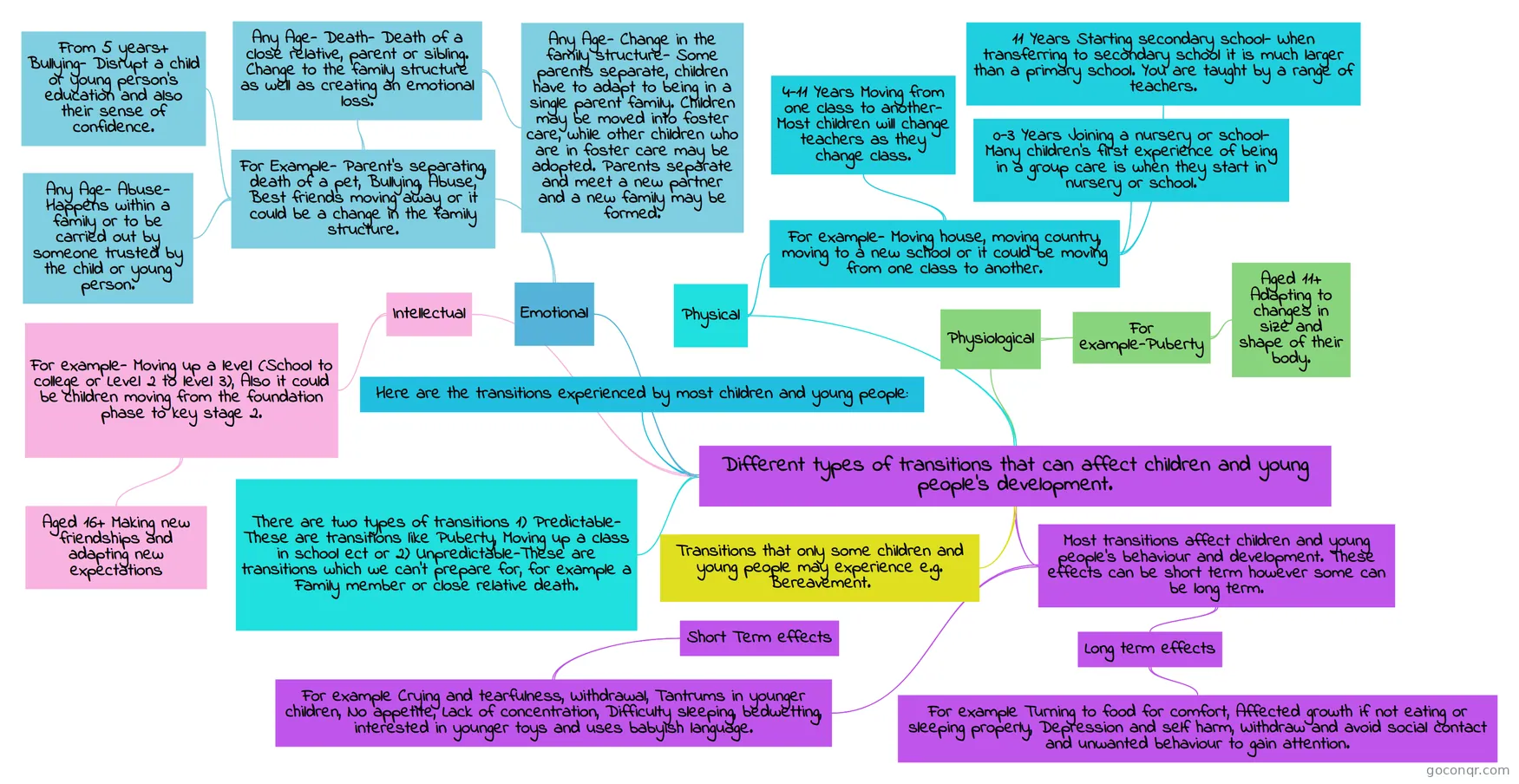 Mind map Different types of transitions that can affect children and young people's development. Here is a mind map describing the different types of transitions that can affect children and young people'...
-
13 cardsChildcare: Milestones: Physical(Fine) Development Physical(Fine): 1 month
-
5 cardschildcare revision -defintion of each type of development with examples communication and language development definition?
-
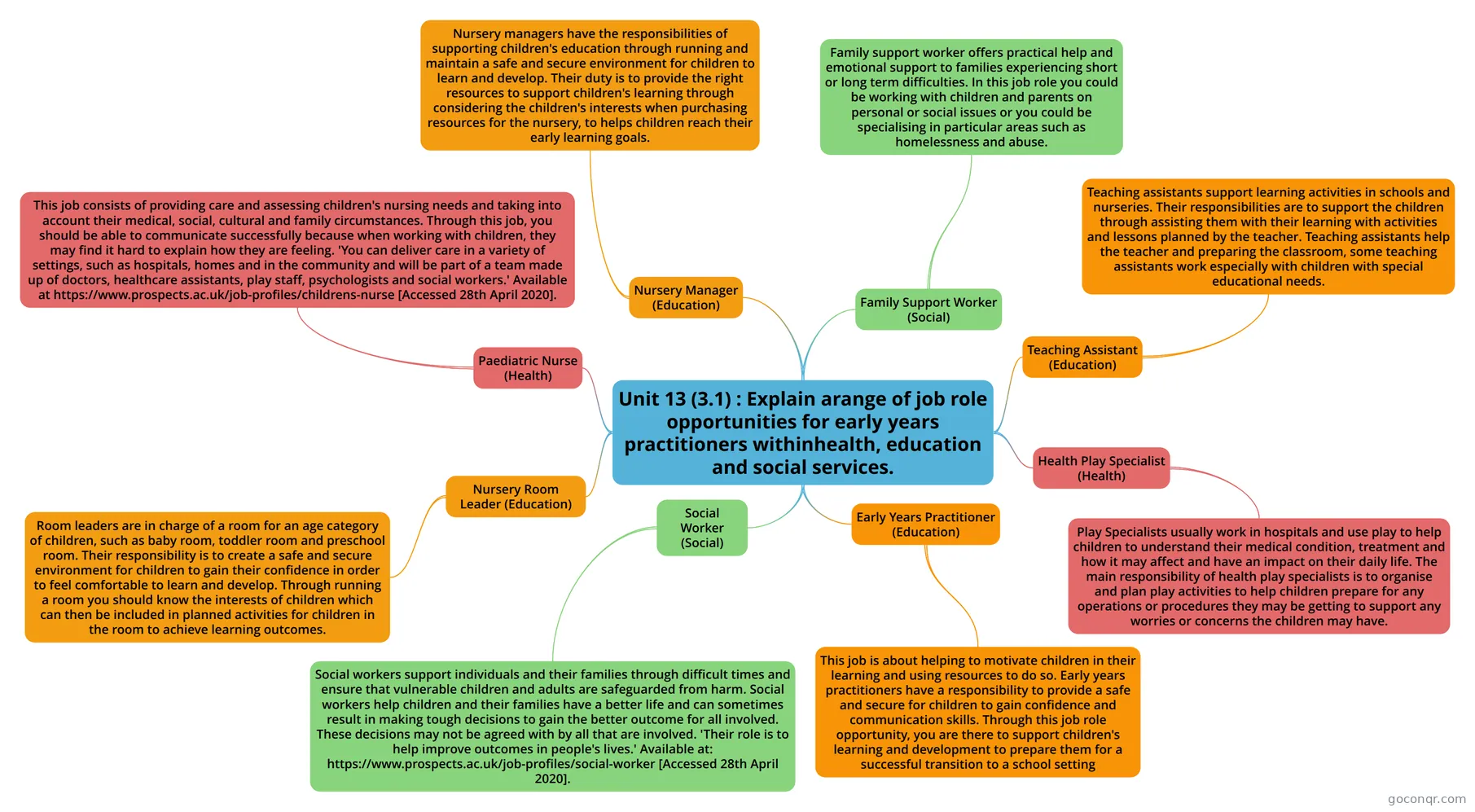 Mind map Unit 13 (3.1) : Explain arange of job role opportunities for early years practitioners withinhealth, education and social services.
-
39 cardsModule 1 Introduction to Health Across the Lifespan: Child and Family Health Traditionally, communication with children has been based on the assumption that the healthcare practitione...
-
32 cardsModule 2 The health of Australia's children & families The Family Matters Roadmap (published separately) proposes four inter-related building blocks, underpinned ...
-
98 cardsLO3 - What is the Apgar score?
-
Mind map Children's development
Quizzes
See all 10 quizzes-
6 questionsH.G.D > historical views of childhood what were kids thought to be in the middle ages?
-
10 questionsbirth up to 8 years At what age can a baby sit up unsupported
-
13 questionsChild development At what age are children most likely to find hidden objects?
-
8 questionsChild Development Book 1 Social Development At 3 months a baby would
-
7 questionsChild Development Book 1 Emotional Development Between 3-6 months a child likes to
-
6 questionsChild Development Book 1 general questions Development is an increase of control over the body and mind
-
5 questionsUntitled
-
1 questionsFunctional Area Two: Healthy What is the main consideration in setting an infant's sleeping schedule?
Mind maps
See all 249 mind maps-
Different types of transitions that can affect children and young people's development. Here is a mind map describing the different types of transitions that can affect children and young people'...
-
Unit 13 (3.1) : Explain arange of job role opportunities for early years practitioners withinhealth, education and social services.
-
Children's development
-
Gcse Home Economics: Child Development Ocr Gcse Home Economics: Child Development topics
-
Gcse Home Economics: Child Development Ocr Gcse Home Economics: Child Development topics
-
Child Development whole course Ocr Gcse Home Economics: Child Development topics
-
Child Development Ocr Gcse Home Economics: Child Development topics
-
Milo J
Flashcards
See all 87 flashcards-
13 cardsChildcare: Milestones: Physical(Fine) Development Physical(Fine): 1 month
-
5 cardschildcare revision -defintion of each type of development with examples communication and language development definition?
-
39 cardsModule 1 Introduction to Health Across the Lifespan: Child and Family Health Traditionally, communication with children has been based on the assumption that the healthcare practitione...
-
32 cardsModule 2 The health of Australia's children & families The Family Matters Roadmap (published separately) proposes four inter-related building blocks, underpinned ...
-
98 cardsLO3 - What is the Apgar score?
-
34 cardsSection one : Child Development revision Whats a nuclear family?
-
45 cardsUntitled What supports the baby?
-
24 cardsSAC 1 PART 2 Prenatal risk factors
Flowcharts
Notes
-
Child Development Revision Child Development RevisionPIES: Physical development; fine motor skills, Gross motor skills, Hand-eye co-ordination, Sensory development Intellectual development (Cognitive); Concept, Problem solving, Experimenting, D...
-
Infants Topic Objectives Upon successful completion of this topic, for the following age groups (infants, toddlers, pre-schoolers, school-age children and adolescents), you should be able to: Development Describe the physical...
-
child development what is child development.A CHILD DEVELOPMENT is about children learning skills and gaining knowledge as they grow. GrowthGROWTH is during childhood they are many physical changes. for example skeleton changes - bones...
-
notes Chapter 1: Intro to Child Development Nature of development Development: way individuals grow and change over the course of their lifespan. Domains: biological, cognitive, emotional, and social Natur...
-
Untitled Helping FamiliesNational Voluntary Organisations - Barnado's, Gingerbread and Home-StartLocal Voluntary Organisations - Church Groups and Community GroupsSure Start - Government program that provides a wide range of i...
-
Benefits of children's exercise Benefits of children's exercise Short term boosts energy which helps to overcome stress and anxiety helps support a healthy sleep routine as children will feel tired boosts immune system which helps reduce illnesses. ...
-
Different grasp and keywords. Primitive grasp- A clumpsy grasp of crayons, ect. Egocentricity- Not taking anyone else's view or needs into account. Pincer grasp- Holding something using the thumb and index finger. Object permanence- Understanding ...
Slides
Topics in Child Development
More Health and social care topics
About Child Development
GoConqr OriginalWhat the resources cover
The mind maps do most of the work on this page. Several are titled simply Child Development, and they branch into parenthood, pregnancy, the development of the child, diet, health and care, and support for parents. Others focus on types of family, such as nuclear, extended, single parent, foster, adoptive and step families, plus looked after children.
Safety has its own map, with labels such as the lion mark, BSI kite mark and CE mark, and types of accident like falls, burns, scalds and drowning. Another map covers the different types of transitions that can affect children, including parents separating, bullying and friends moving away.
Milestones by age
Many maps are broken down by age, from At birth, 1 month and 3 months to Nine months, 18 months, Three years and 4 years. The Childcare: Milestones (0-3 years) and Milestones 3-5 Years maps give a wider view. Flashcards such as Childcare: Milestones: Physical(Fine) Development let you test the same ground month by month.
Where to start
- Open one of the whole-topic Child Development maps to see the shape of the course.
- Learn the key terms with the flashcard deck that defines each type of development with examples.
- Move to the age-based maps and the milestone flashcards.
- Finish with the quizzes, including milestone quiz and birth up to 8 years.
Using maps and quizzes together
Read a map, close it, then take a quiz on the same topic. Anything you miss tells you which branch to reread. The Emotional Development and Social Development quizzes from Child Development Book 1 pair well with the matching maps and flashcards.
Where this unit sits
This unit belongs to the Human Growth and Development strand of Health and social care. Teachers can use the revision maps and decks as ready-made starters. Choose one map today and see how much you can recall.
Frequently asked questions
Which resource should I open first?
Start with one of the mind maps titled Child Development. They lay out parenthood, pregnancy, the development of the child, diet and care, and support for parents on one page. Once you know the layout, move on to the flashcards and age-based maps.
What do the age-based mind maps cover?
They run from birth through months such as 1, 3 and 9, then 18 months and three, four and five years. Together with the milestone flashcards, they help you compare physical, social and emotional development at each stage.
Which exams do these resources suit?
The listed resources mention GCSE Child Development, GCSE Home Economics: Child Development and GCSE Health and Social Care. Most of the page is secondary level, so it suits school students, though a few items go further and some teachers use them in class.
Are there quizzes on this page?
Yes, there are 8 quizzes. They include a milestone quiz, one covering birth up to 8 years, and Child Development Book 1 quizzes on emotional and social development. Use them after a map to check what stuck.
Are the resources free to use?
Yes. Every resource listed here is free to open, study and take, with no account needed. They were made by GoConqr users, not by GoConqr. A free account also saves your quiz scores and lets you create your own maps, flashcards, quizzes and notes.
What if my topic is not listed?
Look for a nearby map or deck first, as topics such as play, reflexes, transitions and safety each have their own items. If you still cannot find what you need, make your own mind map or flashcards and fill the gap yourself.