
Mindmap
overview about the short story
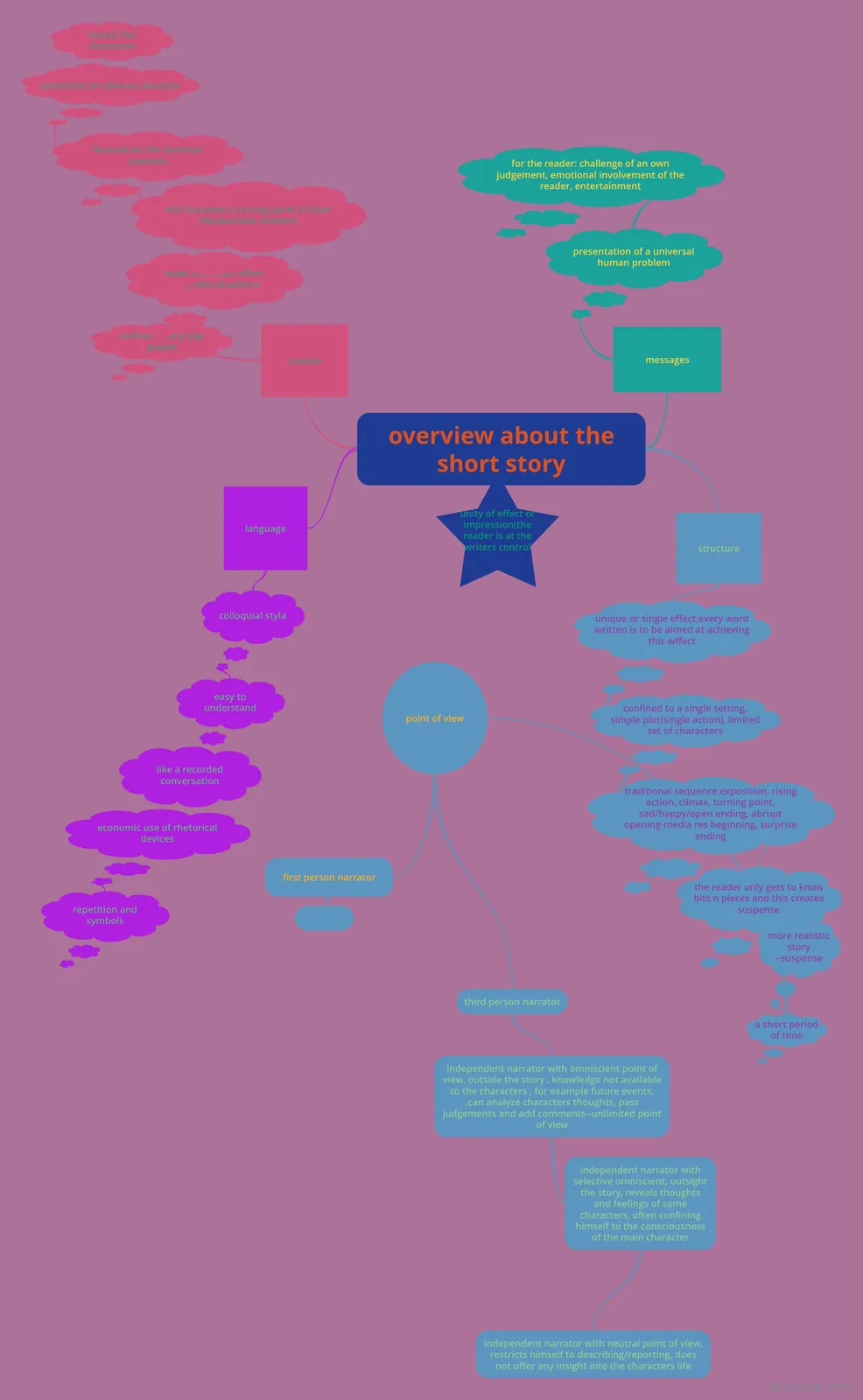
Mind map: overview about the short story
Inhalt der Mindmap
overview about the short story
- fictitious narrative prose, longer than an anecdote, shorter than a novel arabian nights, bible, homer product of the 19th century main purpose:to entertain, to treat serious themes flourished as a result of competition of authors in newspapers largely influenced by EdgarAllan Poe
language
- colloquial styla
- easy to understand
- like a recorded conversation
- economic use of rhetorical devices
- repetition and symbols
- economic use of rhetorical devices
- like a recorded conversation
- easy to understand
- colloquial styla
structure
- unique or single effect,every word written is to be aimed at achieving this wffect
- confined to a single setting, simple plot(single action), limited set of characters
- traditional sequence:exposition, rising action, climax, turning point, sad/happy/open ending, abrupt opening-media res beginning, surprise ending
- the reader only gets to know bits n pieces and this creates suspense
- more realistic story --suspense
- a short period of time
- point of view
- first person narrator
- third person narrator
- independent narrator with omniscient point of view. outside the story , knowledge not available to the characters , for example future events, ,can analyze characters thoughts, pass judgements and add comments--unlimited point of view
- independent narrator with selective omniscient, outsight the story, reveals thoughts and feelings of some characters, often confining himself to the consciousness of the main character
- independent narrator with neutral point of view, restricts himself to describing/reporting, does not offer any insight into the characters life
- independent narrator with selective omniscient, outsight the story, reveals thoughts and feelings of some characters, often confining himself to the consciousness of the main character
- independent narrator with omniscient point of view. outside the story , knowledge not available to the characters , for example future events, ,can analyze characters thoughts, pass judgements and add comments--unlimited point of view
- first person narrator
- point of view
- a short period of time
- more realistic story --suspense
- the reader only gets to know bits n pieces and this creates suspense
- traditional sequence:exposition, rising action, climax, turning point, sad/happy/open ending, abrupt opening-media res beginning, surprise ending
- confined to a single setting, simple plot(single action), limited set of characters
- unique or single effect,every word written is to be aimed at achieving this wffect
messages
- presentation of a universal human problem
- for the reader: challenge of an own judgement, emotional involvement of the reader, entertainment
- presentation of a universal human problem
content
- ordinary every day people
- experiences are often every-day situations
- that becomes a turning point in their life(descisive moment
- focused on the essential contents
- presented an obvious situation
- mostly flat characters
- presented an obvious situation
- focused on the essential contents
- that becomes a turning point in their life(descisive moment
- experiences are often every-day situations
- ordinary every day people
unity of effect or impression(the reader is at the writers control