
Mindmap
Glycoconjugates
Inhalt der Mindmap
Glycoconjugates
What are they?
- They consist of carbohydrates of different size and complexity
- Covalently attached to non-sugar residues
- As
- Protein
- Their union generates
- Glycoproteins
- Proteoglycans
- Glycosaminoglycans
- Their union generates
- Lipids
- Their union generates
- Glycolipids
- Their union generates
- Protein
- As
- Covalently attached to non-sugar residues
- They consist of carbohydrates of different size and complexity
Glycosaminoglycans
- What are they?
- Long, unbranched chains of heteropolysaccharides, generally composed of a repeating disaccharide unit
- Functions
- Allows to act as lubricants and shock absorbers
- They act as structural components of the MEC
- They serve as polyanions
- Join
- Polycations
- Cations
- Join
- They act as sieves in the MEC
- They facilitate cell migration
- They act as anticoagulants
- Determine the load selectivity of the renal glomerulus
- ¿Cuales son los mas importantes?
- Hyaluronate
- What are they made of?
- Union between
- D-glucuronate
- N-acetylgalactosamine
- Union between
- No tiene azufre
- We can find it in
- Synovial fluid
- Vitreous humor
- Connective tissue ECM
- What are they made of?
- Dermatan sulfate 1 and 2
- What are they made of?
- Union between
- Iduronate
- N-acetyl glucosamine sulfate
- Union between
- Has sulfur
- We can find it in
- Skin
- Blood vessels
- What are they made of?
- Chondroitin sulfate
- What are they made of?
- Union between
- N-acetyl glucosamine sulfate
- Glucoronate
- Union between
- Has sulfur
- We can find it in
- Cartilage
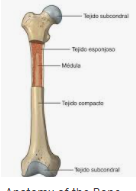
- Bone
- Heart valves
- What are they made of?
- Heparin
- What are they made of?
- Union between
- Iduronate
- Sulfo N-acetylgalactosamine
- Union between
- We can find it in
- Mast cells
- Blood vessels
- Liver
- Skin
- What are they made of?
- Heparan sulfate
- We can find it in
- Basal lamina
- Cell membrane surfaces
- We can find it in
- Keratin sulfate
- What are they made of?
- Union between
- D-galactose
- N-acetyl glucosamine sulfate
- Union between
- We can find it in
- Cornea
- Bone
- Cartilage
- What are they made of?
- Hyaluronate
- An excess can produce
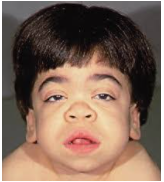
- Mucopolysaccharidosis
- Orphan Disease Group
- Autosomal recessive diseases
- Also known as gargolismo
- Its treatment is based on the administration of the deficient enzyme in the body
- Mucopolysaccharidosis
- What are they?
Proteoglycans
- What are they?
- Molecules formed by a protein nucleus that is covalently bound to a special type of polysaccharides
- Have
- Protein core structure
- Sugar chain
- Linear from 10 to 50 sugars
- Features and functions
- Bind proteins
- Bind with glycosaminoglycans
- Have a negative charge
- Retain water
- They are composed of 95% carbohydrates
- They have a high molecular weight
- Place where we can find them
- Exclusive to the extracellular matrix
- Some are
- Sindicano
- Betaglucan
- Perlecano
- Decorine
- Agrecane
- What are they?
Glycoproteins
- What are they?
- Molecules composed of a protein linked to one or more carbohydrates, simple or compound.
- function
- Modulate physicochemical properties
- As
- Solubility
- Viscosity
- Load
- Conformation
- Union sites
- For
- Bacteria
- Virus
- Parasites
- For
- Denaturation
- As
- Protect against proteolysis
- Since
- Inside the cell
- Outside the cell
- Since
- They participate in biological activity
- Affect insertion into membranes
- They affect embryonic development and differentiation
- Modulate physicochemical properties
- Diseases originated in the biosynthesis of glycoproteins
- Cancer
- Congenital factors of glycation
- Leukocyte type 2 inheritance deficiency
- Paroxysmal nocturnal hemoglobin
- Cell I disease
- Factors Affecting the Activities of the Glycoprotein Processing Enzyme
- Cell type
- Previous enzyme
- Developing
- Intracellular location
- Protein conformation
- Species
- Cancer
- What are they?
Glycolipids
- What are they?
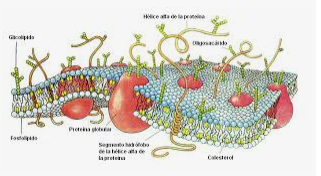
- They are membrane lipids with carbohydrates in their polar head groups.
- Types
- Cerebrosides.
- Globosides
- Gangliosides.
- Functions
- Barrier function
- Responsible for fluency
- Of
- The plasma membrane
- Of
- Responsible for flexibility
- Responsible for curvature
- Participate in processes
- Cell recognition
- Cellular communication
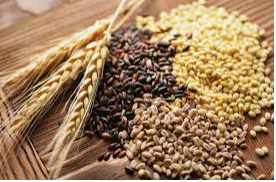
- Foods rich in Glycolipids
- Alpiste
- Rice.
- Oats
- Sugar cane.
- Barley
- What are they?
Bilder und Dateien der Mindmap


Informationen
- Beschreibung
- Mindmap am Glycoconjugates, erstellt von Jose Gabriel Zabala Quintero am 12/10/2020.
- Erstellt von
- Jose Gabriel Zabala Quintero
- Aufrufe
- 1
- Bewertung