
Mindmap
Internal Structures of Prokaryotes
Inhalt der Mindmap
Internal Structures of Prokaryotes
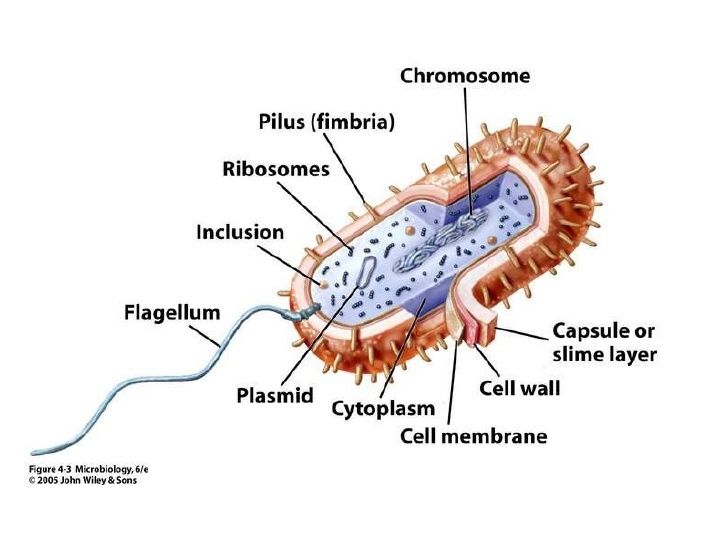
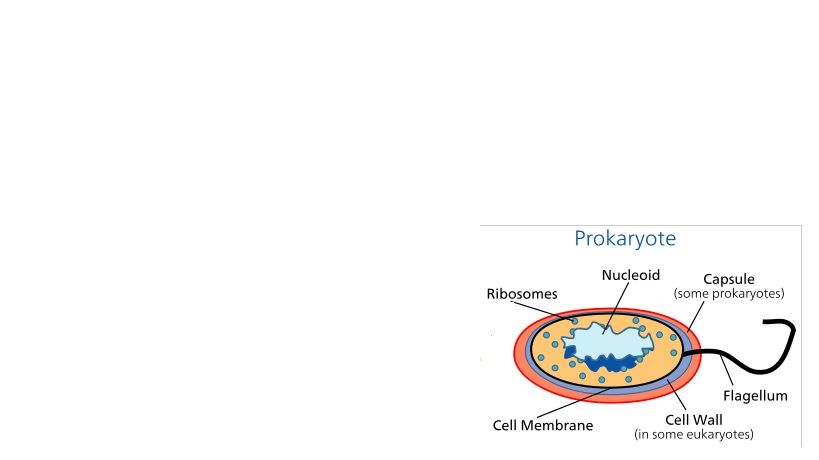
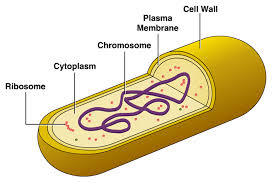
Cytoplasm
- is a gel-like, yet fluid, substance in which all of the other cellular components are suspended. It is very similar to the eukaryotic cytoplasm, except that it does not contain organelles
- Recently, biologists have discovered that prokaryotic cells have a complex and functional cytoskeleton similar to that seen in eukaryotic cells. The cytoskeleton helps prokaryotic cells divide and helps the cell maintain its plump, round shape
Ribosome
- are smaller and have a slightly different shape and composition than those found in eukaryotic cells.
- Bacterial ribosomes, for instance, have about half of the amount of ribosomal RNA (rRNA) and one third fewer ribosomal proteins (53 vs. ~83) than eukaryotic ribosomes have
- Just like in eukaryotic cells, prokaryotic ribosomes build proteins by translating messages sent from DNA.
Nucleoid
- is an irregularly-shaped region within the cell of a prokaryote that contains all or most of the genetic material, called genophore. All the genetic material are in the form of DNA and RNA. In contrast to the nucleus of a eukaryotic cell, it is not surrounded by a nuclear membrane
- In addition to a single large piece of chromosomal DNA, many prokaryotic cells also contain small pieces of DNA called plasmids. These circular rings of DNA are replicated independently of the chromosome and can be transferred from one prokaryotic cell to another through pili, which are small projections of the cell membrane that can form physical channels with the pili of adjacent cells.
Inclusions
- nonliving components of the cell that do not possess metabolic activity and are not bounded by membranes
- may or may not be present in a cell, depending on the cell type
- Examples:
- Glycogen
- is an important energy source of the cell
- Lipids
- are triglycerides and serve as a local store of energy and a potential source of short carbon chains
- Crystals
- crystalline forms of certain proteins which is located everywhere in the cell such as in nucleus, n etc
- Pigments
- Glycogen
plasma membrane
- is responsible for controlling what gets into and out of the cell
- Prokaryotic cells can have multiple plasma membranes. Prokaryotes known as "gram-negative bacteria," for example, often have two plasma membranes with a space between them known as the periplasm
Bilder und Dateien der Mindmap
Informationen
- Beschreibung
- A mind map about that explains about all the internal structures of prokaryotes
- Erstellt von
- skylineturbo96
- Aufrufe
- 103
- Tags
- Bewertung