
Mindmap
SYSTEMS & MODELS
Inhalt der Mindmap
SYSTEMS & MODELS
SYSTEMS
- It is a set of connected parts that relate to each other to form a complex whole and produce emergent properties.
- Helps us to study its complexity by breaking it down into the most relevant elements.
- INTEGRATED PARTS
- Inputs
- An element that goes into the system to activate it
- Physical
- Cultural behaviours
- They can be
- An element that goes into the system to activate it
- Processes
- A series of actions that act on the inputs and transform them into outputs
- Information transfer
- Energy transformation
- They can be
- A series of actions that act on the inputs and transform them into outputs
- Outputs
- are the flows of matter and energy that leave the system
- Feedback
- They are outputs that re-enter the system and become new inputs
- Not every system has feedback
- They are outputs that re-enter the system and become new inputs
- Feedback
- are the flows of matter and energy that leave the system
- EXAMPLE
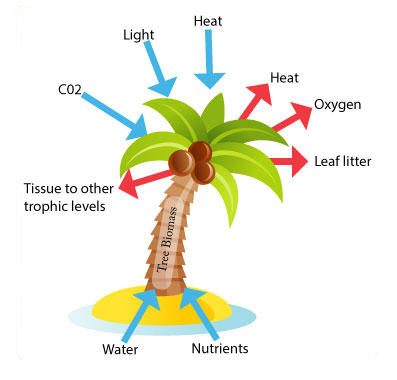
- In photosynthesis:
- INPUT: Water, carbon dioxide, and sunlight (Energy)
- PROCESS: Chemical reactions
- OUTPUTS: Oxygen and glucose
- In photosynthesis:
- Inputs
- CONSTITUENT PARTS
- Energy flow
- Energy
- It flows
- Sunlight
- EXAMPLE
- It flows
- Matter
- It cycles
- Water
- EXAMPLE
- It cycles
- It involves
- Ways it occurs
- Transformations
- When energy and matter is moved through a process that will create a change of state or form
- Transfers
- When energy and matter is moved without suffering any changes
- Transformations
- Energy
- Energy flow
- TYPES
- Open
- A system that exchanges both energy and matter with the environment
- Water Bodies.
- EXAMPLE
- A system that exchanges both energy and matter with the environment
- Closed
- A system that exchanges energy but does not exchange natter with the environment
- Earth
- EXAMPLE
- A system that exchanges energy but does not exchange natter with the environment
- Isolated
- A system that does not exchange energy nor matter with the environment
- Universe
- EXAMPLE
- A system that does not exchange energy nor matter with the environment
- Open
- INTEGRATED PARTS
- Helps us to study its complexity by breaking it down into the most relevant elements.
- It is a set of connected parts that relate to each other to form a complex whole and produce emergent properties.
MODELS
- It is a study on a particular part of the world by making a simplified version of it in order to have a better understanding, visualization and definitions
- It is useful to obtain prediction about similar situation
- It explains how a complex phenomena emerges from a simpler phenomena
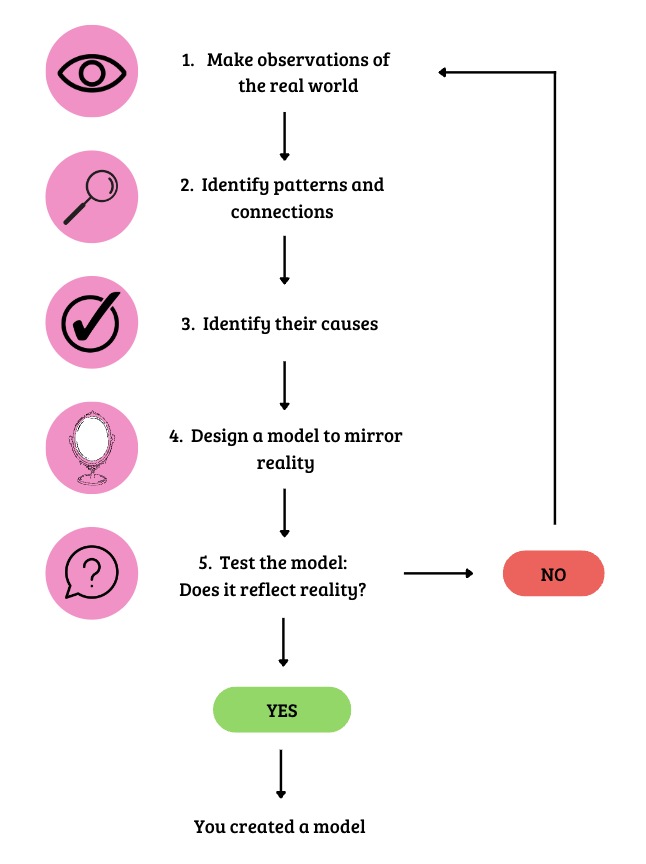
- DEVELOPEMENT
- It is similar to the scientific method
- It is similar to the scientific method
- TYPES
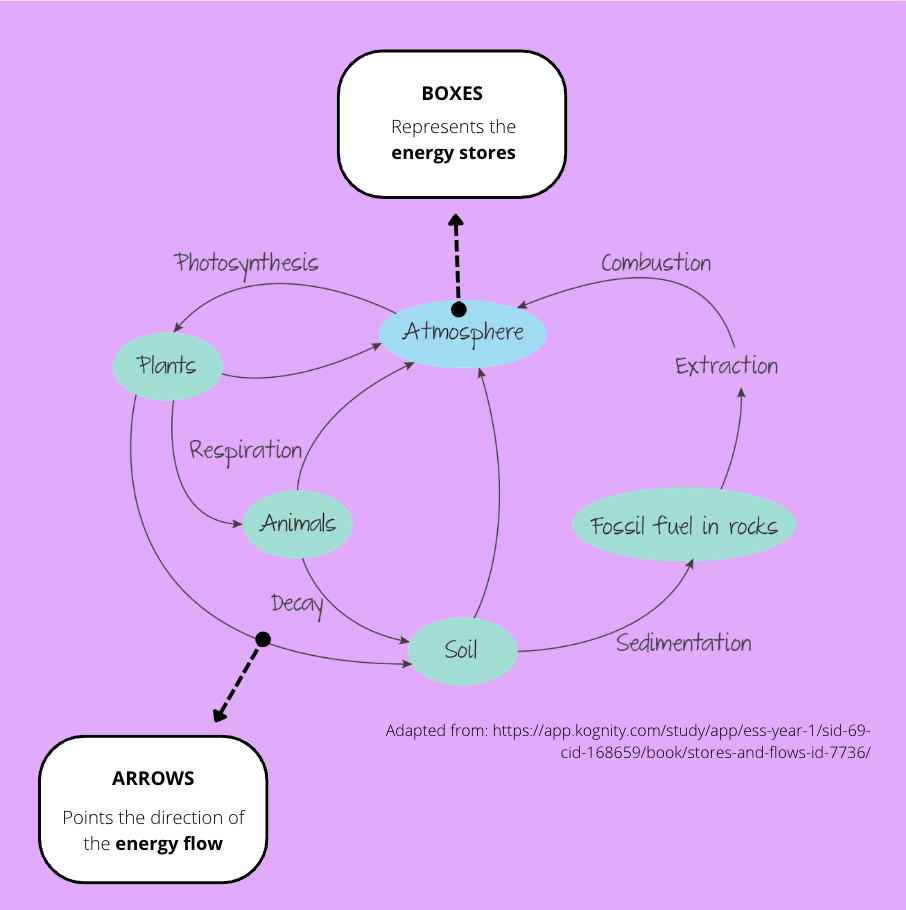
- Systems
- It is a set of connected parts that relate to each other to form a complex whole and produce emergent properties.
- Taken from: https://www.i-study.co.uk/IB_ES/IB_unit1_Environmental _systems_and_models.html
- EXAMPLE
- It is a set of connected parts that relate to each other to form a complex whole and produce emergent properties.
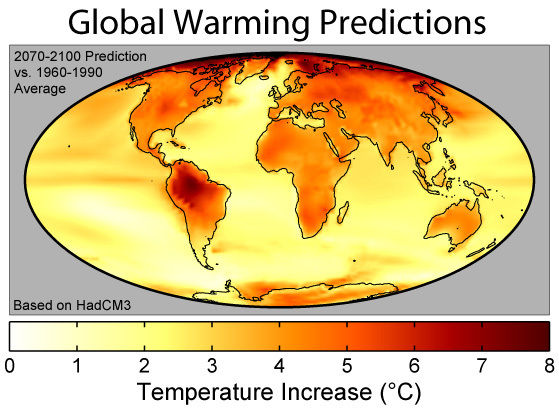
- Simulations
- It is model in action that provides information about the response of something over time.
- Taken from: https://hcdevilsadvocate.com/top-stories/2017/03/01/ why-to-welcome-global-warming/
- EXAMPLES
- It is model in action that provides information about the response of something over time.
- Systems
- ADVANTAGES
- DISADVANTAGES
- Shortage of detail, predictions are not that precise
- It requires figures, or else it creates misunderstandings
- Distorted information which can lead to misconception
- May be deceiving and it might affect our comprehension
- Distorted information which can lead to misconception
- It requires figures, or else it creates misunderstandings
- Shortage of detail, predictions are not that precise
- Helps to exemplify complex ideas and prepare hypotheses.
- Reveal patterns
- Easy to follow
- It is able to study aspects that might be too small or too long for a better understanding.
- Easy to follow
- Reveal patterns
- DISADVANTAGES
- DEVELOPEMENT
- It explains how a complex phenomena emerges from a simpler phenomena
- due to this
- It is useful to obtain prediction about similar situation
- It is a study on a particular part of the world by making a simplified version of it in order to have a better understanding, visualization and definitions
Bilder und Dateien der Mindmap

Informationen
- Beschreibung
- Mindmap am SYSTEMS & MODELS, erstellt von María Gabriela Forero Joya (7653) am 05/09/2022.
- Erstellt von
- María Gabriela Forero Joya (7653)
- Aufrufe
- 0
- Bewertung