
Introduction to Environmental Science and Systems
250 resources created by 220 users
This Introduction to Environmental Science and Systems page on GoConqr gathers community-made flashcards, mind maps, quizzes, notes, slide sets and flowcharts, from systems and models to the Gaia hypothesis, planetary boundaries and pollution. It's built for school students revising a topic, university students and professional candidates filling gaps, and teachers after ready-made material. There are over 240 resources here, including more than 30 quizzes, over 90 mind maps and over 90 flashcard decks, with some aimed at AP Environmental Science and IB ESS. Pick a deck or map and start.
Top Introduction to Environmental Science and Systems resources
-
52 cardsAPES Review Many communities experience the tragedy of the commons. One way a local community might regulate a shared a...
-
185 cardsEnvironmental Science 101 Final Exam
-
Mind map Systems and Models
-
50 questionsEnvironmental Geography Exam 2 Which of the following climate zones would be described as not extreme, with four seasons?
-
48 cardsEVN Final Exam Energy contained in firewood and other plant matter
-
15 cardsES 200 2/11(test 2/13) area subject to flooding(3 parts within)
-
81 cardsEnvironmental Science Literally the entire glossary from my Environmental Science textbook
-
46 cardsIB ESS Topic 1
Quizzes
See all 36 quizzes-
50 questionsEnvironmental Geography Exam 2 Which of the following climate zones would be described as not extreme, with four seasons?
-
60 questionsEnvironmental Science Final Exam Practice
-
113 questionsEnvironmental Science - Chapter Two What are the two major types of energy?
-
15 questionsAPES: Fundamentals of Environmental Science Which of the following data regarding a renewable resource is the most important in determining if the reso...
Mind maps
See all 98 mind maps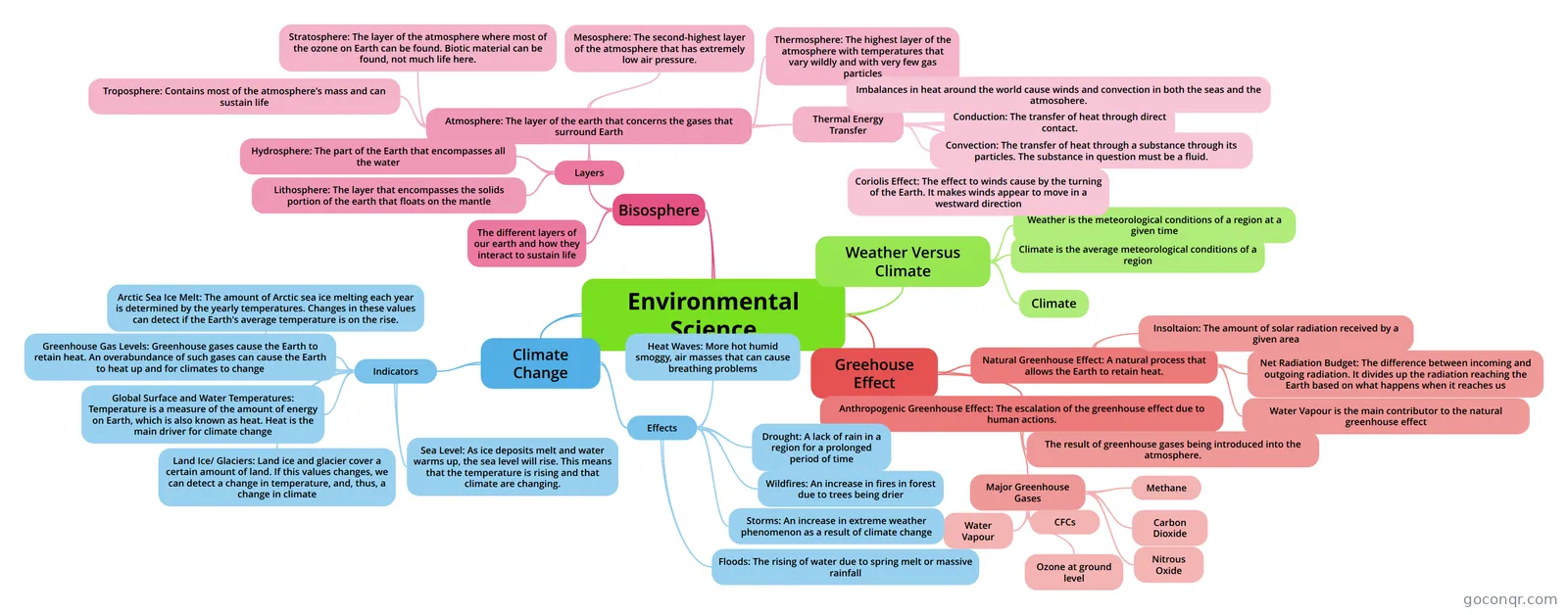
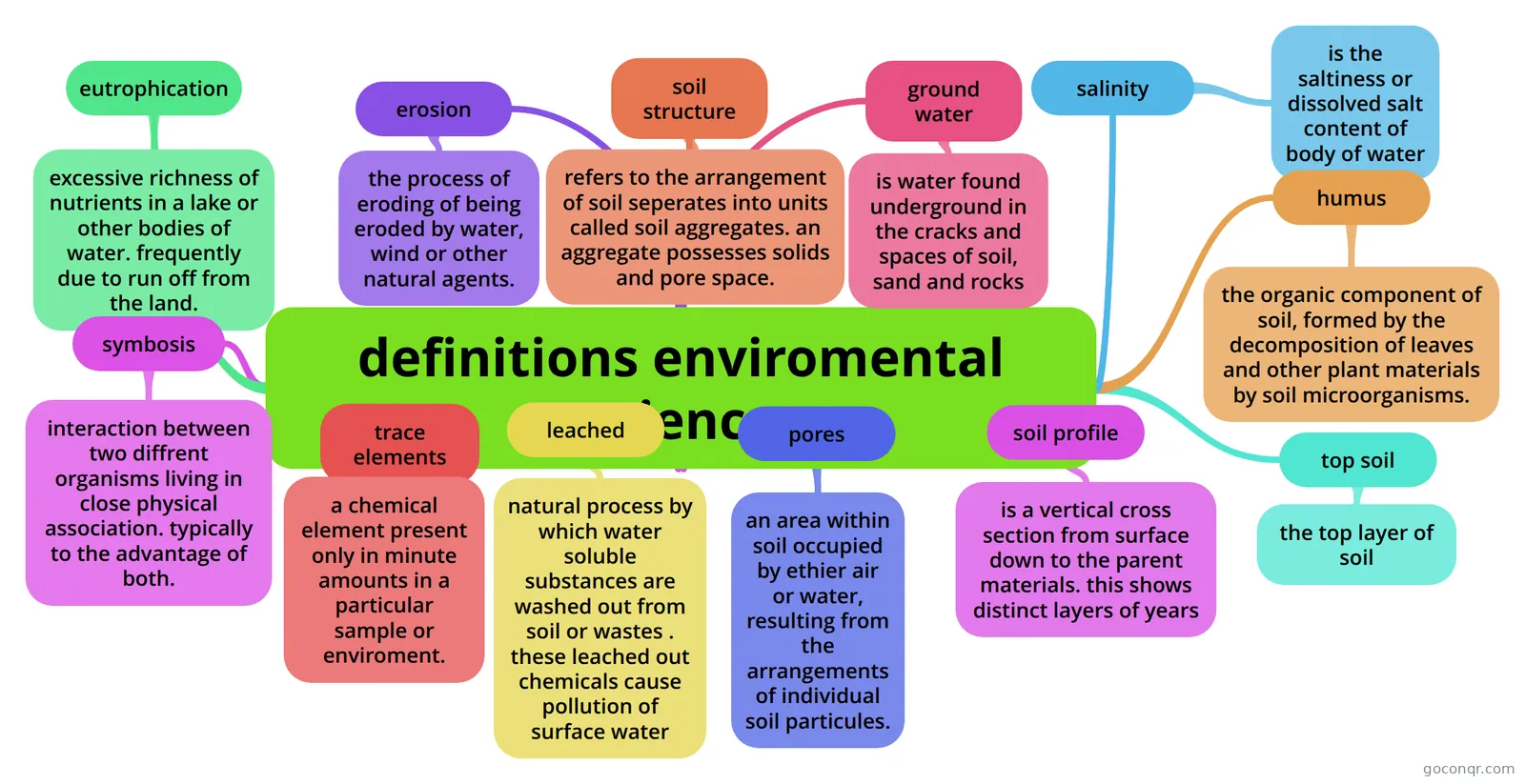
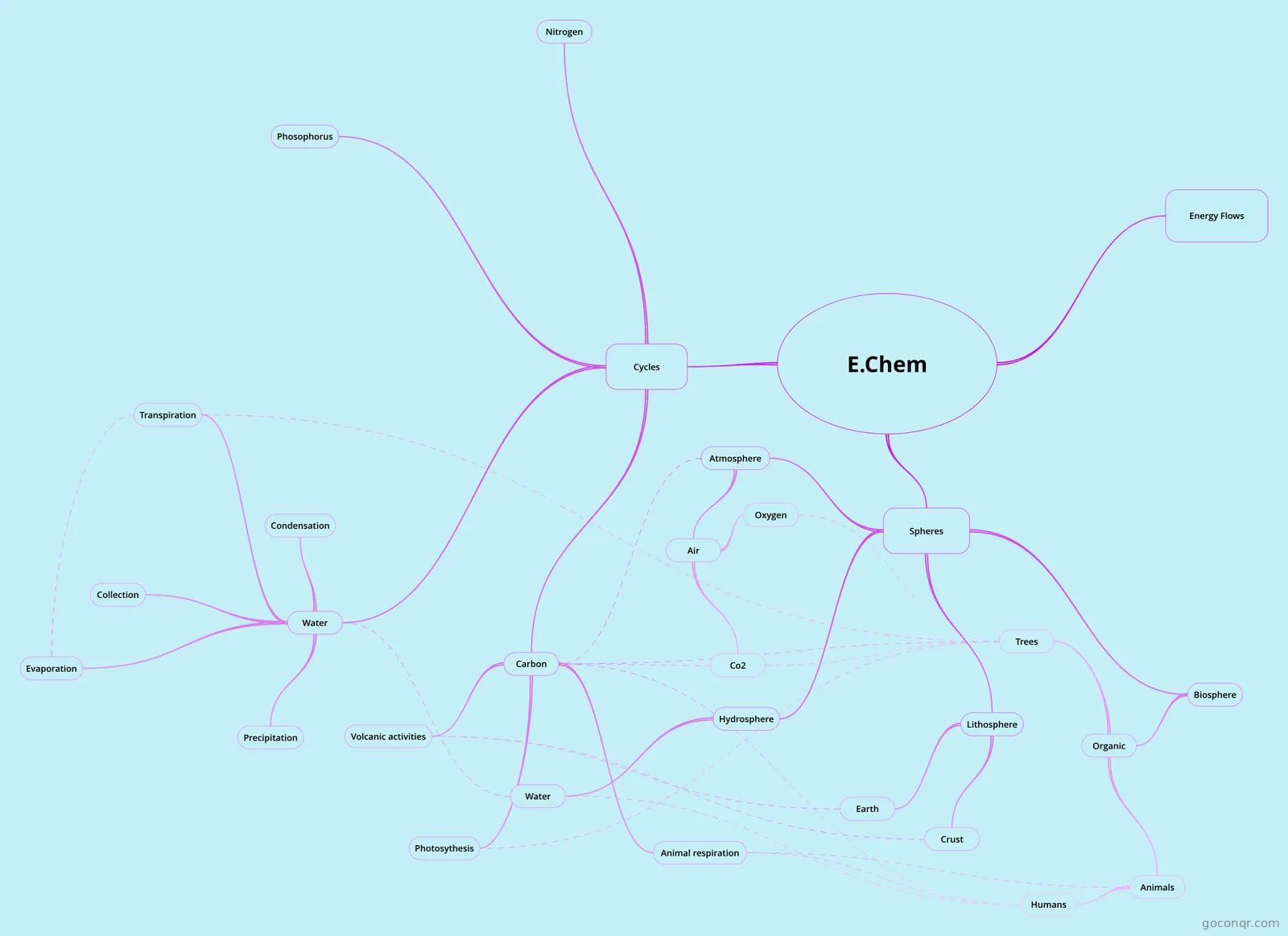
Flashcards
See all 99 flashcards-
52 cardsAPES Review Many communities experience the tragedy of the commons. One way a local community might regulate a shared a...
-
185 cardsEnvironmental Science 101 Final Exam
-
48 cardsEVN Final Exam Energy contained in firewood and other plant matter
-
15 cardsES 200 2/11(test 2/13) area subject to flooding(3 parts within)
-
81 cardsEnvironmental Science Literally the entire glossary from my Environmental Science textbook
-
46 cardsIB ESS Topic 1
-
142 cardsFinal Lab Exam Environment Science
-
124 cardsAP Environmental Science greatest global mass extinction
Slides
More Environmental science and ecology topics
About Introduction to Environmental Science and Systems
GoConqr OriginalWhat the unit covers
This unit gathers the opening ideas of environmental science. Many resources start with systems: the mind map Systems and Models outlines the concept and characteristics of systems and the terms open, closed and isolated system. Others look at feedback loops, equilibrium, the Anthropocene and planetary boundaries.
Values and big-picture thinking also appear. The IB ESS Topic 1 flashcards cover the Gaia hypothesis, sustainability, environmental value systems and terms such as technocentric, ecocentric and anthropocentric. There is also a mind map on the Gaia hypothesis, with its black daisy and white daisy model of a worldwide ecosystem.
Where to start
- Begin with a broad mind map such as Systems and Models or Environmental Systems - Basics to get the vocabulary.
- Move to flashcards. Environmental Science is a long glossary running from acid deposition to adaptive management, and APES Review includes questions on the tragedy of the commons.
- Finish with a quiz, such as Topic 1 - Systems & Models - questions or ESS Review Quiz.
Using quizzes and maps together
Read a map first, then take a quiz without looking. Note the questions you miss and go back to the matching branch of the map. Flashcards are handy for short gaps in time, such as key terms before a test.
Some decks are tied to courses and exams. You will find material labelled for AP Environmental Science, IB Environmental Systems and IB ESS, alongside university-style exam decks covering minerals, air composition, energy sources, water use and flooding. Check the title and excerpt to see whether a resource fits your course.
Where it fits
This unit sits in the Foundations of Environmental Science strand of the Environmental science and ecology subject. It is a sensible place to begin before moving on to more specific topics.
Open a few resources, compare how different authors explain the same idea, and then make your own map or deck to fill any gaps you find.
Frequently asked questions
Which resource should I open first?
Start with the mind map Systems and Models. It outlines what a system is and separates open, closed and isolated systems, which many other resources build on. After that, try the Topic 1 questions quiz on systems and models to check what you remember.
What do the mind maps on this page cover?
They range from systems, feedback loops and equilibrium to the Gaia hypothesis, planetary boundaries, the Anthropocene, environmental value systems and types of pollution. Some follow a textbook chapter, while others are short definition maps, so you can pick by topic.
Are these resources free to use?
Yes. Every resource listed here is free to open, study and take, with no account needed. They were made by GoConqr users, not by GoConqr itself, so it is worth checking that a resource matches your course before relying on it.
Which exams and levels do they suit?
The listed resources mention AP Environmental Science, IB, IB Environmental Systems and IB ESS. Many others read like university course material, with exam and chapter decks. School students, university students and professional candidates can all find something, and teachers can use them as ready-made material.
What if I can't find the topic I need?
Try searching the resource titles for a related word, such as pollution, water or energy, since many exam decks cover several topics. If nothing fits, a free account lets you build your own quizzes, mind maps, flashcards and notes, and save your quiz scores.