
Mindmap
P1B: Keeping Homes Warm
Inhalt der Mindmap
P1B: Keeping Homes Warm
CONDUCTION
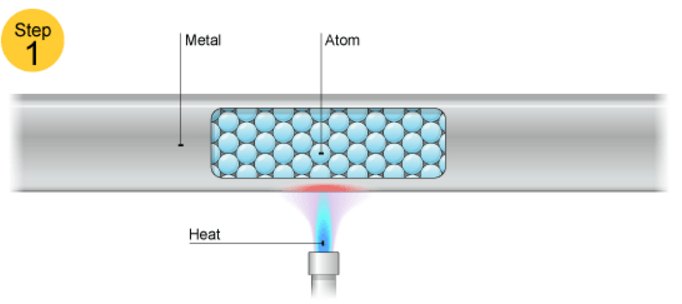
- Heat is thermal energy. It can be transferred from one place to another by conduction, which involves particles.
- Metals are good conductors of heat, but non-metals and gases are usually poor conductors of heat. Poor conductors are called INSULATORS.
- The electrons in a piece of metal can leave their atoms and move about in the metal as free electrons.
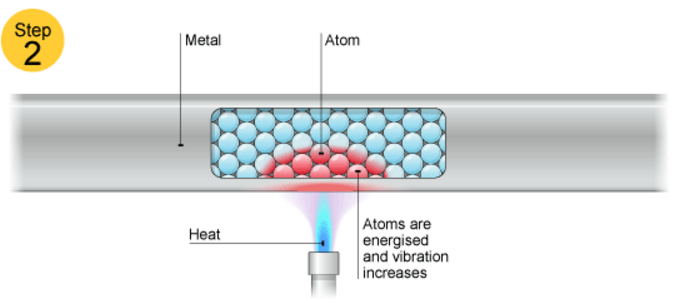
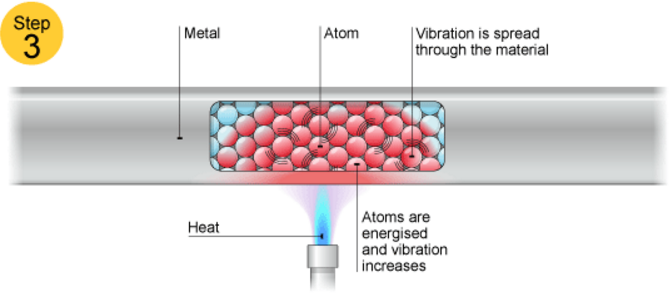
- The parts of the metal atoms left behind are now charged metal ions. The ions are packed closely together and they vibrate continually. The hotter the metal, the more kinetic energy these vibrations have.
- This kinetic energy is transferred from hot parts of the metal to cooler parts by the free electrons. These move through the structure of the metal, colliding with ions as they go.
- The parts of the metal atoms left behind are now charged metal ions. The ions are packed closely together and they vibrate continually. The hotter the metal, the more kinetic energy these vibrations have.
CONVECTION
- Heat can be transferred from one place to another by convection. Like conduction, the process involves particles.
- Liquids and gases are fluids because they can be made to flow. The particles in these fluids can move from place to place. Convection occurs when particles with a lot of heat energy in a liquid or gas move and take the place of particles with less heat energy. Heat energy is transferred from hot places to cooler places by convection.
- Liquids and gases expand when they are heated = the particles in liquids and gases move faster when they are heated = as a result, the particles take up more volume = the gap between particles widens, while the particles themselves stay the same size.
HEAT TRANSFER BY RADIATION
- Heat can be transferred by infrared radiation. Unlike conduction and convection, which need particles, infrared radiation is a type of electromagnetic radiation that involves waves.
- Radiation can even work through the vacuum of space. This is why we can still feel the heat of the Sun even though it is 150 million km away from the Earth.
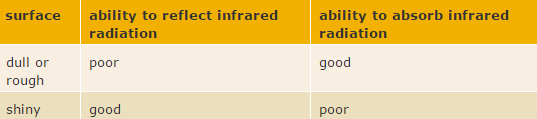
- Some surfaces are better than others at reflecting and absorbing infrared radiation.
- If two objects made from the same material have identical volumes, a thin, flat object will radiate heat energy faster than a fat object. This is one reason why domestic radiators are thin and flat. Radiators are often painted with white gloss paint. They would be better at radiating heat if they were painted with black matt paint, but in fact, despite their name, radiators transfer most of their heat to a room by convection.
INSULATING HOMES
- Heat energy is transferred from homes by conduction through the walls, floor, roof and windows. It is also transferred from homes by convection
- For example, cold air can enter the house through gaps in doors and windows, and convection currents can transfer heat energy in the loft to the roof tiles. Heat energy also leaves the house by radiation through the walls, roof and windows.
- Ways to reduce heat loss
- Fitting carpets, curtains and draught excluders
- Fit reflective foil in the walls or on them
- Double glazing to reduce heat loss from windows
- Heat loss through walls can be reduced using cavity wall insulation
- CAVITY WALL INSULATION: blowing insulating material into the gap between the brick and the inside wall, which reduces the heat loss by conduction (prevents air circulating inside cavity)
- Heat loss through the roof can be reduced by laying loft insulation. This works in a similar way to cavity wall insulation.
- Heat energy is transferred from homes by conduction through the walls, floor, roof and windows. It is also transferred from homes by convection
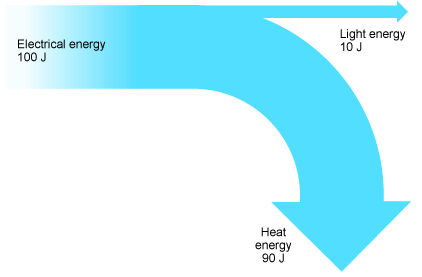
SANKEY DIAGRAMS
- Sankey diagrams summarise all the energy transfers taking place in a process. The thicker the line or arrow, the greater the amount of energy involved
- Energy can be transferred usefully, stored or dissipated. It cannot be created or destroyed
EFFICIENCY AND PAYBACK TIME
- The efficiency of a device is the proportion of the energy supplied that is transferred in useful ways. Calculated as a decimal or percentage.
- efficiency = useful energy out ÷ total energy in (for a decimal efficiency)
- efficiency = (useful energy out ÷ total energy in) × 100 (for a percentage efficiency)
- NOTE: the efficiency of a device will always be less than 1.
- TO CALCULATE PAYBACK TIME: (years) = cost of installation (£) ÷ savings per year in fuel costs (£)
- The payback time will be shortest if the cost of installation is low compared to the savings made each year.
Bilder und Dateien der Mindmap
Informationen
- Beschreibung
- GCSE Science (Physics) Mindmap am P1B: Keeping Homes Warm, erstellt von emilyhwilliams08 am 26/10/2015.
- Erstellt von
- emilyhwilliams08
- Aufrufe
- 0
- Bewertung