
Heat Transfer
792 resources created by 633 users
This Heat Transfer page on GoConqr gathers community-made quizzes, mind maps, flashcards, notes and slides on conduction, convection and radiation, from thermos flasks and insulation to keeping homes warm. It's built for school students revising GCSE Physics, and for teachers after ready-made material. There are over 700 resources here, including more than 40 quizzes and over 400 mind maps, almost all at secondary level. Pick a mind map to get your bearings, then try a quiz to find your gaps.
Top Heat Transfer resources
-
57 cardsAQA Physics unit 1 What is Infra-red Radiation?
-
30 questionsHeat Transfer Quiz Under what condition can heat pass between two objects?
-
Mind map GCSE PHYSICS: Energy Transfer
-
Mind map THERMAL ENERGY ghjtyjtyj
-
14 cardsEnergy Transfer What is an insulator?
-
6 cardsheat transfer- conduction, convection, radiation This describes the main processes of heat transfer in the 3 states of matter.
-
Mind map Energy Transfer By Heating
-
4 cardsPhysics [Chapter 5.07] Convection in Liquid
Quizzes
See all 47 quizzes-
30 questionsHeat Transfer Quiz Under what condition can heat pass between two objects?
-
41 questionsGCSE AQA Physics 1 Quiz Convection is the main form of heat transfer in...............?
-
8 questionsP1.1 infrared radiation is emitted by...
-
11 questionsHeat Transfer What are the 3 ways heat can be transferred?
-
1 questionsHow Thermos Works!
-
13 questionsP1.1 - Everything in the Specification A quick quiz on everything outlined in the AQA specification for P1.1.
-
10 questionsHeat transfer The water boiling on the stove is an example of convection.
-
5 questionsP2.1 METALS ARE THE BEST CONDUCTORS OF ELECTRICITY
Mind maps
See all 487 mind maps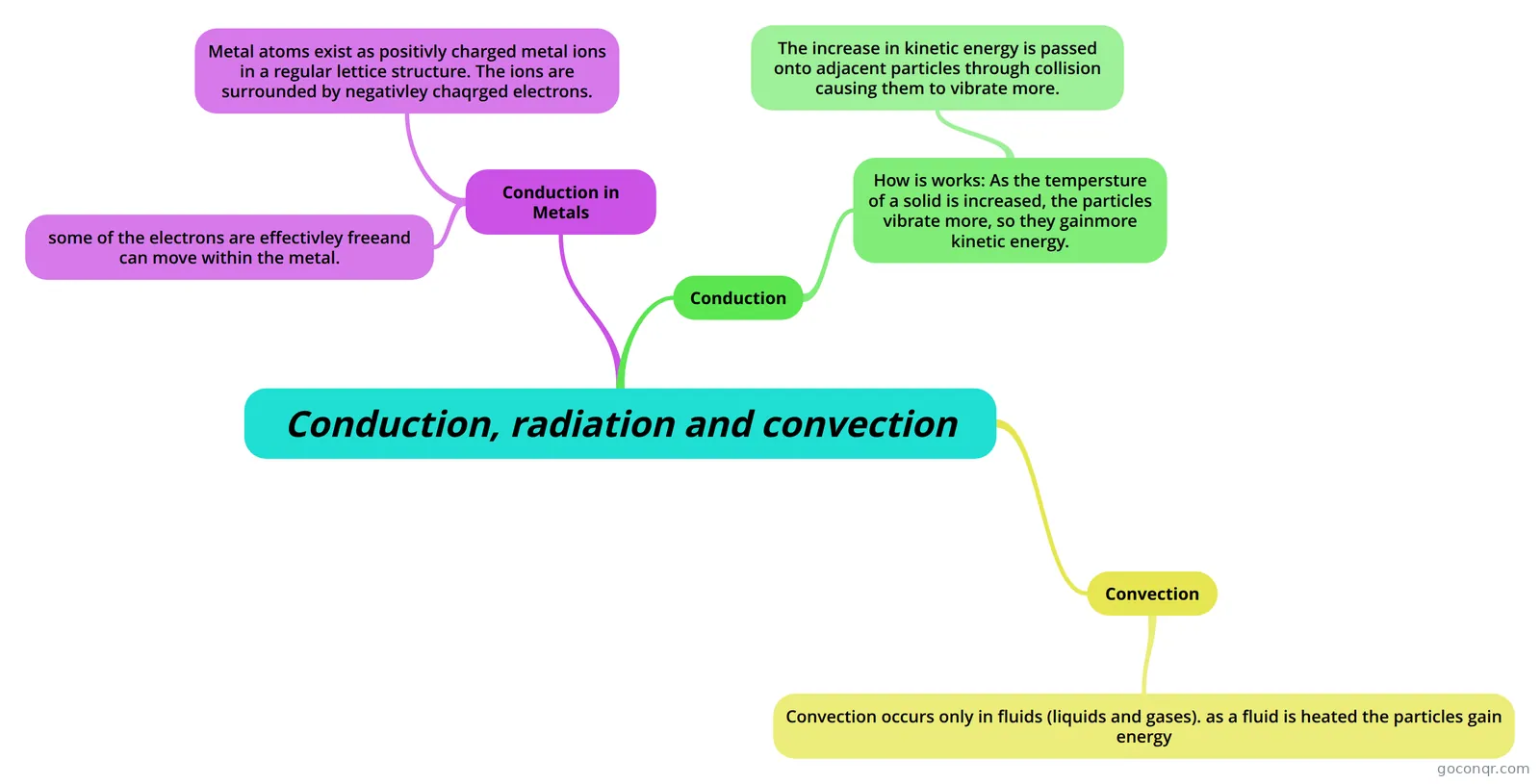
Flashcards
See all 204 flashcards-
57 cardsAQA Physics unit 1 What is Infra-red Radiation?
-
14 cardsEnergy Transfer What is an insulator?
-
6 cardsheat transfer- conduction, convection, radiation This describes the main processes of heat transfer in the 3 states of matter.
-
4 cardsPhysics [Chapter 5.07] Convection in Liquid
-
8 cards(Science) SOUND and LIGHT Sound and Light
-
64 cardsAQA Physics Unit 1 What is INFRARED RADIATION?
-
86 cardsP1 What are infrared waves part of?
-
25 cardsEnergy Transfer by heating Infrared Radiation(heat) -Electromagnetic spectrum, beyond visible red light -Emitted by all objects -Can t...
Flowcharts
Notes
See all 46 notes-
Thermos Flask History A vacuum flask is a type of flask that aims to stop all three forms of heat transfer. Conduction, convection and radiation. ConductionA vacuum flask prevents conduction by making a vacuum between the inside an...
-
Heat Transfer ConductionHeat energy can move through a substance by conduction. Metals are good conductors of heat but gases and non-metals are usually poor conductors. Poor conductors are called insulators. Heat energy is conducte...
-
GCSE core physics revision ENERGY TRANSFER BY HEATINGINFRARED RADIATION every object emits infrared radiation the hotter an object is, the more infrared radiation it emits in a given time IR is beyond the red part of the visible spectrum use a ...
-
P1 - created from Mind Map Heating Houses Energy flow Measuring temperature Specific heat capacity Specific latent heat Energy flows from a warmer to a colder body. When energy flows away from a warm object, the temperature decreases A thermogr...
-
Them Six Markers 1. Describe and explain the processes in which heat is transferred from a hot cooker to a potato in a pan of water - Conduction from the cooker to the pan- Conduction through the pan- Conduction from the pan to ...
-
P1- 1.9 P1- 1.9- HEATING AND INSULATING BUILDINGS Reducing the rate of energy transfers at home:LOFT INSULATION- Such as fibreglass reduces the rate of energy lose through the roof. The air between the fibre helps to reduce t...
-
P1- 1.6 P1- 1.6- EVAPORATION AND CONDENSATIONDrying off:When you hand wet clothes on a washing line, eventually they will dry off. This is because the water evaporates.Condensation:In a steamy bathroom, a mirror is often cove...
-
P1- 1.4 P1- 1.4- CONDUCTIONIt is important to know which materials are good CONDUCTORS and which are good INSULATORS-Metals are better conductors than non-metals-Copper is a better conductor than steel-Wood conducts better th...
More Physics topics
About Heat Transfer
GoConqr OriginalWhat this unit covers
The resources on this page follow the three ways heat moves: conduction, convection and radiation. The flashcard deck on conduction, convection and radiation sets out the basics. Conduction is heat moving through solids from high temperature to low, and it stops when the temperatures are equal. Convection is heat moving through a gas or a liquid. Radiation covers infrared, which every object emits and absorbs.
Where to start
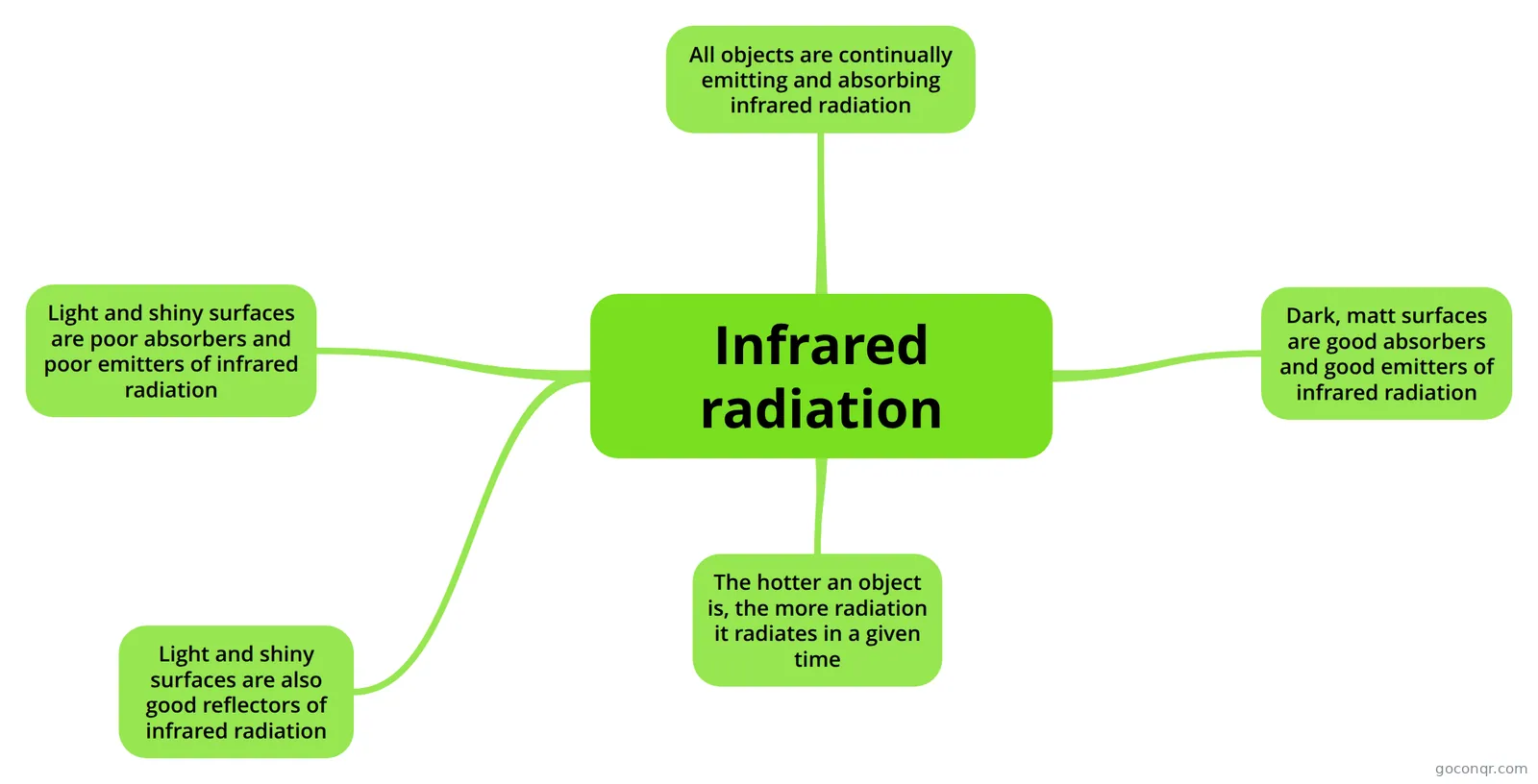
Begin with a mind map for the big picture. The mind map titled Energy Transfer By Heating shows that hotter objects emit more infrared and that surface type affects how much is given out. Conduction, radiation and convection explains how particles in a solid vibrate more and gain kinetic energy as it warms up.
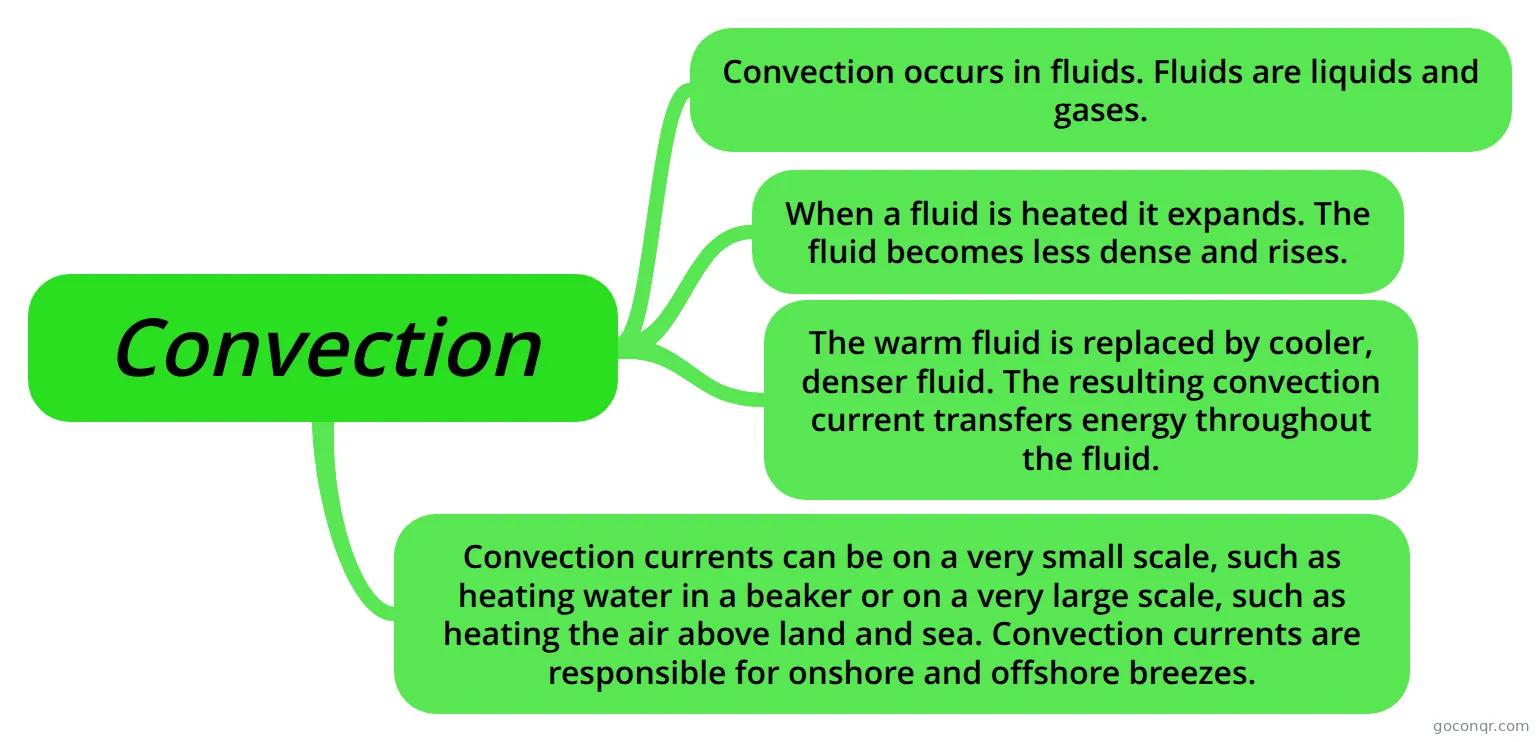
Next, move to flashcards. The deck on convection in liquid and in air explains how water above a flame expands, becomes less dense and rises while cooler, denser water sinks in to replace it.
Putting ideas to use
Several resources apply the theory to real things. The notes on Thermos Flask explain how a vacuum flask aims to stop all three kinds of heat transfer. Other maps look at heating homes, insulation and keeping homes warm. There is also a flowchart on convection currents created by radiators.
Using quizzes with maps
- Read a map or flashcard deck on one method of heat transfer.
- Take the Heat Transfer Quiz without looking.
- Note the questions you missed and go back to the matching map.
- Try a longer set, such as the notes called Them Six Markers, once the basics feel secure.
Where it sits
This unit belongs to the strand Matter and Thermal Physics within Physics. Many resources are labelled for AQA Physics and GCSE Physics, so they suit teachers and students working to those courses.
When you are ready, open a quiz, then make a mind map or flashcard set of your own.
Frequently asked questions
Which resource should I start with?
Start with a mind map such as Energy Transfer By Heating or the one on conduction, radiation and convection. They give you the overview in one view. Then work through the flashcard deck on conduction, convection and radiation before testing yourself with the Heat Transfer Quiz.
What do the mind maps cover?
The mind maps cover conduction, convection and radiation, plus infrared, kinetic theory, insulation, heating homes and keeping homes warm. Some are tied to GCSE Physics topic codes such as P1.1. There are over 400 of them, so you can compare different students' approaches to the same idea.
Are the resources free to use?
Yes. Every resource on this page is free to open, study and take, with no account needed. They were made by GoConqr users, not by GoConqr itself. If you create a free account, it also saves your quiz scores and lets you build your own quizzes, maps, flashcards and notes.
Which exams do these resources suit?
Most of the resources are at secondary level, and the ones that name an exam mention GCSE Physics, including AQA Physics and AQA GCSE Physics. Check each resource against your own specification, since the content was written by different users.
Is there anything on how a thermos flask works?
Yes. The notes called Thermos Flask explain how a vacuum flask aims to stop conduction, convection and radiation. There is also a quiz called How Thermos Works!, which is a good way to check you can name which type of transfer each feature blocks.
What if I can't find the topic I need?
Try searching related ideas, such as kinetic theory, insulation or heating homes, as many resources sit under those headings. If something is still missing, you can make your own mind map, flashcards or quiz and use it for revision or in class.