
39633187
Beschreibung

Mindmap von Imogen colvin, aktualisiert more than 1 year ago

|
Erstellt von Imogen colvin
vor mehr als ein Jahr
|
|
Cells
- Eukaryotes
- Most animal and plant cells are eukaryotic
- Have a nucleus and other
membrane-bound organelles
- Plant and animal cells
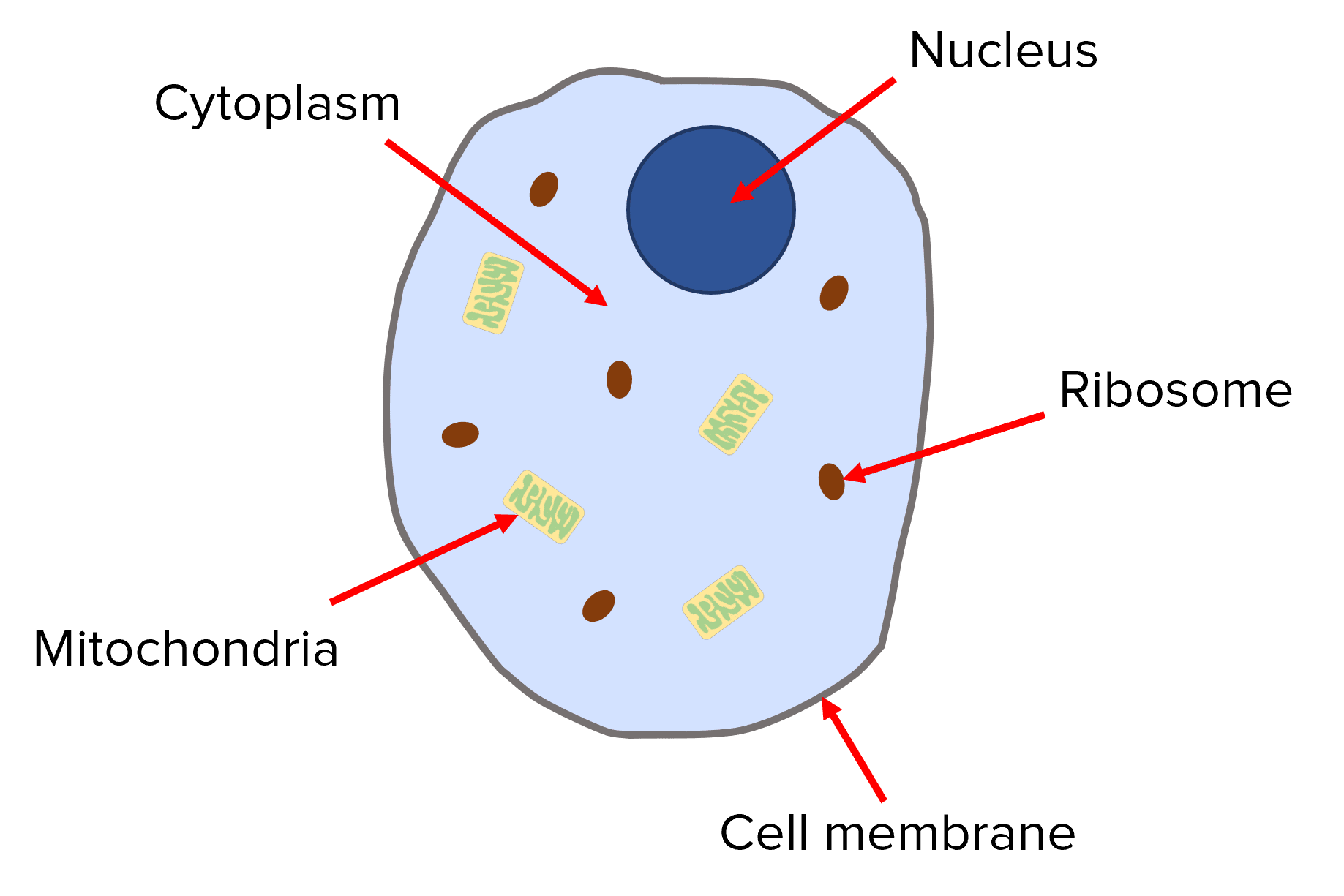
- Cell Membrane
- Controls what comes in and out of the cell
- Controls what comes in and out of the cell
- Nucleus
- Controls cell function and
contains genetic information
- Controls cell function and
contains genetic information
- Mitochondria
- Perform cellular respiration
- Perform cellular respiration
- Ribosomes
- Perform protein synthesis
- Perform protein synthesis
- Cytoplasm
- Site of most chemical processes,
controlled by enzymes
- Site of most chemical processes,
controlled by enzymes
- Cell Membrane
- Just plant cells
- Cell wall
- Adds additional support
and structure to the cell
- Adds additional support
and structure to the cell
- Vacuole
- Contains cell sap - dissolved sugars and salts
- Contains cell sap - dissolved sugars and salts
- Chloroplasts
- Perform photosynthesis
- Perform photosynthesis
- Cell wall
- Plant and animal cells
- Prokaryotes
- Have no nucleus
- Mostly bacteria
- Flagella
- Allow the cell to move
- Allow the cell to move
- Plasmids
- Smaller loops of DNA
- Smaller loops of DNA
- Chromosome / DNA ring
- Larger loops of DNA
- Larger loops of DNA
- Have no nucleus
- Magnification
- he number of times larger the image
is than the real size of the object
- Magnification = Image height / Object height
- Resolution
- Smallest distance between two objects that
can still be distinguished as different things
- Smallest distance between two objects that
can still be distinguished as different things
- he number of times larger the image
is than the real size of the object
- Specialisation
- Cells specialise becuase they
all have different functions
and need to perform them as
efficiently as possible
- The cell adapts to conform to the active DNA
- The cell adapts to conform to the active DNA
- Stem Cell
- An undifferentiated cell that can
specialise into other cell types, or
produce more stem cells
- Can't always specialise beyond pre-birth growth
- Become only in bone marrow, making a few cells e.g. blood cells
- Become only in bone marrow, making a few cells e.g. blood cells
- An undifferentiated cell that can
specialise into other cell types, or
produce more stem cells
- Cells specialise becuase they
all have different functions
and need to perform them as
efficiently as possible
- Microscopes
- Light
- Light is shone through the specimen
- x2000 at max
- Up to 200nm
- Only large, nucleus, chloroplasts
- Alive and needs little preparation
- Alive and needs little preparation
- Only large, nucleus, chloroplasts
- Up to 200nm
- x2000 at max
- Light is shone through the specimen
- Electron
- Electrons are fired at the specimen
- x50,000,000 at max
- 0.1nm
- Ribosomes, and within
structures such as mitochondria
- Must be dead, and requires lots of preparation
- Must be dead, and requires lots of preparation
- Ribosomes, and within
structures such as mitochondria
- 0.1nm
- x50,000,000 at max
- Electrons are fired at the specimen
- Source of image
- Magnification
- Resolution
- Sub-cellular structures viewed
- Specimen
- Specimen
- Sub-cellular structures viewed
- Resolution
- Magnification
- Light
Medienanhänge
Möchten Sie kostenlos Ihre eigenen Mindmaps mit GoConqr erstellen? Mehr erfahren.