
Quiz
Cells and the Immune System
This quiz has question types that open in the usual player.
Questions in this quiz (15)
1T-Cells are involved in Cellular Response.
- ATrue
- BFalse
2Select the correct definitions of a Primary Immune Response.
- ASlower, Smaller, Shorter
- BNo symptoms felt by the infected person
- CMemory Cells produced
- DOccurs during the second exposure to the antigen
3Why is it beneficial to our immune system that many pathogens have several different antigens?
- AMore antigens mean its a bigger pathogen so it'll be noticed more easily
- BMore antigens mean that more B-Cells and T-Cells can be activated
- CIt's not beneficial - it's too confusing for the B-Cells and T-Cells
- DAntigens stop the toxins being released
4[blank_start]Active[blank_end] Immunity is when your own immune system manufactures its own antibodies to tackle the antigen.
[blank_start]Passive[blank_end] Immunity is when you receive antibodies made by another organism.- AActive
- BPassive
5Active Immunity is long term and offers immediate protection.
- ATrue
- BFalse
6[blank_start]Natural Passive Immunity[blank_end] is when antibodies are passed from the mother to the baby through the placenta and/or breast milk.
[blank_start]Natural Active Immunity[blank_end] is when antibodies are produced when you have caught the disease.
[blank_start]Artificial Passive Immunity[blank_end] is when antibodies are injected into you from another organism.
[blank_start]Artificial Active Immunity[blank_end] is when antibodies are produced after exposure to the antigen through a vaccine.- ANatural Passive Immunity
- BNatural Active Immunity
- CArtificial Passive Immunity
- DArtificial Active Immunity
- ENatural Active Immunity
- FNatural Passive Immunity
- GArtificial Passive Immunity
- HArtificial Active Immunity
- IArtificial Passive Immunity
- JNatural Passive Immunity
- KNatural Active Immunity
- LArtificial Active Immunity
- MArtificial Active Immunity
- NNatural Passive Immunity
- ONatural Active Immunity
- PArtificial Passive Immunity
7Antigenic Variation:
- AWhen pathogens change the antigens on their surface
- BDone by mutation
- CDoesn't stop the Secondary Immune Response
- DEnables vaccines to be made
- EIs common among viruses
8HIV is known as a [blank_start]retro[blank_end]virus because it stores its genetic information in the form of [blank_start]R[blank_end]NA.
- Aretro
- BR
9Label this diagram of a HIV.
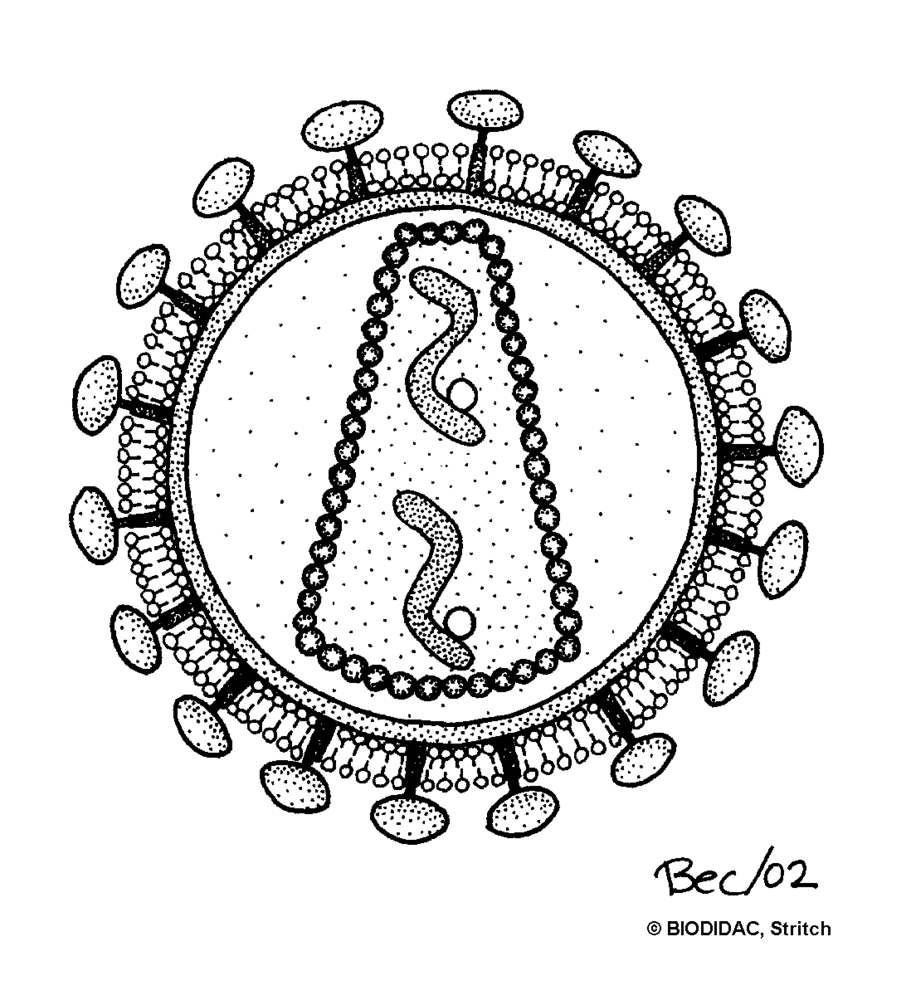
- ARNA
- BEnzyme
- CCapsid
- DPhospholipid Membrane
- EGlycoprotein Receptor
- FCore
10[blank_start]Indirect[blank_end] ELISAs test for the presence of a specific antibody.
[blank_start]Direct[blank_end] ELISAs test for the presence of a specific antigen.- AIndirect
- BDirect
11Label the diagram of an antibody:
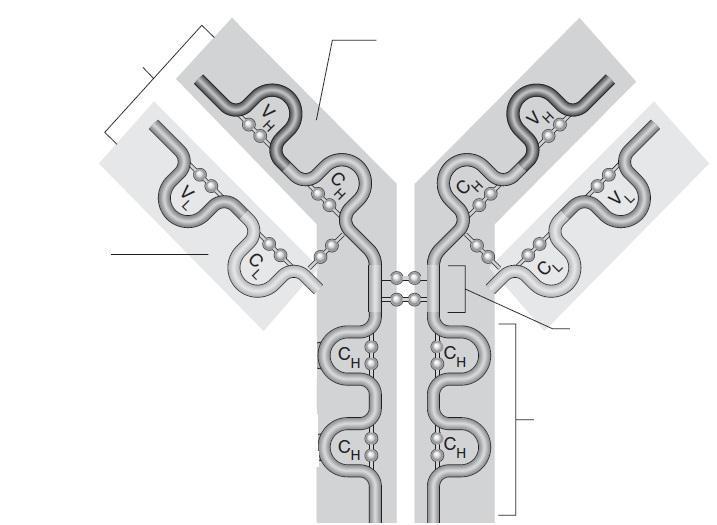
- AAntigen Binding Site
- BDisulfide Bridge
- CHeavy Chain
- DConstant Region
- EVariable Region
12Label this graph:
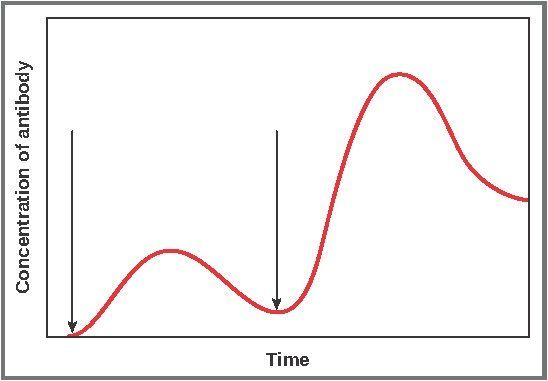
- AInitial Exposure
- BPrimary Immune Response
- CSecondary Exposure
- DSecondary Immune Response
13A phagocyte follows the trail of [blank_start]chemoattractants[blank_end] left by the pathogen up the concentration gradient.
When it gets near the pathogen, the phagocyte starts stretching out its cell membrane around the pathogen. These 'arms' are known as [blank_start]pseudopodia[blank_end] and allow the phagocyte to [blank_start]engulf[blank_end] the pathogen and form a [blank_start]phagosome[blank_end] or phagocytotic vacuole.
[blank_start]Lysosomes[blank_end] in the phagocyte travel to this vesicle, fuse with it (a [blank_start]phagolysosome[blank_end]) and release their [blank_start]lytic[blank_end] enzymes into it, breaking down and destroying the pathogen.
The waste is released in [blank_start]exocytosis[blank_end] and often the antigen(s) of the pathogen are displayed on the cell surface of the phagocyte.- Achemoattractants
- Bpseudopodia
- Cphagosome
- Dengulf
- ELysosomes
- Fphagolysosome
- Glytic
- Hexocytosis
- Iphagocyte
14Endocytosis is when something is taken into a cell.
- ATrue
- BFalse
15Put these stages of an Immune Response in order of when they occur and match the correct definition to them:
[blank_start]PHAGOCYTES ENGULF PATHOGENS[blank_end] - Phagocyte ingests pathogen and displays its antigens on its cell surface membrane.
[blank_start]T-CELLS ACTIVATED[blank_end] - A [blank_start]T-Cell[blank_end] with a [blank_start]complementary receptor[blank_end] to the antigen comes into contact with the phagocyte.
[blank_start]CLONAL SELECTION[blank_end] - The T-Cell begins [blank_start]rapid mitosis[blank_end], producing [blank_start]daughter cells[blank_end] with the complementary receptors.
[blank_start]IMMUNE RESPONSE[blank_end] - [blank_start]Cytokines[blank_end] are released by the T-Cells, stimulating [blank_start]B-Cells[blank_end] to divide to form [blank_start]plasma and memory cells[blank_end] and phagocytes to perform [blank_start]phagocytosis[blank_end]. [blank_start]Cytotoxic and Memory T-Cells[blank_end] are also created.- APHAGOCYTES ENGULF PATHOGENS
- BT-CELLS ACTIVATED
- CCLONAL SELECTION
- DIMMUNE RESPONSE
- ECytotoxic and Memory T-Cells
- FCytokines
- GB-Cells
- Hplasma and memory cells
- Iphagocytosis
- Jcomplementary receptor
- KT-Cell
- Lrapid mitosis
- Mdaughter cells
Information
- Description
- A revision quiz to test your knowledge on the Immune System. Make sure you revise even after doing this because I haven't covered everything!
- Author
- Eleanor H
- Language
- English
- Views
- 2,605
- Tags
- Rating
- 4.5 out of 5 · 24 ratings Rate this quiz