
Mindmap
Module 1 - Info Theory
Inhalt der Mindmap
Module 1 - Info Theory
To explain and predict Acctg practice, we examine 2 theories
LOs
- Importance of Acctg numbers
- Research (establish importance)
- Regulatory implications (on standards)
Addresses USEFULNESS of Acctg info in investment decisions
Historical dissatisfaction with prescriptive theories
- Led to empirical research
- Prescriptive: what firms SHOULD BE doing
- E.g. Told to use reducing balance for Depn, but they are using SL instead
- Researchers trying to understand why prescriptive theories not being used
Is Acctg info useful to investors?... YES!
Ball & Brown Study, 1968
- Examine relation between earnings and share prices
- Assumptions of Investors
- 1. Find future EPS
- Relevant for decision making
- Provides info about firm's future cash flows
- 2. Can forecast EPS from known data
- i.e. Acctg Financial statements
- 3. React to errors in forecasts when revealed
- 'Share price reaction'
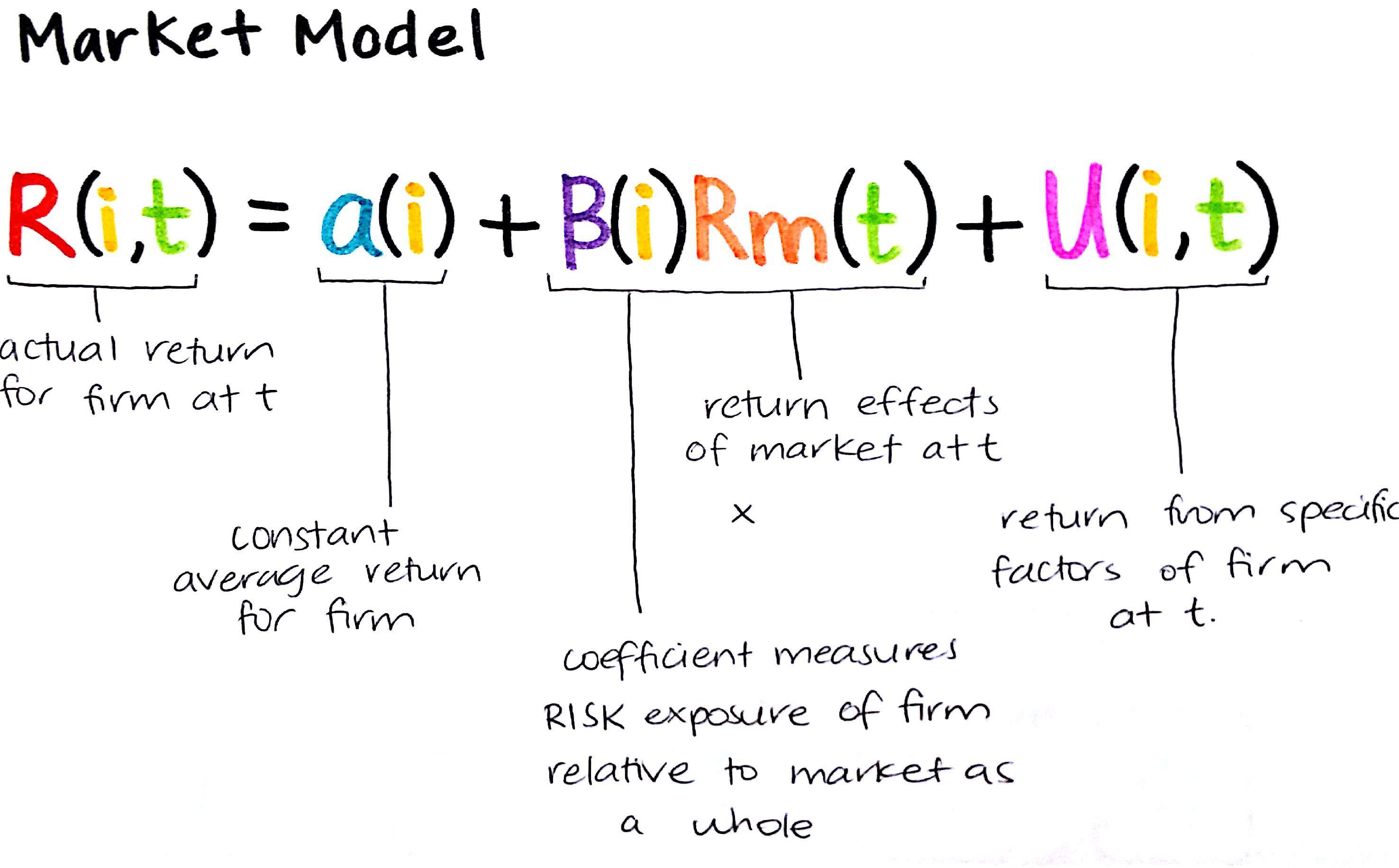
- Measure investors' reactions - abnormal return in share price
- Share prices affected by
- Market events
- Create systematic risk (affect everyone in market
- e.g. Reserve bank announces increase in interest rates
- ALL firms decrease share price
- Investors can earn better returns by putting money into debt market
- ALL firms decrease share price
- e.g. Inflation
- Share price decreases
- Increased inflation erodes returns earned
- Firms less profitable
- Increased inflation erodes returns earned
- Share price decreases
- Firm-specific events
- Unique to firm only
- e.g. Earnings announcement
- Share price reaction for THAT FIRM ONLY
- Only reduced by fully diversified share portfolio!
- Market events
- Share prices affected by
- Measure investors' reactions - abnormal return in share price
- If there is a share price reaction - it has INFORMATION CONTENT and is USEFUL!
- Errors a surprise to investors
- Adjust share trading price
- F errors should have a related and similar share price reaction
- Adjust share trading price
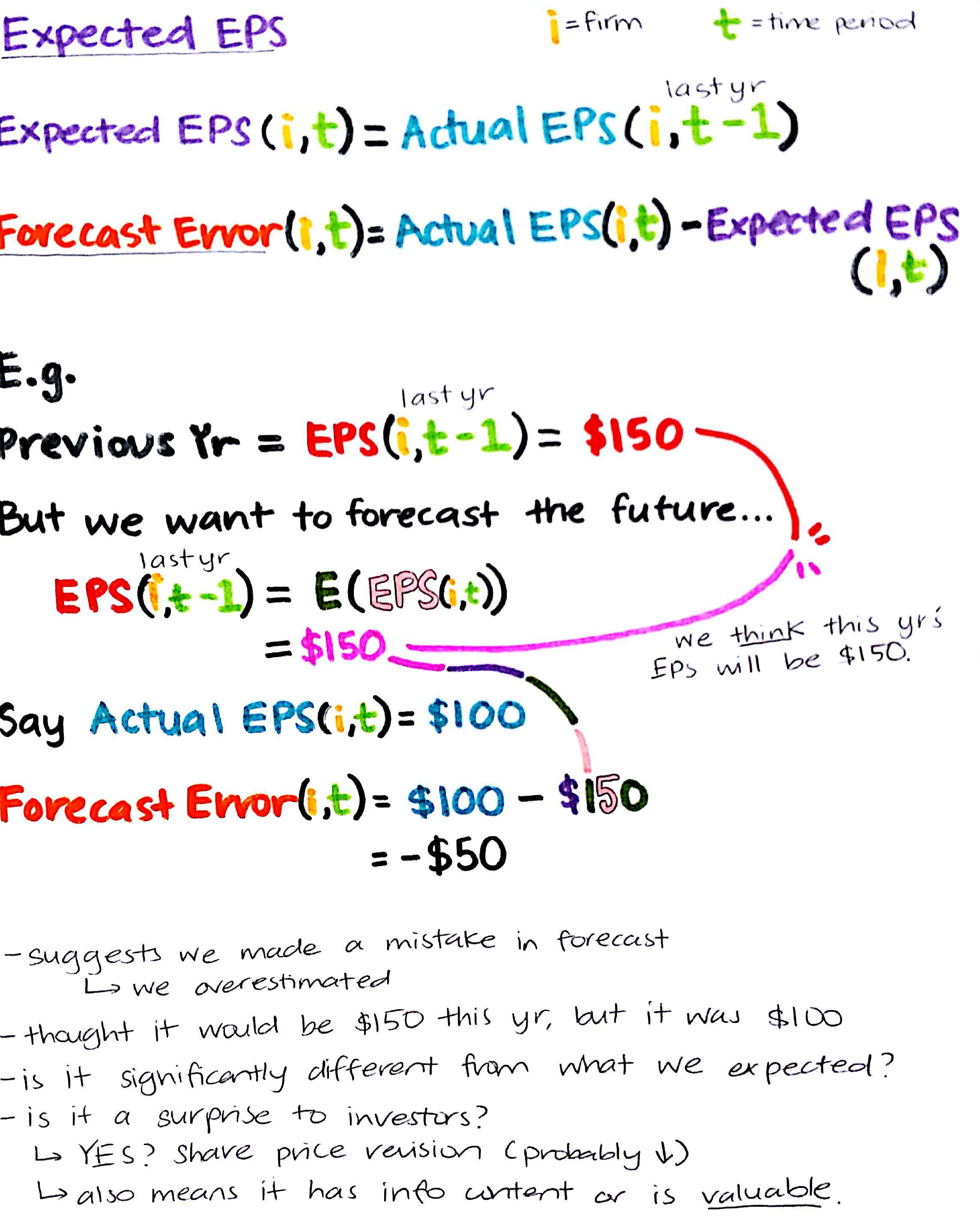
- Actual EPS compared to forecasted EPS
- Difference? = Revaluing shares of firm
- Measure the forecast error (Random Walk Model)
- 'Share price reaction'
- 1. Find future EPS
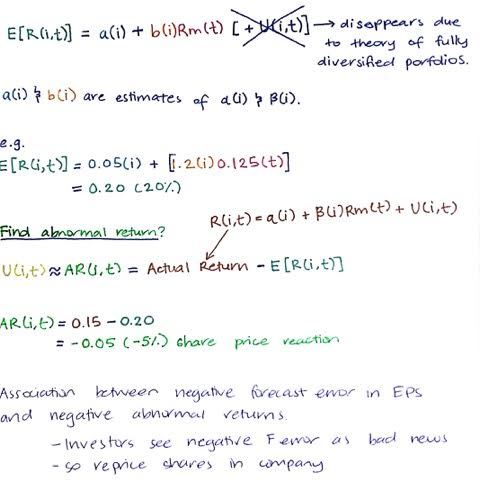
ESTIMATING the market model
- Firm specific events reduced
- In theory, unobservable, but we're trying to find out what it's at
- Abnormal return associated with negative forecast error in EPS
- i.e. Positive F Error in EPS = Positive abnormal return
- Actual EPS greater than expected EPS
- Increase in share price
- Actual EPS greater than expected EPS
- i.e. Positive F Error in EPS = Positive abnormal return
- Greatest AR/SPR around EPS announcement date, but not before!
- Firm specific events reduced
Acctg info NOT monopoly supplier of info to investors
- Other info provided (85%) by firm that is causing SPR
- This info causes SPR PRIOR to announcement
- e.g. release of semi-annual numbers
Market is semi-strong
- Reacts quickly and unbiased to new info
- After announcement, share price reaction flattens
- Once everyone has that info, you cannot make any money
- After announcement, share price reaction flattens
- Small/spot-on F error = small SPR
- Reacts quickly and unbiased to new info
Market fooled by changes that have no cash flow consequences?
- e.g. SL vs Acc. Depn
- In long run, total earnings is the same
- In short run, SL appears better
- Can fool market into thinking firm doing better
- In short run, SL appears better
- In long run, total earnings is the same
- There are NO cash flow consequences from changing policy!
- Direct cash flow consequences?
- e.g. FIFO/LIFO
- FIFO increases earnings
- Income increasing technique
- LIFO decreases earnings
- Income decreasing technique
- Negative reaction to changing to LIFO
- Adverse affects like high agency costs
- Override initial tax benefits
- Less money to pay in dividends or invest in firm
- Adverse affects like high agency costs
- FIFO increases earnings
- e.g. FIFO/LIFO
- e.g. SL vs Acc. Depn
Bilder und Dateien der Mindmap
Informationen
- Beschreibung
- Accounting information in capital markets, concentrating on Information theory.
- Erstellt von
- T L
- Aufrufe
- 10
- Bewertung