
Accounting Principles and Conceptual Framework
62 resources created by 48 users
This Accounting Principles and Conceptual Framework page on GoConqr gathers community-made quizzes, mind maps, flashcards and notes, from accounting definitions and the accounting equation to qualitative characteristics, measurement methods and positive accounting theory. It's built for university students and professional candidates, school students, and teachers after ready-made material, all practising key terms, concepts and exam-style questions. There are over 300 resources here, including more than 50 quizzes, over 150 mind maps and over 100 flashcard decks. Pick a topic, try a quiz to find your gaps, then build your own revision sets.
Top Accounting Principles and Conceptual Framework resources
-
16 questionsFA chapter 3 In which month should Kelly record the cost of the cleaning supplies as an expense?
-
13 cardsLevel 2 Accounting Definitions
-
5 questionsACC341 - Topic 1 Normative accounting theories and research seek to:
-
9 questionsACC 101 Study - Chapter 3 Chapter 3: Measuring Business Income: Adjusting the Accounts
-
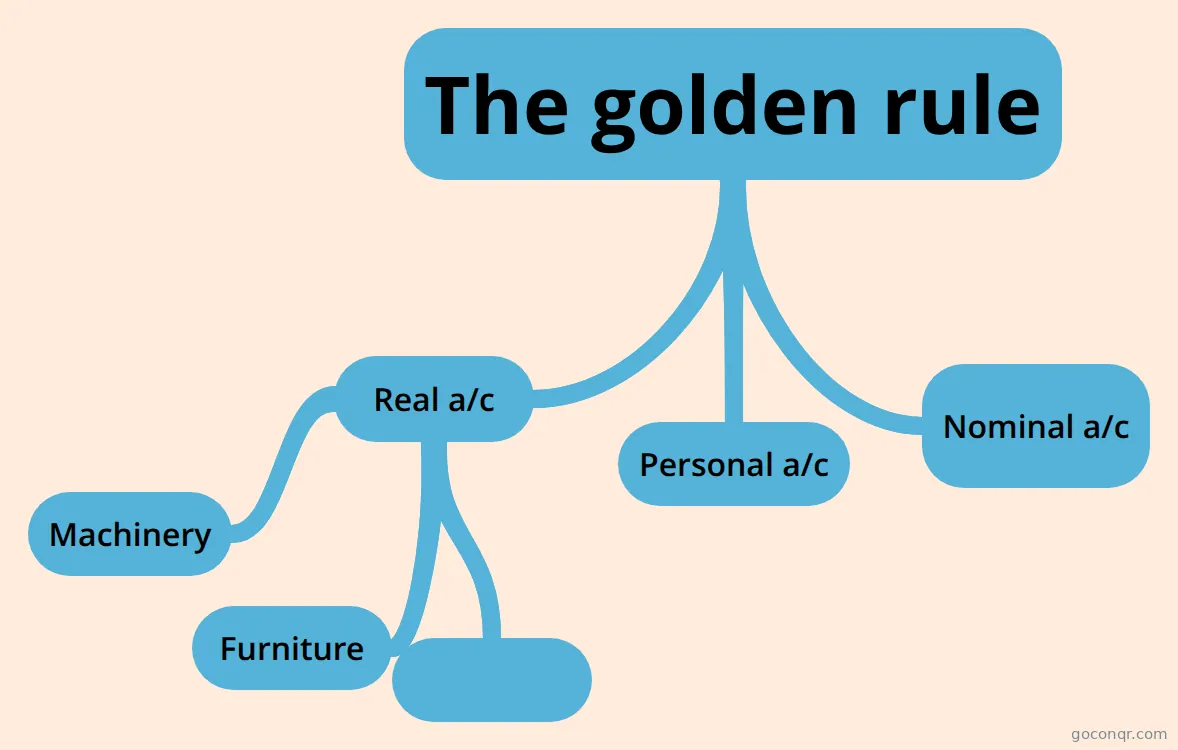 Mind map The golden rule The foundation of accounts
-
Mind map Module 1 - Info Theory Accounting information in capital markets, concentrating on Information theory.
-
102 cardsFinancial Management Users of Accounting Info
-
75 cardsACC1100 Exam Prep 2018 How are retained earnings for a period calculated?
Quizzes
See all 15 quizzes-
16 questionsFA chapter 3 In which month should Kelly record the cost of the cleaning supplies as an expense?
-
5 questionsACC341 - Topic 1 Normative accounting theories and research seek to:
-
9 questionsACC 101 Study - Chapter 3 Chapter 3: Measuring Business Income: Adjusting the Accounts
-
15 questionsFAR6606D Theory of efficient markets Free market economists would argue that markets function best without governmen...
-
13 questionsFinancial Statements IASB Quiz "Going Concern Basis" is an underlying assumption of financial statements.
-
5 questionsACC341 - Topic 10 Which of the following reveals critical theorists' view on disclosure of social responsibility information?
-
5 questionsACC341 - Topic 7 If historical cost profits are all distributed in dividends during times of rising inventory prices, this w...
-
5 questionsACC341 - Topic 9 Which of the following is true about Stakeholder Theory?
Mind maps
See all 19 mind maps-
The golden rule The foundation of accounts
-
Module 1 - Info Theory Accounting information in capital markets, concentrating on Information theory.
-
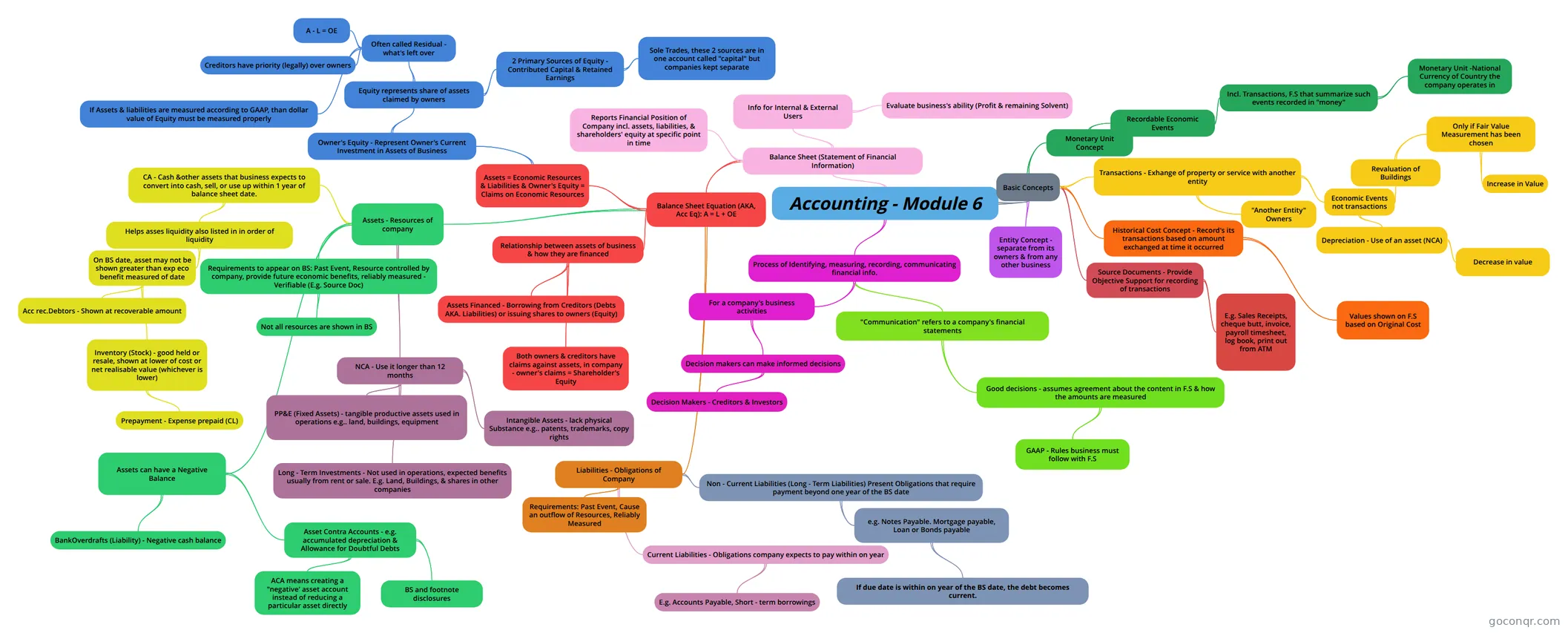 Acc - Module 6 Revision for Balance Sheet and Accounting Systems
-
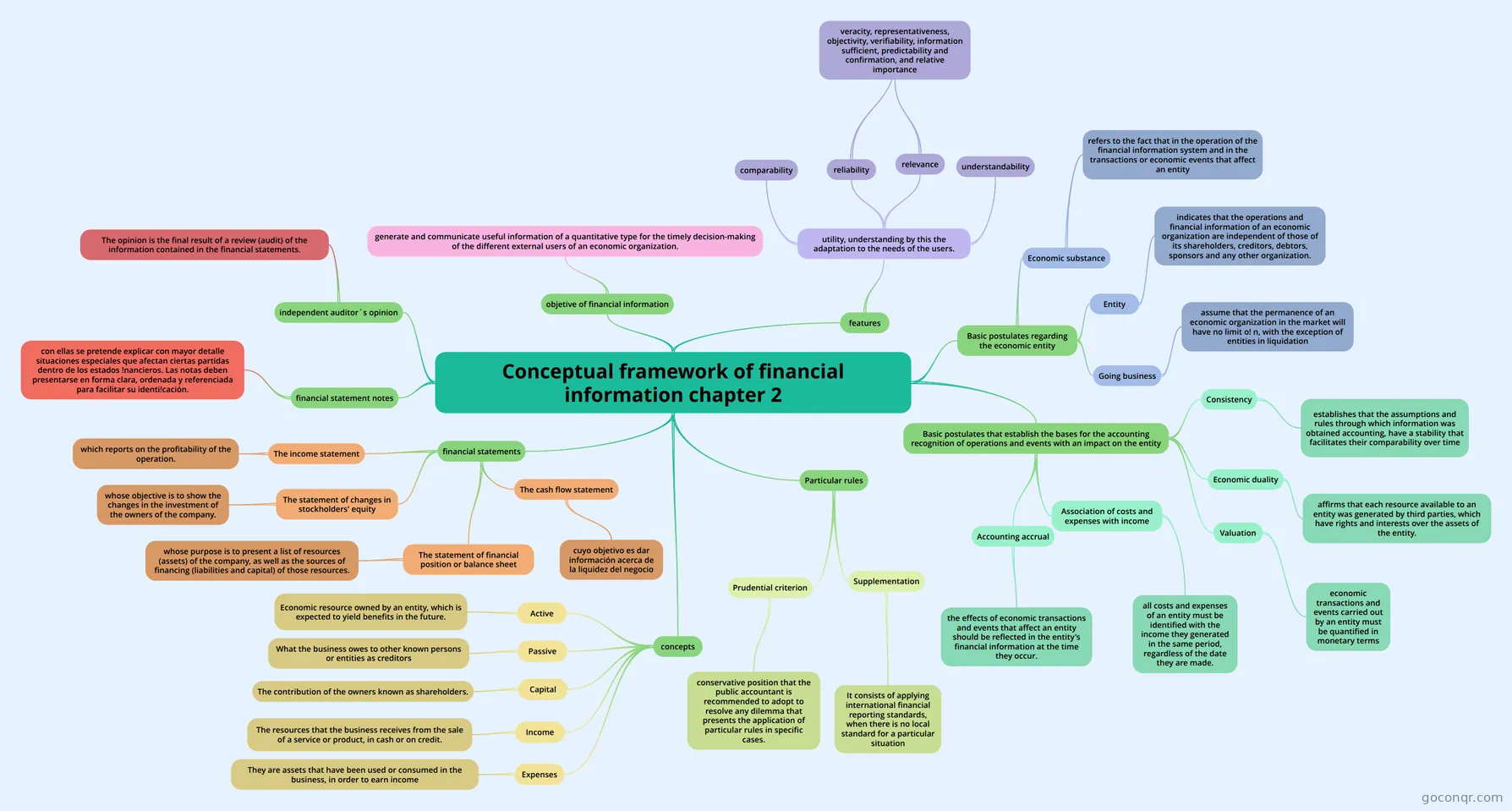 Conceptual framework of financial information chapter 2 resumen del capitulo 2
-
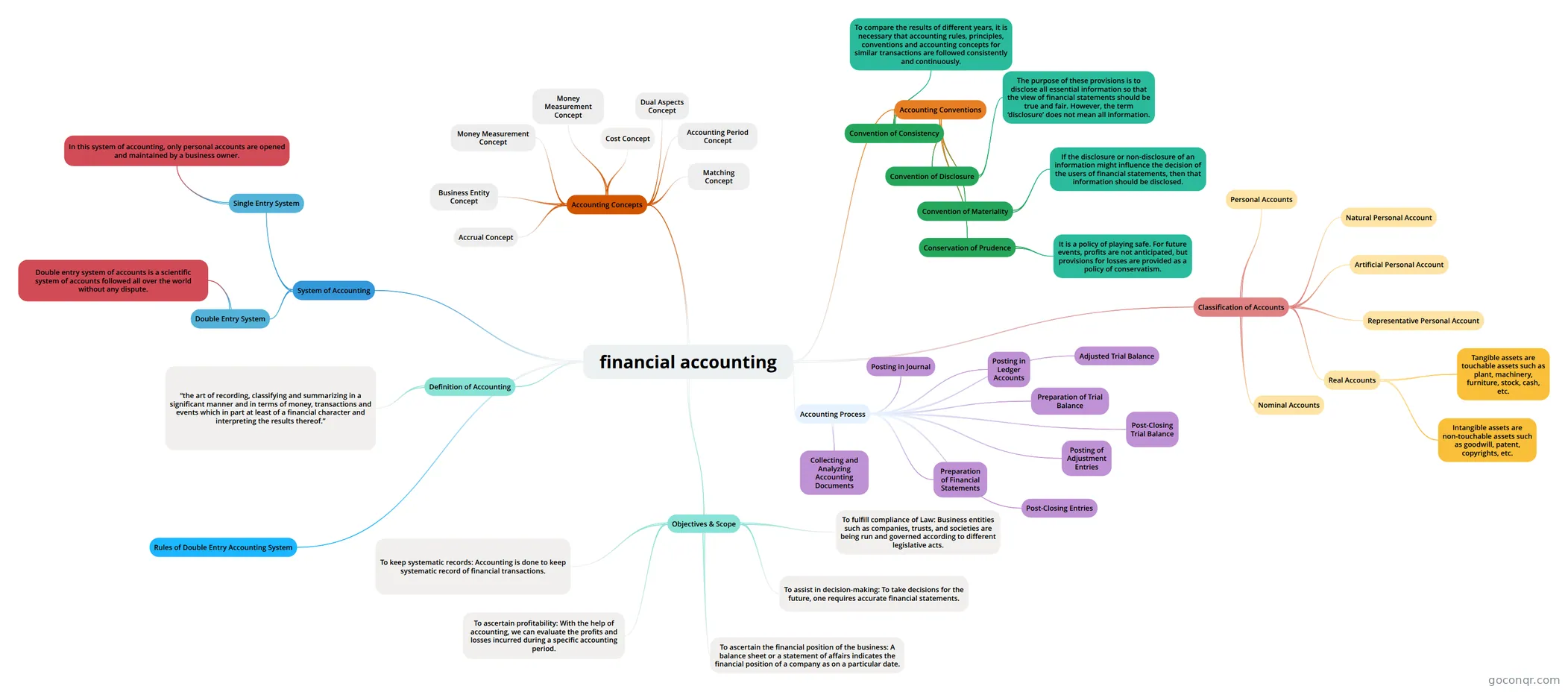 financial accounting
-
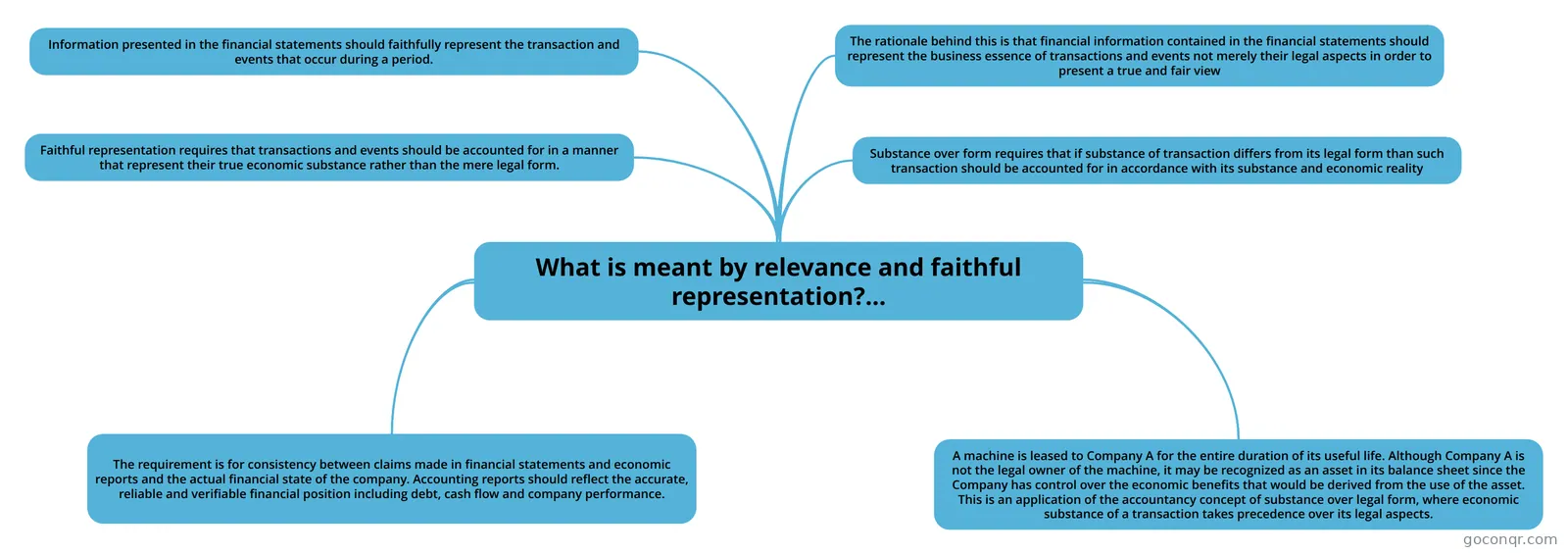 What is meant by relevance and faithful representation?... Financial statements
-
What are the four possible measurement bases for assets? Mind Map outlining the four possible measurement basis for assets.
-
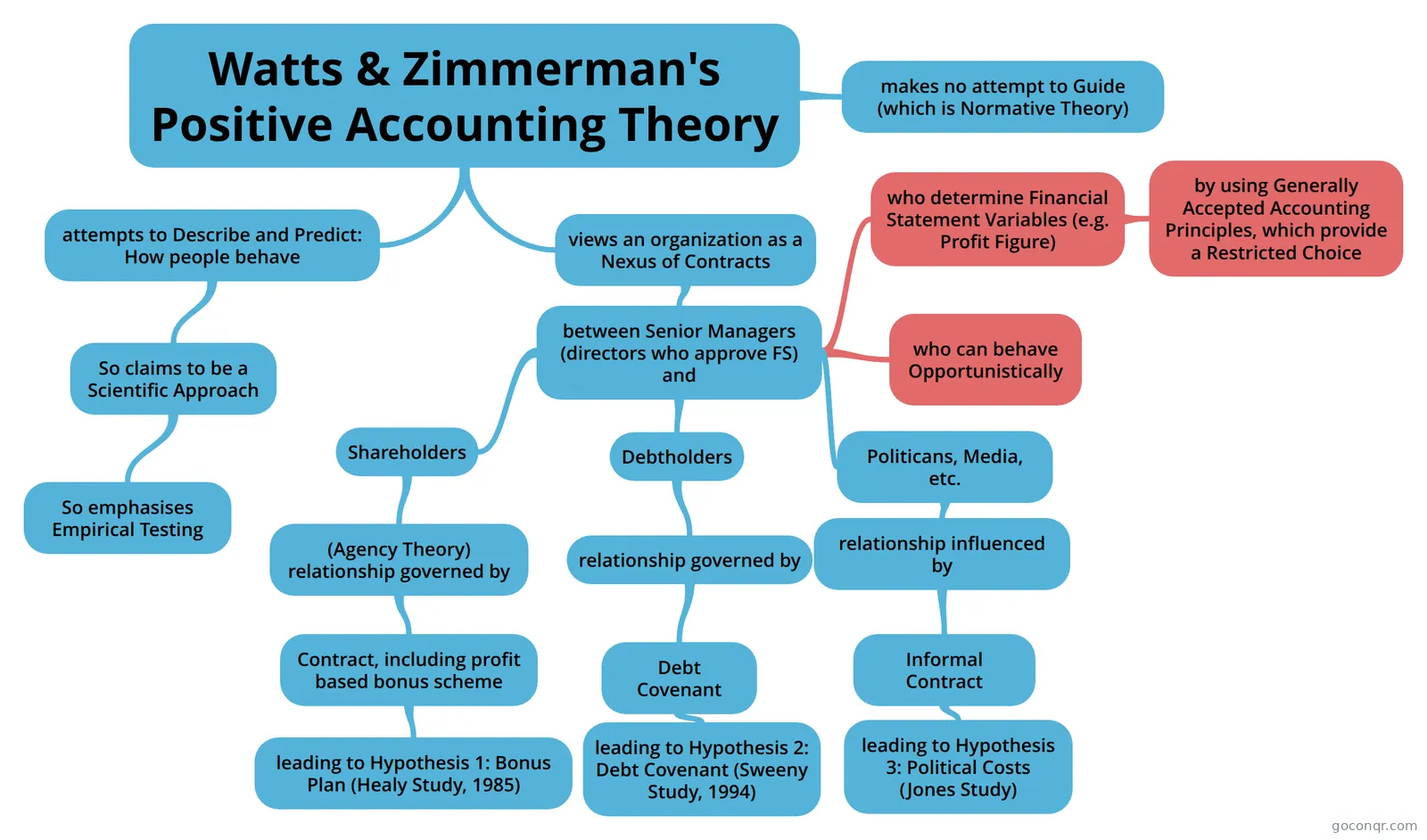 Watts & Zimmerman's Positive Accounting Theory
Flashcards
See all 26 flashcards-
13 cardsLevel 2 Accounting Definitions
-
102 cardsFinancial Management Users of Accounting Info
-
75 cardsACC1100 Exam Prep 2018 How are retained earnings for a period calculated?
-
28 cardschapter1- unit5-9 accounting terminology
-
15 cardsFinancial Accounting Theory - Module 2 What is an Accounting Standard?
-
22 cardsThe Frameworks AAT LEVEL 4 Financial Statements, THE FRAMEWORKS ,REVISION FLASH CARDS
-
25 cardschapter1 unit1-4 accounting terminologies
-
12 cards1.3 Bases of Accounting 1. What are the three bases of accounting? (3)
Notes
-
Chapter 2 - Fundamental Accounting Concepts SME: no public accountability (issues shares to the public i.e. listed company/banks [hold assets on a trust basis]), does not publish general purpose financial information for external users. 99% of the world’s compa...
-
What are the underlying characteristics which support relevance and faithful representation? Comparability Information about a reporting entity is more useful if it can be compared with a similar information about other entities and with similar information about the same entity for another period or another ...
More Accounting and auditing topics
About Accounting Principles and Conceptual Framework
GoConqr OriginalWhat the resources cover
This unit brings together the ideas that sit behind financial statements. You will find the accounting equation, assets and liabilities, going concern, historical cost, accruals and materiality. Alongside these sit the conceptual frameworks of the IASB and FASB, and the qualitative characteristics of useful financial information, such as relevance and faithful representation.
A good share of the material goes further into theory. There are maps and quizzes on normative and positive accounting theory, agency costs, fair value accounting, market efficiency and voluntary disclosure.
Where to start
If the vocabulary is new, begin with the Level 2 Accounting Definitions flashcard deck. It asks you to define equity, going concern, historical cost, assets, comparability and reliability. Then move to the Glossary of Accounting Terms deck for a wider list.
Next, open the mind maps The Accounting Equation and 1. Conceptual Framework. They give you the structure before you test yourself.
Using quizzes and maps together
- Read a map such as Qualitative Characteristics of Use Financial Information.
- Take a quiz on the same idea, for example Ch.3 Qualitative characteristics.
- Note which answers you missed and go back to that branch of the map.
- Repeat with a flashcard deck to fix the terms.
For cash versus accrual accounting, the quizzes FA chapter 3 and ACC 101 Study - Chapter 3 ask when revenue and expenses should be recorded. For theory-heavy courses, the ACC341 - Topic 1 quiz covers normative theory, and the Topic 8 - Measurement Methods map covers historic cost and current value.
Who it suits
Most of the material is at university level, so it suits university students and professional candidates. Some resources mention ACCA, and a smaller share is aimed at school students. Teachers can use the ready-made decks and quizzes as starting points for classes.
Where it fits
This unit belongs to the Accounting Foundations strand of Accounting and auditing. Choose one resource that matches your course today, work through it, and then make your own maps or flashcards to fill any gaps.
Frequently asked questions
Which resource should I open first?
Start with the Level 2 Accounting Definitions flashcard deck if the terms are unfamiliar. It covers equity, going concern, historical cost, assets and more. Once the vocabulary feels comfortable, try the FA chapter 3 quiz to see how revenue and expenses are recorded.
What do the mind maps cover?
The mind maps cover the accounting equation, elements and concepts, qualitative characteristics, the IASB and FASB frameworks, measurement methods, fair value accounting, corporate governance and positive accounting theory. There are over 150, so you can usually find one that matches a lecture or chapter.
Are the resources free to use?
Yes. Every resource listed here is free to open, study and take, with no account needed. They were made by GoConqr users rather than by GoConqr itself. A free account also saves your quiz scores and lets you create your own quizzes, mind maps, flashcards and notes.
Which levels and exams do these resources suit?
Most resources are at university level, so they suit university students and professional candidates. Some mention ACCA. A smaller share suits school students, and teachers can use the decks and quizzes as ready-made material for revision sessions.
Is there anything on accounting theory as well as basic principles?
Yes. Alongside definitions and concepts, there are quizzes in the ACC341 series on normative theory and other topics, plus mind maps on positive accounting theory, agency costs, market efficiency and voluntary disclosure. They suit students whose courses go beyond bookkeeping basics.
What if I cannot find the topic I need?
Try a nearby resource first, such as a conceptual framework map or a concepts flashcard deck, since many cover overlapping ideas. If a gap remains, you can make your own notes, mind map or flashcards with a free account and build exactly what your course needs.