
Mindmap
EDTE251 Week 11
Inhalt der Mindmap
EDTE251 Week 11
EDTE251 WEEK 11
- 5 Approaches to Teaching Reading
- 1) Psycholinguistic Approaches
- This approach requires children to bring what they already know and their understanding of oral and written texts to make meaning from the written words
- Students should be taught that literacy is not simply taught in school (as parts of lessons). It is part of everyday life
- Children need to learn in meaningful real situations rather than simply class instructions, practising skills
- 3 Cueing Systems
- Graphophonic- decoding graphemes (letters) into sounds (phonemes)
- Semantic- knowledge about the world and the meaning of words
- Syntatic- knowledge of language structure
- Psycholinguistic Teaching Approaches
- Reading aloud opportunities- good quality, multicultural texts
- Enthusiastic Teacher---> provides reading, writing, speaking and listening for pleasure (independent and group), opportunity to demonstrate links between sounds and letters
- Words games and Word Play
- This approach requires children to bring what they already know and their understanding of oral and written texts to make meaning from the written words
- 2) Cognitive-Psychological Approaches
- Readers learn in STAGES starting with grapho-phonic strategies and explicit instructions from teacers
- Qualitiative differences between beginners and more experienced readers
- Word recognition should be the first cueing system- visual features
- 3) Phonics Teaching
- The understanding that there is a link between SOUNDS and LETTERS/SPELLING of words. This is important as it helps students master alphabetical code-breaking skills needed for proficiency in reading
- Converts letters (graphemes) into sounds (phonemes) and then blend the sounds into recognisable words
- Two types of phonics teaching
- Synthetic
- Phonemes are introduced first, pronounced then blended together (synthesised). Therfore, children learn phonemes to make up words.
- Segmentation- hearing individual phonemes within a word Blending- merging phonemes together
- Analytic
- whole words are introduced first, then students are asked to analyse each individual part
- Onsets- part of the syllable BEFORE the first vowel e.g. S/un, D/og
- Rimes- part of the syllable from the first vowel onwards e.g. s/UN, d/OG, sp/IT
- whole words are introduced first, then students are asked to analyse each individual part
- Synthetic
- Phonics Teaching Approaches
- Daily whole class direct teaching, follow phonics teaching program, regular assessments, sessions with regular structure e.g. warmup exercise, revision, introduction of new sounds, word making, consolidation
- 4) Sociocultural Approaches
- Children read successfully because they learn to read CULTURALLY rather than by instructions. This approach emphases the idea that learning is co-constructed with others in routine everyday activities at home and in society e.g. reading newspaper, researching something on the internet
- Examples of Sociocultural Approaches: connecting home and school reading, encourage children to bring in texts, introduce popular children's texts, encourage technology based learning, encourage participation
- 1) Psycholinguistic Approaches
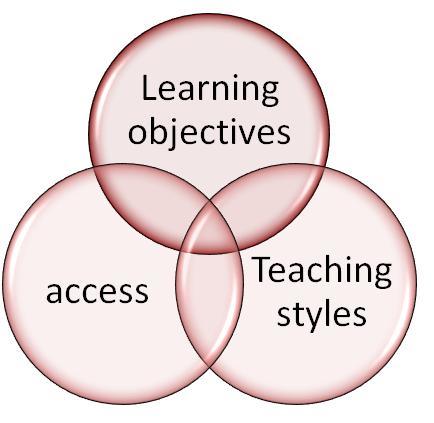
- Planning for an Inclusive Curriculum (need to be considered in planning and teaching
- Set suitable objectives and challenges
- consider different teaching and learning styles
- provide equal access for diverse learners
- Integrating speaking, listening, reading and writing
- Familarisation with the genre/ text
- Capturing Ideas
- Teacher demonstration
- Teacher scribing
- Supported writing
- Independent Writing
- Supported writing
- Teacher scribing
- Teacher demonstration
- Capturing Ideas
- Familarisation with the genre/ text
- Expanding Learning Affordances
- Book Talk
- Elicit Response
- (encourage sharing)- tell me what you thought about it/ how you felt
- Extending Response
- tell me more about it
- Encouraging Critique
- do you agree?
- Elicit Response
- Dialogic Teaching
- Collective: T+Ss (learn together)
- Reciprocal: T <-> Ss (Share ideas)
- Supportive: Ss =) Ss (Students teaching each other)
- Cumulative: T + Ss (create new ideas)
- Purposeful: T plans with specific learning objectives in mind
- Book Talk
- Planning
- Cross-Curricular Planning
- students practise and apply learning in different contexts
- teachers observe any gaps in understanding
- students learn the academic language and use literacy skills
- (assessments can help plan the next steps of learning)
- Creative Planning
- set culturally and personally authentic activities
- provide involvement and creative engagement
- include a wide range of activities
- set challenging but achievable learning goals
- Planning an effective Literacy Lesson
- set language and literacy objectives
- use child friendly language
- use inspiring texts
- link with previous learning
- Incorporate whole class and independent work
- Plenary Session to review learning, encourage discussions and feedback
- Cross-Curricular Planning
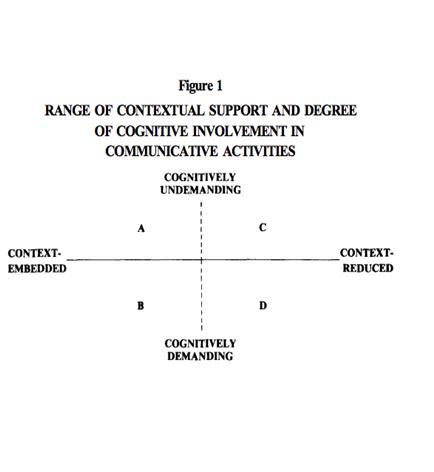
- Cummins "Interdependence Theory of Bilingualism"
- Basic Interpersonal Communication Skills (BICS)
- Cognitive and Academic Language Proficiency (CALP)
- A- Face to Face Conversation B-Demonstrations/ experiments c- Telephone Conversations D-Writing a standardized test
- 5 Approaches to Teaching Reading
Bilder und Dateien der Mindmap
Informationen
- Beschreibung
- Education Mindmap am EDTE251 Week 11, erstellt von Lateish Meachem am 12/12/2016.
- Erstellt von
- Lateish Meachem
- Aufrufe
- 0
- Verlauf
-
- Erstellt von angelwoo2002 · 20 Mai 2015
- Kopiert von Lateish Meachem · 12 Dez 2016
- Bewertung