
8162345
Beschreibung

Mindmap von Abigail Whiting, aktualisiert more than 1 year ago

|
Erstellt von Abigail Whiting
vor fast 9 Jahre
|
|
The immune system
- Phagocytosis
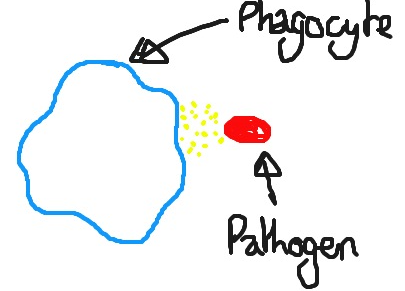
- 1. Attraction - The pathogen is
detected by the phagocyte,
causing the phagocyte to
move towards it.
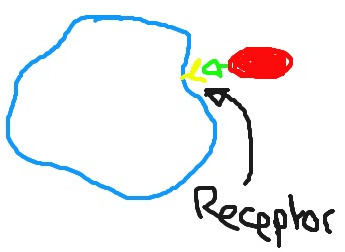
- 2. Engulfing - Pathogen
attaches to receptors on
outside of phagocyte, causing
the phagocyte to engulf it in a
process called endocytosis.
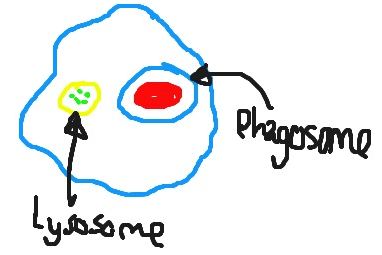
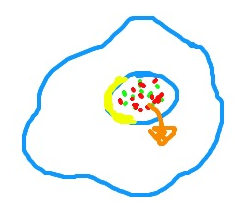
- 3. Phagosome - A
phagosome is
formed when the
pathogen is
engulfed
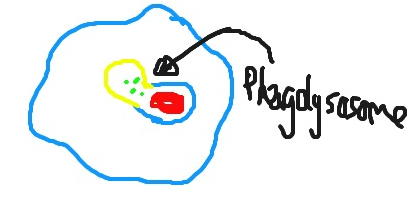
- 4. Phagolysosome -
Lysosomes bind
with the
phagosome, forming
a phagolysosome
- 5. Digestion and absorption - The
lysosomes that bind with the
phagosome contain digestive
enzymes which break down the
pathogen. Any useful components
gathered from the breakdown of
the pathogen are absorbed.
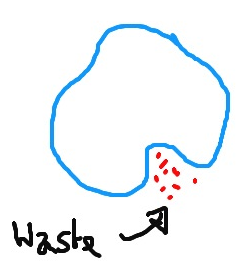
- 6.Discharging waste -
Any products that
cannot be digested
are discharged
- 6.Discharging waste -
Any products that
cannot be digested
are discharged
- 5. Digestion and absorption - The
lysosomes that bind with the
phagosome contain digestive
enzymes which break down the
pathogen. Any useful components
gathered from the breakdown of
the pathogen are absorbed.
- 4. Phagolysosome -
Lysosomes bind
with the
phagosome, forming
a phagolysosome
- 3. Phagosome - A
phagosome is
formed when the
pathogen is
engulfed
- 2. Engulfing - Pathogen
attaches to receptors on
outside of phagocyte, causing
the phagocyte to engulf it in a
process called endocytosis.
- 1. Attraction - The pathogen is
detected by the phagocyte,
causing the phagocyte to
move towards it.
- Cell-mediated response
- The cell mediated response
requires T lymphocytes
- These are produced in the
bone marrow and mature in
the thymus gland, making
them "T" cells
- These are produced in the
bone marrow and mature in
the thymus gland, making
them "T" cells
- 1. When the phagocyte ingests
the pathogen it presents its
antibodies on its surface.
- 2. Complementary
receptors on a T-helper
cell bind with the
presented antigen
- 3. The T-helper cell then becomes
activated and divides rapidly by
mitosis. This is called clonal
selection and is part of the primary
immune response.
- 4. The cloned
T-helper cells
can go on to...
- Produce memory cells for
when the body
encounters the pathogen
again
- Activate Killer T cells
which will destroy the
pathogen
- Activate the humoral response
- Produce memory cells for
when the body
encounters the pathogen
again
- 4. The cloned
T-helper cells
can go on to...
- 3. The T-helper cell then becomes
activated and divides rapidly by
mitosis. This is called clonal
selection and is part of the primary
immune response.
- 2. Complementary
receptors on a T-helper
cell bind with the
presented antigen
- The cell mediated response
requires T lymphocytes
- Immunity
- Primary and
secondary
immune response
- The primary immune response is when the
body encounters a pathogen for the first time
and sets up immunity by creating memory
cells which remember the pathogen if it is
encountered again.
- The initial encounter
produces a relatively
low amount of
antibodies
- There is a lag phase
after the first exposure
where the pathogen is
engulfed, its antigens
presented, a T-helper
cell attached and clonal
selection activated
- The initial encounter
produces a relatively
low amount of
antibodies
- The primary immune response is when the
body encounters a pathogen for the first time
and sets up immunity by creating memory
cells which remember the pathogen if it is
encountered again.
- Primary and
secondary
immune response
Medienanhänge
Möchten Sie kostenlos Ihre eigenen Mindmaps mit GoConqr erstellen? Mehr erfahren.