
Mindmap
1.2.3 The respiratory system
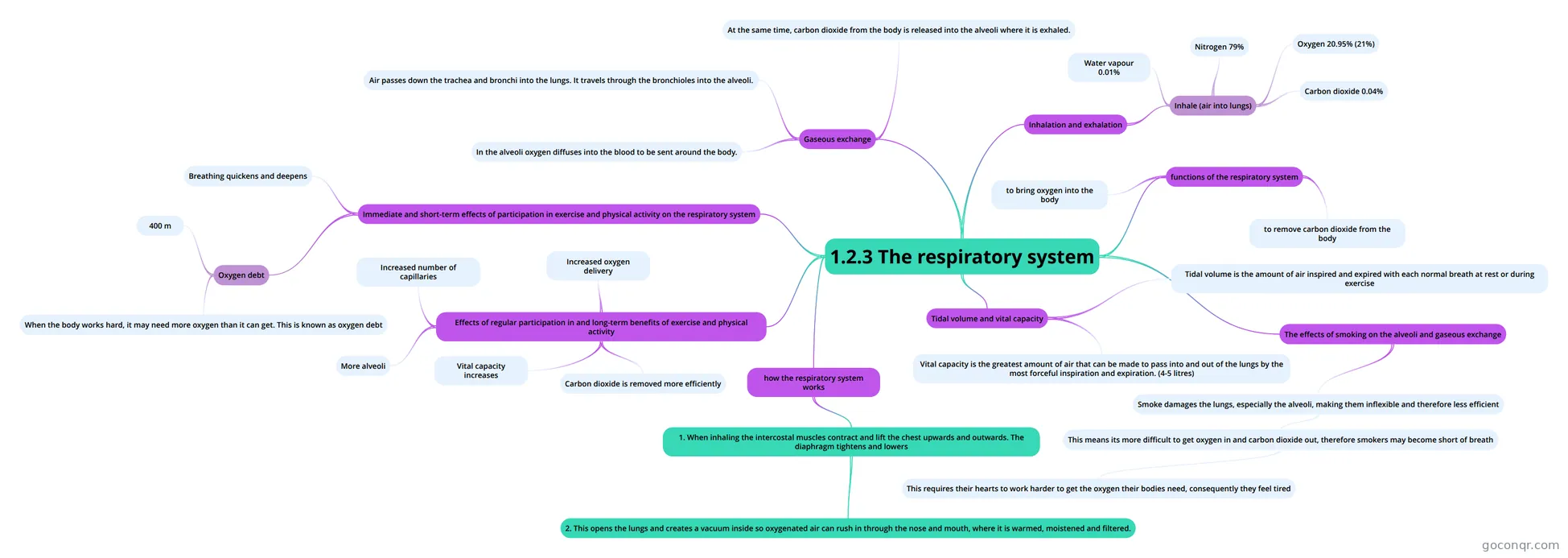
Mind map: The respiratory system
Inhalt der Mindmap
1.2.3 The respiratory system
functions of the respiratory system
- to bring oxygen into the body
- to remove carbon dioxide from the body
Gaseous exchange
- Air passes down the trachea and bronchi into the lungs. It travels through the bronchioles into the alveoli.
- In the alveoli oxygen diffuses into the blood to be sent around the body.
- At the same time, carbon dioxide from the body is released into the alveoli where it is exhaled.
how the respiratory system works
- 1. When inhaling the intercostal muscles contract and lift the chest upwards and outwards. The diaphragm tightens and lowers
- 2. This opens the lungs and creates a vacuum inside so oxygenated air can rush in through the nose and mouth, where it is warmed, moistened and filtered.
- 1. When inhaling the intercostal muscles contract and lift the chest upwards and outwards. The diaphragm tightens and lowers
Inhalation and exhalation
- Inhale (air into lungs)
- Oxygen 20.95% (21%)
- Nitrogen 79%
- Carbon dioxide 0.04%
- Water vapour 0.01%
- Inhale (air into lungs)
Tidal volume and vital capacity
- Tidal volume is the amount of air inspired and expired with each normal breath at rest or during exercise
- Vital capacity is the greatest amount of air that can be made to pass into and out of the lungs by the most forceful inspiration and expiration. (4-5 litres)
Immediate and short-term effects of participation in exercise and physical activity on the respiratory system
- Breathing quickens and deepens
- Oxygen debt
- When the body works hard, it may need more oxygen than it can get. This is known as oxygen debt
- 400 m
Effects of regular participation in and long-term benefits of exercise and physical activity
- Increased oxygen delivery
- Carbon dioxide is removed more efficiently
- Vital capacity increases
- Increased number of capillaries
- More alveoli
The effects of smoking on the alveoli and gaseous exchange
- Smoke damages the lungs, especially the alveoli, making them inflexible and therefore less efficient
- This means its more difficult to get oxygen in and carbon dioxide out, therefore smokers may become short of breath
- This requires their hearts to work harder to get the oxygen their bodies need, consequently they feel tired
- This means its more difficult to get oxygen in and carbon dioxide out, therefore smokers may become short of breath
- Smoke damages the lungs, especially the alveoli, making them inflexible and therefore less efficient