
Anatomy and Physiology: Body Systems
369 resources created by 321 users
This Anatomy and Physiology: Body Systems page on GoConqr gathers community-made quizzes, mind maps, flashcards and notes, from the skeletal and muscular systems to the respiratory, cardiovascular and nervous systems. It's built for school students revising a topic, university students and professional candidates filling gaps, and teachers after ready-made material. There are over 360 resources here, including more than 20 quizzes, over 150 mind maps and over 160 flashcard decks. Pick a topic, try a quiz to find your gaps, then make your own revision sets.
Top Anatomy and Physiology: Body Systems resources
-
42 questionsUnit 3: Skeletal and Muscular System The following bones are found in the upper body, except?
-
Mind map Skeletal and Muscular system A-level Pe revsion material on skeletal and muscular system
-
10 questionsNervous system test What is the role of the nervous system?
-
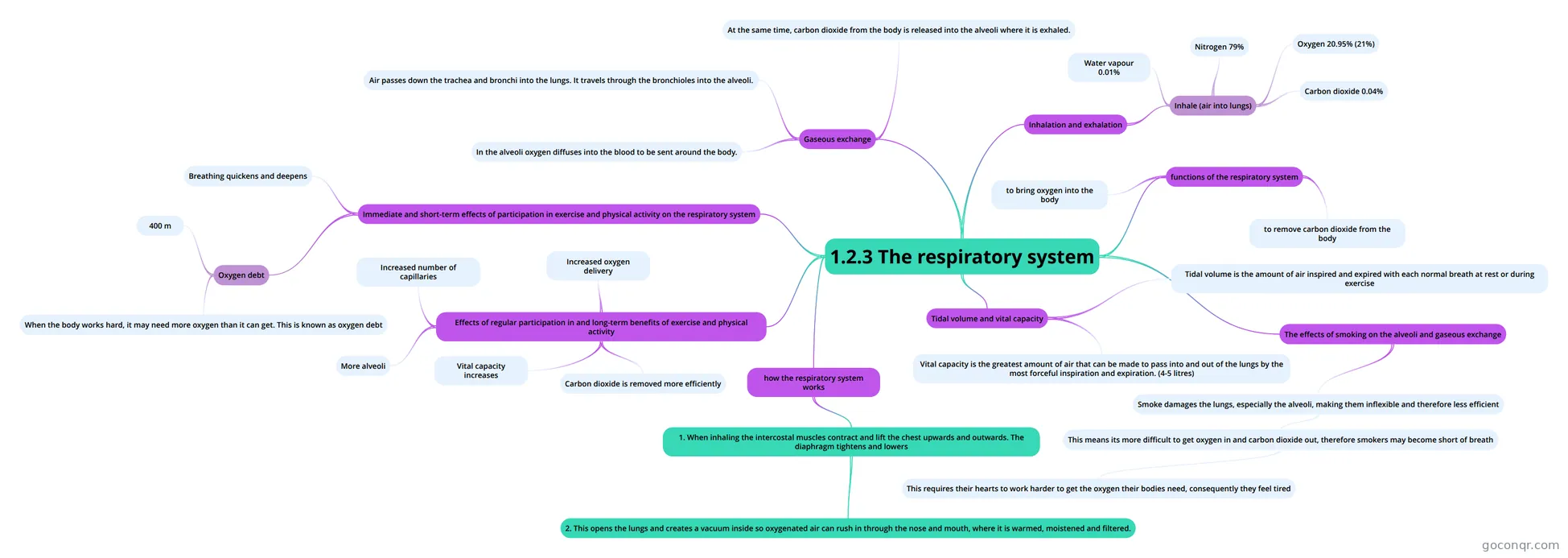 Mind map 1.2.3 The respiratory system 1.2.3 Overview
-
129 cardsPE Revision What are three functions of a skeleton?
-
56 cardsMovement Descriptions Flexion, Extension, Abduction, etc.
-
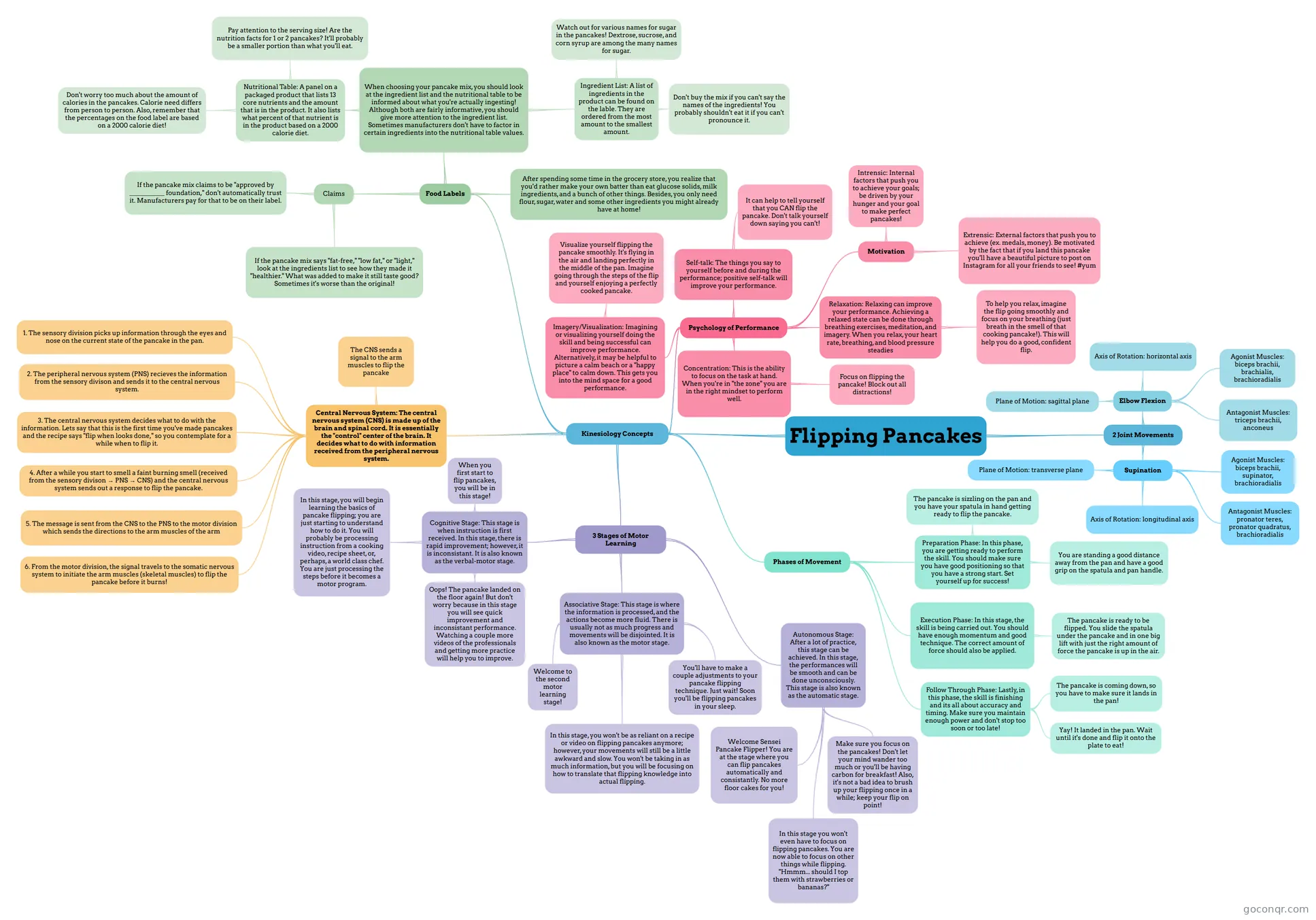 Mind map Flipping Pancakes
-
50 questionsPE 2 Multi Choice Questions The name of the synovial joint found in the wrist is:
Quizzes
See all 25 quizzes-
42 questionsUnit 3: Skeletal and Muscular System The following bones are found in the upper body, except?
-
10 questionsNervous system test What is the role of the nervous system?
-
50 questionsPE 2 Multi Choice Questions The name of the synovial joint found in the wrist is:
-
21 questionsA level Dance: revision what is progressive overload doing?
-
8 questionsThe Muscular System Usain Bolt would use predominantly which muscle fibre type?
-
5 questionsJoints and range of movement What is the definition of a Hinge joint?
-
19 questionsLevel 2 personal trainer Where s the heart located?
-
20 questionsJoints Test There are 2 classifications of joints
Mind maps
See all 162 mind maps-
Skeletal and Muscular system A-level Pe revsion material on skeletal and muscular system
-
1.2.3 The respiratory system 1.2.3 Overview
-
Flipping Pancakes
-
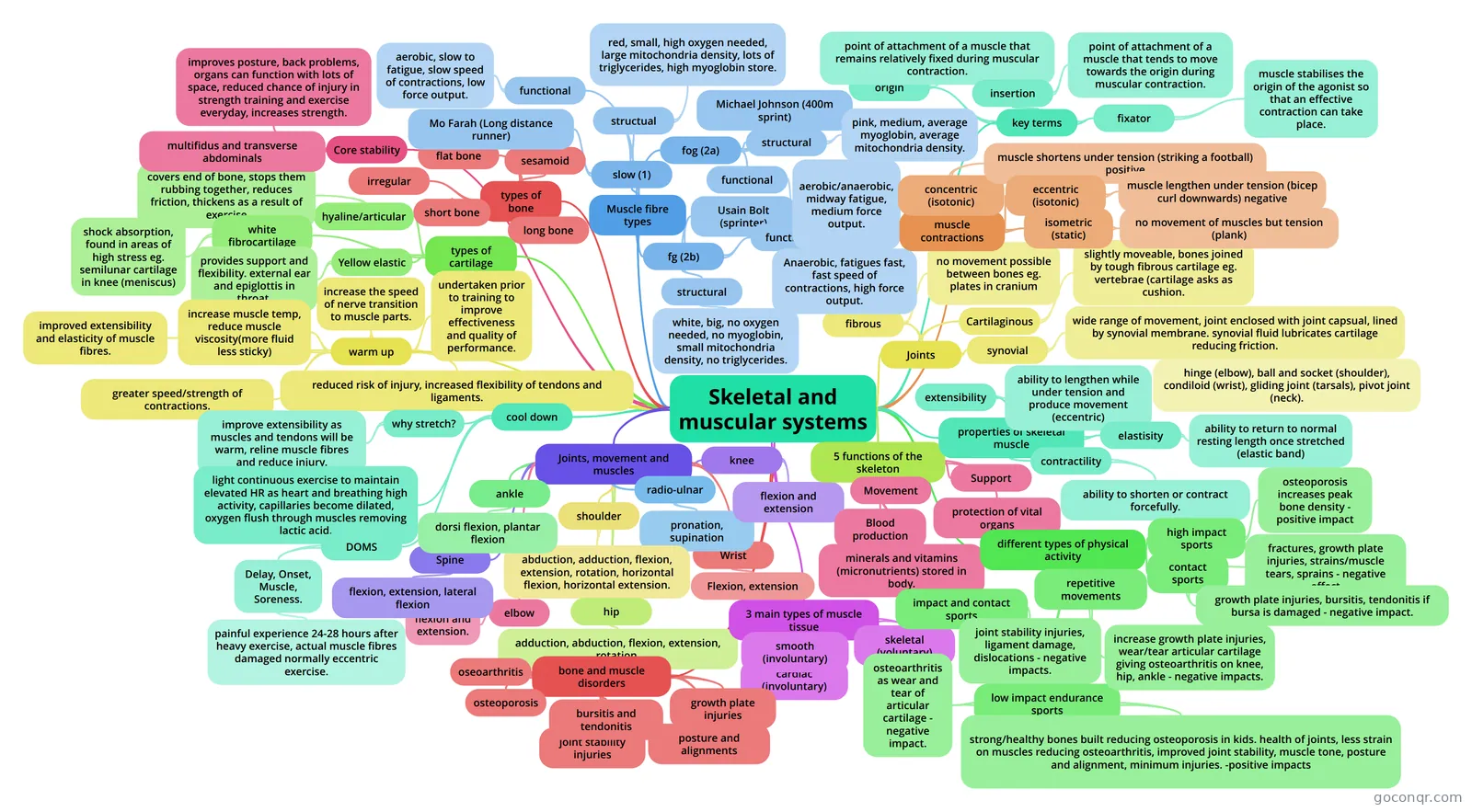 Skeletal and muscular systems
-
PE - Anatomy and Physiology
-
1.2.4 The muscular system 1.2.4 overview
-
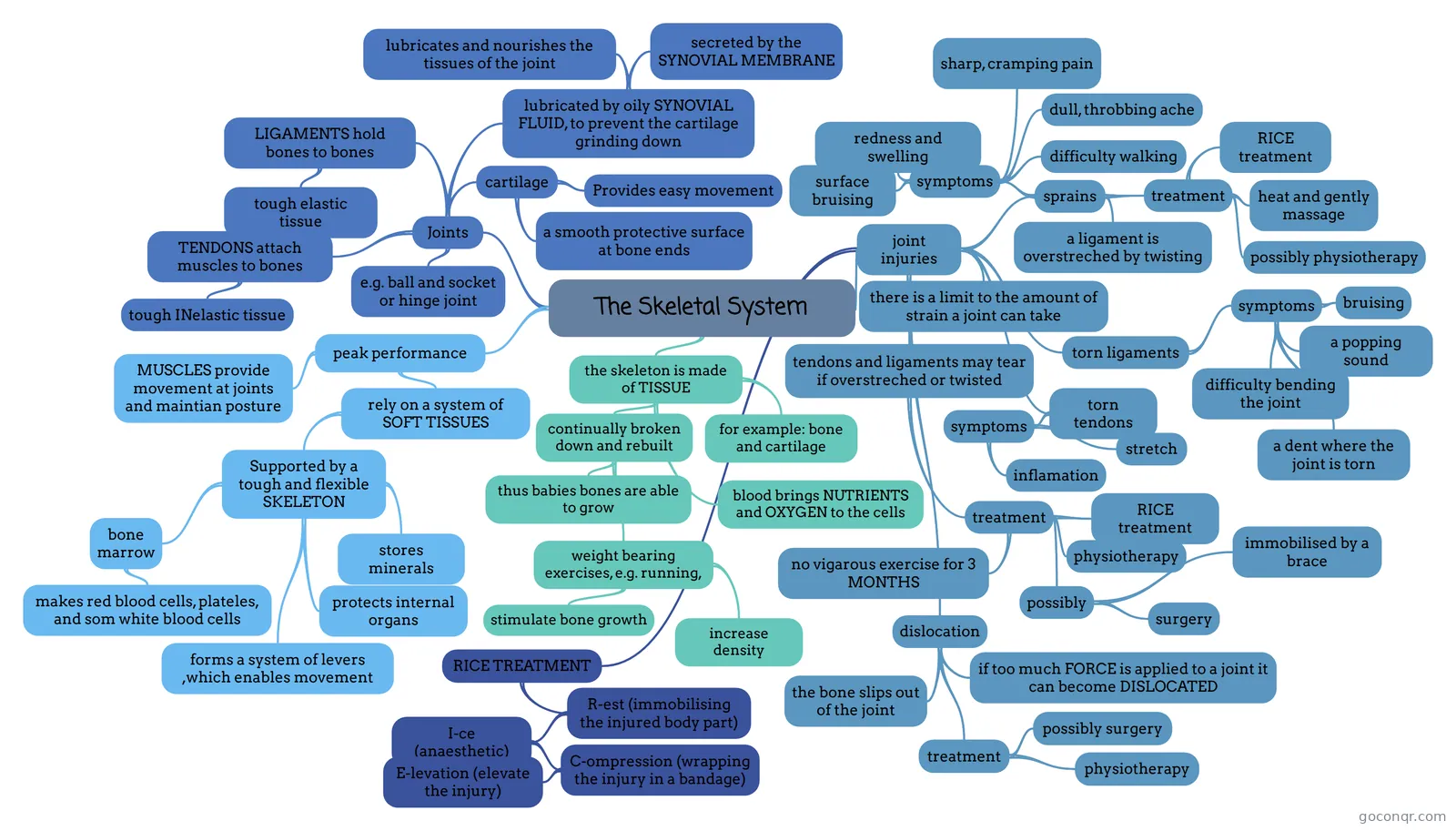 The Skeletal System
-
Main Muscles at Joint Learn the muscles surrounding each joint.
Flashcards
See all 162 flashcards-
129 cardsPE Revision What are three functions of a skeleton?
-
56 cardsMovement Descriptions Flexion, Extension, Abduction, etc.
-
85 cardsSports Science Test, Sem 2
-
49 cardsUnit 3: Skeletal and Muscular System What are the functions of the skeleton?
-
48 cardsFunctional Anatomy. (5) Functions of the Skeleton.
-
34 cardsKinesiology Chapter 2 The Musculoskeletal system: The Skeletal Framework and its movements
-
36 cardsNervous system of NASM Human Movement System
-
50 cardsThe skeletal system (OCR) What bone is A?
Notes
See all 16 notes-
IGCSE PE : The Human Body Revision Website:- www.s-cool.co.uk- www.bbc.co.uk/schools/gcsebitesize The Circulatory System:The circulatory system is also known as the cardio vascular system. The essentials components/parts for the cardio v...
-
Applied Physiology - ENERGY Applie Physiology - ENERGY!! STORED ATP location/storage factors affecting use intensity + duration of exercise STORED PHOSPHOCREATINE (PC) location/storage factors affecting use intensity + duration of exercise re-sy...
Slides
More Physical education and sport topics
About Anatomy and Physiology: Body Systems
GoConqr OriginalWhat this unit covers
The unit brings together resources on how the body is built and how it moves. The biggest cluster is the skeletal and muscular systems: bones, joints, muscles, planes of movement and analysis of movement. Around that sit the respiratory system, the cardiovascular system, the nervous system and the body's response to exercise.
Where to start
Begin with the mind map Skeletal and Muscular system. It sets out the main roles of the skeleton: protection of internal organs, a framework for the body and movement. It also defines terms such as ligament. Then move to the Anatomy and Physiology mind map, which links skeletal, muscular, cardiovascular and respiratory topics with synovial joints such as the elbow, knee and hip.
Building your knowledge
- Read a map to get the overall picture, such as The Body in PE for skeletal functions and joint types.
- Work through flashcards. A Level PE - Muscular/Skeletal System asks you to identify the three planes of movement and define adduction and abduction.
- Test yourself with the quiz Unit 3: Skeletal and Muscular System, which checks bone locations in the upper and lower body.
- Move on to Nervous system test, which covers how the nervous system activates muscle fibres and the sliding filament theory.
Using quizzes and maps together
Use a quiz first to see what you cannot yet recall. Then return to the matching mind map and read only those branches. Try the quiz again afterwards. For the respiratory system, the mind map 1.2.3 The respiratory system covers bringing oxygen in, removing carbon dioxide and gaseous exchange. The flashcard deck Hormonal responces to exercise suits students who want to go further into how hormones act on cells.
Many resources mention GCSE PE, A-level PE, BTEC Sport or IB, so you can pick material close to your course. Most of the material is aimed at school level, with some for university students and professional candidates.
Where it fits
This unit sits in the Applied Anatomy, Physiology and Biomechanics strand of Physical education and sport. Choose one system, work through a map, a deck and a quiz, then add your own notes where something is missing.
Frequently asked questions
Which resource should I open first?
Start with the mind map Skeletal and Muscular system. It covers what the skeleton does, including protection, a framework and movement, and explains terms like ligament. Once that feels familiar, try the quiz Unit 3: Skeletal and Muscular System to see which bones and ideas you still need to revisit.
What do the mind maps on this page cover?
They cover the skeletal and muscular systems, joints and types of movement, the respiratory system and the cardiovascular system. There is also a broad Anatomy and Physiology map linking synovial joints, biomechanics and the heart, plus maps on movement analysis and the effects of exercise.
Are the resources free to use?
Yes. Every resource listed here is free to open, study and take, with no account needed. They were made by GoConqr users, not by GoConqr itself. If you create a free account, your quiz scores are saved and you can make your own quizzes, mind maps, flashcards and notes.
Which exams and levels do the resources suit?
Resources mention GCSE PE, GCSE Physical Education, A-level PE, A-level Physical Education, BTEC Sport and IB. Most of the material is at school level, with a smaller share for university students and professional candidates, so check the title and content to find the right fit.
Is there anything on the nervous system or exercise responses?
Yes. The quiz Nervous system test asks about the role of the nervous system and the sliding filament theory. The flashcard deck Hormonal responces to exercise looks at how hormones affect cells and what changes hormone levels in the blood.
What if the topic I need is missing?
Look through related titles first, as many decks and maps overlap, for example on muscles, joints or movement analysis. If you still cannot find it, you can make your own mind map, flashcards or quiz on the topic and use it alongside the community material.