
Notizen
Atomic structure
Inhalt der Notizen (1)
Seite 1
Matter is made up of atoms molecules or ions.
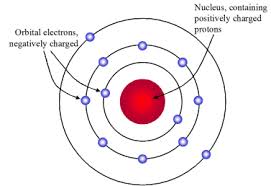
Atoms consist of:
electrons
protons
neutrons
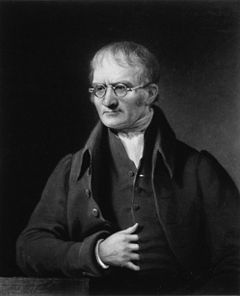
John Dalton - suggested that
A) Atoms are small, solid, indivisible, spheres.
B) Atoms of a given element are identical to eachother and have the same mass and chemical properties.
C) Atoms of different elements vary in mass
D)A compound contains atoms of two or more elements combined together in fixed proportions.
E)Atoms cannot be created or destroyed.
The law of the conservation of mass states that matter is neither created nor destroyed in the course of a chemical reaction.
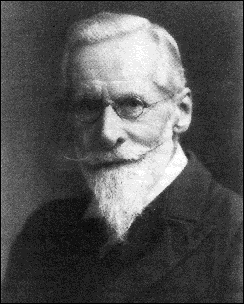
William Crookes - showed the presence of cathode rays and showed that they travel in straight lines.
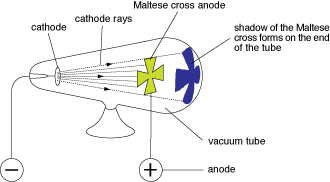
MALTESE CROSS EXPERIMENT
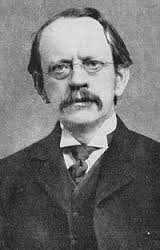
J.J. Thomson -
showed that cathode rays have a negative charge by showing they were attracted to the positive plate of an electric field
Measured the ratio of charge to mass (e/m) for cathode ray particles (electrons)
Developed the plum pudding model of the atom. (Sphere of positive charge with negative charges embedded in it)
He concluded that these particles were to be found in all matter (electrons)
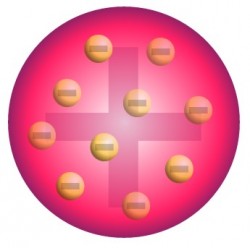
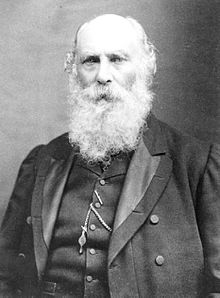
Johnstone Stoney - named the electron
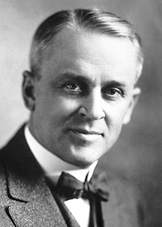
Robert Millikan - Measured the size of the charge on the electron using the oil drop experiment.
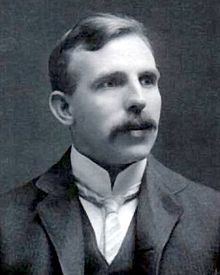
Ernest Rutherford - fired alpha particles at gold foil.
Observations:
A) Most went straight through
B) Some were deflected slightly
C)Very few bounced back
Conclusion::
A) Atom consists mostly of empty space
B) Thes particles were passing close to the positive nucleus
C) These hit the positive nucleus.
Overall:
Atom is made up mostly of empty space with a tiny, dense, positive nucleus.
Subsequently:
Rutherford discover protons by firing alpha particlas at atoms which cause the protons to be knocked out.
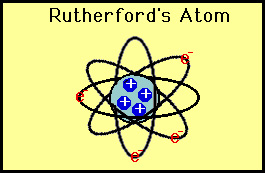
Niels Bohr - Bohr model of the atom
James Chadwick - showed the presence of neutrons, used alpha particles to knock out neutral particles from atoms of beryllium.
The number of protons is the same as the number of neutrons - neutral charge. This is called the atomic number (Z) of an atom. The elements in the modern periodic table are arranged in order of atomic number.
The atomic number of an element is the number of protons in an atom of that element.
Particle
Electron
Proton
Neutron
Relative mass
1/1836
1
1
Relative charge
-1
Location
Orbitals
Inside the nucleus
Inside the nucleus
The mass number of an element is the sum of the number of protons and the number of neutrons in the nucleus of an atom of that element. (A)
The number of neutrons can be calculated by subtracting the atomic number from the mass number.
Isotopes are atoms withe the same number of protons but different numbers of neutrons.
The chemical properties of an element depend on the number and arrangement of the electrons. Isotopes of an element have the same chemical properties since they have the same number and arrangement of electrons. However there may be slight differences in physical properties due to the difference in mass.
The relative atomic mass of an element is the average mass of an atom of the element relative to one-twelfth the mass of an atom of carbon-12
The mass of an element depends on the relative abundances of all the isotopes present in the sample analysed.
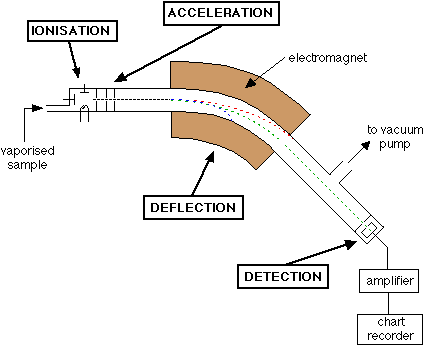
MASS SPECTROMETER
-used to find the abundancies of isotopes
-the lower the mass, the more they will be deflected by a magnetic field
Principle:
Positively charged ions are seperated on the basis of their relative masses when moving in a magnetic field.
Process:
Vaporisation
Ionisation
Acceleration
Seperation
Detection
http://www.youtube.com/watch?v=O5iaw5WNuB0 (Einbetten)
http://www.youtube.com/watch?v=d3YR8e_iHlk (Einbetten)
http://www.youtube.com/watch?v=NlDPPANJZXM (Einbetten)
http://www.youtube.com/watch?v=xC1Did4_Ifg (Einbetten)
Atomic structure
Continued
Links
Informationen
- Beschreibung
- Leaving Certificate Chemistry (Atomic Structure) Notiz am Atomic structure, erstellt von eimearkelly3 am 23/06/2013.
- Erstellt von
- eimearkelly3
- Aufrufe
- 959
- Tags
- Bewertung