
Notizen
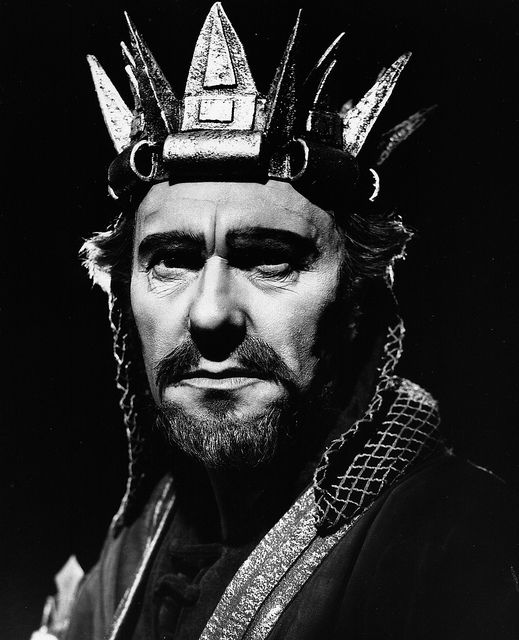
Macbeth character - created from Mind Map
Inhalt der Notizen (1)
Seite 1
a soldier, cousin of the king, a good man, one "full o' th' milk of human kindness", "valour's minion", "bellona's bridegroom", "valiant cousin" and "worthy gentleman"
he has a flaw, that of "vaulting ambition". the first words he utters; "so foul and fair a day i have not seen" echo the words of the witches, that reveal that he will later on be in line with their way of thinking.
when witches appear to him, he is not innocet as no innocent man immediately conceives of murder upon the mere prophecy of a crown. yet he knows this thought of murder is wrong and tries to resist his ambition.
he undergoes a moral see-saw of ambition as opposed to guilt, of good as opposed to bad. but he ultimately restrains himself with: "if chance will have me king, why chance may crown me without my stir"
however when Duncan names Malcom as his heir, Macbeth feels frustrated and again thinks of ways as to how to attain the throne: "stars hide your fires, let not light see my black and deep desires." yet he knows murder is wrong. Furthermore this same Duncan has rewarded him by making him Thane of Cawdor
we see that "noble Macbeth" trusts his wife, "his dearest partner of greatness" as he sends her a letter informing her of the prophecies, a letter which could be construesd as treacherous if found.
when he meets Lady Macbeth who wants him to get what he is promised, he decides not to go through with the plan: "We will proceed no further in this business"
she becomes the "spur to prick the sides of (his) intent" and teaches him to "look like the innocent flower, but be the serpent under't".
Before he kills Duncan, he sees a floating dagger - symbol of his ambition. when he is about to commit the murder, he undergoes terrible pangs of conscience. once he kills Duncan, he feels tormented and tortured and feels he has murdered "sleep"
Unlike his wife who remains cool and unaffected, Macbeth feel he has murdered his own soul.
He refuses to accept that he has "filed (his) mind" just for Banquo's issue to be kings and so he decides to challange Fate by killing Banquo and his descendants.
He doesn't include Lady Macbeth in this murder and starts acting on his own: "Be innocent of this knowledge, dearest chuck". He grows stronger whilst she grows weaker.
Once he has Banquo killed, he is haunted by his death and troubled because his son Fleance escaped.
Macbeth is also worried about the loyalty of other lords, like Macduff.
We get to know that he has planted spies in the lords' houses as he is growing more and more paranoid.
After the banquet, he regains his composure and decides to "know by the worst means the worst" and to seek the witches to have his future told. it is now Macduff whow spils his sleep.
He is at once too ambitious to allow his conscience to stop him from murdering his way to the top and too conscientious to be happy with himself as a murderer.
He knows that Duncan is "Here in double trust," first as his kinsman and host, but above all as his king. yet her powerful rhetoric (persuasive speech) is too much for him.
However when she attacks his virility (manliness), he starts to go back on his word. Macbeth is at his most human and sympathetic when his manliness is mocked and demeaned by his wife, yet he is at loggerheads as to whether he should kill the king or not.
Ultimately, he gives in with "False fave doth hide what the false heart doth know."
once the murder of Duncan is discovered, he rashly kills the guards of Duncan and he masks his fear of being found out with rage againts the supposed murderers.
This time he engages others to do his dirty work since he believes that if he does so, his conscience will not trouble him as with Duncan's murder.
They are exchanging roles
however, by Act III, Scene 2, Macbeth has resolved himself into a far more stereotypical villain and asserts his manliness over that of his wife.
His ambition now begins to spur him towards further terrible deeds, and he starts to disregard and even to challenge Fate and Fortune.
he upsets the banquet feast with his strange behavior on seeing the ghost (symbol of his guilt),
His strange antics upset the other lords who realise that his senses are "pestered". it is only thanks to Lady Macbeth's intervention that he regains his composure.
From now on "for (his) own good all causes shall give way."
Informationen
- Beschreibung
- literature Notiz am Macbeth character - created from Mind Map, erstellt von Luisa Maniscalco am 19/01/2018.
- Erstellt von
- Luisa Maniscalco
- Aufrufe
- 0
- Verlauf
-
- Erstellt von Luisa Maniscalco · 19 Jan 2018
- Zu Notiz kopiert von Luisa Maniscalco · 19 Jan 2018
- Bewertung