
Notizen
Electricity
Inhalt der Notizen (1)
Seite 1
c
Charge on cellulose acetate is positive and charge on polythene is negative
There are positive charges and there are negative charges
Electrons transfer
Rubbing a polythene rod vigorously with a cloth causes the electrons to move from the cloth to the rod
result: negatively charged polythene (excess electrons)
positively charged cloth (Electron deficiency)
Rubbing does not create charge - it causes a separation (transfer) of charge (electrons)
only negatively charged electrons are albe to move
positive charge cannot move because protons are in the nucleus
Electrons carry negative charge
negatively charged object has an excess of electrons
positively charged object has a shortage of electrons
POSITIVE CHARGES CANNOT MOVE
In an insulator:
- all electrons are bound firmly to their atoms
- can be charged by rubbing because the charge produced cannot move from where the rubbing occurs (electric charge is static)
In a conductor:
- some electrons can move freely from atom to atom
Conductors:
Mostly metals
The metal atoms contain free moving electrons that are able to carry the current
These electrons collide with the metal ions to create a resistance to the electronic flow
e.g. steel, iron, silver, copper, aluminium, graphite & silicon
Allows an electric current to flow through them
The length of a conductor is directly proportional to the resistance e.g. the double the length of the copper wire, the double the resistance
However, the resistance is inversely proportional to the cross-section area e.g. The more electrons in the wire, the less resistance.
Insulators:
Mostly plastics
Can be charged with static electricity by using friction
Extra electrons are added to the insulating material
The electrons stay at the surface of the material and attracts itself to something that ispositively charged
When you rub a polyethene rod with a cloth, electrons transfer from the cloth to the rod. Therefore, it gains a negative charge.
You can also take away electrons from the material so that it carries a positive charge
Current Electricity: flow of electrons along a wire
cell or battery can be used to 'pump' the charge along the wire
(currents can produce heat, light, motion)
electrons are already in the wire, cell = pump
current is the rate of flow of charge measured in amps
potential difference is the amount of energy given out per coulomb of electricity passing through a component
emf: energy supplied per unit charge
amount of chem --> elect per unit charge
resistance is a measure of how much an electrical component opposes current flow
charge is measured in coulombs
I = Q/T
current = charge/time
Voltmeters
Used to measure the potential difference across a certain section of a circuit.
ALWAYS connected in PARALLEL.
Ammeters
Used to measure the current in the entire circuit.
ALWAYS connected in SERIES.
Voltage:
- amount of potential energy between two points
- amount of energy converted per coulomb of electricity passing through a component
Voltage: Energy/Charge
V = E/Q
Voltage: Current x Resistance
V = IR
Current: flow of electrons along a wire
- rate of flow of charge
- charge flowing per second
- measured in amperes (coulombs per second)
electrons flow from negative to positive not positive to negative (conventional current)
Charge: property of matter
- measured in coulombs
EMF = TOTAL VOLTAGE (BATTERY)
V = VOLTAGE BETWEEN TWO POINTS
Series:
current is the same at all points
I = I1 = I2 = I3 = IN
V = V1 + V2 + V3…
Parallel:
voltage is same everywhere
V1 = V2 = V3 = VN
I = I1 + I2 + I3...
Resistance: measure of how much an electrical component (eg bulb, motor etc.) opposes current flow
Resistance = voltage/current
R = V/I
measure in ohms
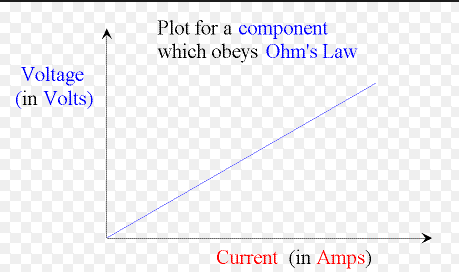
Ohms Law: Voltage is directly proportional to current provided that the temperature remains constant
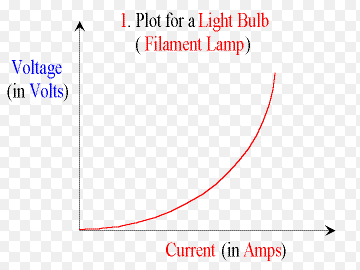
- bulb/lamp gets hotter
- R increases
- I increases at a slower rate
Longer wires: more resistance
Thicker wires: less resistance
Resistance of a wire = directly proportional to its length
= inversely proportional to its cross sectional area
Static Electricity
Conductors and Insulators
Current Electricity
Voltage and Circuits
Resistance
Informationen
- Beschreibung
- 9th grade Science Notiz am Electricity, erstellt von emma honaman am 31/05/2018.
- Erstellt von
- emma honaman
- Aufrufe
- 2
- Tags
- Verlauf
-
- Erstellt von ShreyaDas · 4 Apr 2014
- Kopiert von emma honaman · 31 Mai 2018
- Bewertung