
Electric Circuits and Current Electricity
414 resources created by 317 users
This Electric Circuits and Current Electricity page on GoConqr gathers community-made quizzes, mind maps, flashcards and notes, from charge, current and potential difference to resistance, series and parallel circuits, mains electricity and capacitors. It's built for school students revising a topic and teachers after ready-made material. There are over 2,700 resources here, including more than 160 quizzes, over 1,300 mind maps and over 900 flashcards, mostly at secondary level. Pick a quiz to find your gaps, then revisit the maps and flashcards.
Top Electric Circuits and Current Electricity resources
-
Mind map Electricity A larger mind map of end-of-ks3 electricity!
-
8 cardsAQA GCSE Physics equations: Unit 2 (Electricity) What is the equation for charge flow?
-
47 questionsScience 9: Unit 4 - Electricity MEGA QUIZ Use this on the Final and PAT.
-
23 questionsP5 Quiz Electric current is the flow of electric charge.
-
30 questionsIGCSE Co-ordinated Science Semester 1 Revision Questions The circuit shown contains a component X and two meters Y and Z in an electrical circuit. Which unit is use...
-
37 cardsEdexcel A level/AS Physics Chapter 3 - Electricity What is Electric Current?
-
34 cardsP5 - Electric circuits What is the definition of electric charge?
-
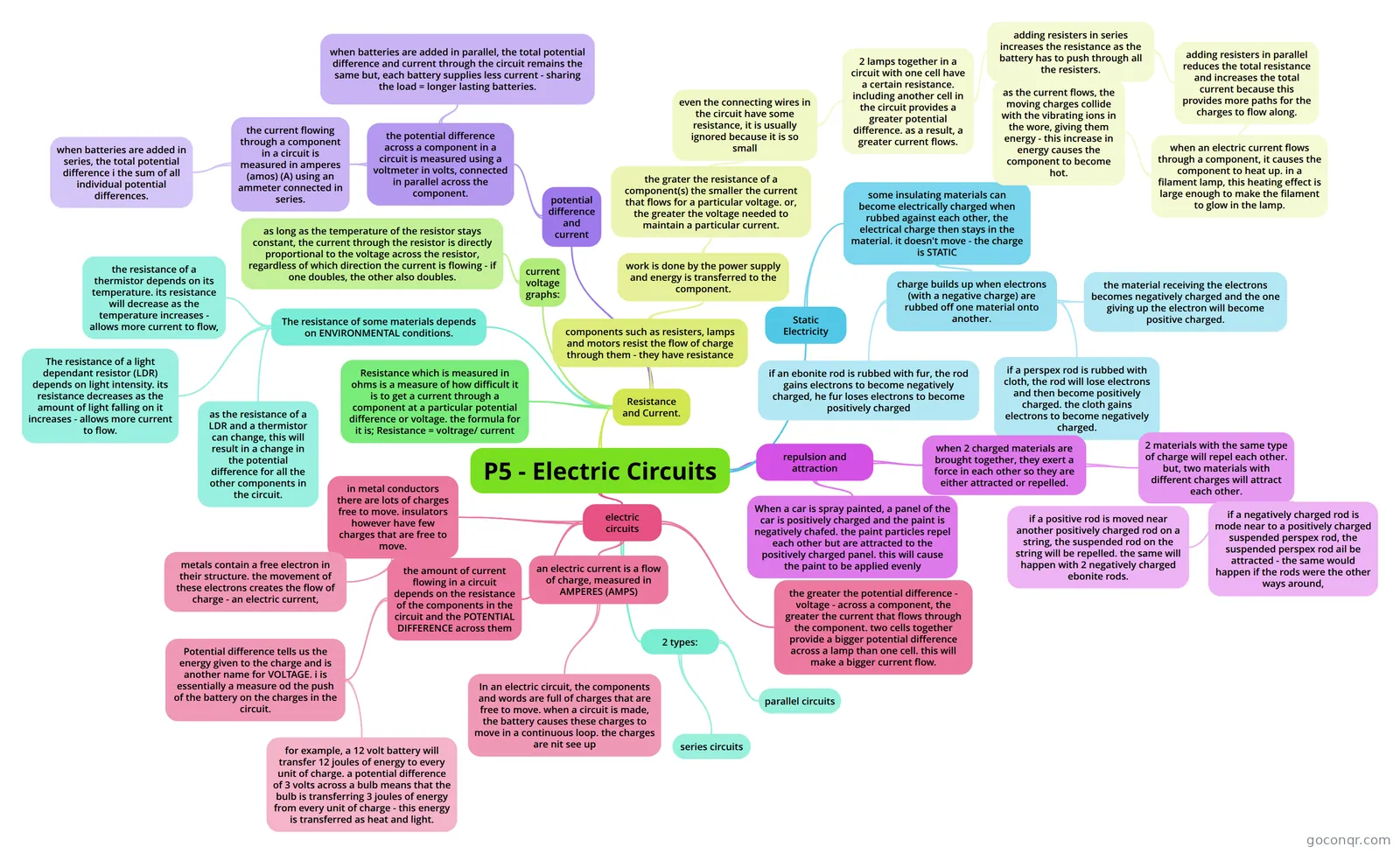 Mind map P5 - Electric Circuits
Quizzes
See all 48 quizzes-
47 questionsScience 9: Unit 4 - Electricity MEGA QUIZ Use this on the Final and PAT.
-
23 questionsP5 Quiz Electric current is the flow of electric charge.
-
30 questionsIGCSE Co-ordinated Science Semester 1 Revision Questions The circuit shown contains a component X and two meters Y and Z in an electrical circuit. Which unit is use...
-
16 questions0654 P6 Electric Circuits Quiz A cell is connected to a lamp, as shown. A charge of 4.0 C flows through the lamp in 2.0 s. What is the dir...
-
18 questionsU10 Electric Circuits Quiz Which of these statements is true?
-
10 questionsPLTW POE Electricity Test Series circuit has a voltage of 110 and three resistors. RA = 15 ohms, RB = 18 ohms, and RC = 25 ohms. What...
-
20 questionsAQA GCSE Physics Unit 2.4 Which generator is used to generate high potential differences using static electricity?
-
5 questionsPhysics Circuit True or False(Easy) A Conductor does not carry a current well.
Mind maps
See all 126 mind maps-
Electricity A larger mind map of end-of-ks3 electricity!
-
P5 - Electric Circuits
-
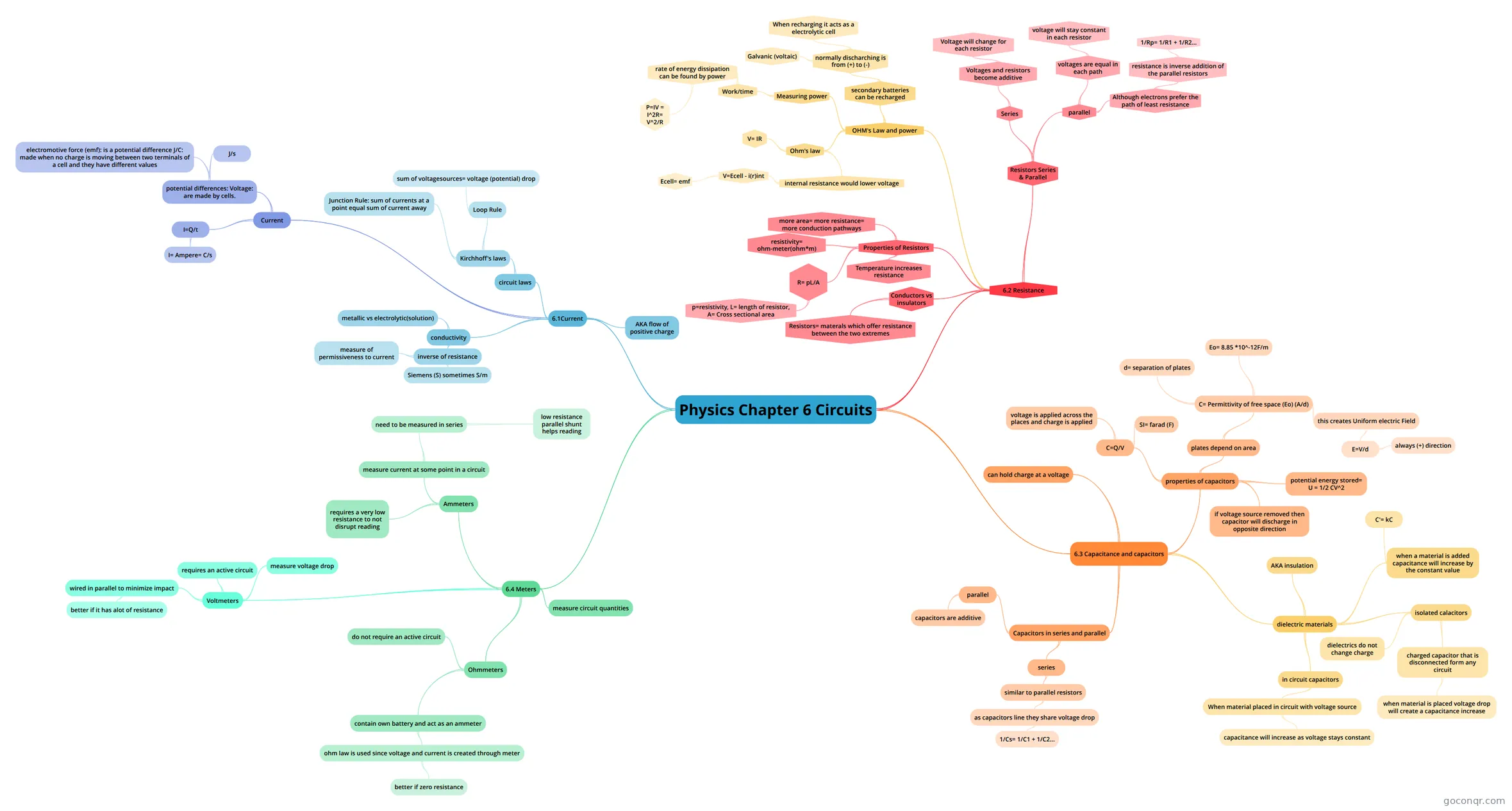 Physics Chapter 6 Circuits Prep for Chem/phys 2
-
P6
-
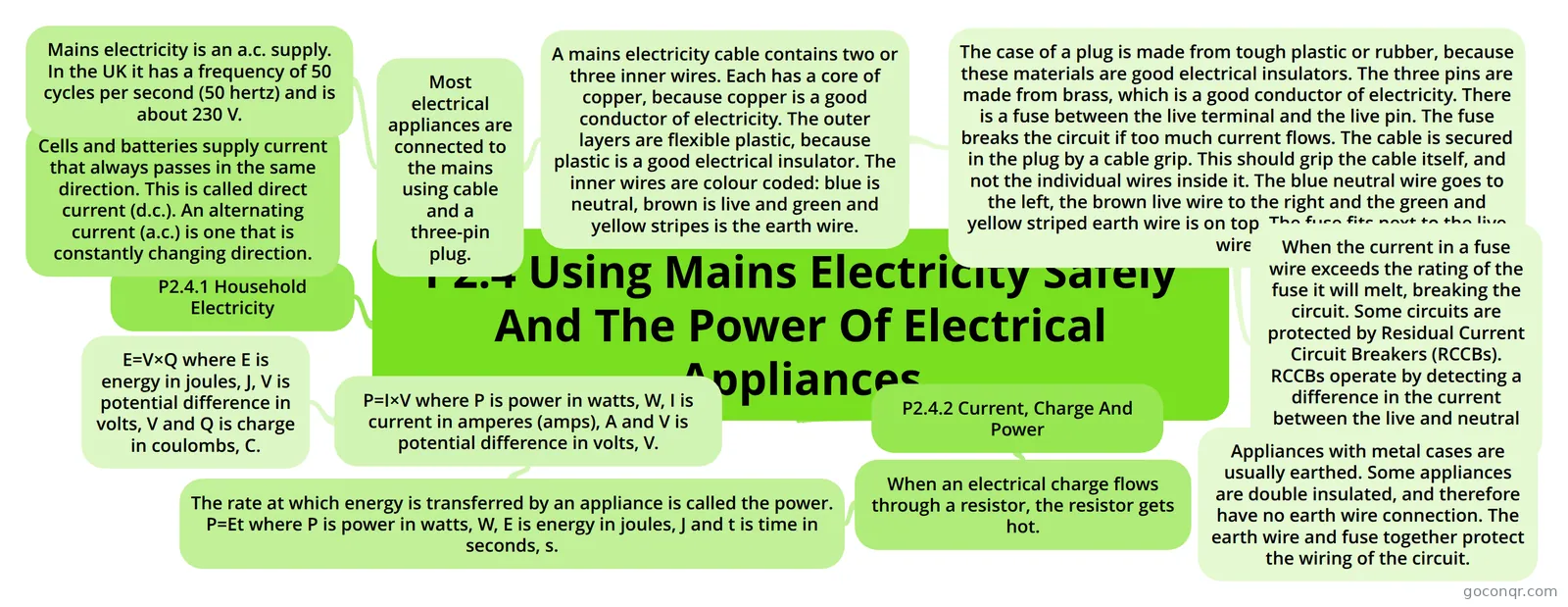 P2.4 Using Mains Electricity Safely And The Power Of Electrical Appliances
-
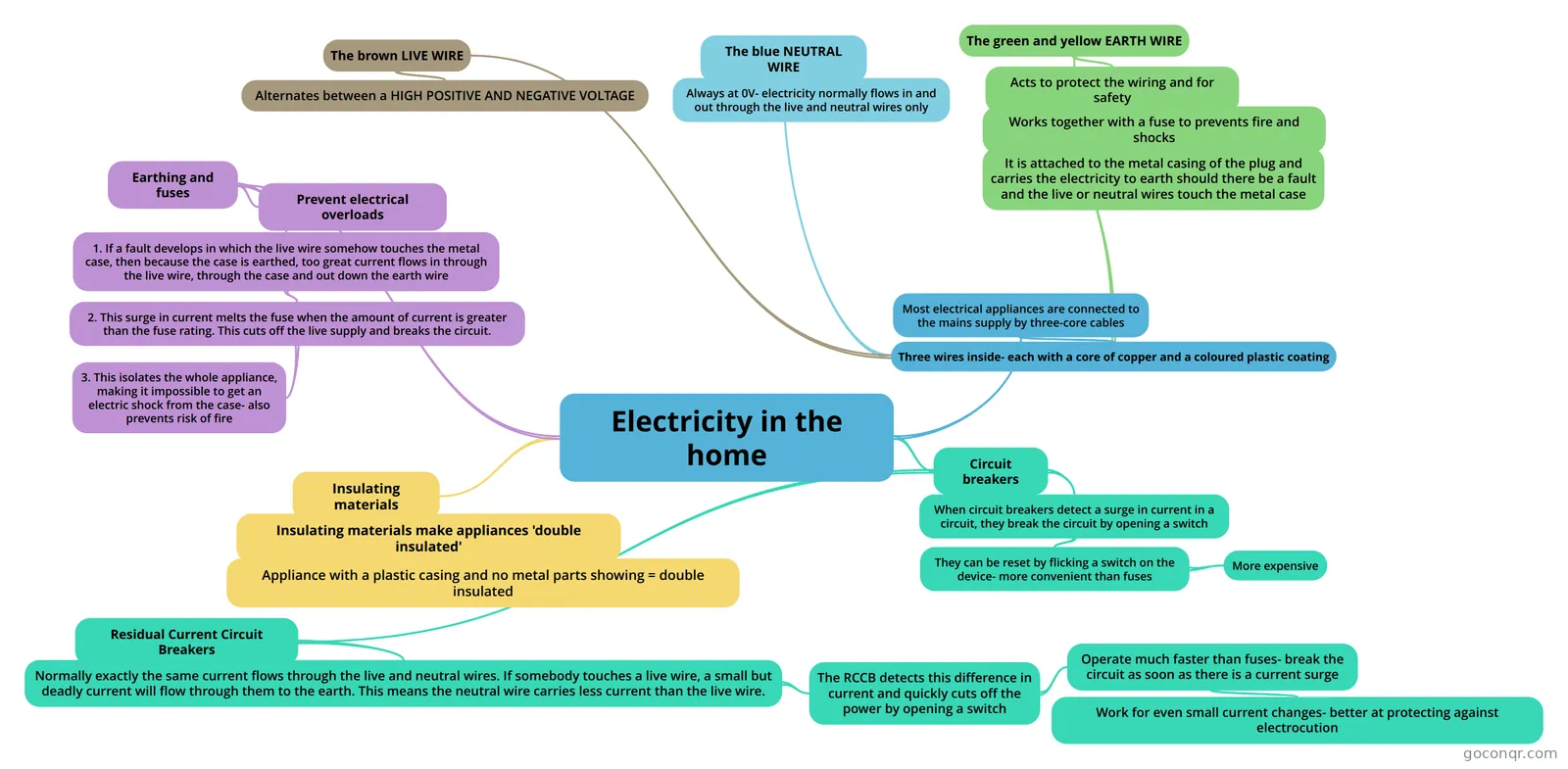 Electricity in the home
-
Physics - Electricity National Five physics electricity unit summarised.
-
P1.4.2 The National Grid
Flashcards
See all 184 flashcards-
8 cardsAQA GCSE Physics equations: Unit 2 (Electricity) What is the equation for charge flow?
-
37 cardsEdexcel A level/AS Physics Chapter 3 - Electricity What is Electric Current?
-
34 cardsP5 - Electric circuits What is the definition of electric charge?
-
29 cardsElectric Circuits If a 60–watt bulb is used to light a room, how much current is flowing through the bulb given that the volt...
-
33 cardsUNIT 3.1 - ELECTRIC CIRCUITS What does this circuit symbol represent?
-
20 cardsMains electricity What is it meant by direct current and alternating current?
-
24 cardsP2.5 Flashcards What is direct current?
-
16 cardscalculating power define power rating
Flowcharts
Notes
See all 37 notes-
Science 9: Unit 4 - Electricity Science 9: Unit 4 - Electricity Topic 1.1 - Introduction and Static Electricity Positive Charge: Not enough electrons compared to protons Negative Charge: Too many electrons compared to protons Neutral Cha...
-
Charge and Current Revision Notes: Physics: OCR A: Unit 2: Module 1: Charge and Current(a) explain that electric current is a net flow of charged particlesCurrent is defined as the rate of flow of charge (b) explain that electric curren...
-
Current and Potential Difference Current- the flow of electrical charge around the circuit. Unit:ampere,A Potential Difference- is the driving force that pushes the current around.Unit: volt,V. Resistance- is anything in the circuit that slows the fl...
-
Physics: Power and Resistance Electrical resistance Voltage can be thought of as the pressure pushing charges along a conductor, while the electrical resistance of a conductor is a measure of how difficult it is to push the charges along. Using th...
-
Ohm's Law
-
Physics: Watt
-
P4 - Static Electricity Static electricity is made by rubbing two insulators together. This causes electrons to flow from one insulator to the other - making one insulator positively charged (because it now has more protons than electrons) a...
-
static and current electricity atoms are basic particles from which all matter is made up. each atom has a nucleus consisting of protons and neutrons. the nucleus is surrounded by electrons. static electricity- material that allow electri...
Slides
See all 16 slidesMore Physics topics
About Electric Circuits and Current Electricity
GoConqr OriginalWhat the resources cover
The page starts with the basics. The mind map Electricity covers charge, current in amps, the formulae triangle for charge and current, potential difference, ammeters, voltmeters and circuit symbols. The mind map Electrical Circuits adds complete circuits, series circuits and parallel circuits.
Further down you will find resistance, Ohm's law, IV characteristics, internal resistance and EMF, power, domestic circuits, the National Grid and capacitors. Notes on static electricity sit alongside the current electricity material.
Where to start
If circuits are new, begin with the Circuit Symbols flashcards and the mind map Electricity. Then read the notes Charge and Current and Current and Potential Difference. Once those make sense, move on to Ohm's Law and the notes on resistance.
- Learn the symbols and key words.
- Read the notes on charge, current and potential difference.
- Work on resistance, then series and parallel circuits.
- Finish with power, mains electricity and exam-style questions.
Using quizzes and maps together
Try a quiz first, without looking anything up. The quiz Short test: Resistors in Series and parallel asks how ammeter readings change when a switch is closed. The quiz Electric Circuits Quiz asks why a bulb lights in a simple series circuit. When you miss a question, open the matching mind map and find the branch that explains it. Then try the quiz again.
Equations and exam practice
The flashcards AQA GCSE Physics equations: Unit 2 (Electricity) cover charge flow, Ohm's law and total resistance of resistors in series and parallel. The resources mention GCSE, IGCSE, A-level, National 5, Leaving Certificate and CBSE, so check which ones match your course.
Where this unit fits
This unit sits in the Electricity and Magnetism strand of Physics. Choose a resource that suits your course and make a start, or build your own set of notes for the parts you find hardest.
Frequently asked questions
Which resource should I open first?
If you are new to circuits, start with the mind map Electricity. It covers charge, current, potential difference, ammeters, voltmeters and circuit symbols in one place. The Circuit Symbols flashcards are a good next step before you try a quiz.
Which quizzes test series and parallel circuits?
Try Short test: Resistors in Series and parallel, which asks how ammeter readings change when a switch is closed. The PLTW POE Electricity Test has a series circuit with three resistors and asks for total resistance, voltage drops and power.
Are the resources free to use?
Yes. Every resource on this page is free to open, study and take, with no account needed. They were made by GoConqr users rather than by GoConqr itself, so it is worth checking that each one fits your course.
Which exams do the resources suit?
Most of the material is secondary level. The resources mention GCSE Physics, AQA GCSE Physics, IGCSE Physics, A-level Physics, National 5 Physics, Leaving Certificate, KS3 and CBSE. Look at each title to see which course it was made for.
Is there anything on mains electricity and power?
Yes. There are mind maps on mains electricity and the National Grid, flashcards on household electricity and calculating power, and notes on power and resistance. These sit alongside the core circuit material.
Can I make my own revision material?
Yes. A free account saves your quiz scores and lets you make your own quizzes, mind maps, flashcards and notes. That helps if you want to fill a gap, such as a formula you keep forgetting.