
Notizen
Carbohydrates - created from Mind Map
Inhalt der Notizen (1)
Seite 1
Definition
Importance
Monosaccharides
Classification of CHO
Dietary Fiber
Oxidation Reaction
Interaction with water
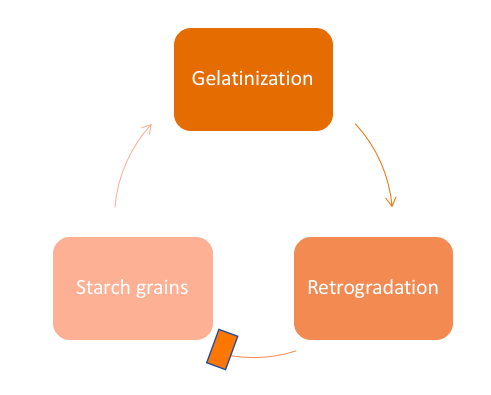
Retrogradation of amylose
Syneresis
Hydrolysis
Browning reactions
Caramelization
Maillard Browning
Pyrolysis
Consist of polyhydroxy aldehydes or ketones
3 Elements: C - Carbon, H- Hydrogen & O - Oxygen
Source of energy
Building blocks
Components of other molecules
Glucose
Starch in plants
Plant : Cellulose
Human : Glycogen
DNA
RNA
Glycolipids
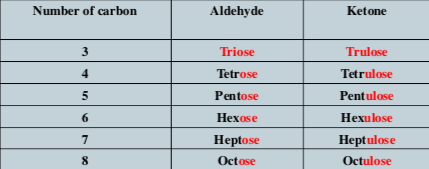
Aldose/Ketose
No. of carbons in chain
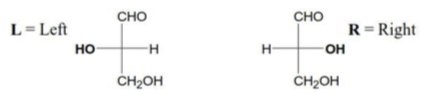
Chiral carbon
Fisher Projections
Chiral objects
Archiral objects
Ways to represent mirror image in 2 dimensions
Cannot be superimposed on their mirror image
Hand
Gloves
Can be superimposed on the mirror images
Drinking glass
Cubes
Monosaccharides
Disaccharides
Polysaccharides
Oligosaccharides
1 polyhydroxy aldehyde/ketone
Single sugars
Colorless, water-soluble & crystalline solids
Sweet taste
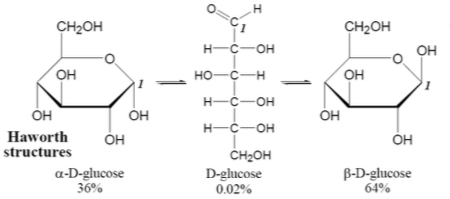
Glucose Anomers
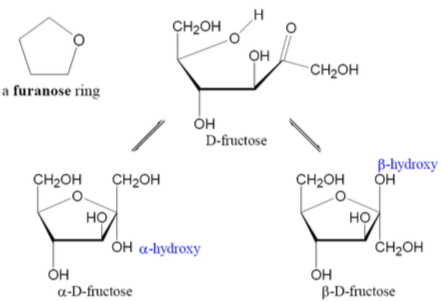
Fructose Anomers
Importance
Glucose
Xylose
Forms are anomers of each other & carbon-1 called the anomeric carbon
Closes on itself to form a furanose ring
β-D-glucose
β-D-fructose
β-D-ribose
β-D-galactose
β-D-deoxyribose
dextrose & blood sugar
Metabolized in the body for energy
Other sugar : must be converted to glucose by the liver
levulose & fruit sugar
Sweetest
ribonucleic acid (RNA)
Glucose into lactose
deoxyribonucleic acid (DNA)
2 monosaccharides
Glycosidic Bonds
Importance
Covalent bond that joins a carbohydrate to another group
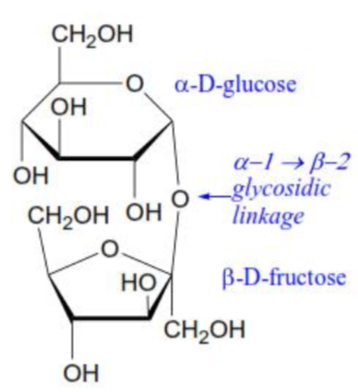
Sucrose
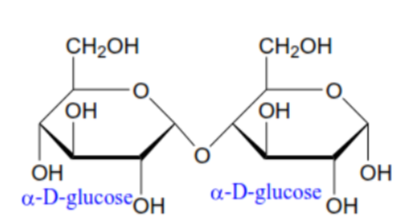
Maltose
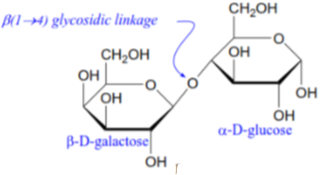
Lactose
Table sugar
Caramel formed from heating sucrose
Invert sugar : produced by hydrolysis of sucrose under acidic conditions
Malt sugar
Produced in germinating grain
Formed during the hydrolysis of starch to glucose during digestion
Milk sugar
Digested by enzyme lactase
More than 2
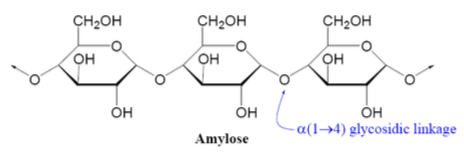
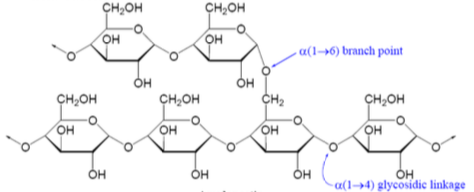
Starch
Polymer consisting of D-glucose units
Amylose
Amylopectin
Glycogen
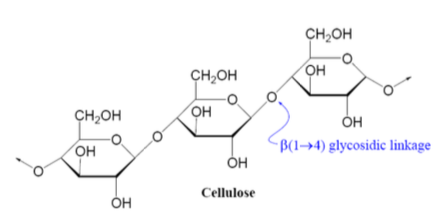
Cellulose
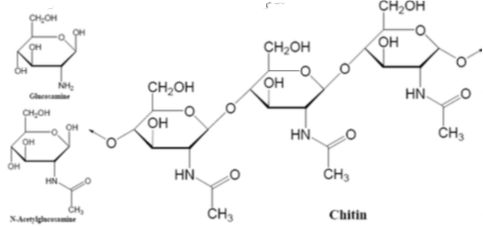
Chitin
Long, unbranched chains of glucose
Flexible to allow the molecule to twist into the shape of helix
Long chains of glucose
Animal starch
Abundant in the liver & muscles
Maintains normal blood sugar level & gives energy
Long,unbranched chains of D-glucose connected by β(1→4) glycosidic
Important structural
Polymer of N-acetylglucosamine
Extremely strong
3 - 10 monosaccharides
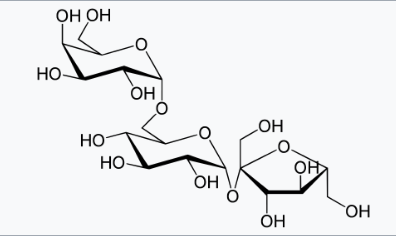
Raffinose
Trisaccharide
Found in beans, cabbage, broccoli etc
Hydrolyzed to D-galactose & sucrose by the enzyme α-galactosidase
Galactose
Fructose
Glucose
Important
Complex mixture
Resistant to hydrolysis by endogenous enzymes
Types
Cellulose
Beta-Glucans
Lignin
Pectins
Hemicellulose
Chitin/Chitosan
Plant Gums
Insoluble in water
Low-calores foods : bulking & rheological
Linear polymer of glucose with beta : 1-4 links
Glucose polymers contains both beta : 1-3 links & beta 1-4 links
Less linear, more soluble than cellulose
Contribute viscosity of products
High complex nonpolysaccharide
Insoluble
Polymer galacturonic acid bounded by alpha : 1-4 galacturonic links
Produce strong gels
Heterogenous
Different sugars in backbone & side chain
Soluble in dilute alkali
Improve water binding in baked goods
Poly beta, 1-4 acetyl-D-glucosamine
Cellulose-like constituents
Deacetylation of chitin = chitosan
Water-soluble polysaccharides
Contribute : viscosity/gelling properties
Thickening agents
Test for reducing sugars
See colour changes
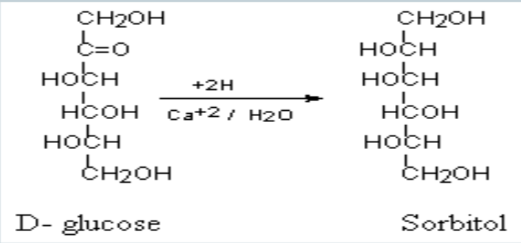
Formation of sugar alcohol
Sucrose with water become solubilize
Starch with water won't be solubilize
Apply heat/ stir it to increase the solubility rate
Colour changes from opaque to translucent
Water will be secreted from the carbohydrate
Preservation techniques
Enzymatic: Oxygen + Phenolic + PPO
Nonenzymatic: Caramelization
Process
Influenced by pH
Direct heating
Anomeric shifts, alteration of ring size & breakage of glycosidic bonds
Dehydration
Formation of anhydro rings, double band formation
Color & flavour
Carbohydrate + Protein
Why we need to control
Loss of amino acid
Dark colour, strong flavour & odour
Toxicity of product
Total loss of water from sugar molecule
Ex: Burnt & inedible flavor

Informationen
- Beschreibung
- - Major food components
- Erstellt von
- Syarifah Sumaira
- Aufrufe
- 0
- Verlauf
-
- Erstellt von Syarifah Sumaira · 1 Nov 2020
- Zu Notiz kopiert von Syarifah Sumaira · 1 Nov 2020
- Bewertung