
Notizen
Power Stations
Inhalt der Notizen (1)
Seite 1
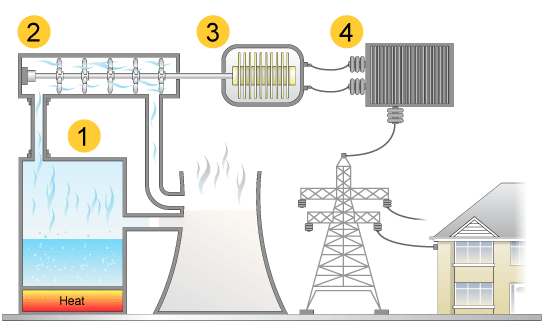
Power stations are very easy to understand:
1. Boiler - Heat is created, evaporating the water, and creating steam.
2. Steam Turbine - The steam (pushed in high pressure through small pipes) turns the turbine.
3. Generator - The turbine turns the generator and creates electricity.
4. National Grid - The electricity is dispersed via the National Grid
Chemical Energy --> Heat Energy
Heat Energy --> Kinetic Energy
Kinetic Energy --> Electrical Energy
Boiler
One of the only differences in power stations is what chemical fuel is used to create heat energy:
Fossil Fuels - Oil, coal and natural gas.
Nuclear Fuels - Uranium and Plutonium.
These are all non-renewable, and will run out some day.
They all damage the environment.
They provide most of our energy.
Key Words
Boiler
Turbine
Generator
Electricity
Electromagnetic Induction
Generator
Does what it says on the tin - generates electricity.
In the generator, there are;
Coils of wire
Magnets.
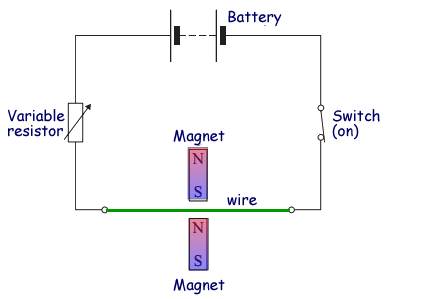
The process by which electricity is created is called electromagnetic induction. This sounds very complicated, but it's not!
By moving a magnet in a coil of wire or moving an electrical conductor in a magnetic field, this created a little 'blip' of current.
National Grid
Electricity is distributed via the National Grid. It takes electrical energy from power stations to where it's needed in homes and industry.
It enables power to be generated anywhere on the grid, and then be supplied to anywhere else on the grid.
Fossil fuels are burned in power station to convert its stored chemical energy into heat (thermal) energy.
Fossil fuels are made from sediments (layers) of DOM (dead organic matter). Lots of pressure builds up over millions of years, with heat. They are:
Coal
Oil
Natural Gas
Burning fossil fuels in power stations damage the environment.
All three release Carbon Dioxide into the atmosphere when burned.
For the same amount of energy produced, coal releases the most carbon dioxide, followed by oil and then gas.
All these pollutive gases adds to the greenhouse effect, and contributes to global warming.
Burning coal and oil releases sulfur dioxide, which causes acid rain. Acid rain can be harmful to trees and soils, and can have far-reaching effects on ecosystems.
Acid rain can be reduced by taking the sulfur out before the fuel is burned, or cleaning up the emissions.
Nuclear power stations are the same as fossil fuel power stations, but use a different way of creating heat energy for the boiler.
The nuclear fuels are:
Uranium
Plutonium.
As with any type of energy source, there are advantages and disadvantages.
Advantages:
Nuclear reactions release a lot more energy than chemical reactions.
A nuclear power station doesn't produce carbon dioxide when producing electricity.
Nuclear fuel is relatively cheap.
Reliable.
Disadvantages:
Nuclear power stations produce radioactive waste - this can be very dangerous and difficult to dispose of, as it emits ionising radiation and stays radioactive for a long time.
Nuclear power needs extra safety precautions - waste needs disposing of carefully, the surrounding area needs to be tested for contamination of the soil and water, and workers need to be tested regularly to check they've not been exposed to too much radiation.
People who live close to nuclear power stations are scared of the risks.
Nuclear power stations take the longest time of all the power stations to start up. The overall cost of nuclear power is high due to the cost of the power plant and final decommissioning.
Nuclear accidents cause sickness or even death, spreading over a wide area.
Uranium and Plutonium will run out, they are non-renewable.
Radioactive Waste.
All nuclear power stations produce 'radioactive waste'.
They don't produce greenhouse gases, but a solid, physical substance which can cause cancer.
The waste is stored in metal tanks under water. They are closely monitored, and left to become unradioactive.
There are ways to reduce the impact of carbon dioxide.
This is called Carbon Capture and Storage (CCS):
General
Fossil Fuels
Nuclear
Informationen
- Beschreibung
- gcse Physics (Generating Electricity) Notiz am Power Stations, erstellt von darkangelforgiven am 20/10/2013.
- Erstellt von
- darkangelforgiven
- Aufrufe
- 760
- Tags
- Bewertung