
Energy Resources and Electricity Generation
117 resources created by 93 users
This Energy Resources and Electricity Generation page on GoConqr gathers community-made quizzes, mind maps, flashcards and notes, from how power stations work to hydroelectric, tidal, wind and nuclear power. It's built for school students revising GCSE Physics and GCSE Science, and for teachers after ready-made material. There are over 800 resources here, including more than 20 quizzes and over 500 mind maps, made by more than 700 contributors. Pick a topic, try a quiz to spot your gaps, then make your own revision sets.
Top Energy Resources and Electricity Generation resources
-
16 cardsGenerating Electricity Fuel for Electricity -In most power stations, water is heated to produce steam. The steam drives a turbine,...
-
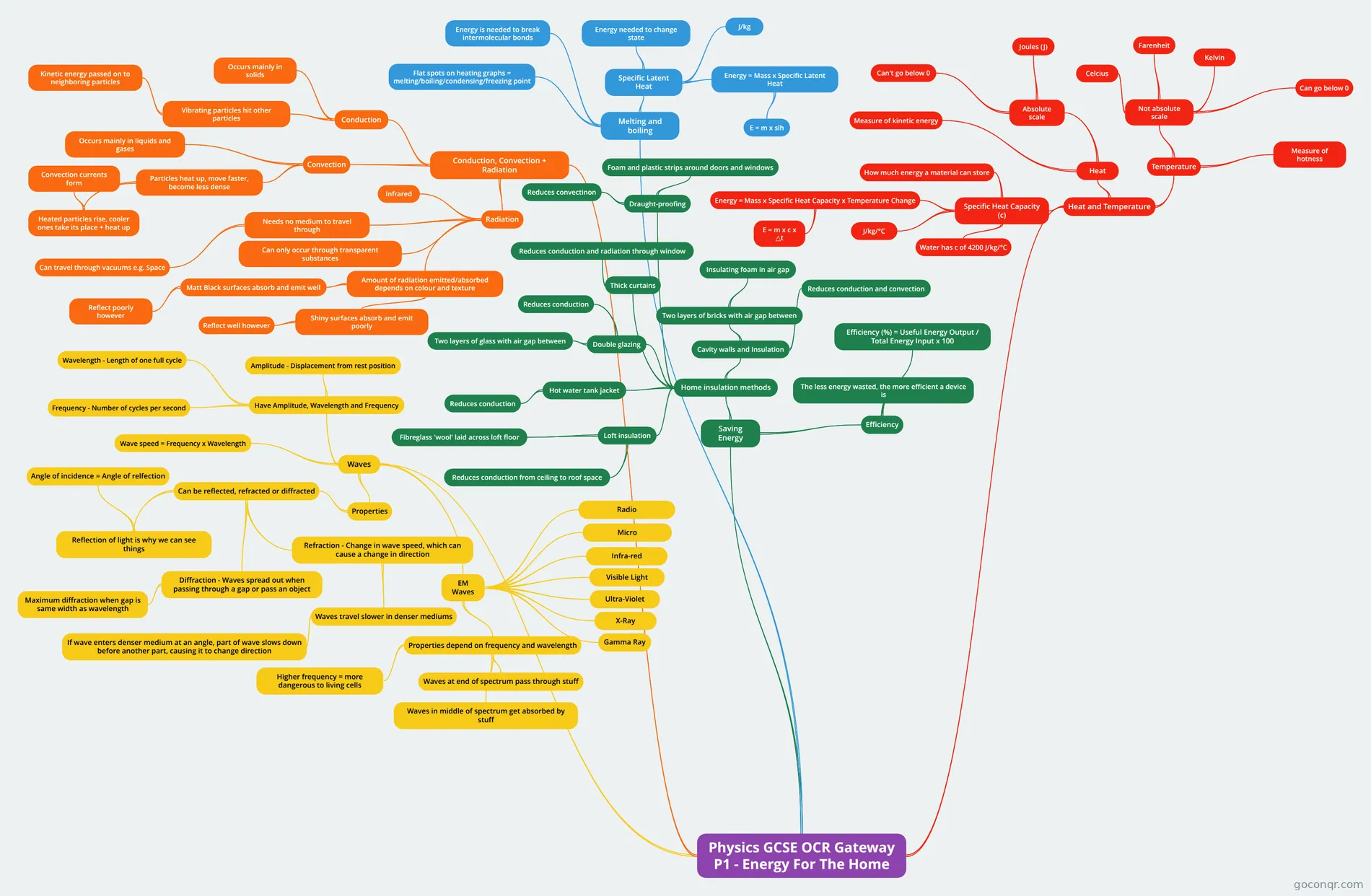 Mind map Physics GCSE OCR Gateway P1 - Energy For The Home
-
16 cardsKeywords/ key ideas for Physics mod1 Quick way to see how much you remember. Also useful to test yourself if you are confident with this module ...
-
Mind map Renewable Energy Sources Renewable Energy Sources//Physics Revision(AQA)
-
15 cardsList of Physics equations ALL of the physics equations I need to memorise!
-
Mind map Tidal Power This is a mind map all about tidal power.
-
Mind map Hydroelectric hydroelectric power and dams
-
Mind map The Difference between renewable and non-renewable energy By Hiten Desai
Quizzes
-
4 questionsP1.8 WHAT IS MOST OF THE ENERGY YOU USE IN YOUR HOME
-
12 questionsEnergy and Electricity Quiz (Section 1 on Revision Checklist) When a ball is dropped from a height onto a loop the loop the energy transfer is Kinetic to GPE
-
11 questionsUnit 11 Energy Resources Quiz Which of the following is not a fossil fuel?
-
10 questionsEnergy, Power and Heat 1 gigawatt is equal to how many watts?
-
9 questionsOCR Gateway P2a Quiz Photocells are renewable energy source
-
5 questionsCCI03.04.01 Pros and Cons of different energy sources (solar, wind, biofuels, geothermal, and hydro) Weak points of solar energy are
Mind maps
See all 49 mind maps-
Physics GCSE OCR Gateway P1 - Energy For The Home
-
Renewable Energy Sources Renewable Energy Sources//Physics Revision(AQA)
-
Tidal Power This is a mind map all about tidal power.
-
Hydroelectric hydroelectric power and dams
-
The Difference between renewable and non-renewable energy By Hiten Desai
-
P3 Science Revision Notes!
-
Wind Power This mind map is about wind power.
-
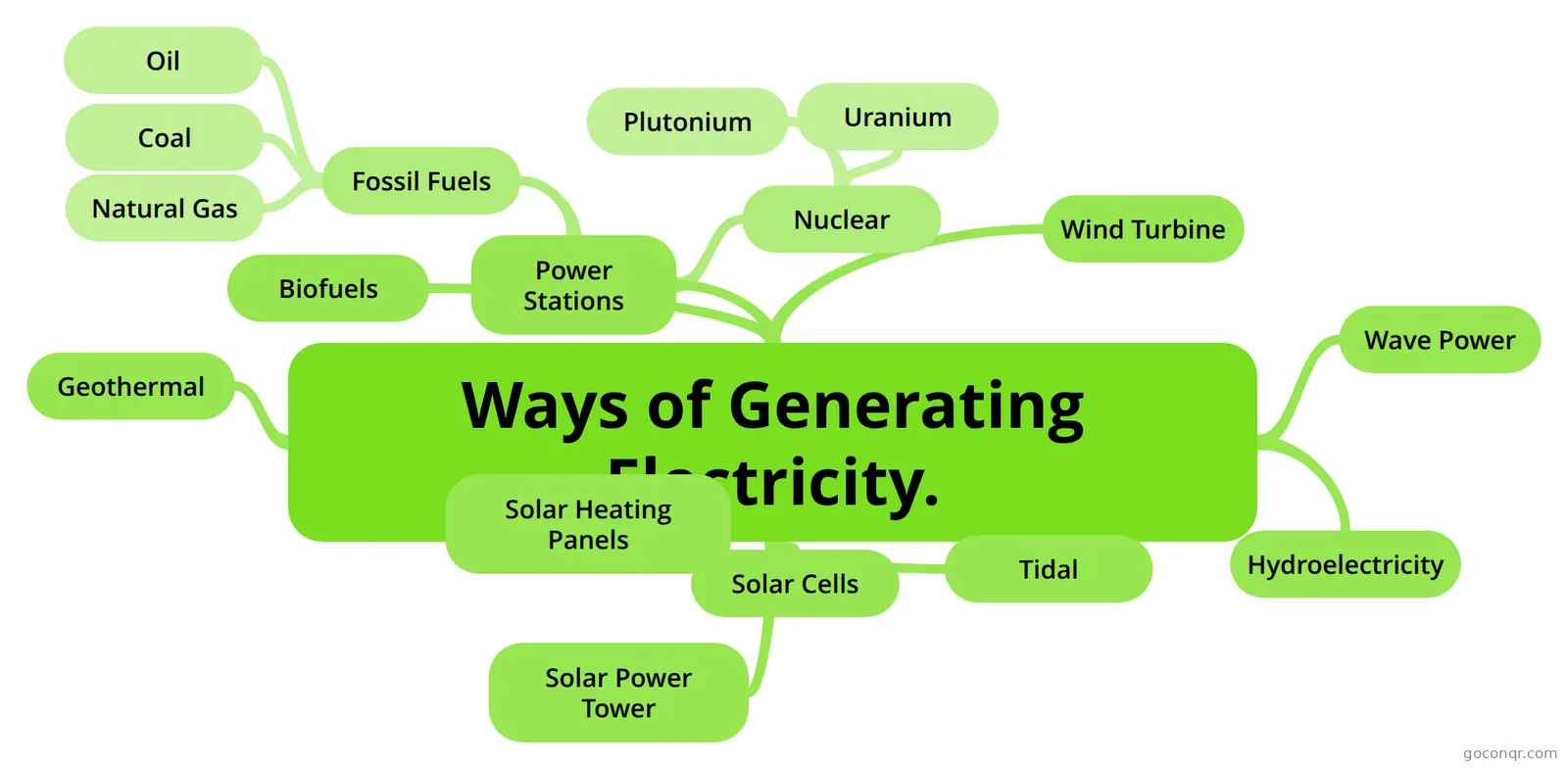 Ways of Generating Electricity.
Flashcards
See all 52 flashcards-
16 cardsGenerating Electricity Fuel for Electricity -In most power stations, water is heated to produce steam. The steam drives a turbine,...
-
16 cardsKeywords/ key ideas for Physics mod1 Quick way to see how much you remember. Also useful to test yourself if you are confident with this module ...
-
15 cardsList of Physics equations ALL of the physics equations I need to memorise!
-
79 cardsPhys P1 (after efficiency) - F What are non-renewable resources?
-
68 cardsP2 - Living for the future (Energy Resources) - Flash Cards Physics: Living for the future (Energy Resources) P2 Flash Cards
-
23 cardsRenewable Energy
-
30 cardsmod p2 living for the future pg 32.. here we go , give one advantage and disadvantage of using photocells to generate electricity
-
24 cardsPhysics P1b What is meant by a non-renewable energy resource? Name four non-renewable energy resources.
Notes
-
Power Stations Power stations are very easy to understand: 1. Boiler - Heat is created, evaporating the water, and creating steam. 2. Steam Turbine - The steam (pushed in high pressure through small pipes) turns the turbine.
-
Renewable Energy Sources Wind Turbines.This involves putting lots of wind turbines in exposed places like on moors or round coasts.Each turbine has its own generator inside it, so the electricity is generated directly from the wind turning th...
-
Methods of electricity generation Ways to generate electricityBurning fossil fuels:Brief description of what it is: Dead organisms get buried under the ground so they get squashed over time and the pressure changes their state to the fossil fuels we k...
-
P3 Revision Notes P3 – Making decisions – People may disagree about which technologies should be allowed. Some decisions may be based on the best outcome for the greatest number of people or a moral sense of right and wrong. The benefi...
-
Forms of Electricity (Solar, Geothermal, Fracking, Wind, Tidal, Hydroelectric) Forms of Electricity By Laura Dibble Basic Electricity Steam is created by burning some sort of fuel (mainly fossil fuels) and heating water The steam turns a turbine then spins a wire past a magnet (known as electrom...
-
P1- 3.3 P1- 3.3- USING ELECTRICAL ENERGY For any appliance the energy supplied depends on:- How long it is used for- The power supplied to it THE ENERGY SUPPLIED TO A 1KW APPLIANCE IN 1 HOUR IS 1 KILOWATT-HOUR (kWh)We can use...
-
P2.6 alterenating current lows one way and then the opposite in successice cycles. THE FREQUENCY is the number of cycles it passes through each second.THE MAINS FREQUENCY IN THE UK IS 50hz. every mains circuit ...
-
P1- 3.4 P1- 3.4- COST EFFECTIVENESS MATTERS To compare the cost effectiveness of different cost-cutting measures, we need to consider:- Capital costs (buying and installing equipment)- The running cost (fuel and maintenance)-...
Slides
More Physics topics
About Energy Resources and Electricity Generation
GoConqr OriginalWhat the resources cover
This unit looks at where electricity comes from. The flashcard deck Generating Electricity — Fuel for Electricity starts with the basic idea: in most power stations, water is heated to make steam, the steam drives a turbine, and the turbine is coupled to a generator. The note Power Stations walks through the same chain step by step, from boiler to steam turbine.
Renewable and non-renewable sources
Several mind maps compare the main options. Renewable Energy Sources includes geothermal energy, which is only possible in volcanic areas where hot rocks lie near the surface. Hydroelectric notes that such schemes can only be built in a few suitable places, but that output can be raised and lowered quickly. Tidal Power explains that energy can only be taken when the tide flows one way, so electricity is produced for about 10 hours per day. For a side-by-side view, try The Difference between renewable and non-renewable energy.
Where to start
- Read the flashcards on fuel for electricity to learn the steam, turbine and generator chain.
- Open the Power Stations note to see it written out in order.
- Move to the mind maps on renewable sources, then Hydroelectric and Tidal Power.
- Check the notes on nuclear power and fracking, and the one on advantages and disadvantages of fossil fuels and nuclear power.
- Use the equations flashcards when you reach efficiency and power questions.
Using quizzes and maps together
Read a mind map first, then take a quiz such as Unit 11 Energy Resources Quiz or Energy, Power and Heat. Note the questions you miss, go back to the matching map, and try again. Flashcard decks such as Comparison of Energy Resources are handy for short bursts of recall.
Where it fits
This unit sits in the Energy strand of Physics. The resources mention GCSE Physics and GCSE Science, and they were made by GoConqr users. Choose one resource today, then try building a map of your own.
Frequently asked questions
Which resource should I open first?
Start with the flashcard deck Generating Electricity — Fuel for Electricity. It sets out the basic chain of heated water, steam, turbine and generator. After that, the Power Stations note gives the same process in order, and the mind maps then compare different energy sources.
What do the mind maps cover?
They cover renewable and non-renewable sources, including hydroelectric, tidal, wind and geothermal power. Some compare the two groups directly, and others look at power stations and fuels. There are over 500 mind maps on the page, so you can pick the source you need.
Are the resources free to use?
Yes. Every resource listed here is free to open, study and take, with no account needed. If you want to save quiz scores or make your own quizzes, mind maps, flashcards and notes, you can also create a free account.
Which exams do these resources suit?
The listed resources mention GCSE Physics and GCSE Science, and nearly all of them are at secondary level. School students can use them for revision, and teachers can pick out ready-made material for lessons.
How can I test myself on this topic?
Try the quizzes, such as Unit 11 Energy Resources Quiz, Solar Cells or Energy, Power and Heat. There are more than 20 quizzes on the page. Use your wrong answers to choose which mind map or flashcard deck to revisit.
Who made these resources?
They were made by GoConqr users, not by GoConqr itself. Over 700 contributors have added quizzes, maps, flashcards and notes. Because they are community-made, it helps to compare a couple of resources on the same topic.