
Notizen
1_C1 - created from Mind Map
Inhalt der Notizen (1)
Seite 1
Atoms, molecules and compunds
Emulsifiers
Cooking and chemical change
Perfumes
Solutions
Paints and pigments
Polymers
Atoms are very small. They have a nucleus which is positively charged and electrons which are negatively charged. The electrons move around the nucleus in layers known as shells
Atoms can form bonds to make molecules or compounds.
Charged atoms are known as ions. If a positive ion meets a negative ion they'll be attrached to one another and join together. This is an ionic bond.
The other main type of bond is called covalent bond- atoms in a covalent bond share a pair of electrons.
Additives make food last longer and look and taste better. Food colours make food look more appealing than before Flavour enhancers bring out taste as well as the smell
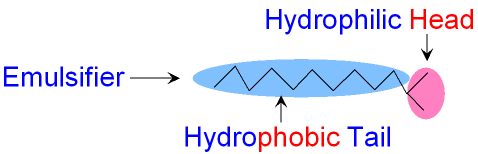
Oil and water naturally separates into two layers with oil on top, emulsifiers help to stop this
The hydrophilic end of the molecule bonds to the water molecules
When you shake oil and water together with a bit of emulsifiers, the oil forms droplets surrounded by a coating of emulsifier.
Oil droplets are repelled by the hydrophilic bit of emulsifier, while the water molecules latch on
The hydrophobic end of the emulsifier molecule bonds to oil molecules.
Eggs and meat
Potatoes
Baking powder
Eggs and meat are good source of protein. Protein molecules change shape when you heat them. The energy from cooking breaks some of the chemical bonds in the protein and this allows the molecule to take different shape. This gives the food a more edible texture. This change is irreversible.
Each potato cell is surrounded by a rigid cell wall made of cellulose. Humans can't digest cellulose, so its difficult for us to get to the contents of the cells. Cooking the potato ruptures the cell walls. It also makes the strach grains inside the cells swell up and spread out.
It makes the potato softer and more flexible, and much easier to digest.
It undergoes thermal decomposition
Sodium hydrogencarbonate > sodium carbonate + carbon dioxide + water
This is when the substande breaks down into a simpler substance when heated
Esters can be made by heating a carboxylic acid with an alcohol. (Esterification)
Acid + Alcohol > Ester + Water
Easily evaporates - Nontoxic - Doesn't react with water - Doesn't irritate the skin - Insoluble in water
Solution - is a mixture of a solute and a solvent that does nit separate out.
Nail vanish doesn't dissolve in water
Solute - is the substance being dissolved.
Solvent - is the liquid its dissolving into.
Soluble - means it will dissolve.
Insoluble - means it will not dissolve.
Solubility - a measure of how much will dissolve
The molecules of nail vanish are strongly attracted to each other. This attraction is stronger than the attraction between the nail vanish molecules and the water molecules.
The nail varnish dissolves in acetone ( Nail varnish remover) This is because the attraction between acetone molecules and nail varnish molecules is stronger than the attractions holding the two substances together.
The molecules of water are strongly attracted to each other. This attraction is stronger than the attraction between the water molecules and the nail vanish molecules.
pigment - gives the paint its colour
Emulsion paints are water-based. Their solvent is water and they dry when the water evaporates.
The pigments in oil paints are dispersed in oil, which may itself be dissolved in a solvent. The solvent evaporates away when the paint dries. This leaves the pigment and oil behind. The oil oxidises to form a hard film. This happens because the oil reacts with oxygen in the air.
Special pigements
a binding medium - a liquid polymer that hardens to form a continuous layer when the paint dries
a solvent - dissolves the binding medium and makes the paint more fluid
Paints are a type of mixture called a colloid. In a colloid, particles of one substance are mixed and dispersed with particles of another substance - but they are not dissolved in it. The components do not separate out because their particles are small enough not to settle at the bottom.
Thermochromic pigments are sensitive to temperature. They change colour when they are heated up or cooled down. This property is useful for indicating if the drink in a cup is hot, or if the water in a kettle is hot.
Phosphorescent pigments glow in the dark. They are able to absorb light energy and store it. This stored energy is released as light energy over a period of time.
Phosphorescent pigments are useful for watching faces that glow in the dark. They may also be used in fire safety signs placed near fire extinguishers. In the event of a fire, the location of the fire extinguishers can be seen even if the lights fail.
In the past, glow-in-the-dark watch faces used radioactive paints. Phosphorescent pigments are much safer, though.
Polymers are formed when lots of small molecules called monomers join together. This reaction is called polymerisation.
Molecules with a least one double covalent bond between carbon atoms are called unsaturated compounds. Molecules with no double bond between carbon atoms are saturated compounds
Lots of unsaturated monomer molecules can open up their double bonds and jon together to form polyemer chains.
Weak forces
Strong forces
If a plastic is made up of long chains that are held together by weak intermolecular forces, then the chains will be free to slide over each other. This means that the plastic can be stretched easily and will have a low melting point.
Some plastics have stronger bonds between the polymer chains- these might be covalent bonds between the chains, or cross-linking bridges. These plastics have higher melting points, are rigid and can't be stretched as the crosslinks hold the chains firmly together.

Informationen
- Beschreibung
- Notiz am 1_C1 - created from Mind Map, erstellt von stiles2k15 am 13/12/2015.
- Erstellt von
- stiles2k15 · Dez 2015
- Aktualisiert
- 19 Feb 2016
- Aufrufe
- 0
- Verlauf
-
- Erstellt von stiles2k15 · 13 Dez 2015
- Zu Notiz kopiert von stiles2k15 · 13 Dez 2015
- Bewertung