
Notizen
Maths Cheat Sheet
Inhalt der Notizen (5)
Seite 1
Number Terms:
Multiples - The multiples of a number are those numbers that result from multiplication by 1,2,3,4,5... etc
Common Multiples - Multiples that numbers share
Lowest Common Multiple - The smallest multiple shared by the numbers
Factors - The factors of a number are the whole numbers that divide exactly into it.
Common Factors - Numbers can share certain factors
Highest Common Factor - The largest factor shared by numbers
Prime Numbers - A whole number that is greater than one and has only 2 factors which are the number 1 and itself.
Powers - Powers are used to show repeated multiplication, the exponent n the number represents how many times it is to be multiplied by itself.
Square Roots - The square root of a number is a number which multiplied by itself gives you the original number.
Order Of Operations - Brackets, Exponents, Division, Multiplication, Addition, Subtraction
Percentage - A percentage is a portion of a whole represented as a number of parts out of 100.
Seite 2
NUMBER NOTES - Prime Numbers
Prime Numbers to 200:
2, 3, 5, 7, 11, 13, 17, 19, 23, 29, 31, 37, 41, 43, 47, 53, 59, 61, 67, 71, 73, 79, 83, 89, 97, 101, 103, 107, 109, 113, 127, 131, 137, 139, 149, 151, 157, 163, 167, 173, 179, 181, 191, 193, 197, 199,2, 3, 5, 7, 11, 13, 17, 19, 23, 29, 31, 37, 41, 43, 47, 53, 59, 61, 67, 71, 73, 79, 83, 89, 97, 101, 103, 107, 109, 113, 127, 131, 137, 139, 149, 151, 157, 163, 167, 173, 179, 181, 191, 193, 197, 199,
1 is not a prime number as it only has 1 factor which is itself.
NUMBER NOTES - Percentages
Percentages to Fractions
to write a percentage as a fraction put the percentage over 100 and simplify the fraction.
Fractions to Percentages
To write a fraction as a percentage, multiply it by 100/1 then divide the resulting improper fraction.
Percentage to Decimal
To write a percentage as a decimal, divide by 100 (move decimal point 2 places to the left)
Decimal to Percentage
To write a decimal as a percentage, multiply by 100 (move 2 decimal places to the right)
Writing a percentage of a quantity
To write one quantity as a percentage of another, first write the quantity as a fraction and then change the fraction to a percentage.
e.g A student scores 24 out of 40 in a test, what is the result written as a percentage?
24/40 x 100/1 = 2400/40 = 240/4 = 60%
Finding a percentage of a quantity
To find a percentage of a quantity, multiply the percentage by the quantity.
e.g 65% of a 90-hectare farm is used to grace dairy cows. How many hectares are used for dairy cows?
= 65% of 90
= 65/100 x 90/1 = 5850/100
= 58.5 ha
NUMBER NOTES - Integers
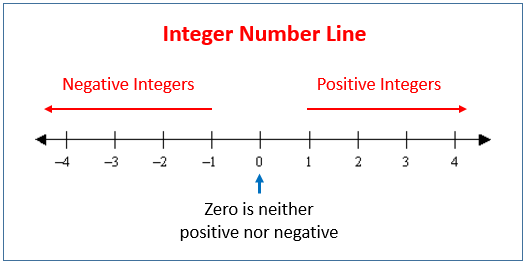
Integers include whole numbers and the negatives of whole numbers. Integers can be represented on an integer number line. Negative integers are on the left-hand side and have a small - sign in front of their digit. 0 is an integer that is neither positive nor negative. Positive Integers are on the right hand side. They have a + sign which isn't always shown.
Opposite Integers
Opposite integers are pairs of integers that have the same digit but different signs. When opposite integers are added, the result is 0.
e,g the opposite of -3 is +3
+3 -3 = 0
Multiplying Integers
Negative x Negative = Positive
Negative x Positive = Negative
Positive x Positive = Positive
Multiplying Integers with powers
(-3)^3 = -3 x -3 x -3
If the indice number is even then the result will be positive
If the indice number is odd then the answer will be negative
Seite 3
Divisibility Rules:
Divisibility by 1: Every number is divisible by 1.
Divisibility by 2: The number should have 0,2,4,6 or 8 as the units digit.
Divisibility by 3: The sum of digits of the number must be divisible by 3 .
Divisibility by 4: The number formed by the tens and units digit of the number must be divisible by 4.
Divisibility by 5: The number should have 0 or 5 as the units digit.
Divisibility by 6: The number should be divisible by both 3 and 2.
Divisibility by 7: The absolute difference between twice the units digit and the number formed by the rest of the digits must be divisible by 7 (this process can be repeated for many times until we arrive at a sufficiently small number).
Divisibility by 8: The number formed by the hundreds, tens and units digit of the number must be divisible by 8
Divisibility by 9: The sum of digits of the number must be divisible by 9.
Divisibility by 10: The number should have 0 as the units digit.
Divisibility by 11: The absolute difference between the sum of alternate pairs of digits must be divisible by 11 .
Divisibility by 12: The number should be divisible by both 3 and 4 .
Seite 4
Geometry
Types of Angles
1. Acute Angle = less than 90 degrees
2. Right Angle = 90 degrees
3. Obtuse Angle = More than 90 degrees, less than 180 degrees
4. Straight Angle = 180 degrees
5. Reflex Angle = More than 180 degrees, less than 360
6. Revolution = 360 degrees
Naming Angles
- Always 3 letters, middle letter is the vertex
- Use an angle symbol
- an angle is between two intersecting lines.
- Angles can be measured in Gradient, Degrees, Radians
Angle Rules:
Vertically Opposite angles are always equal
Angles around a point = 360 degrees
Angles on a straight line = Supplementary
Angle Definitions:
- Complimentary = add up to 90 degrees
- Supplementary = add up to 180 degrees
- Perpendicular lines = intersect at 90 degrees
- Parallel lines = Do not intersect and have the same gradient
Seite 5
Triangles
Types of Triangles:
Scalene = All sides and angles are unequal
Isosceles = 2 sides are equal and the 2 base angles are equal
Equilateral = 3 equal sides and 3 angles of 60 degrees
Right Angled Isosceles = 2 Equal sides & 2 angles of 45 degrees
Interior Angles
Sum of interior angles in all triangles = 180 degrees
Informationen
- Beschreibung
- 2018 Maths Notiz am Maths Cheat Sheet, erstellt von Alice Ankersmit am 26/07/2018.
- Erstellt von
- Alice Ankersmit
- Aufrufe
- 5
- Bewertung