
Number Systems and Real Numbers
175 resources created by 150 users
This Number Systems and Real Numbers page on GoConqr gathers community-made quizzes, mind maps, flashcards, notes and slide sets, from whole numbers and prime numbers to surds, standard form and irrational numbers. It's built for school students revising a topic, primary pupils building early number skills, and teachers after ready-made material. There are over 700 resources here, including more than 100 quizzes, over 300 mind maps and over 200 flashcard decks. Pick a topic, try a quiz to find your gaps, then review with a map.
Top Number Systems and Real Numbers resources
-
20 questionsNumber system If n = 4p, where p is a prime number greater than 2, how many different positive even divisors does n have,...
-
20 cardspowers and roots what are powers?
-
 Mind map fractions, decimals, percentages, and recurring decimals
-
10 cardsprime numbers, factors and multiples what is a prime number?
-
10 questionsFractions, Decimals and Percentages 10 consolidation questions on conversions between Fractions, Decimals and Percentages
-
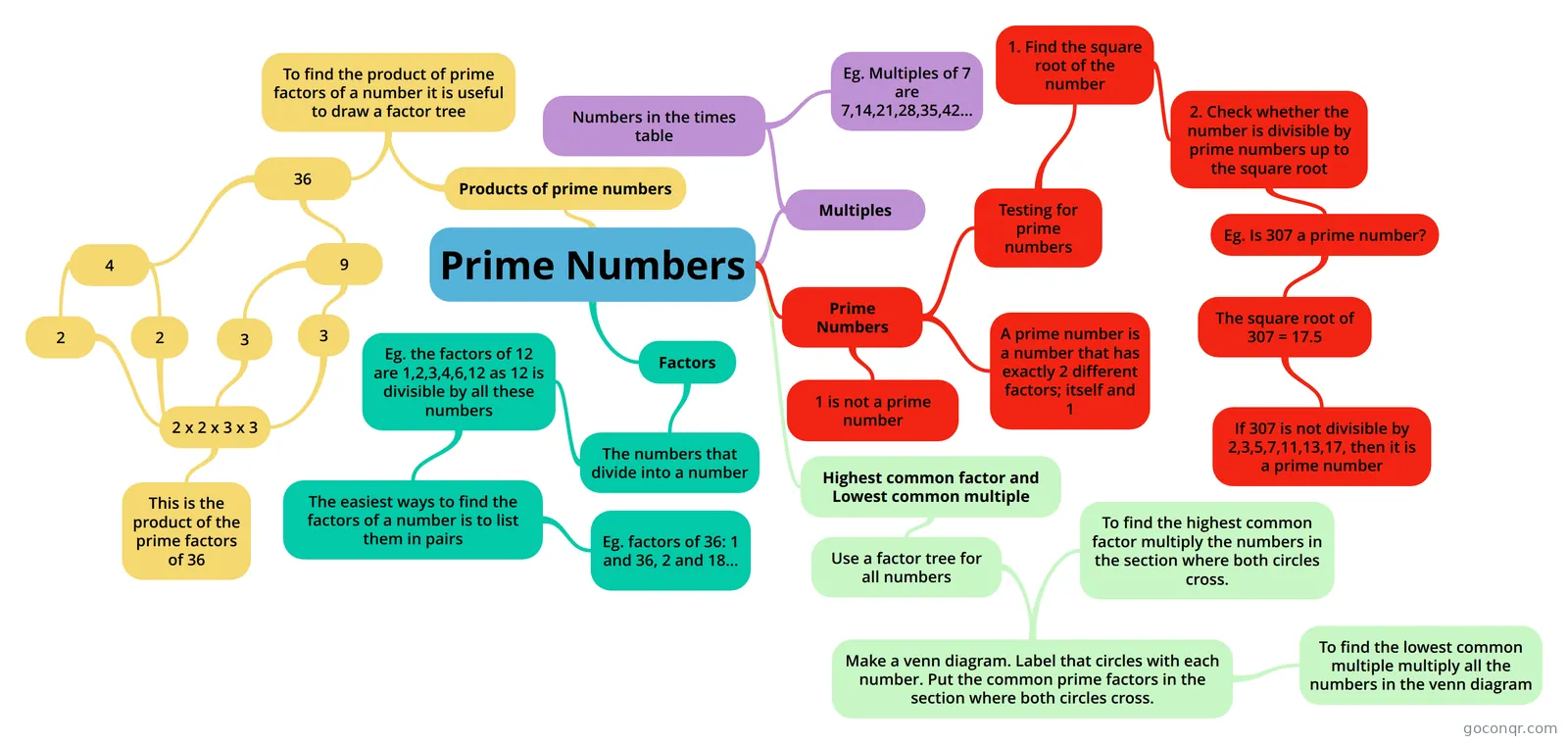 Mind map Prime Numbers
-
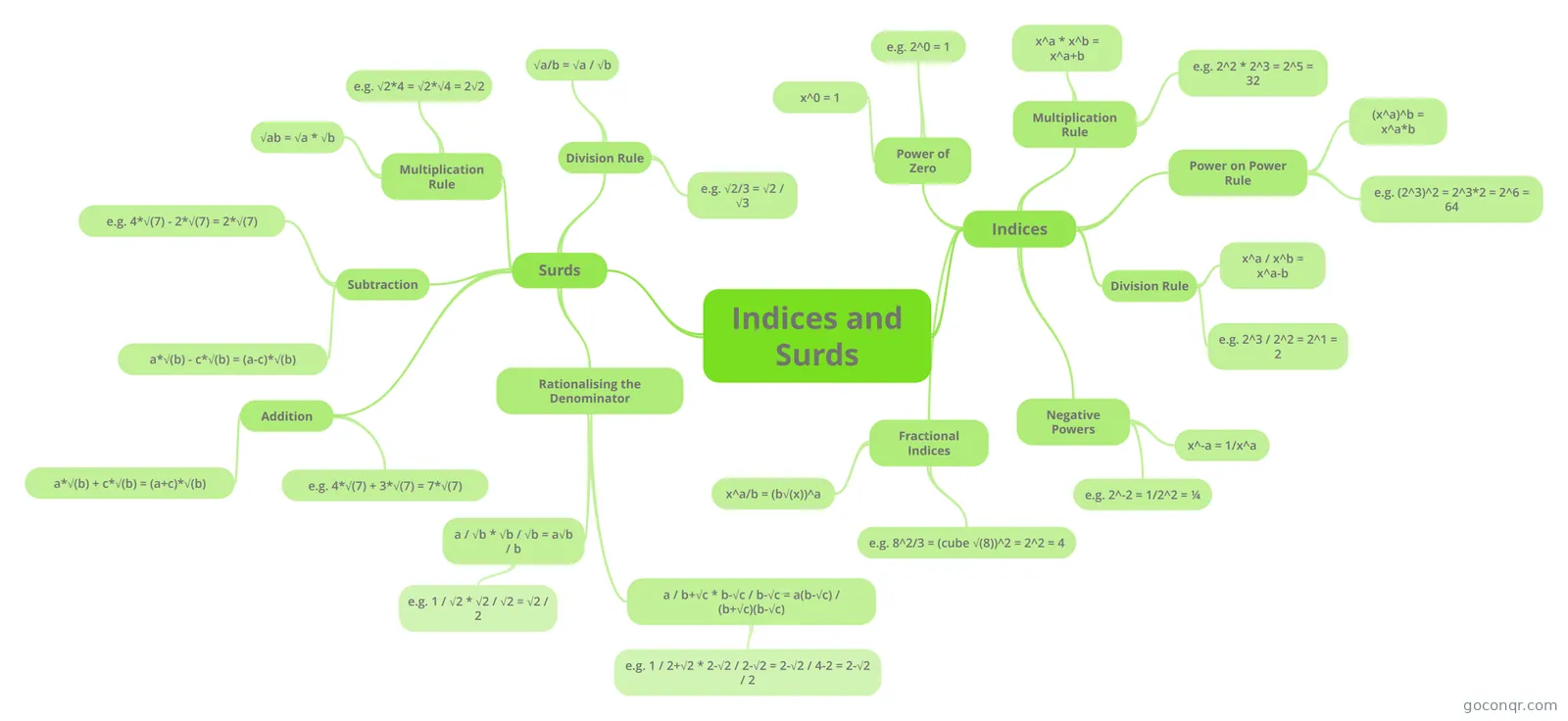 Mind map Indices and Surds Indices and Surds | AS OCR Maths
-
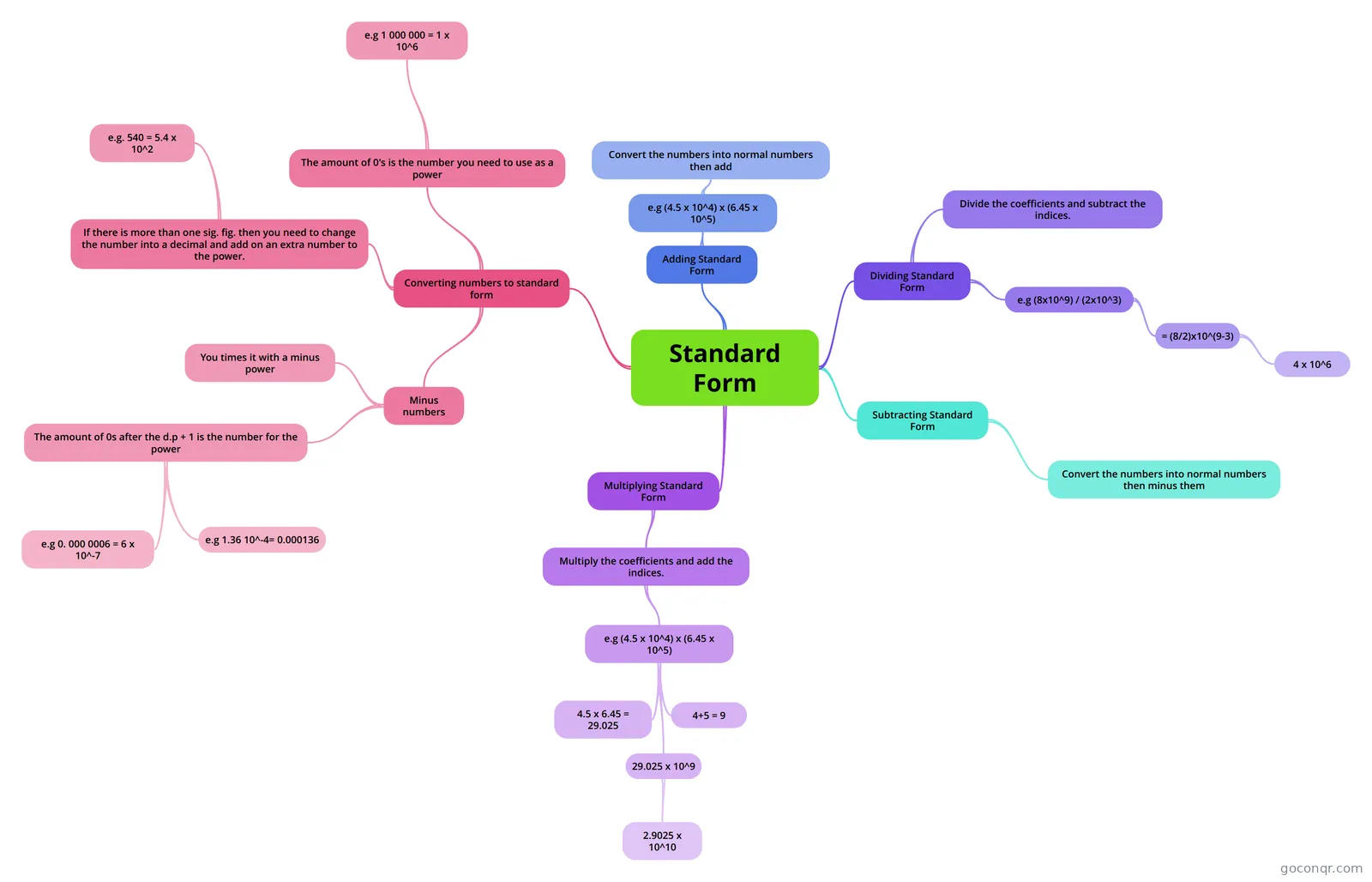 Mind map Standard Form
Quizzes
See all 39 quizzes-
20 questionsNumber system If n = 4p, where p is a prime number greater than 2, how many different positive even divisors does n have,...
-
10 questionsFractions, Decimals and Percentages 10 consolidation questions on conversions between Fractions, Decimals and Percentages
-
22 questionsAPPLICATION OF NUMBER A computer is priced at €500. In a sale there is a 20% discount. What is the sale price?
-
9 questionsProperties of Operations Assessment When three or more numbers are added, the sum is the same regardless of the grouping of the addends. For ex...
-
29 questionsMath 9: Perfect squares and their square roots (up to 30) Has square roots that vary from 1-30.
-
8 questionsRounding to decimal places What is a decimal place?
-
6 questionsTypes of numbers and BODMAS Select all of the non-integer numbers
-
20 questionsNumber System (1 - 100) - After Number and Before Number What comes after 67
Mind maps
See all 58 mind maps-
fractions, decimals, percentages, and recurring decimals
-
Prime Numbers
-
Indices and Surds Indices and Surds | AS OCR Maths
-
Standard Form
-
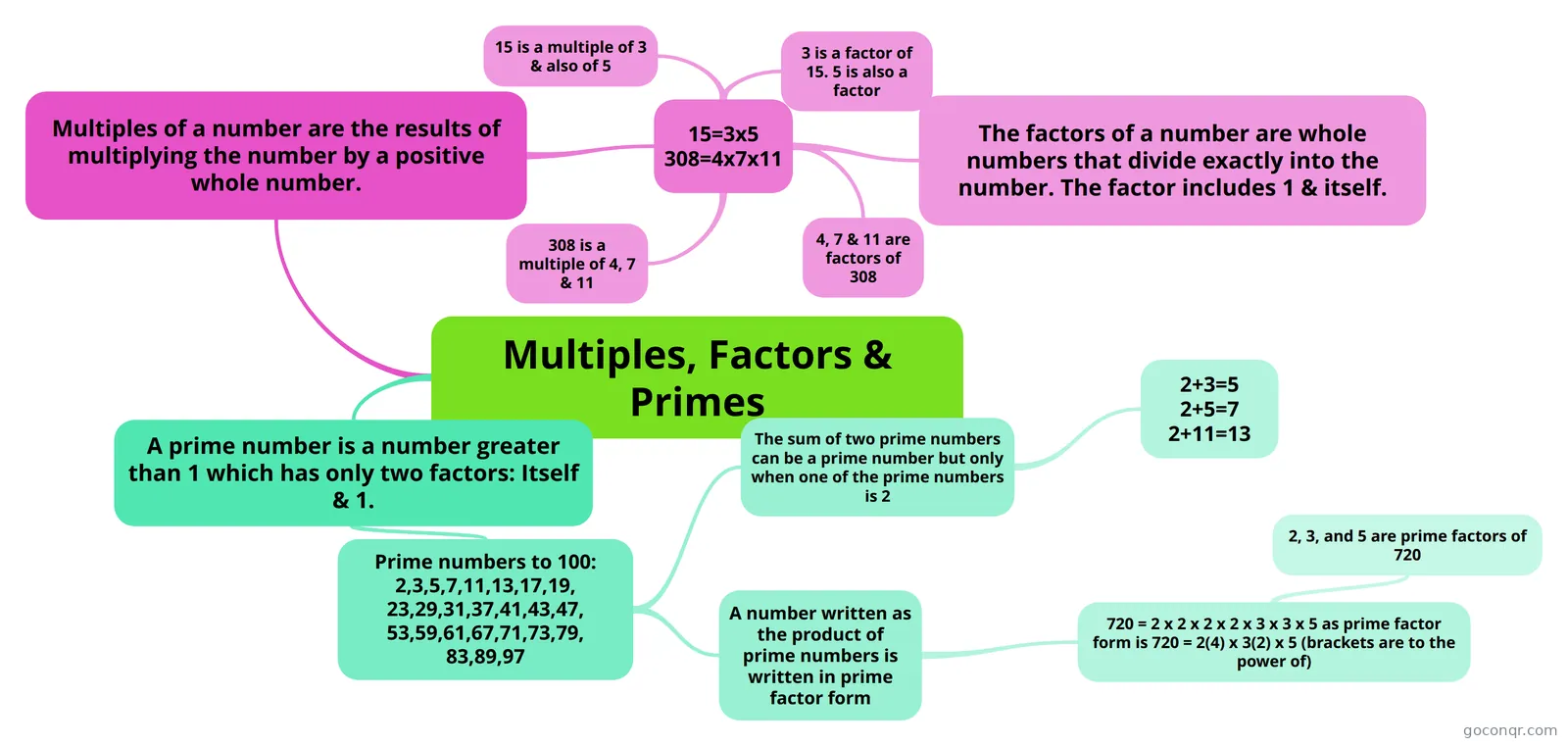 Multiples, Factors & Primes Explanation of multiples, factors & primes
-
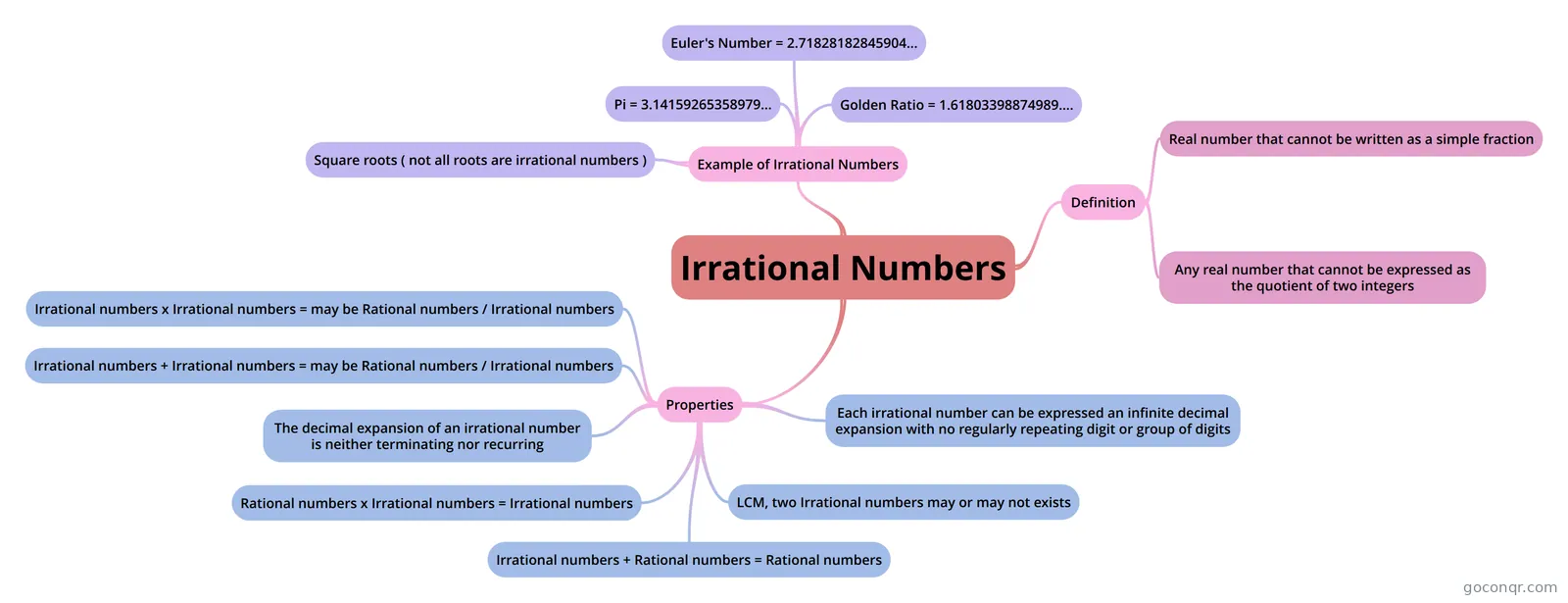 Irrational Numbers MTES 3013 TUTORIAL 21/9/2021
-
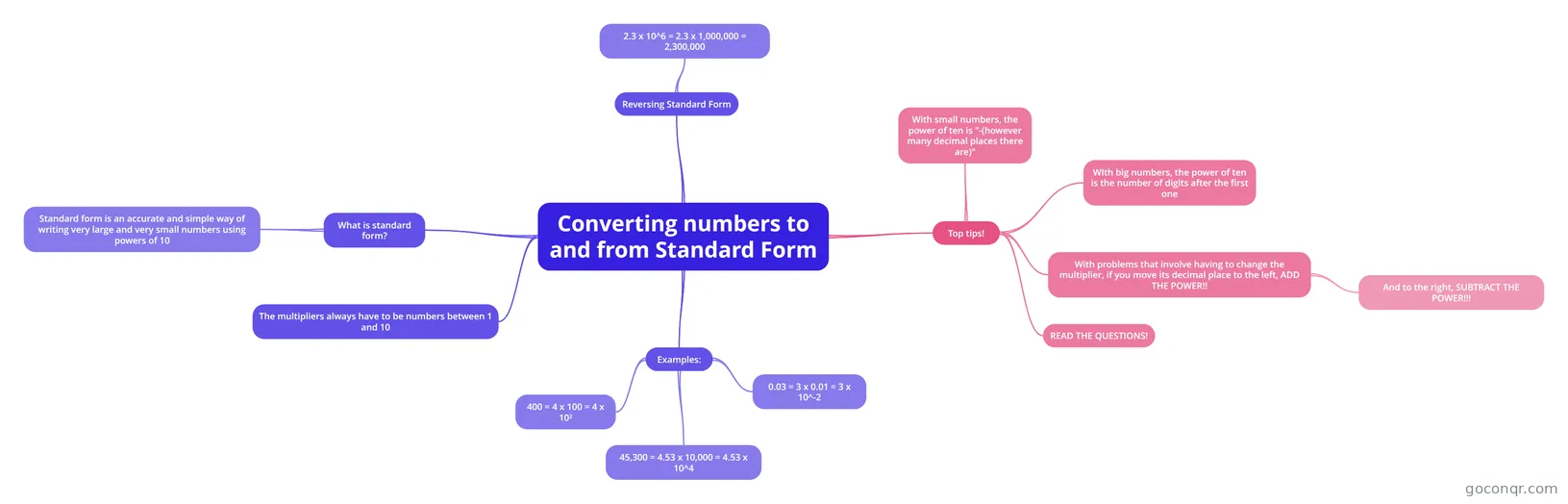 Converting numbers to and from Standard Form
-
Adding and Subtracting positive and negative numbers
Flashcards
See all 57 flashcards-
20 cardspowers and roots what are powers?
-
10 cardsprime numbers, factors and multiples what is a prime number?
-
7 cardsTypes of Numbers Flash cards on Types of Numbers
-
5 cardsSURDS What are surds?
-
10 cardsSurds
-
29 cardsPrime Numbers 1- 100 What is the first Prime number?
-
8 cardspercentages
-
9 cardssurds what is a surd?
Notes
See all 16 notes-
Indicies/Index Form Quiz http://www.proprofs.com/quiz-school/story.php?title=NjEzOTgw http://www.proprofs.com/quiz-school/story.php?title=NjEzOTgw http://www.proprofs.com/quiz-school/story.php?title=NjE0MjQy
-
Maths - Percentages Calculations involving Percentages: Finding a percentage of a quantity: You will have to be able to use the basic skills of doing percentages for many different calculations in the exam.Most of these questions will be...
-
Maths - Significant Figures Revision of Rounding: Before you begin to revise significant figures, you will need to remind yourself of the rules for rounding. Example 1: Round 3.7454 to 2 decimal places.Look at the number given and find the ...
-
Scientific Notation Is an abbreviation, to write numbers that are big and really small lets take numbers and get rid of all the unnecessary 0, to make it easier to multiply or divide them. 25, 300, 000, 000, 000 ...
-
Scientific Notation Notes Emilia Lehnhoff There is a mathematical scientific notation which is very useful for writing very big and very small numbers. Scientific notation is an abriviation. Short way to put numbers that are really big and rea...
-
Surds What is a Surd? A square root which cannot be reduced to a whole number. Rules for Surds √a + √a = a √ab = √a + √b 4√6 - 2√6 = 2√6 2√5 - 2√3 does not subtract because root is different! 2 surds can be multipled togeth...
-
SURD - Definitions What is a SURD? An irrational nth root. Any mathematical expression (square root, cube root or higher root) which cannot be written as a common fraction An irrational number isAny real number that cannot be expressed ...
-
Estimating and Approximates Estimating and ApproximatesEstimating is a good way of checking your answer. It is useful when shopping to estimate the cost of your purchases.When estimating... Round the numbers to easy numbers, usually ones with 1 ...
Slides
More Mathematics topics
About Number Systems and Real Numbers
GoConqr OriginalWhat the resources cover
The unit runs from counting and whole numbers to the real number system. Early topics include Whole Numbers, Number Line notes and the quiz on ordering and comparing whole numbers. Core topics follow: factors, multiples and primes, the Lowest Common Multiple, and fractions, decimals and percentages. Later topics reach indices, surds, rounding and standard form.
Where to start
If you are new to a topic, begin with a mind map. The Multiples, Factors & Primes map explains that a prime number is greater than 1 and has only two factors. The Adding and Subtracting positive and negative numbers map covers integers above and below zero. Then move to the Fractions, Decimals and Percentages quiz, which asks you to fill in the steps for changing a fraction to a decimal.
Stepping up to surds, indices and standard form
- Read the Indices and Surds map for the multiplication, division and power rules.
- Test yourself with the SURDS flashcards, which include rationalising the denominator of 2/√5.
- Open the Irrational Numbers map to see how these numbers differ from fractions.
- Practise Standard Form and the Rounding to significant figures quiz.
Using quizzes and maps together
Use a map to see the whole topic, then take a quiz on the same idea. Wrong answers show you what to go back to. Flashcards suit quick recall of rules and definitions. Some resources mention GCSE Maths, IGCSE Maths, CBSE, KS3 or Functional Skills Maths, so check the title and content against your own course. Teachers can use the Edexcel GCSE Maths Specification - Number slide set as a ready-made overview of the number content.
Where this fits
This unit belongs to the Number strand of Mathematics. Choose one topic from the list above and work through it, map first and quiz second.
Frequently asked questions
Which resource should I open first?
For a broad overview, try the Edexcel GCSE Maths Specification - Number slide set, which lists what the number topics involve. If you prefer to start small, the Multiples, Factors & Primes mind map or the Fractions, Decimals and Percentages quiz are gentle, clear entry points.
What do the mind maps on this page cover?
They cover topics such as irrational numbers, standard form, indices and surds, rounding to significant figures, adding and subtracting positive and negative numbers, and primes. There are over 300 maps, so you can often find a topic explained in more than one way.
Are the resources free to use?
Yes. Every resource listed here is free to open, study and take, with no account needed. They were made by GoConqr users rather than by GoConqr itself, so styles and depth vary from one resource to the next.
Which exams and levels do these resources suit?
Most are aimed at secondary school students, with a good share for primary pupils. Resources mention GCSE Maths, IGCSE Maths, CBSE Class 10, KS3 and Functional Skills Maths. Check each resource against your own course, because the community made them rather than an exam board.
Can I practise surds here?
Yes. There are several surds flashcard decks, a mind map, notes and a slide set. The SURDS deck covers multiplying, dividing and simplifying surds, plus rationalising the denominator. The Indices and Surds mind map is a good companion for the rules.
What if I cannot find my exact topic?
Try a different word, such as scientific notation instead of standard form, or BIDMAS instead of BODMAS. The page also holds general Number and Maths maps that may cover it. You can also make your own quiz, map or flashcards with a free account.