
Quiz
Cardiac Pathology :)
Dieses Quiz enthält Fragetypen, die sich im gewohnten Player öffnen.
Fragen in diesem Quiz (47)
1ACE inhibitors work by:
- ABlocking the sympathetic effect of noradrenaline on blood vessels.
- BPreventing the conversion of angiotensin I to angiotensin II.
- CBlocking angiotensin II receptors
- DRapid degradation of angiotensin II.
2A 53-year-old man complains of erection difficulty. He recently had some transient angina and was given some medications.
His symptoms started soon after the consultation. Which drug is likely to be causing his symptoms?- ANifedipine
- BRamipril
- CLabetalol
- DSpironolactone
- EBendroflumethiazide
3An older man arrives at ED with swollen lips. Not anaphylactic shock. His regular prescriptions are nifedipine, simvastatin, warfarin, lansoprazole and Ramipril. Which is causing this angioedema?
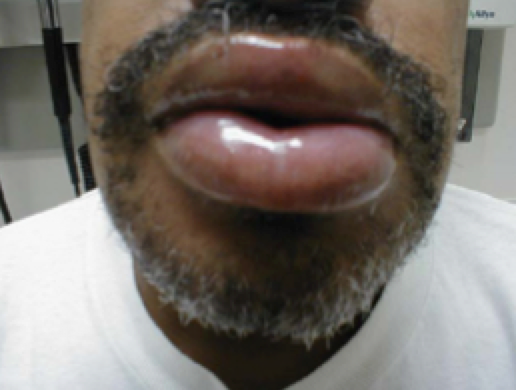
- ARamipril
4A 65-year-old man presents with central crushing angina for the first time. He is transferred immediately to the closest cardiac unit to undergo a primary percutaneous coronary intervention. There is thrombosis of the left circumflex artery only. Angioplasty is carried out and a drug-eluding stent is inserted.
What are the most likely changes to have occurred on ECG during admission?- AST elevation in leads V1–4
- BST elevation in leads V1–6
- CST elevation in leads I, aVL, V5, V6
- DST elevation in leads II, III and aVF
5The ECG shows an antero-lateral STEMI. Which coronary artery is most likely to have been occluded?
- ALeft Circumflex artery
- BLeft anterior descending artery
- CRight main coronary artery.
- DRight posterior descending artery
- ELeft main coronary artery
6Which of the following will be observed in a patient that has mitral regurgitation
- ADiastolic murmur, 5th intercostal space, left midclavicular line
- BDiastolic murmur, 4th intercostal space, left midclavicular line
- CDiastolic murmur, apex of the heart
- DSystolic murmur, apex of the heart.
- ESystolic murmur, 2nd intercostal space, right sternal border.
7A murmur is heard just to the left of the sternum in the 2nd intercostal space during systole, what kind of murmur do you suspect?
- AAortic Stenosis
- BAortic regurgitation
- CPulmonary stenosis
- DPulmonary regurgitation
- Emitral stenosis
8A 25-year-old woman with known mitral valve prolapse develops a low-grade fever, malaise and night sweats after a couple of weeks of a major dental procedure. Examination reveals tender vasculitic lesions on the finger pulps and microscopic haematuria. Which is the most appropriate initial step in management?
- AGive antibiotics
- BChest X-ray.
- CGive NSAIDs
- DSputum sample
- EGet blood cultures
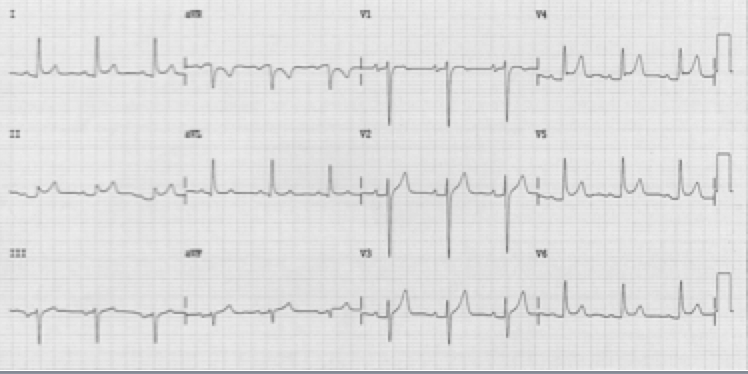
9A middle aged female has central retrosternal angina. The pain is worse lying flat and when she takes a deep breath. It is relieved by sitting up, and leaning forward. An ECG is performed as below. What is the most likely diagnosis?
- AThe ECG
- BAcute STEMI
- CEndocarditis
- DNSTEMI
- EPulmonary embolism
- FPericarditis
- AThe ECG
10A 54 years old man presents to the emergency department with chest pain which does not go away with GTN spray. He sits down and the pain persists and he begins to feel an ache in his arm, and feels extremely sweaty. An ECG is performed.
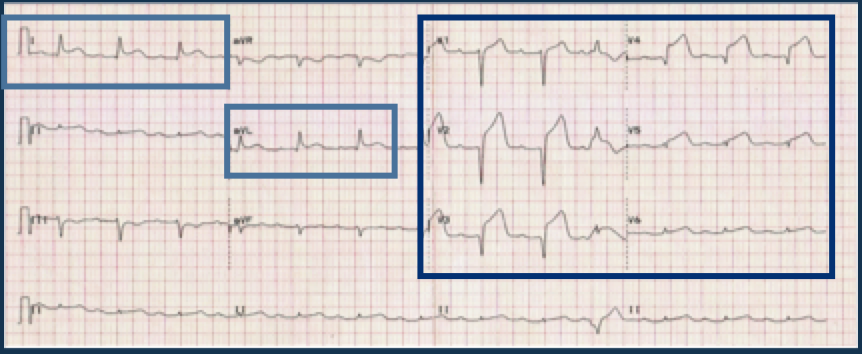
- Aantero-lateral STEMI
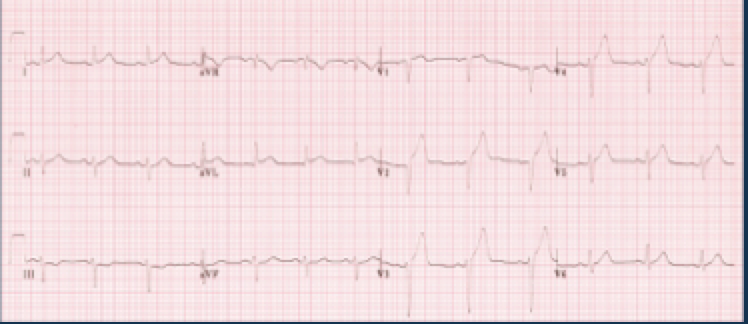
11At ED, an elderly woman with Type 2 diabetes mellitus, Hypertension and BMI of 33.6 was admitted to your department via ambulance after experiencing an episode of central crushing chest pain that radiated to her left arm. It came on while she was watching TV and has not been relieved despite rest and GTN spray.
Vital signs: RR: 35; BP:105/62; SpO2:90%; Temperature: 37.0oC
Based on the ECG, what is the most appropriate initial management for this?- AThe ECG
- BIV morphine, GTN, aspirin
- CPercutaneous coronary intervention (PCI)
- DArrange a CTPA
- ECoronary artery bypass graft (CABG)
- FIV morphine, 15L high flow O2, GTN, aspirin
- AThe ECG
12A [blank_start]heart[blank_end] [blank_start]murmur[blank_end] is an extra or unusual sound heard during a heartbeat.
- Aheart
- Bmurmur
13Murmurs can either be [blank_start]systolic[blank_end] (S1) or [blank_start]diastolic[blank_end] (S2).
Valvular murmurs: 2 main reasons
[blank_start]Stenosis[blank_end]: Valve is too narrow for the blood to pass through.
[blank_start]Regurgitation[blank_end] (Incompetence): Valve does fully shut so there is backflow- AStenosis
- BRegurgitation
- Csystolic
- Ddiastolic
14Fill in the Table.
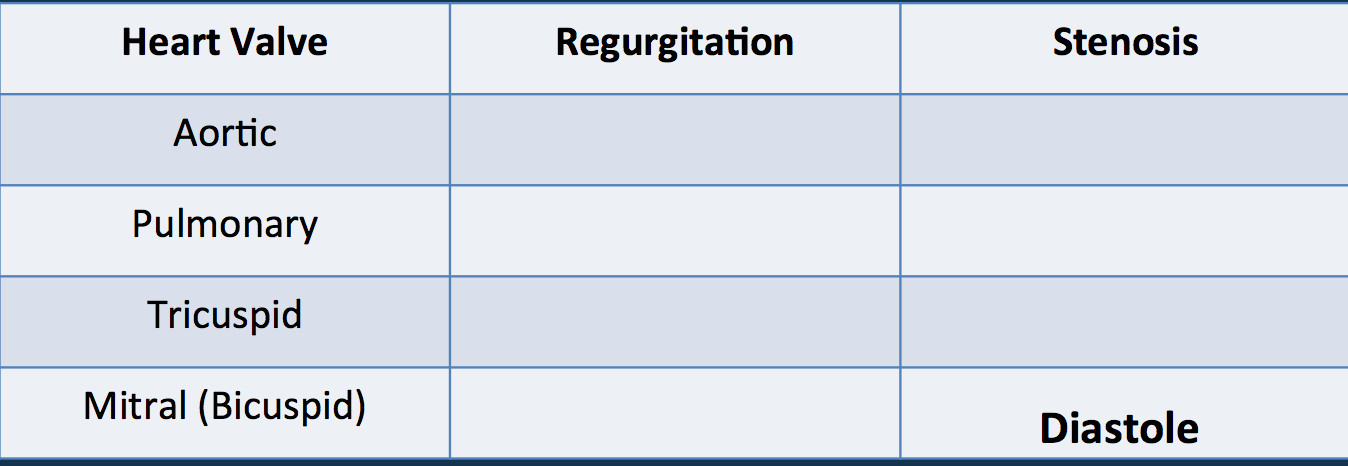
- Adiastole
- Bdiastole
- Cdiastole
- Dsystole
- Esystole
- Fsystole
- Gsystole
15Non-valvular murmurs also exist.
- ARichtig
- BFalsch
16Label the different valves.
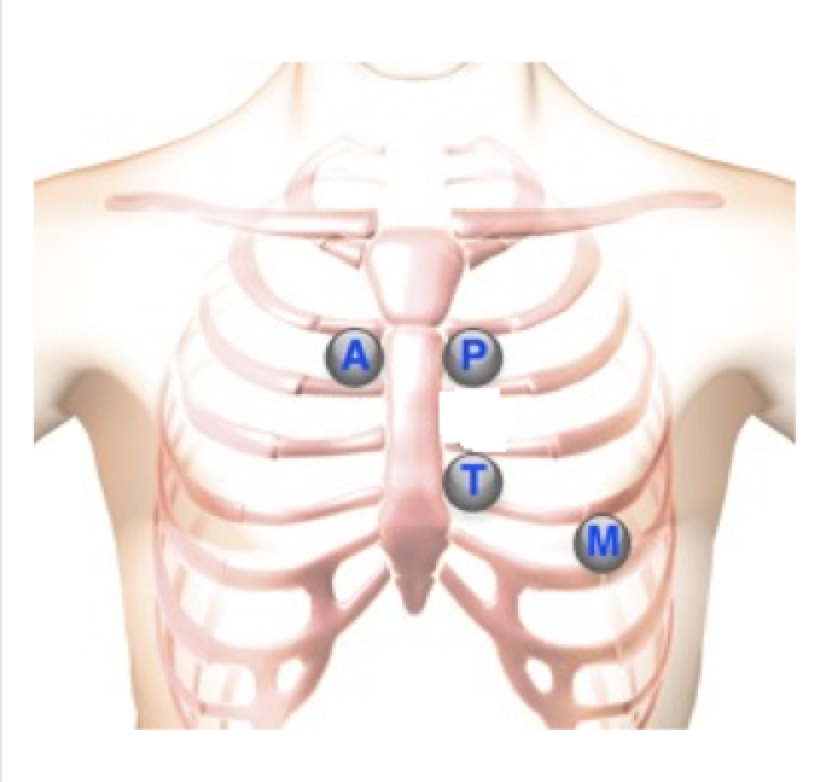
- AAortic
- BPulmonary
- Ctricuspid
- Dmitral
17 [blank_start]Calcification[blank_end] of the aortic valves (due to naturally [blank_start]aging[blank_end]) mainly causes [blank_start]aortic[blank_end] [blank_start]stenosis[blank_end].
The most common cause of [blank_start]mitral[blank_end] [blank_start]stenosis[blank_end] is rheumatic heart disease due to the bacteria of group [blank_start]A[blank_end] Streptococcus.- ACalcification
- Baortic
- Cstenosis
- Daging
- Estenosis
- Fmitral
- GA
18What is the correct ordering of the heart layers?
- Afibrous pericardium, parietal serous pericardium, pericardial cavity, pericardial fluid, visceral serous pericardium, epicardial fat, myocardium, endocardium
- Bfibrous pericardium, epicardial fat, visceral serous pericardium, pericardial cavity, pericardial fluid, parietal serous pericardium, myocardium, endocardium
- Cfibrous pericardium, parietal serous pericardium, visceral serous pericardium, pericardial cavity, pericardial fluid, epicardial fat, emyocardium, endocardium
- Depicardial fat, fibrous pericardium, parietal serous pericardium, visceral serous pericardium, pericardial cavity, pericardial fluid,endocardium, myocardium
19What is true regarding endocarditits?
- AInflammation of the endocardium
- Bcommon cause: Staph Aureus
- Ccommon cause: Strep viridans
- DNew murmur
- EFever
- FSplinter Hemorrhage
- GJaneway lesions and Osler nodes
- HDiagnosis: Echocardiograms and electrocardiograms
- IDiagnosis: Blood culture and echocardiograms
- JManage: antibiotics and NSAIDS
20What is true regarding pericarditits?
- Ainflammation of pericardium
- BCommon cause: Coxsackie B virus
- CChest pain which feels better when sitting forward
- DAuscultation: pericardial friction rub audible
- EWidespread saddle shaped ST-elevation on ECG = diagnosis
- F1-2 weeks course of NSAIDs
- Gcomplication: cardiac tamponade
- HAuscultation: crackles
- IChest pain better from lying down
- Jdispersed ST-elevation on ECG leads = diagnosis
21What are these clinical symptoms?
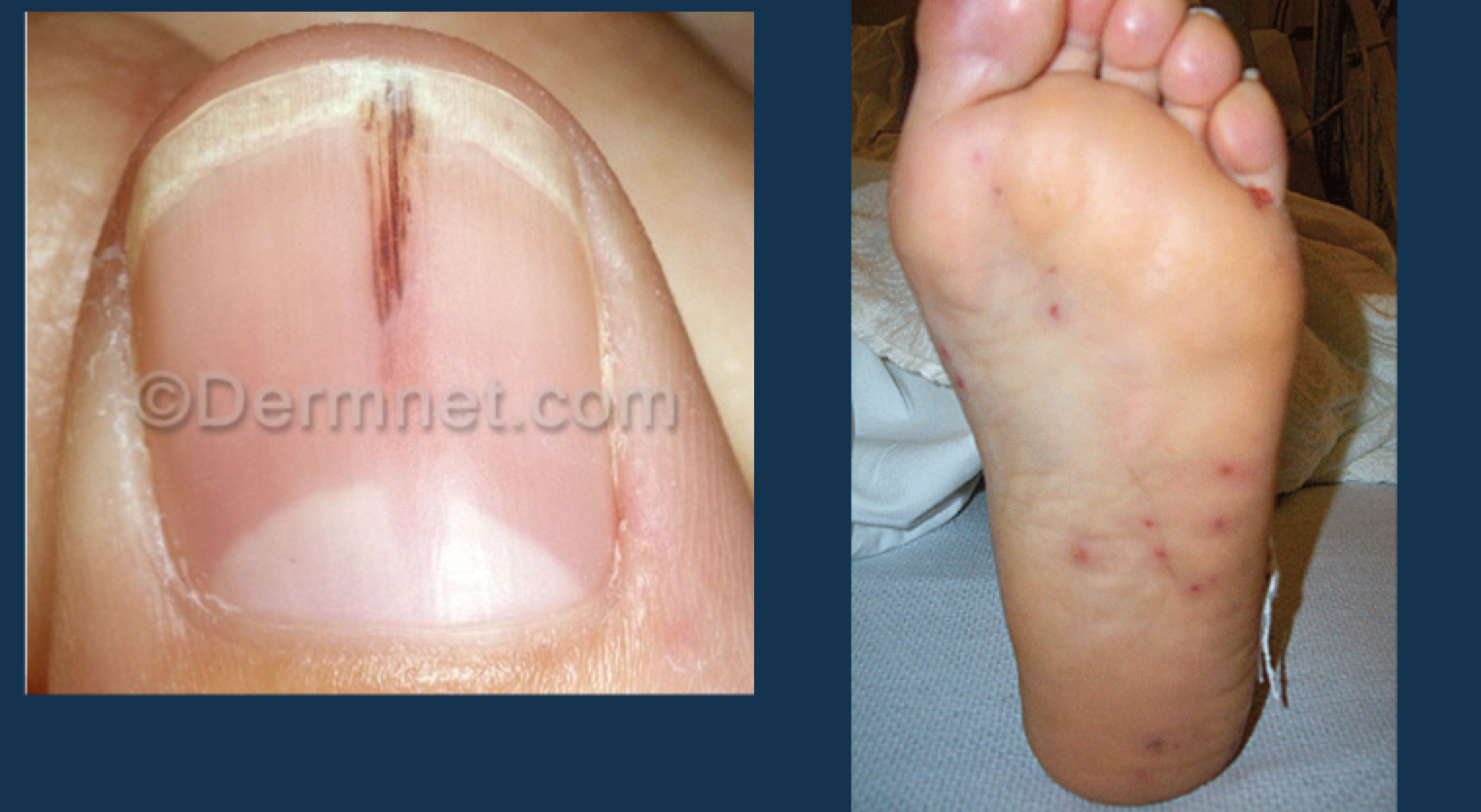
- Aosler nodes
- Bsplinter hemorrhages
22[blank_start]Unstable[blank_end] angina is due to problems in blood supply. It comes about at [blank_start]rest[blank_end] or [blank_start]minimal[blank_end] [blank_start]exertion[blank_end], like walking.
- AUnstable
- Brest
- Cminimal
- Dexertion
23Stable angina is due to [blank_start]myocardial[blank_end] [blank_start]ischemia[blank_end]. It is a [blank_start]central[blank_end] chest tightness or heaviness, which is relieved by [blank_start]rest[blank_end]. It may radiate to one or both [blank_start]arms[blank_end], the neck, jaw or [blank_start]teeth[blank_end].
- Amyocardial
- Bischemia
- Ccentral
- Drest
- Earms
- Fteeth
24GRAB to treat stable angina:
[blank_start]Glycerol[blank_end] [blank_start]Trinitrate[blank_end] spray for symptomatic relief
[blank_start]Risk[blank_end] Factor modification like stop smoking and reduced cholesterol
[blank_start]Aspirin[blank_end] reduces mortality by 34% (fact)
[blank_start]Beta[blank_end] [blank_start]blockers[blank_end] to reduce symptoms unless contraindicated- AGlycerol
- BTrinitrate
- CRisk
- DAspirin
- Eblockers
- FBeta
25Unstable angina, NSTEMI and STEMI are a group of conditions that occur due to decreased blood flow in the [blank_start]coronary[blank_end] arteries, leading to heart muscle [blank_start]ischemia[blank_end]. This is known as [blank_start]acute[blank_end] [blank_start]coronary[blank_end] [blank_start]syndrome[blank_end].
- Acoronary
- Bischemia
- Cacute
- Dcoronary
- Esyndrome
26How does ACS (acute coronary syndrome) present?
- AAngina pectoris pain
- Bnoticeable sweating
- Ctachypneia
- Dnausea
- Evomiting
- Fprogresses--> radiating pain
27Which is NSTEMI and which is STEMI?
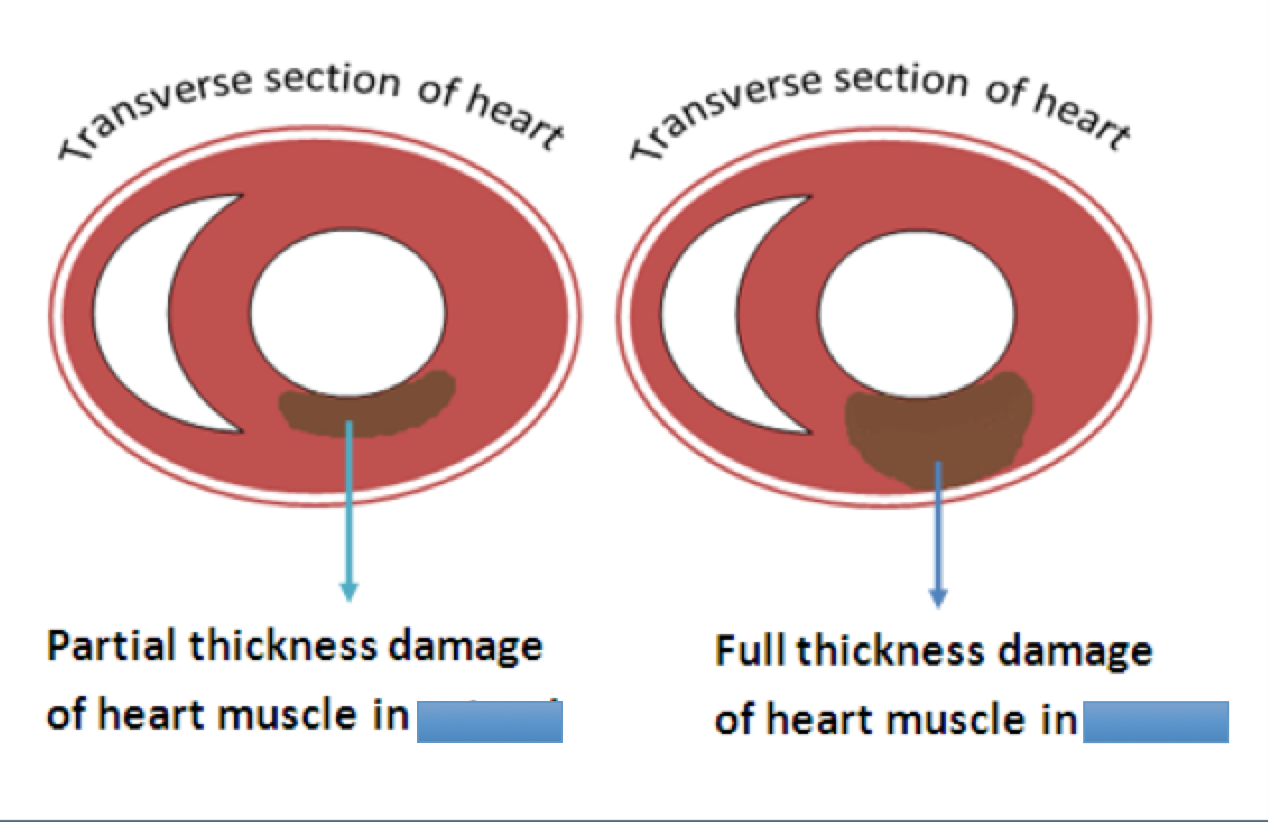
- ASTEMI
- BNSTEMI
28Acute management of ACS: MONA
IV [blank_start]Morphine[blank_end]
Oxygen (if Sats < 94%)
[blank_start]Nitrates[blank_end]
[blank_start]Aspirin[blank_end]- AMorphine
- BNitrates
- CAspirin
29Secondary management of ACS is [blank_start]revascularization[blank_end]:
STEMI
[blank_start]reperfusion[blank_end] therapy--> [blank_start]primary[blank_end] PCI ([blank_start]percutaneous[blank_end] [blank_start]coronary[blank_end] intervention)
If this cannot be achieved within [blank_start]2[blank_end] hours of diagnosis or PCI is not available, [blank_start]thrombolytic[blank_end] therapy such as streptokinase is to be done.- Arevascularization
- Breperfusion
- Cpercutaneous
- Dcoronary
- Eprimary
- F2
- Gthrombolytic
30Secondary prevention of myocardial infarction: AAABC
[blank_start]Aspirin[blank_end] (antiplatelet)
[blank_start]ACE[blank_end] inhibitor
[blank_start]Atorvastatin[blank_end]
Beta-blocker
[blank_start]Clopridogrel[blank_end] (antiplatelet)- AClopridogrel
- BAtorvastatin
- CACE
- DAspirin
31What morphology is shown below? (2 words)
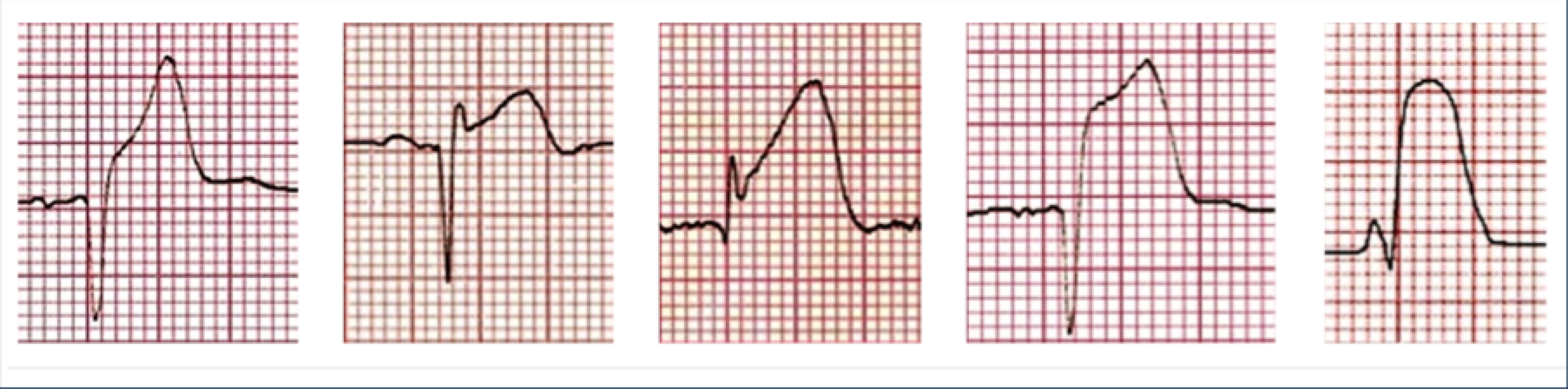
- AST elevation
32Which leads are lateral?
- AAVF
- BAVL
- CAVR
- DII
- EI
- FIII
- GV1 and V2
- HV3 and V4
- IV5
- JV6
33Which leads are anterior?
- AAVF
- BAVR
- CAVL
- Dlead I
- Elead II
- Flead III
- GV1 AND V2
- HV3 AND V4
- IV5
- JV6
34Which of these leads is not inferior?
- AII
- BIII
- CAVF
- DI
35Fill in what each abbreviation in the table stands for.
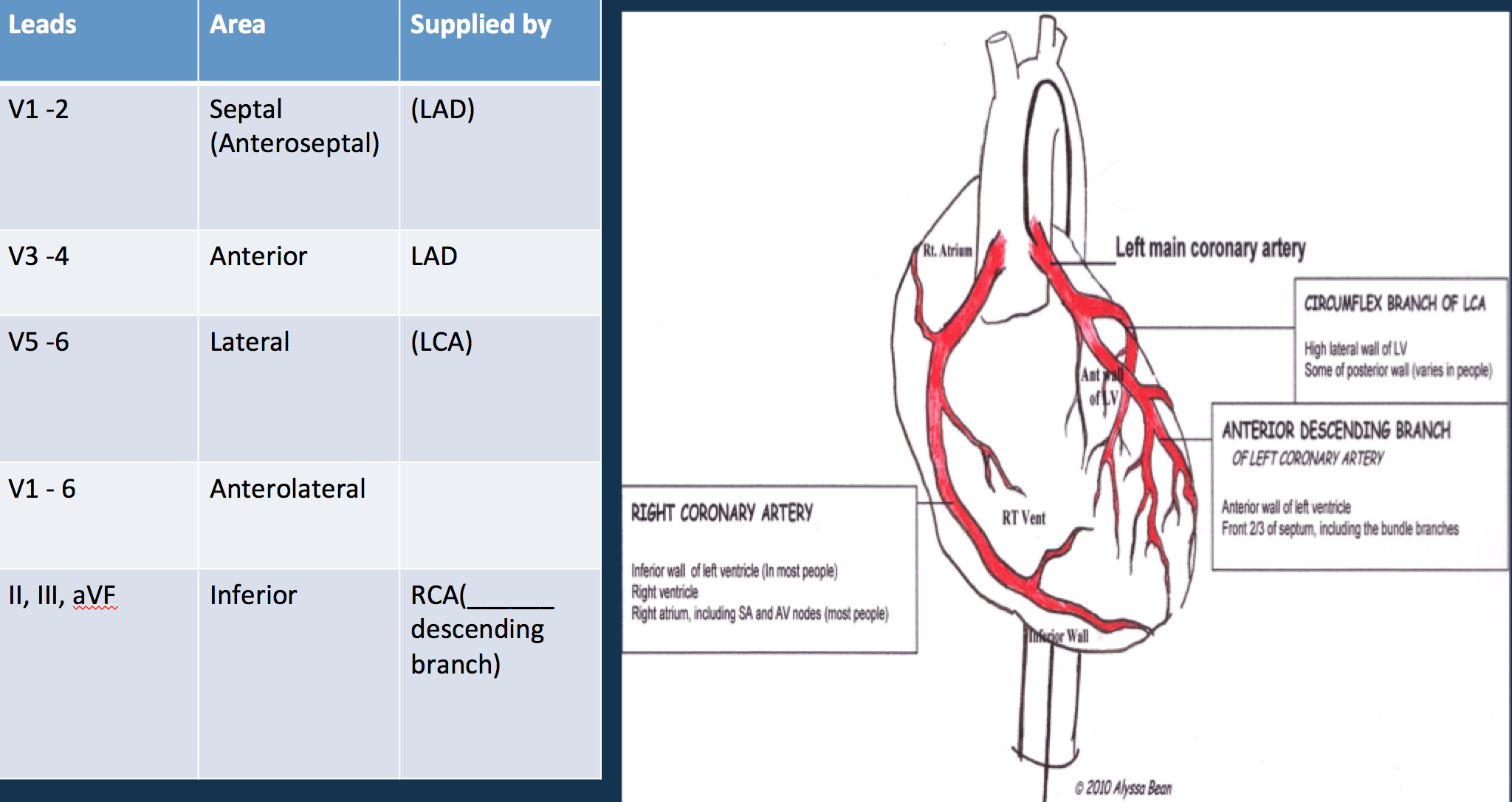
- Aleft anterior descending
- Bleft main coronary artery
- Cright coronary artery
36Which of these could result from severe or untreated hypertension?
- Astroke
- BMI
- Cblindness
- Drenal failure
- Epulmonary disease
- Faneurysms
- Govarian cancer
37What are side effects of ACE inhibitors?
- ADry cough
- BAngioedema
- CHypotension
- DHyperkalemia
- EHypercalcemia
- FHypoglycemia
38Hydrochlorothiazide and Metolazone are examples of thiazide-like diuretics.
- ARichtig
- BFalsch
39[blank_start]Angiotenisin[blank_end] [blank_start]Receptor[blank_end] [blank_start]Blockers[blank_end] end in “sartan” e.g. [blank_start]Losartan[blank_end]
They're given if side effects of ACE inhibitors are experienced.- AAngiotenisin
- BReceptor
- CBlockers
- DLosartan
40Beta blockers reduce the [blank_start]cardiac[blank_end] [blank_start]output[blank_end] by reducing heart rate and force of contraction (hence the [blank_start]stroke[blank_end] [blank_start]volume[blank_end]).
They end in -lol like [blank_start]metoprolol[blank_end].- Ametoprolol
- Bcardiac
- Coutput
- Dstroke
- Evolume
41What is true regarding beta blocker side effects?
- Abronchoconstriction
- Bbradycardia
- Cheart failure
- Dhypotension
- EAV nodal conduction block
- Fpolyuria
- Grenal failure
- Hdehyrdation
- Ivertigo
42If the patien is younger than 8o years, treatment for stage [blank_start]1[blank_end] hypertension is given if:
[blank_start]End[blank_end] [blank_start]organ[blank_end] damage
[blank_start]Cardiovascular[blank_end] disease (or significant risk of developing it)
Renal disease
[blank_start]Diabetes[blank_end]- A1
- Borgan
- CEnd
- DCardiovascular
- EDiabetes
43 NSTE-ACS refers to Unstable Angina and NSTEMI.
- ARichtig
- BFalsch
44Cardiac markers: [blank_start]Troponin[blank_end] I/T
They are the most specific/sensitive tests for [blank_start]MI[blank_end].- ATroponin
- Bmyocardial infarction
45Fill in the diagram. (ABREVIATIONS WHERE APPROPRIATE)
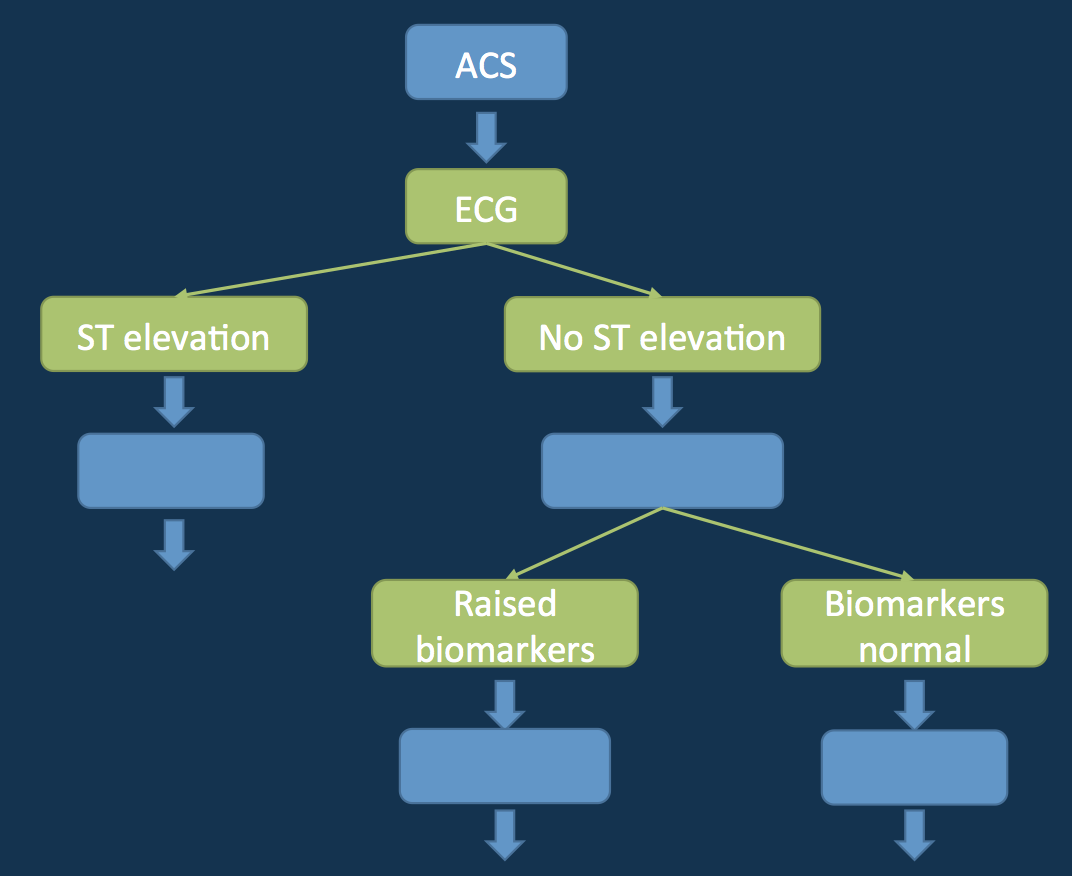
- ASTEMI
- BNSTEACS
- CNSTEMI
- Dunstable angina
46WHICH are side-effects of calcium channel blockers?
- Aperipheral edema
- Bflushing
- Cheadache
- Dsevere hypotension
- Eangina
- Fhidrosis
- Gmiosis
47CCBs used to treat hypertension end in –dipine such as [blank_start]nifedipine[blank_end]
- Anifedipine
Informationen
- Beschreibung
- Courtesy of Dayo's Maturity 1 teach. Content credited to him.
- Autor
- Gelöschter Nutzer
- Sprache
- English
- Aufrufe
- 22
- Verlauf
- Erstellt am 8 Mär 2018 · aktualisiert am 13 Mär 2018
- Schlagwörter
- Bewertung
- Noch keine Bewertungen Bewerte dieses Quiz