
Notizen
To Kill a Mockingbird - General Information
Inhalt der Notizen (1)
Seite 1
To Kill a Mockingbird
Context
Nelle Harper Lee was born on
April 28, 1926, in Monroeville,
Alabama, a sleepy small town similar in many ways to Maycomb, the
setting of To Kill a Mockingbird. Like Atticus
Finch, the father of Scout, the narrator and protagonist of To
Kill a Mockingbird, Lee’s father was a lawyer. Among Lee’s
childhood friends was the future novelist and essayist Truman Capote,
from whom she drew inspiration for the character Dill. These personal
details notwithstanding, Lee maintains that To Kill a Mockingbird was
intended to portray not her own childhood home but rather a nonspecific Southern
town. “People are people anywhere you put them,” she declared in
a 1961 interview.
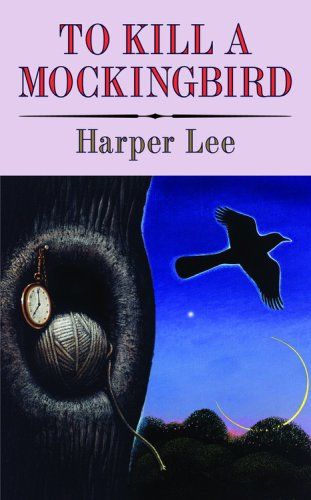
Yet the book’s setting and characters are not the only
aspects of the story shaped by events that occurred during Lee’s
childhood. In 1931, when Lee was five, nine
young black men were accused of raping two white women near Scottsboro,
Alabama. After a series of lengthy, highly publicized, and often
bitter trials, five of the nine men were sentenced to long prison
terms. Many prominent lawyers and other American citizens saw the
sentences as spurious and motivated only by racial prejudice. It
was also suspected that the women who had accused the men were lying,
and in appeal after appeal, their claims became more dubious. There
can be little doubt that the Scottsboro Case, as the trials of the
nine men came to be called, served as a seed for the trial that
stands at the heart of Lee’s novel.
Lee began To Kill a Mockingbird in the
mid-1950s, after moving to New York to become
a writer. She completed the novel in 1957 and
published it, with revisions, in 1960, just
before the peak of the American civil rights movement.
Critical response to To Kill a Mockingbird was
mixed: a number of critics found the narrative voice of a nine-year-old
girl unconvincing and called the novel overly moralistic. Nevertheless,
in the racially charged atmosphere of the early 1960s,
the book became an enormous popular success, winning the Pulitzer
Prize in 1961 and selling over fifteen million
copies. Two years after the book’s publication, an Academy Award–winning
film version of the novel, starring Gregory Peck as Atticus Finch,
was produced. Meanwhile, the author herself had retreated from the
public eye: she avoided interviews, declined to write the screenplay
for the film version, and published only a few short pieces after 1961. To
Kill a Mockingbird remains her sole published novel. Lee
eventually returned to Monroeville and continues to live there.
In 1993, Lee penned a brief foreword
to her book. In it she asks that future editions of To Kill
a Mockingbird be spared critical introductions. “Mockingbird,”
she writes, “still says what it has to say; it has managed to survive
the years without preamble.” The book remains a staple of high school
and college reading lists, beloved by millions of readers worldwide
for its appealing depiction of childhood innocence, its scathing
moral condemnation of racial prejudice, and its affirmation that
human goodness can withstand the assault of evil.
Lee began To Kill a Mockingbird in the
mid-1950s, after moving to New York to become
a writer. She completed the novel in 1957 and
published it, with revisions, in 1960, just
before the peak of the American civil rights movement.
Informationen
- Beschreibung
- GCSE To kill a Mockingbird note with General Information about the book
- Erstellt von
- Landon Valencia · Mär 2015
- Aktualisiert
- 25 Mai 2017
- Aufrufe
- 2.211
- Tags
- Bewertung