
To Kill a Mockingbird
98 resources created by 73 users
This To Kill a Mockingbird page on GoConqr gathers community-made mind maps, quizzes, flashcards and notes, from chapter-by-chapter maps to character analysis, themes, symbols and historical context. It's built for school students revising the novel for GCSE English Literature, and for teachers after ready-made material. There are over 1,100 resources here, including over 900 mind maps, more than 60 flashcard decks and more than 9 quizzes. Browse the list, then pick a quiz to see what you remember.
Top To Kill a Mockingbird resources
-
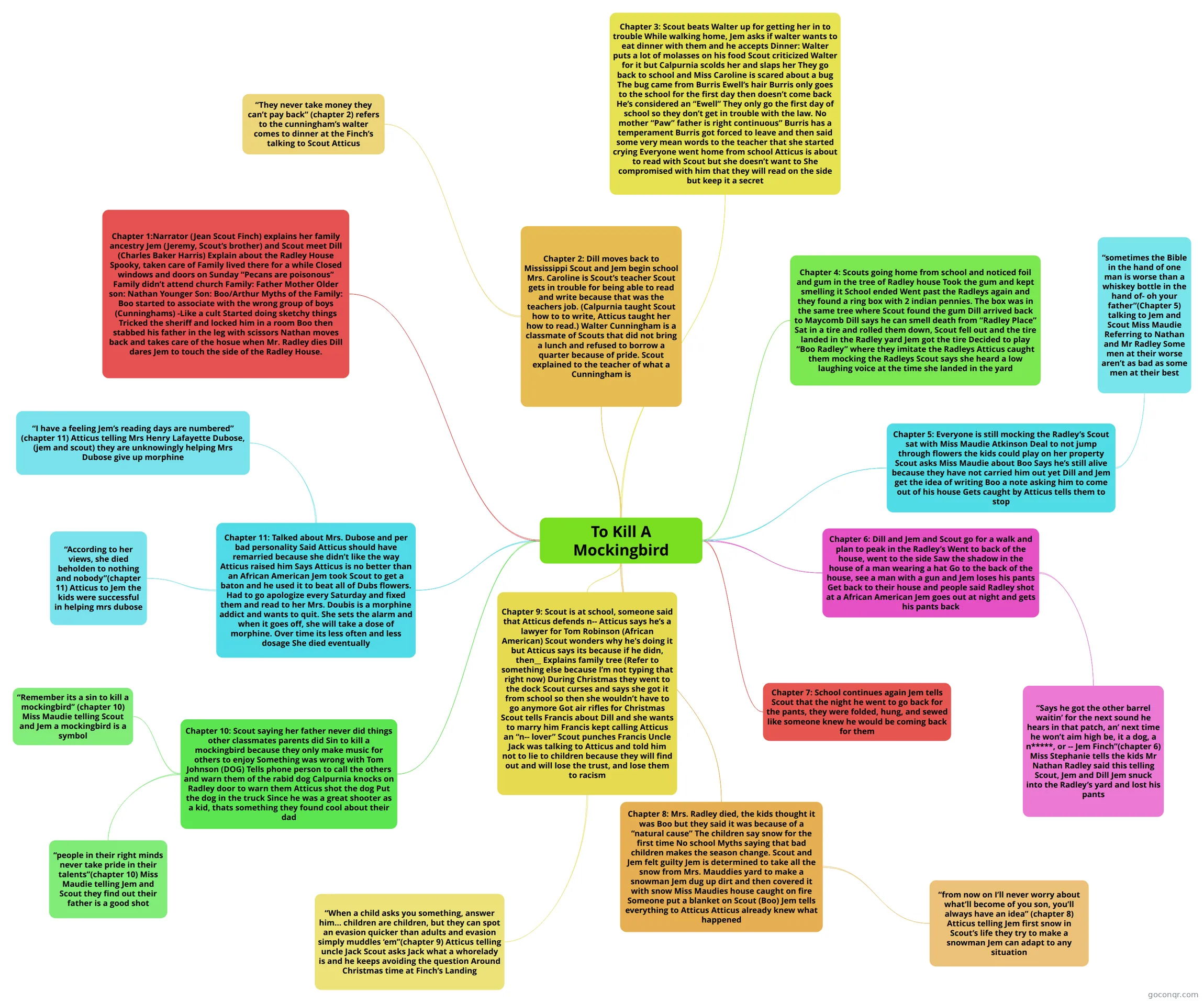 Mind map To Kill A Mockingbird
-
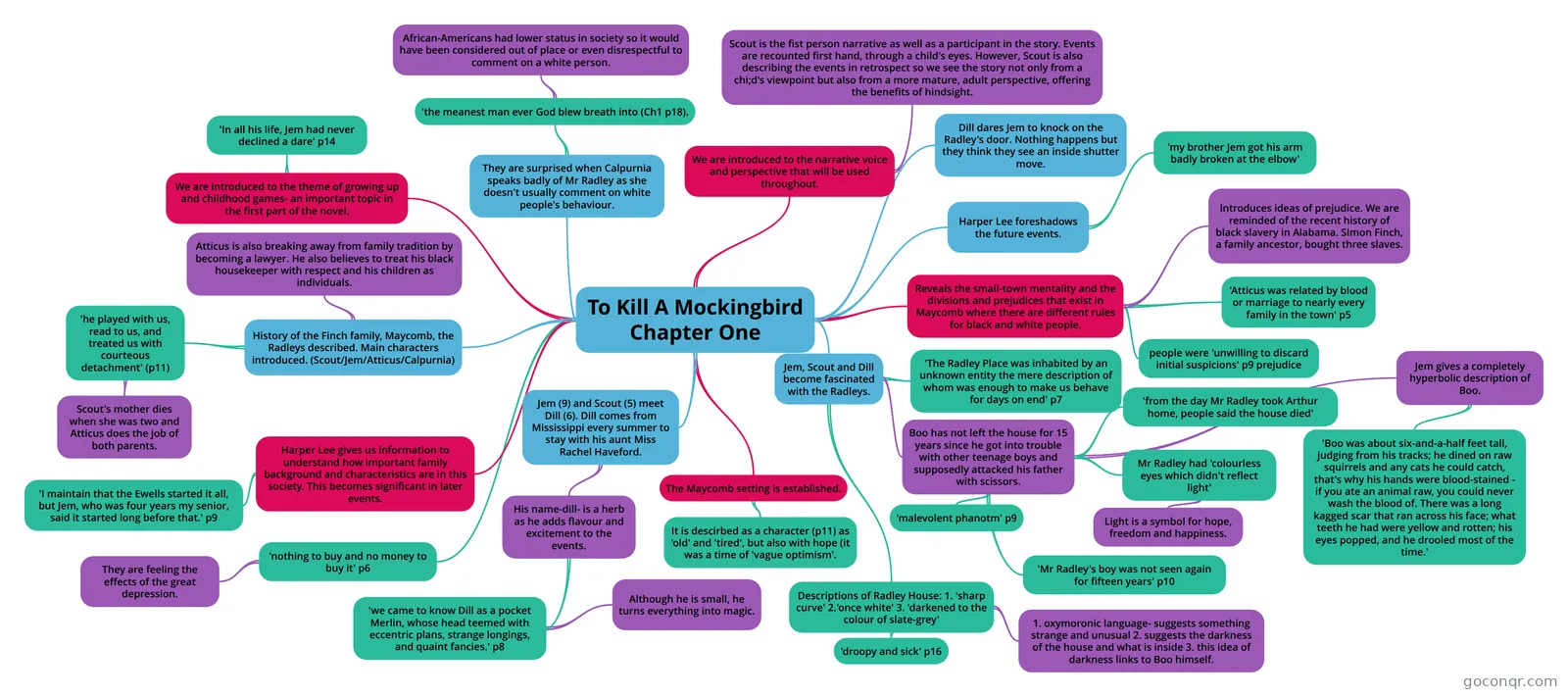 Mind map To Kill A Mockingbird Chapter One Chapter One analysis of To Kill A Mockingbird.
-
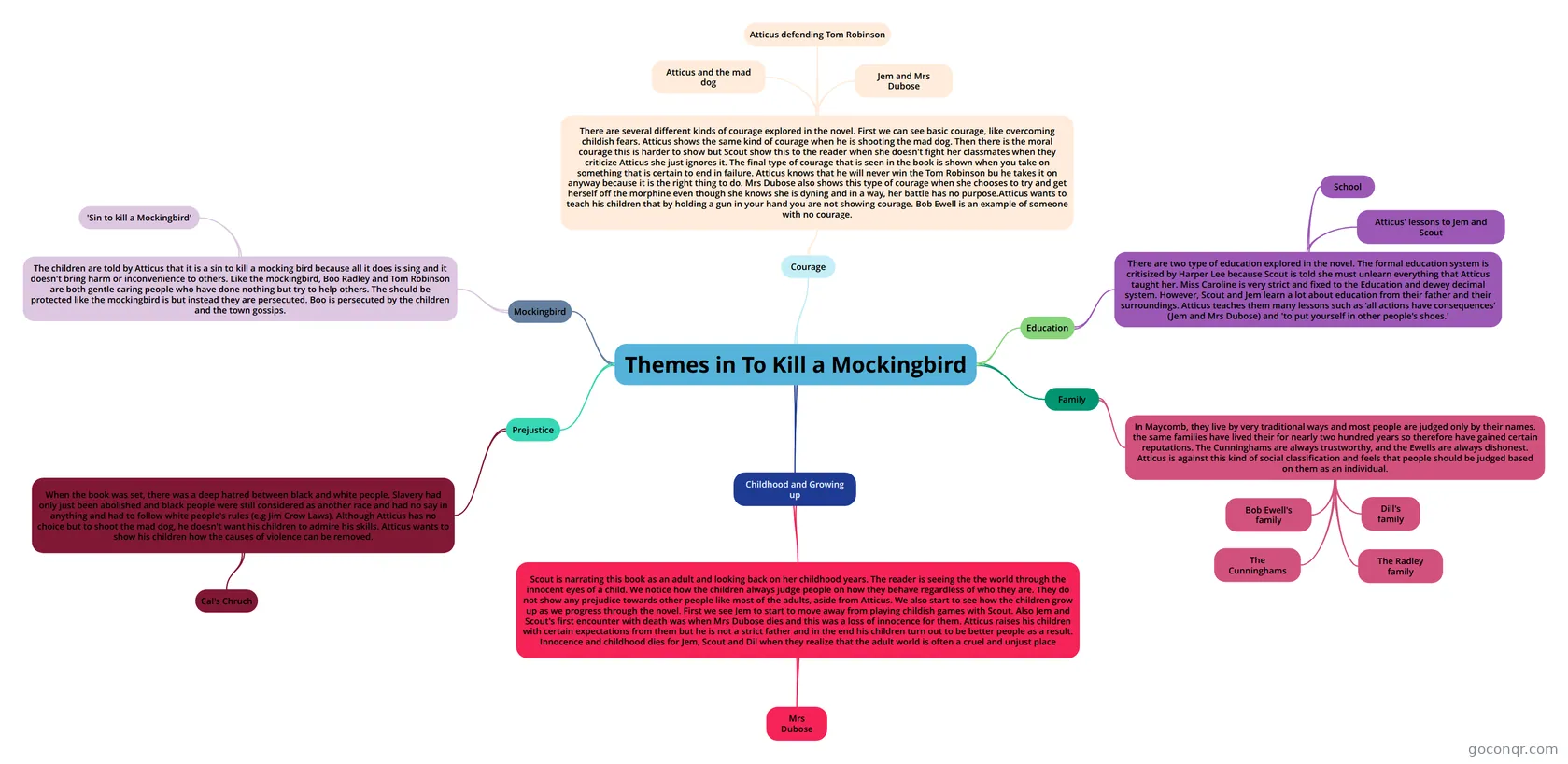 Mind map Themes in To Kill a Mockingbird TKAM themes
-
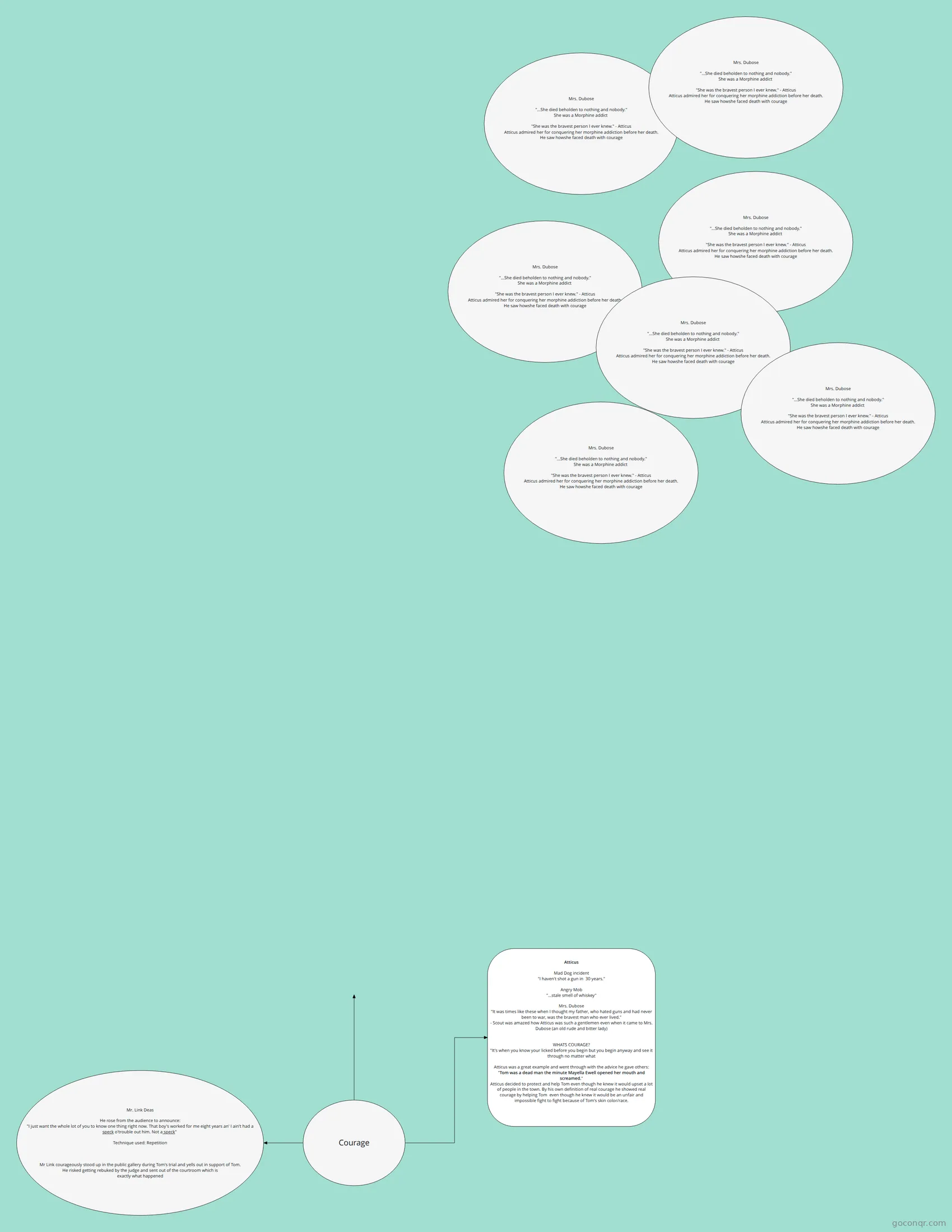 Flowchart To Kill a Mockingbird Flowchart with ideas and quotes for exam.
-
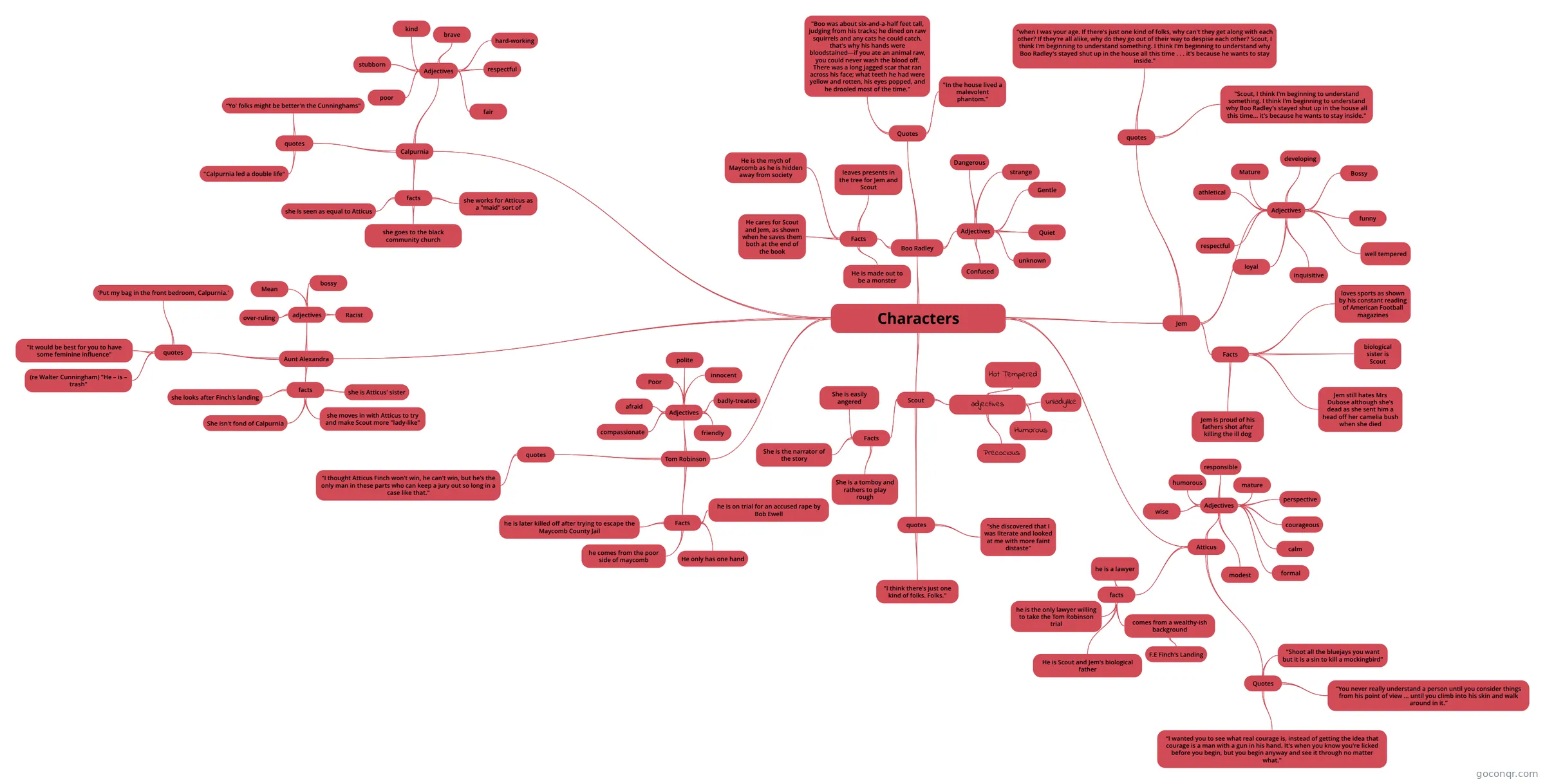 Mind map Characters
-
21 questionsTo Kill A Mockingbird Quiz The narrator of the story is?
-
10 questionsTo Kill A Mockingbird Quote quiz Who said ‘she discovered that I was literate and looked at me with more than faint distaste’ and what theme...
-
Mind map Boo Radley
Quizzes
-
21 questionsTo Kill A Mockingbird Quiz The narrator of the story is?
-
10 questionsTo Kill A Mockingbird Quote quiz Who said ‘she discovered that I was literate and looked at me with more than faint distaste’ and what theme...
-
8 questionsTo Kill A Mockingbird Quiz 2 Which era is the novel 'To Kill A Mockingbird' set?
-
12 questionsENGLISH-TO KILL A MOCKING BIRD in which season did Scout start school?
-
10 questionsTo Kill A Mockingbird Quiz Why does Atticus hesitate to shoot the rabid dog in To Kill a Mockingbird?
-
6 questionsTo Killl A MockingBird Quiz In The Book To Kill A Mockingbird It Is Set During The Great Depresion
Mind maps
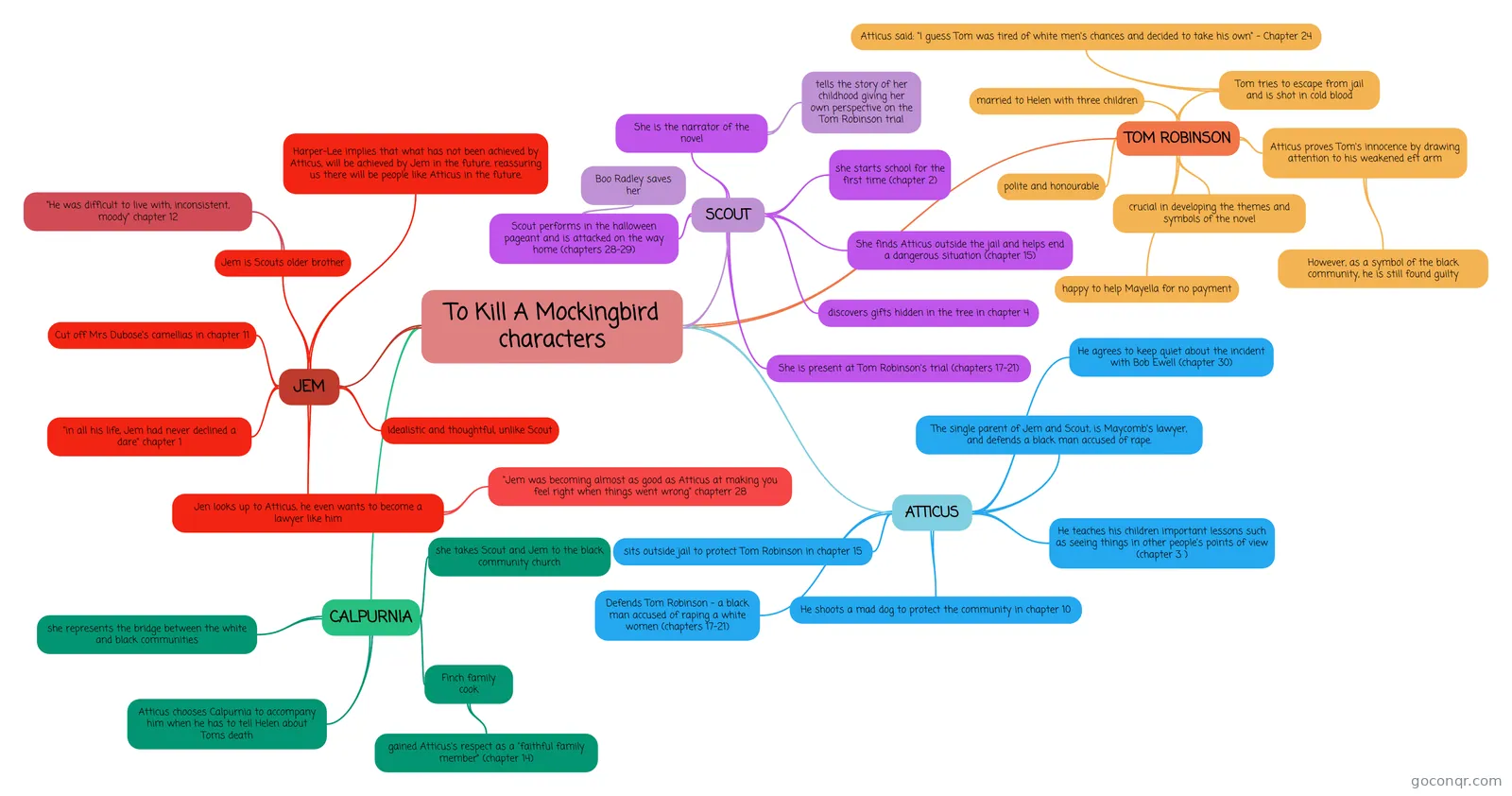
See all 68 mind maps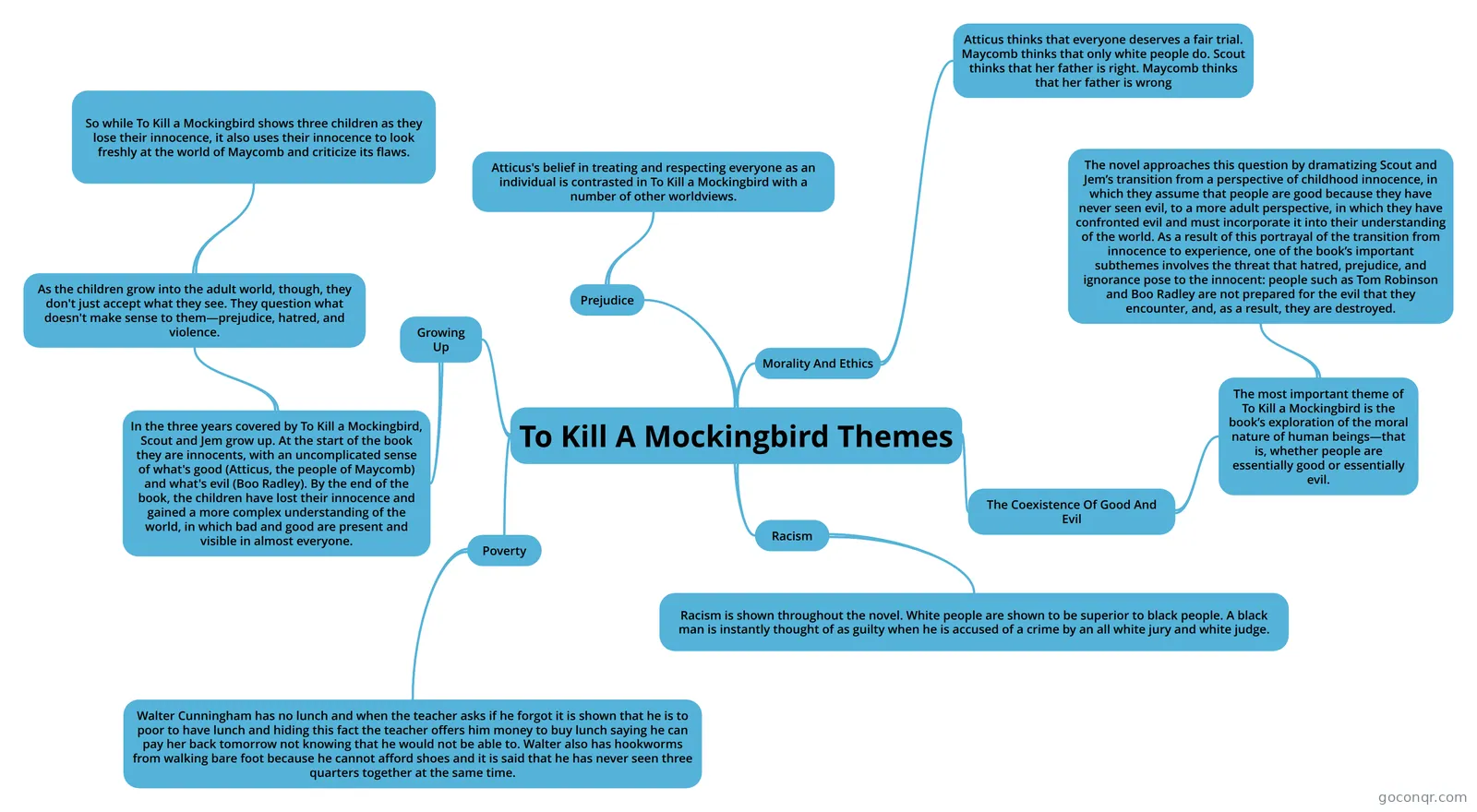
Flashcards
See all 10 flashcards-
27 cardsTo Kill a Mockingbird key quotes You never really understand a person until you consider things from his point of view . . . until you climb...
-
19 cardsTKAM Characters Character description and character traits
-
7 cardsTo Kill A Mockingbird - Themes - Prejudice Prejudice permeates Maycomb society. Almost every character is either prejudiced against others, or the vic...
-
35 cardsTo Kill A Mockingbird Vocab Chapters 11-16
-
6 cardsTo Kill A Mockingbird - Quotes (Scout) "I split my knuckle to the bone on his front teeth"
-
21 cardsTo Kill a Mockingbird Quotes To Kill a Mockingbird Quotes
-
15 cardsDill
-
29 cardsTo Kill A Mockingbird Chapters 1 - 11
Flowcharts
Notes
See all 11 notes-
To Kill a Mockingbird - Analysis of Major Characters Scout Scout is a very unusual little girl, both in her own qualities and in her social position. She is unusually intelligent (she learns to read before beginning school), unusually confident (she fights boys without ...
-
To Kill A Mockingbird GCSE English To Kill A Mockingbird by Harper Lee Key Points:-set in mid 1930's, Maycomb, Alabama, USA - a small secluded, friendly town-narrator = Scout Finch - looking back at her childhood & growing up-Scout lives with older bro...
-
To Kill a Mockingbird - Themes, Motifs & Symbols To Kill a Mockingbird - Themes, Motifs & Symbols The Existence of Social Inequality Differences in social status are explored largely through the overcomplicated social hierarchy of Maycomb, the ins and outs of which ...
-
To Kill a Mockingbird- Quotes for Scout (Jean Louise) To Kill a Mockingbird- Quotes for Scout (Jean Louise) Short Character Summary:Scout is a very unusual little girl, both in her own qualities and in her social position. unusually intelligent (she learns to read b...
-
To kill a mocking bird - Characters To Kill a Mockingbird - Characters Jean Louise “Scout” Finch - The narrator and protagonist of the story. Scout lives with her father, Atticus, her brother, Jem, and their black cook, Calpurnia, in Maycomb. She is int...
-
How does Harper Lee present Jem and Scout's changing relationship in To Kill A Mockingbird? As Jem reaches the age of adolescence, Lee shows that the two siblings drift apart as Jem wants to spend more time on his own. He is maturing faster than Scout is and doesn't want to spend as much time with her. Jem a...
-
To Kill a Mockingbird Themes COURAGE Many people, including Jem and Scout when they're young, mix up courage with strength. They think that courage is the ability and willingness to use strength to get your way. But&nbs...
-
Character Analysis Scout is a very unusual little girl, both in her own qualities and in her social position. She is unusually intelligent, unusually confident, unusually thoughtful, and unusually good. In terms of her social identity, ...
Slides
More Literature topics
About To Kill a Mockingbird
GoConqr OriginalWhat the unit covers
This unit is about Harper Lee's novel, and the resources follow the book from several angles. Chapter maps run through the story, such as the maps for chapters 4-6, chapters 16-21, chapters 22-25 and chapters 26-28. Character resources cover Scout, Jem, Atticus, Boo Radley, Dill, Mrs Dubose, Aunt Alexandra and the Ewells. Theme resources look at racism, morality, innocence, courage, perspective and sexism.
Where to start
If you are new to the book, begin with the notes on plot overview and the chapter maps, including the one that opens with Scout explaining her family ancestry and meeting Dill. Once you know the story, move to the character maps. The notes on major characters explain how Jem is changed by what he sees, and the Atticus Finch map gathers his values, his work and key incidents such as the shooting of the dog, Mrs Dubose and the trial.
Themes, context and quotes
The notes on themes, motifs and symbols explore social inequality and the social hierarchy of Maycomb. The Symbol of the Mockingbird map and the tkam symbols flashcards help you link ideas to images. Several maps and slide sets cover historical context, which is useful when you want to explain why the characters think and act as they do. Flashcard decks of key quotes give you short lines to learn and use in answers.
Using quizzes and maps together
Read a map first, then test yourself. The To Kill A Mockingbird Quote quiz asks who said a line and which theme it links to, which is good practice for connecting evidence to ideas. TKAM: The Ewells is a quick check on one family. If a question stumps you, go back to the matching map, then try again.
Where it fits
This unit sits in the Twentieth-Century and Contemporary Novels strand of Literature. Some notes are written for GCSE English, including one on structuring paragraphs and one on how Jem and Scout's relationship changes, so teachers can use them as models for essay planning.
Choose one chapter map today and see how much of it you can explain from memory.
Frequently asked questions
Which resource should I open first?
Start with the plot overview notes or the chapter maps, such as the one for chapter 1, which introduces Scout, Jem, Dill and the Radley house. Once the story is clear, move on to the character maps and then the themes notes. Finish with a quiz to check what stuck.
What do the mind maps cover?
There are over 900 of them. They cover individual chapters, main characters such as Atticus, Scout, Jem and Boo Radley, and themes including racism, innocence, courage and perspective. Others deal with context, the symbol of the mockingbird and the presentation of the black community.
Are the resources free to use?
Yes. Every resource listed here is free to open, study and take, with no account needed. They were made by GoConqr users rather than by GoConqr itself, so it is worth comparing a few resources on the same topic.
Which exams do these resources suit?
The listed resources mention GCSE English Literature and GCSE English, and all are at secondary level. Notes such as the GCSE English ones and the paragraph-structure guide are useful for essay practice. Check your own exam board's requirements alongside them.
Can I test myself on quotes?
Yes. The To Kill A Mockingbird Quote quiz asks who said a line and which theme it links to. There are also several flashcard decks of key quotes, plus notes of quotes for Scout, so you can learn lines and then check them.
What if I can't find what I need?
Try a different format for the same topic, since a character or theme may appear as a map, a flashcard deck and a note. If there is still a gap, a free account lets you make your own quiz, mind map, flashcards or notes.