
Mindmap
Art Movements
Inhalt der Mindmap
Art Movements
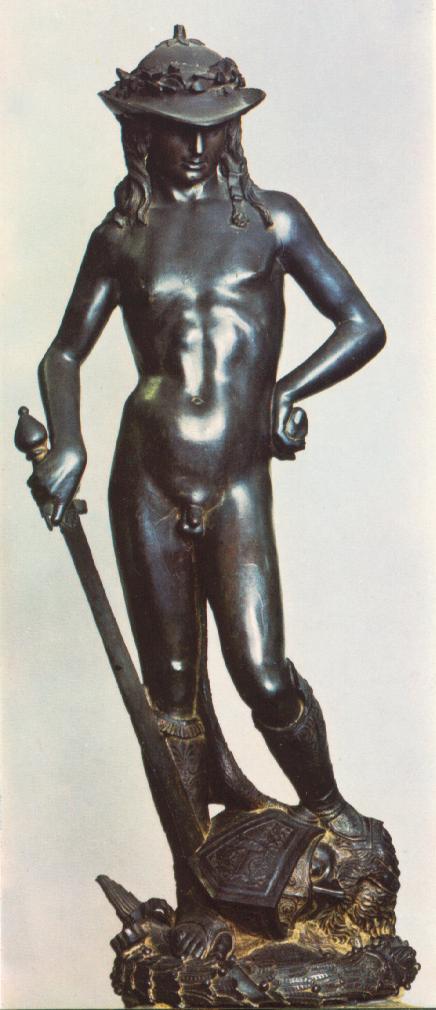
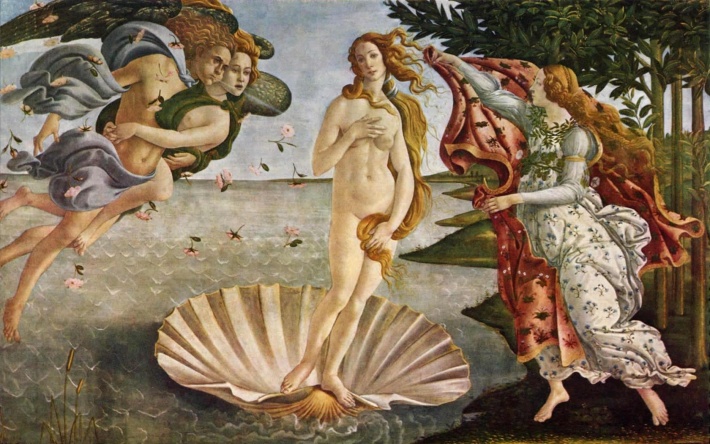
Renaissance 13th - 14th C AD
- - Early Renaissance - High Renaissance
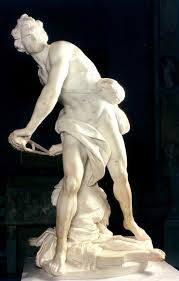
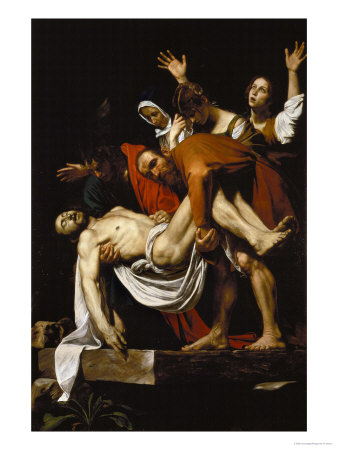
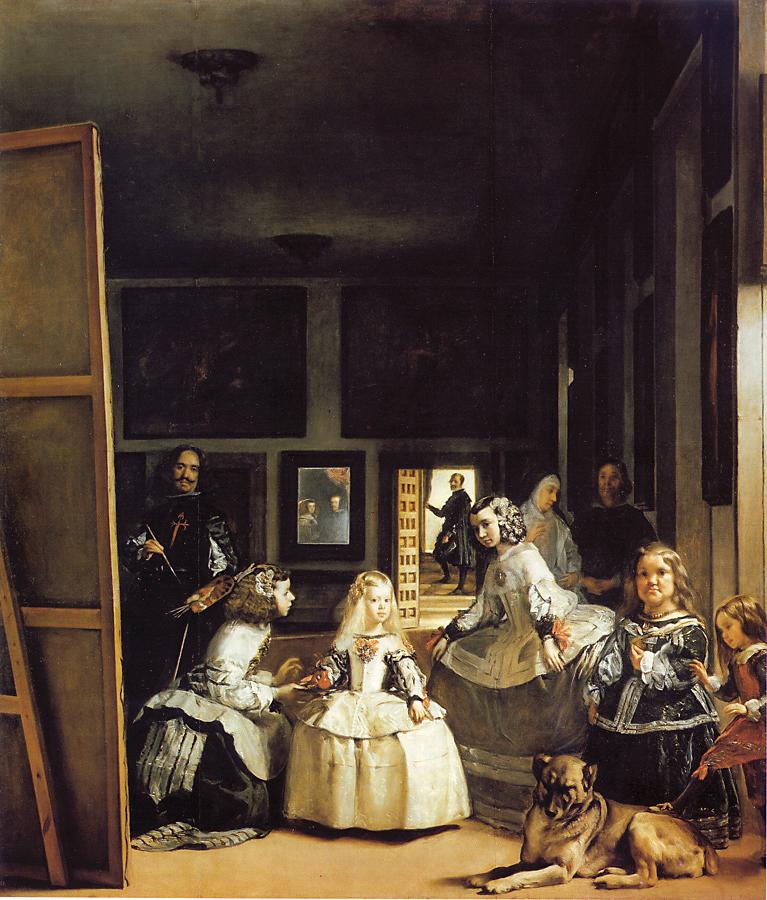
- Baroque 1600s - 1700s
- - Theatrical emotion - Concept of time - Dynamic/diagonal composition - Ornamentation - Rich primary colors - Painterly - Dramatic lighting - Landscapes - Still life - Portraits
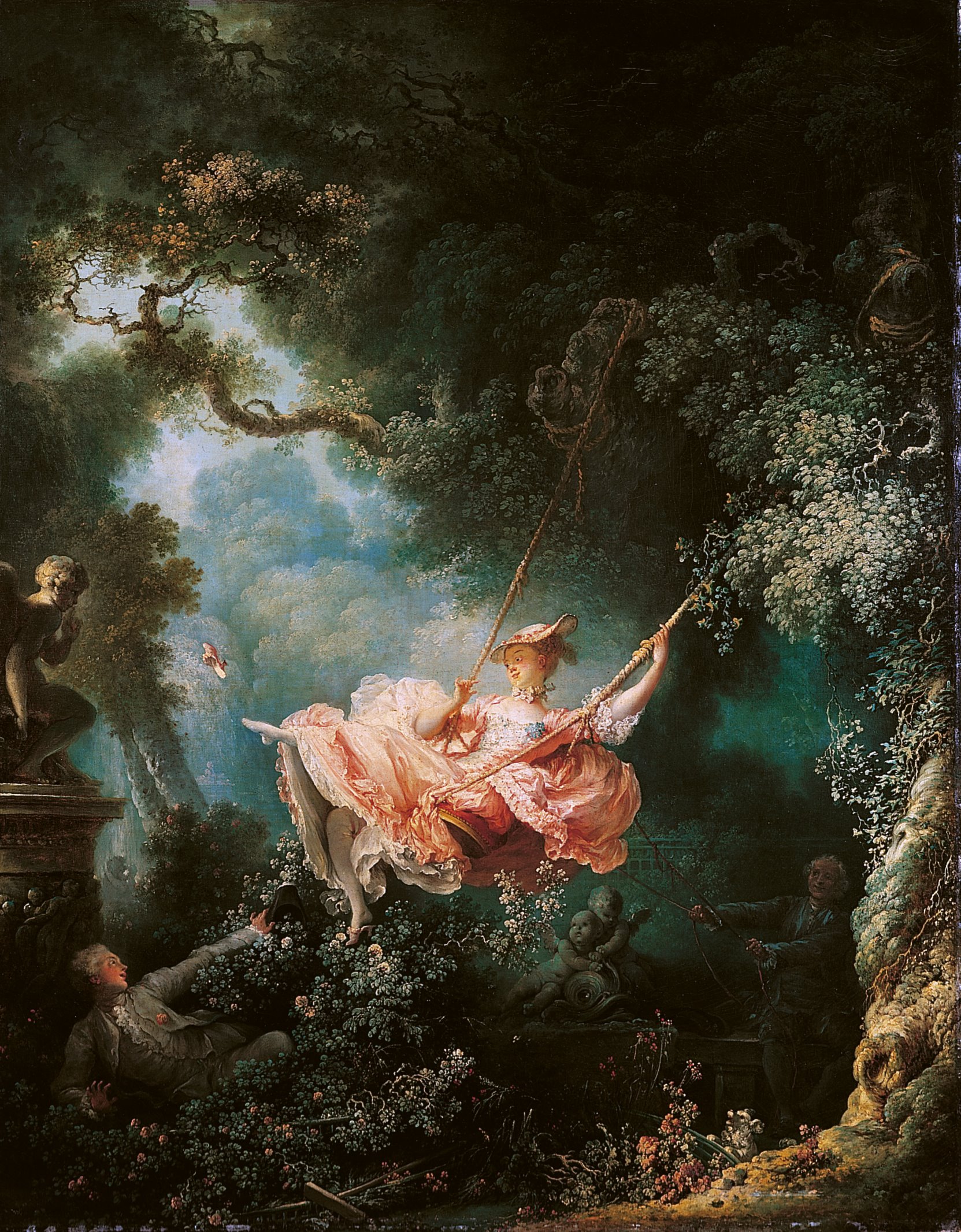
- Rococo 17th C
- - Gentle gradations, mingling of colors - Light, delicate, feminine tastes - Frivolous, excessive - Shell motifs - The rich and their leisure - Courting couples - Pastorals - Painting/decorative arts/interior design
- Neoclassicism 17th - 19 C
- -Reaction against Baroque's excessive movement and life - Reaction against Rococo's Ornamentation and asymmetry - Emphasis on lines, order, symmetry, solemnity, rationality -Line drawing as purest classical medum
- Romanticism 1800 - 1850
- - "Freedom in art, freedom in society; this is the double aim" -Victor Hugo - "Artist's feeling is his law" - "A painter should paint not only what he sees before him but what he sees in him" -Friedrich
- Realism 1850 - 1870
- Gustave Courbet
- LJM Daguerrre
- Context
- - Failure of Industrial Revolution - Invention of photography
- Eugene Delacroix
- Liberty Leading the People (1830)
- - Commemorating the July Revolution of 1880 that toppled Charles X -Woman personifies Liberty
- Liberty Leading the People (1830)
- Francisco Goya
- - Spanish mainter - 1792/3 onwards he was deaf. Withdrawn, intropective
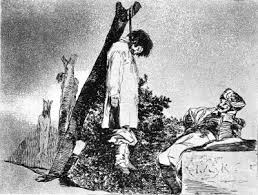
- Disasters of War (1810 - 20)
- Series of prints from etchings/aquatint
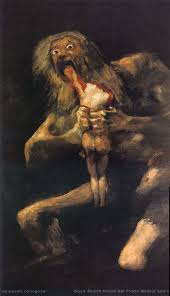
- Saturn Devouring His Son
- - 1819 - 1823 Black Paintings series - Not meant for public display - Precursor expressionism - Isolated himself: House of the Deaf Man - Time as devourer - Fatherland consuming children
- The Family of Charles IV (1800)
- - Retarded expressions - Mocking royalty - Deviate attention from King - Self-insertion
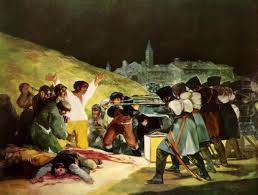
- The Third of May, 1808 (1814)
- - Spanish resistance to Napoleon's armies during the occupation of 1808 Peninsular War - Resemblance to Christ - Inhuman adversary - Rawness -Church in background: no salvation
- Theodore Gericault
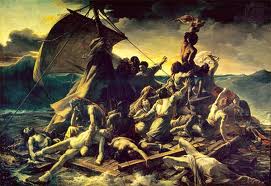
- The Raft of Medusa (1819)
- - Large-scale painting of men who were not heroes - Political allegory of France: Whole society on a raft - Pyramidal composition
- The Raft of Medusa (1819)
- Context
- Counter Enlightenment
- - Senses > Reason/Intellect - Against the rationalisation of nature
- Industrial Revolution as corrupt
- -Rapid rise in population - Civillisation as corrupt and eroding morals - Human innocence/freedom/happiness threatened - Nature as being of beauty/innocence/virtue
- Liberty, equality, fraternity
- - Inequalities and injustices of society - Individual > society - Originality/Experimentation - Intuition/inner reality - Wilderness, expression
- Counter Enlightenment
- JMW Turner
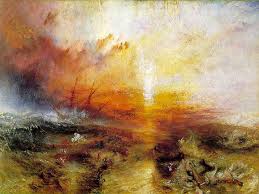
- - Dramatic landscapes - Turbulent and fantastic scenery - Feeling of the sublime - "Colour is released from any defining outlines in order to express the forces of nature, as well as the painter's emotional response to them"
- The Slave Ship (1840)
- Rain, Steam and Speed: The Great Western Railway (1844)
- John Constable
- - Naturalistic landscapes - Closely observed tranquil nature - Religious reverence for landscape - Counteract industrialisation and urbanisation
- The Corn Field (1826)
- The Haywain (1821)
- Ingres
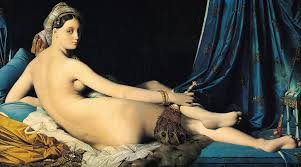
- Grand Odalisque (1814)
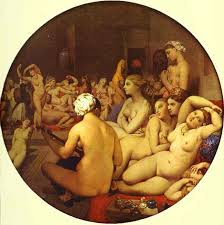
- The Turkish Bath (1862)
- Firmness of outline
- "Drawing is 7/8 of what makes up painting"
- "Paint should be as smooth as the skin of an onion"
- Jacques-Louis David
- -Actively supported French Revolution - Propaganda art
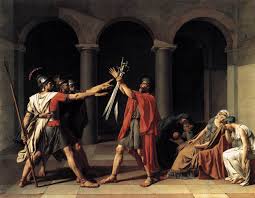
- Oath of the Horatii (1784)
- -Story from pre-republican Rome - Three bros going to battle, one of the women engaged one of the men they were going to fight
- Death of Marat (1793)
- - Revolutionary stabbed to death in his bathtub - Pain and outrage -Directness with detail - Political martyr
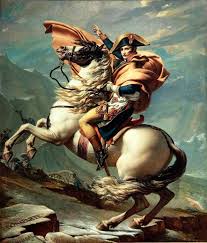
- Napoleon Crossing the St Bernard (1800)
- Context
- -Monarchy represented an irresponsible way of life - Clamour for equality and freedom - Art against wasteful living - Purpose: Serve the nation, inspire civic virtues
- After French Revolution
- Napoleon dictatorship for next 15 years
- Legitimise the regime
- Moral revolution
- Context
- - Need for spontaneity and novelty - Demands for freedom from academic restrictions
- Context
- - Rise of opera - Reaction to overly scientific painting, injection of emotion
- Context
- - Secularization - Scientific advancement - Rise of Humanism - Oil paints
- Subject Matter
- Greek/Roman revival
- Biblical themes
- History
- Allegories
- Mythology
- Characteristics
- Realistic perspective, central axis composition
- Manipulation of light and dark
- Atmospheric perspective
- Accurate anatomy
- Reason and order
MODERNISM
- Impressionism 1862 - 1868
- - Outdoor scenes - Everyday life - Nature's fleeting moment - Immediate sensations of light - Sensory impressions - Calling attention to painting surface (impasto) - Focus on formal element instead of subject matter paved the way for abstraction
- Post-Impressionism 1880 - 1905
- - Anti-bourgeois movement 1.) Focus on design/structure - Recovered art's symbolic spiritual/emotional meaning -Formal, near-scientific 2.) Expression through color- Refusal to imitate nature
- Symbolism 1880s
- - Forerunner of Surrealism - Saw Realism as trivial - Optical world rejected - Exploration of feeling, fantasy, dream, imagination - Mysterious, sensuous subjects - Not to see, but to see through - Deeper significance - Signs and symbols - Synthesis of form and feeling, of realiity and subjectivity
- Fauvism 1904 - 1909
- - Fauves: Wild beasts - applied by critic Louis Vauxcelles - Explosive/aggressive colours - Broad brushwork - Falls under bigger category of expressionism, along with German expressionism and Abstract expressionism
- Expressionism 1905 - 1930
- - German expressionism - Importance of self-expression
- Cubism 1907 - 1914
- - Every aspect of a whole subject, seen simultaneously in a single dimension - Breaking down subjects into facet - 2 Phases: analytical and synthetic cubism
- Futurism 1910 - 1930
- - Developed among 5 Italian artists - Eg: Boccioni, Marinetti, Balla, Severini - 1911 Manifesto - "All subjects previously used must be swept aside in order to express our whirling life of steel, of pride, of fever, and of speed" - Cubism sped up, haha - Most radical and violent movement of its time - "We want to sing the love of danger, the habit of energy and rashness" - "Standing on the world's summit we launch once again our insolent challenge to the stars!"
- Dada 1916 - 1930
- - Anti-art movement - Dematerialisation of art: Art existing as an IDEA- Began in New York and Zurich independently- "Cubism was a school of painting, futurism a political movement: DADA is a state of mind." -Andre Breton- "But the real Dadas are against Dada" -Tristan Tzara- Self destructed in a form of meta-irony- Nihilistic- Noise music, nonsense poems, random chance, readymades
- De Stijl 1917 - 1931
- - Founded in the Netherlands in 1917 - Post WWI was a time of balance petween individual and universal values - Total integration between art and life
- Surrealism 1924 - 1940)
- - Founded by French writer Andre Breton - Influenced by Sigmund Freud's theories of psychoanalysis - Stressed the value of memories and unconscious experiences - Importance of dreams and reaching them using free association - Superior reality
- Abstract Expressionism 1940s
- - Image is created through the action of painting rather than abstracting the image from real objects - Henceforth, shift of artistic capital to America
- Pop Art 1950 - 1970
- - Art no longer isolated from consumer-oriented imagery - portrayal of contemporary experience - Derived from Dada - Pop culture
- Context
- - Reaction against Abstract Expressionism's inaccessibility/incomprehensibility and elitism - Celebration of post-war consumerism, but at the same time a critique through irony
- Richard Hamilton
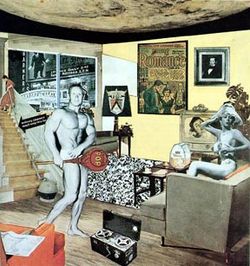
- - Declared that Pop Art shoudl be: - Designed for a mass audience- Transient - Expendable (short term and easily forgotten) - Low cost, mass-produced - Witty, sexy, glamorous
- Just what is it that makes today's homes so different, so appealing? (1956)
- Jasper Johns
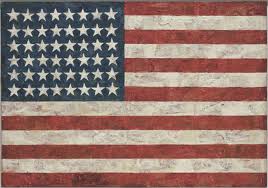
- Flag (1954 - 55)
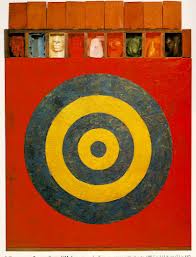
- Target with Four Faces (1955)
- Robert Rauschenberg
- Monogram (1959)
- - "Combines" - stuffed Angora goat - snout is covered in multicolored war paint - standing on a painting as if grazing at a pasture. - tire tread painted white - paintings on the canvas plus newspaper clippings, fragments of wooden signs, shoe sole, police barrier. - dingy tennis ball behind goat: it shat the painting - natural vs industrial - goat as a symbol of the damned; artist was bisexual
- Retroactive I (1963)
- - Mass media images - Commentary on society using the very images that created that society - Commercially-prepared photographic silk screens
- Monogram (1959)
- Roy Lichtenstein
- Masterpiece (1962)
- - Ben Day dots
- Whaam! (1963)
- - Sensationalization, trivialization - Dispassionate - "One of the things a cartoon does is to express violent emotion and passion in a completely mechanized and removed style"
- Masterpiece (1962)
- Claes Oldenburg
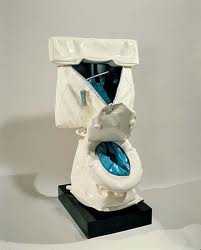
- Soft Toilet (1966)
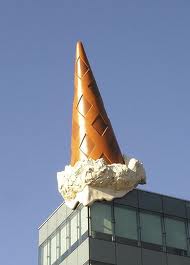
- Dropped Cone (2001)
- Andy Warhol
- - "In the future, everyone will be famous for 15 minutes" - Successful commercial artist. Shoe illustrator. - Use of silkscreen - Liked mechanical repetition and wanted to be a machine himself - made a cult of being boring and banal and superficial - "Just look at the surface of my paintings and films and me, and there I am. There's nothing behind it" - Called his studio 'The Factory'. Open-door.
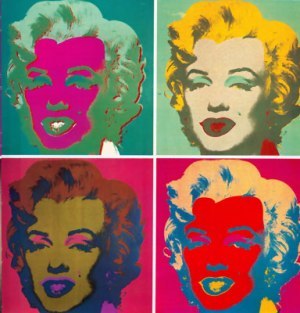
- Four Marilyns (1962)
- - Bad registration - Reveals the process - Construction of image, both the print and marilyn's public profile - Death and the cult of celebrity - Repeated image: ubiquitous presence in the media
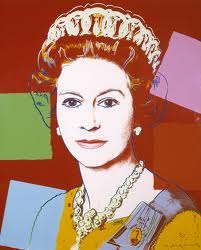
- Queen Elizabeth II of the United Kingdom (1985)
- - Series of "Reigning Queens" - Based on a photograph taken for her Silver Jubilee in 1977 - Presents her as iconic and overly glamorous - Suggests stylized makeup of a Hollywood star; cult of celebrity
- Color field painting
- - "Cold" abstraction - Flat areas or fields of color to induce contemplation - Mystic intensity - Psychological use of color - Large scale
- Mark Rothko
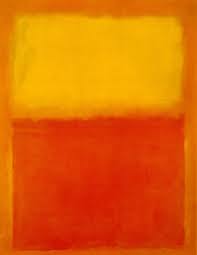
- - Completely abstract, soft-edge blocks of intense color floating against lighter/darker background - Color blocks occupy an ambiguous spatial zone - Color to stimulate emotional reaction in viewer - Invite contemplation and meditation
- Orange and Yellow (1956)
- Ad Reinhart
- Black Painting No. 34 (1964)
- - Perfect surface extremely delicate and fragile - Physical contact leaves permanent marks - Symbol of purity in a corrupt world - Pushed abstraction to the maximum in color and form - Illusion of unstroked surface - Siphoned off the oil in the paint to create a matte texture -
- Black Painting No. 34 (1964)
- Barnett Newman
- Adam (1951 - 52)
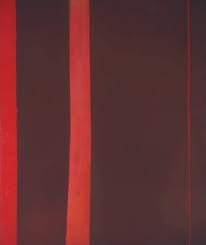
- - ‘Adam’: derived from the Hebrew word adamah (earth), but is also linked with adom (red) and dam (blood) -> man's intimacy with earth - Line represents man, who walks upright - Line also represents the void and separation between man and god
- Adam (1951 - 52)
- Action Painting
- Active process and energy of making art - Physical action of painting is not only the means but the end to express subconscious being - Painting as a proces of self discovery - "action painting" coined by critic Harold Rosenberg - "What was to go on the canvas was not a picture but an event" - Rosenberg
- Overall style
- - Fluid network of ense, interlacing lines - Surging complex visual rhythms - Avoided points of emphasis or identifiable parts. No centre of interest or sense of boundary - No distinction between painting and drawing - Final composition sometimes cut out of larger canvas - Abandoned traditional compositions and relations among parts
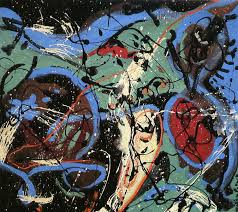
- Jackson Pollock
- - Liked cowboys - Was an alcoholic - Died in drunken car crash - Grew up in Wyoming, moved to New York and was influenced by muralists/indian sand painting - (Influenced scale of paintings) - Painted without planning, embraced accidents
- Bird (1941)
- - Influence of african sand painting and primitivism
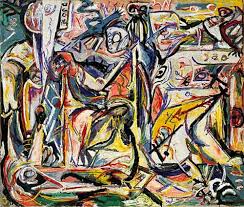
- Circumcision (1946)
- - Focal point no longer present - Central focus has been multiplied and decentralized - Fragmented
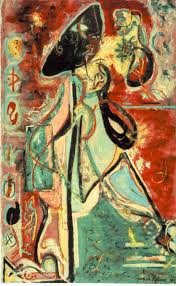
- The Moon Woman (1942)
- - Compare with Picasso's "Girl Before A Mirror" - Frontal + side view of face: Duality
- Composition With Pouring (1943)
- - Layering of paint explored
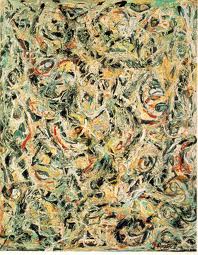
- Eyes in the Heat (1946)
- - First time not using brush - Pushed paint around with sticks
- Autumn Rhythm: No. 30 (1950)
- - Circular rhythm
- Blue Poles (1952)
- - Poles reintroduce the conventional notion of figure and ground into his work, but without making any concession to traditional concepts of perspective
- Willem de Kooning
- - Inspiration from visual perception and themes from the everyday world - Bridged the gap of traditional figure painting to modern abstraction - Direct, vigorous brushwork - Impulsiveness and spontaneity - Dense, compressed forms, sometimes abstract
- Seated Figure (Classic Male) (1940)
- - Was influenced by Picasso - influenced Francis Bacon - Attempt to merge fore- and background
- Pink Angels (1945)
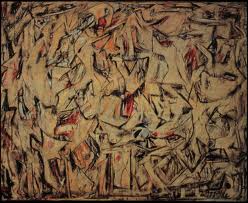
- Excavation (1950)
- - SUbject matter is a rice field and workers - Process: Always drawing and removing (scraping) - One plane, no focal point - organization of space into loose, sliding planes with open contours. - tension between figuration and abstraction
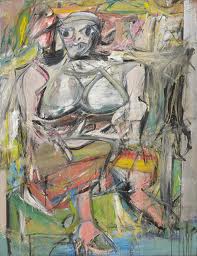
- Woman I (1950 - 52)
- - Response to American objectification of women as billboard models - Reminder that women are capable of destruction
- Untitled (1958)
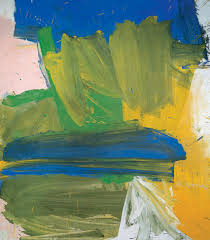
- Villa Borghese (1960)
- Landscape
- Franz Kline
- - Gestural strokes in black and white - SImilar to oriental calligraphy - Abstract New York city scapes - Transformation of New York during hte 1950s - torn down and rebuilt - Work resembled scaffolding and high-rise buildings during construction
- Painting Number 2 (1954)
- Context
- - Response to WWI - Just like Dada - Most Dadaists migrated to Surrealism
- Naturalistic Surrealism
- - Dealt with recognizable scenes that metamorphosed into dream/nightmare
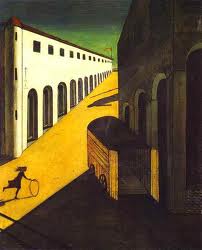
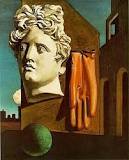
- Giorgio de Chirico
- - Interested in Nietzche's writings (hidden reality revealed through strange juxtapositions) - Metaphysical painting: the otherworldly, enigmatic -Eerily still - References to Classical past
- The Song of Love (1914)
- - Colors of the italian flag - Superiority of the old in face of the new
- Melancholy and Mystery of a Street (1914)
- Max Ernst
- - FROTTAGE: First form of visual automatism - Collage from magazines- French for 'rubbing'- Shading paper with pencil over textured surface - GRATTAGE: scraping - Paint layer on canvas, laid over textured object, the scraped over - COULAGE: Pouring molten material into cold water - OSCILLATION: Tin of paint on a swinging rope
- Two Children are Threatened by a Nightingale (1924)
- - Ernst experienced a hallucination where the wood grain on a panel took on "successively the aspect of an eye, a nose, a bird's head, a menacing nightingale, a spinning top, and so on"
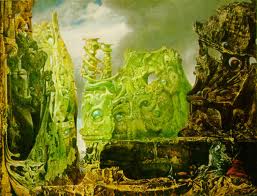
- The Eye of Silence (1943 - 44)
- - Experimented with the texture of the picture surface, leaving surface effects to chance
- Salvador Dali
- - Aim: To project the world of dreams as convincingly as possible - Spanish - From childhood was subjected to hallucinations and acts of sudden/uncontrollable violence EARLY INFLUENCES: Studied how to prepresent objects in space and light with utmost precision - Futurism: Time and space as one, taste for organic distortion as a process of growth - De Chirico's endless space, use of light for psychological reasons, and trompe l'oeil details - PARANOID CRITICAL METHOD: - Technique invokes paranoid state to harness the brain's ability to perceive links between irrational things - Ambiguous images to be interpreted in several ways
- The Metamorphosis of Narcissus (1936 - 37)
- - Can be seen as both a giant figure and giant hand
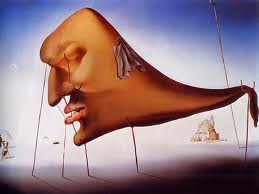
- Sleep (1939)
- - "I have often imagined the monster of sleep as a heavy, giant head with a tapering body held up by the crutches of reality. When the crutches break we have the sensation of falling" - 'falling sensation' as a memory of the expulsion from the womb at birth
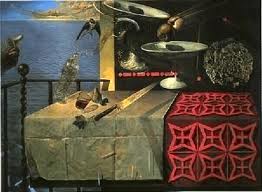
- Animated Still Life (1956)
- - Overturns the central notion of a still life painting - Probably derived idea from Atomicus photo - Influence of Magritte
- Crucifixion (1954)
- Rene Magritte
- - Began as commercial artist designing wallpapers and fashion ads - Used mastery of realism to defy logic in his Surrealist work - Juxtaposition of man-made and natural objects, and between words and images - Disturbing ambiguity- "Like the chance encounter of a sewing machine and an umbrella on an operating table" - Exploited discrepancies of scale and gravity
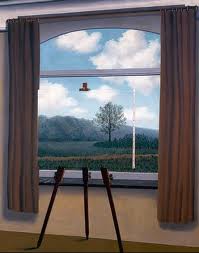
- The Human Condition (1934)
- - Canvas has a picture of what we assume to be the view - Pun: Paintings as 'window' to reality - Painted realistically: Is the landscape real or painted? - "This is how we see the world: as being outside ourselves, even though it is only a mental picture of what we experience inside ourselves"
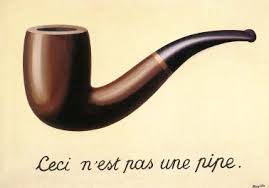
- The Treachery of Images (1928 - 29)
- - Comment on human tendency to label everything - Mimics advertising
- Not to be Reproduced (1937)
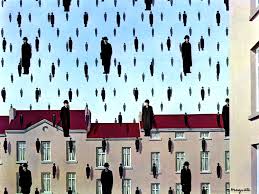
- The Golconda (1953)
- - Wallpaper-like patterning - Windows cut off abruptly - Figures not exactly identical
- Biomorphic Surrealism
- - Automatism, free association - Eliminate conscious control - Close to abstraction
- Joan Miro
- - The first to create imagery using automatic techniques in which forms seemed to emerge directly from the unconscious - Organic imagery, weird and disturbing humor
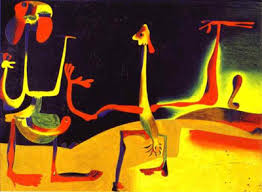
- Man and Woman in Front of a Pile of Excrement (1935)
- -Impossible embrace -apocalyptic sky
- Paul Klee
- The Twittering Machine (1922)
- Context
- New art a New Society: utopian ideals
- - Non-objective art as the new post-war ideal
- Theosophy
- - Spiritual movement in late 19th century - Realize absolute truth by studying all religions - Search for absolute resonated with abstraction - Painting could capture a deeply significant invisible reality
- New art a New Society: utopian ideals
- Piet Mondrian
- NEOPLASTICISM - Painting as a 'plastic' (malleable) form - "Abolition of all particular form" - Abstraction of form and color ; straight lines and primary colors
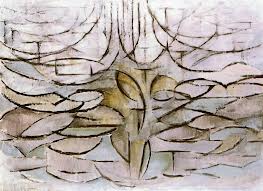
- Flowering Apple Tree (1912)
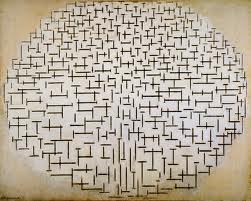
- Composition No. 10 (Pier and Ocean) (1915)
- - Pure geometry - Pristine, mathematical, mechanical - No emotion
- Composition with Red, Yellow, and Blue (1920)
- Broadway Boogie-Woogie (1942 - 43)
- - Yellow and gray areas painted with the same luminance, causing jittery obtical effect
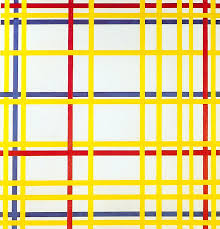
- New York City I (1942)
- Lozenge Composition with Yellow, Black, Blue, Red, and Gray (1921)
- - lines do not extend all the way to the edge of canvas. stop at 45 degree angle. - Rich in surface textures - Different blocks painted in different thicknesses/directions
- Context
- Reaction against WWI and failings of the system
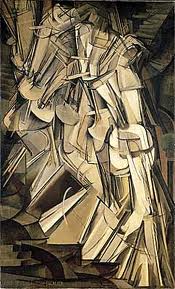
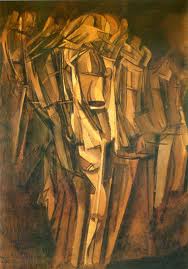
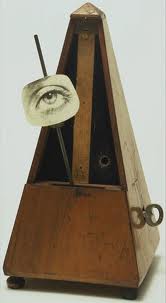
- Marcel Duchamp
- - Rejected by Cubists - Interest in mechanical parts/workings - Exploration of motion, similar to Futurists - 1923 abandoned art, played chess for 10 years
- Nude Descending a Staircase (1912)
- Nudes usually painted with respect; what Duchamp did was outrageous
- Sad Young Man on a Train (1911)
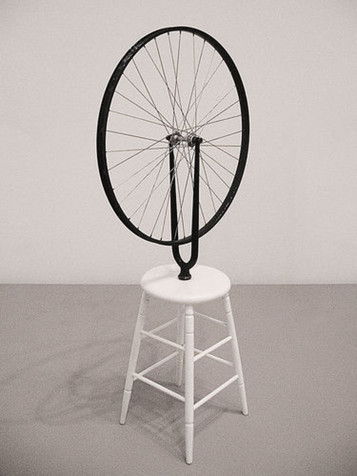
- Bicycle Wheel (1951)
- - First kinetic sculpture - Idle visual pleasure: Duchamp said he simply enjoyed gazing at the wheel while it spun, likening it to gazing into a fireplace. - Comic effect: an ordinary unicycle is a comical thing; upside-down and immobile it might be hilarious. - Juxtaposition of motion and stasis - art without any pretense of artifice, and unconcerned with imitating reality in any way.
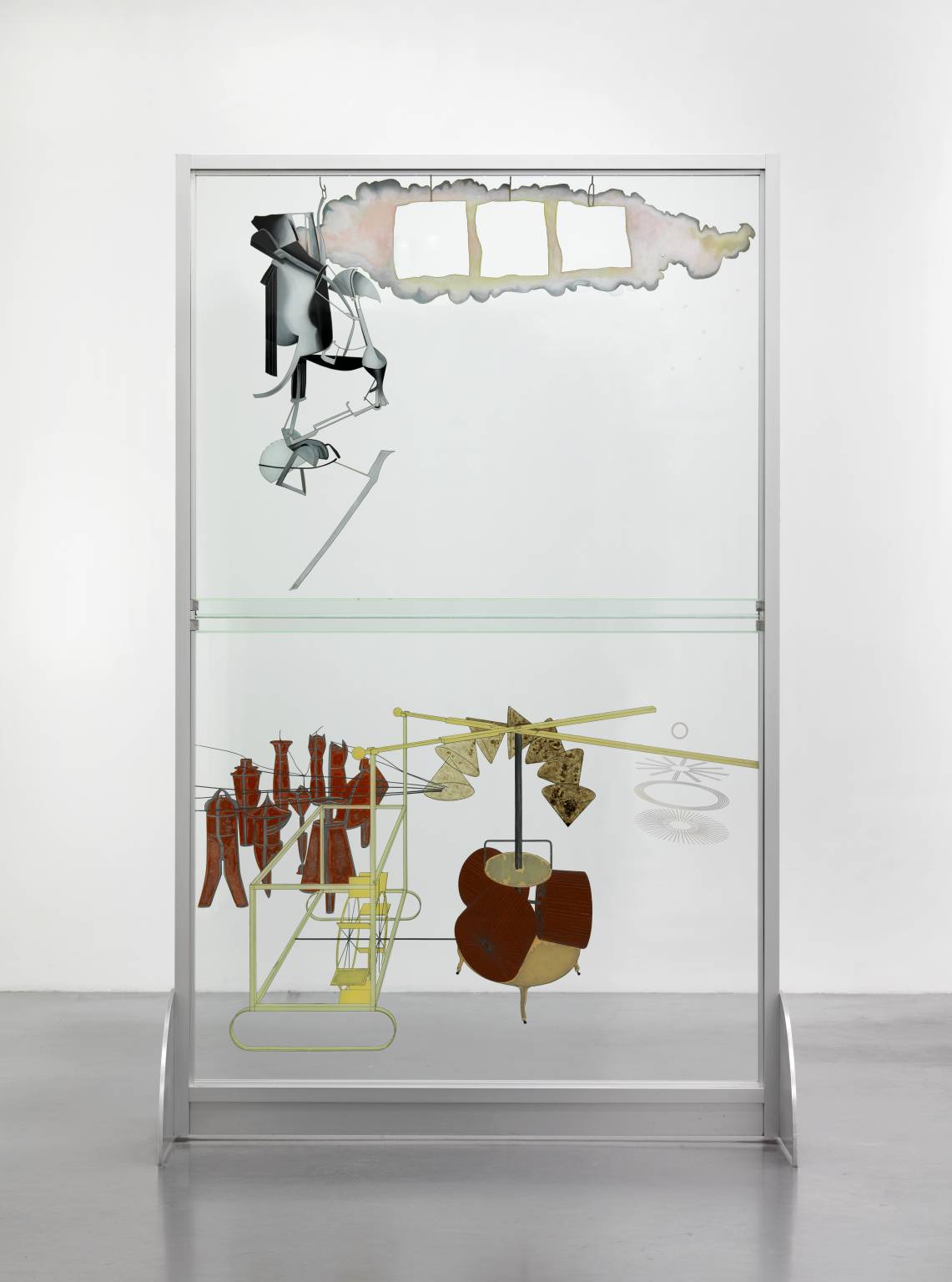
- The Large Glass (1915 - 23)
- Hannah Hoch
- Lights and Shadows
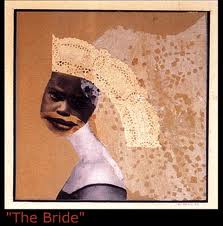
- The Bride (1933)
- Different races juxtaposed and combined
- Man Ray
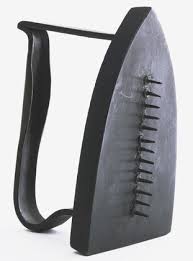
- Cadeau (Gift) (1958)
- - gives a common object a symbolic function. The flatiron, associated with social expectations of propriety and middle-class values, becomes a subversive attack on social expectations. - Even if the iron is no longer used for pressing clothes, the object resonates with ruinous, violent possibilities.
- Indestructible Object (Object to be Destroyed) (1964)
- - irritation over being watched, and powerlessness in the face of endless time. There is no means to stop the cycle, except to destroy the object itself.- “Other contraptions of mine have been destroyed by visitors; not always through ignorance nor by accident, but willfully, as a protest. But I have managed to make them indestructible, that is, by making duplicates very easily.” - Idea behind the work cannot be erased - demeans the value of “original” art and craftsmanship in the true spirit of Dada.
- Untitled Rayograph [Scissors and Cut Paper] (1927)
- - Scissors and cut paper - "I paint what cannot be photographed" - "I photograph what I do not wish to paint"
- Cadeau (Gift) (1958)
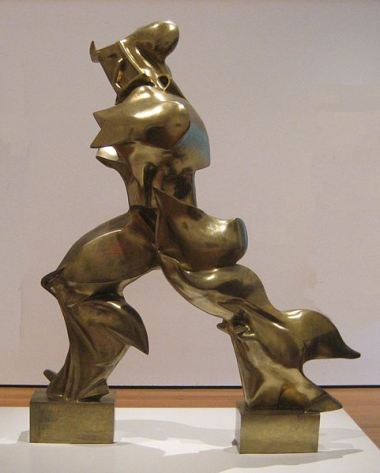
- Umberto Boccioni
- Unique Forms of Continuity in Space (1913)
- - Cast in bronze 1931 (posthumously) - "these days I am obsessed by sculpture! I believe I have glimpsed a complete renovation of that mummified art." - originally inspired by the sight of a football player moving on to a perfectly weighted pass - Strong forward stride, yet treads lightly. - triumph over the limitations of the human stride to suggest unending movement into infinite space
- Unique Forms of Continuity in Space (1913)
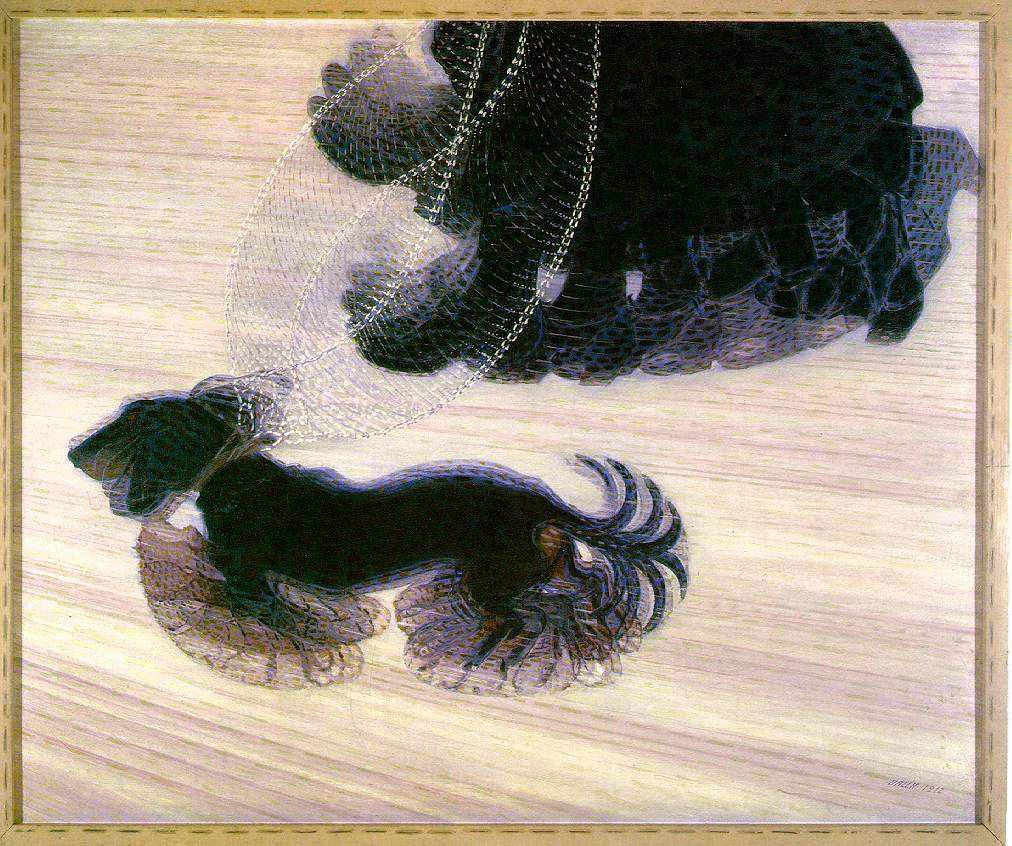
- Giocome Balla
- Dynamism of a Dog on a Leash (1912)
- - abrupt close up - similar to multiple exposure photography
- Abstract Speed + Sound (1913 - 14)
- Abstract Speed (1913)
- Dynamism of a Dog on a Leash (1912)
- Pablo Picasso
- - Blue Period (1901 - 1904) - Rose Period (1904 - 1906) - Cubism (1907 - 1914) - Return to the figurative - Reinterpreting Old Masters
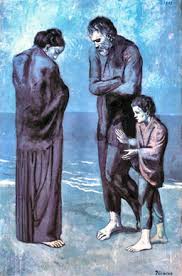
- Poor People on the Seashore (The Tragedy) (1903)
- - Blue Period - His friend Casagemas committed suicide - Cold palette - Themes of misery, alienation
- Portrait of Gertrude Stein (1906 - 07)
- - Gertrude was one of his first patrons - Influence of primitivism - Elongation of features - Geometrical emphasis
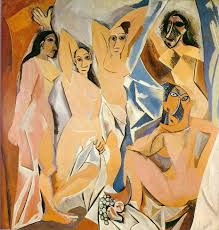
- Les Demoiselles d'Avignon (1907)
- - Cubism - Influence from African masks- Simultaneity of frontal and profile view- Fragmentation of space
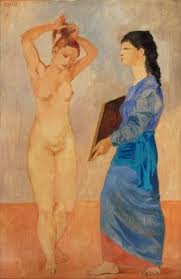
- La Toilette (1906)
- - Rose Period - After meeting his first love, Fernande Olivier - Rose-hued and earthy palette - Circus performers
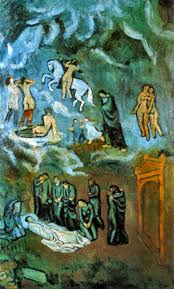
- The Burial of Casagemas (1901)
- - Similarity to El Greco's 'The Funeral of Count Orgaz"
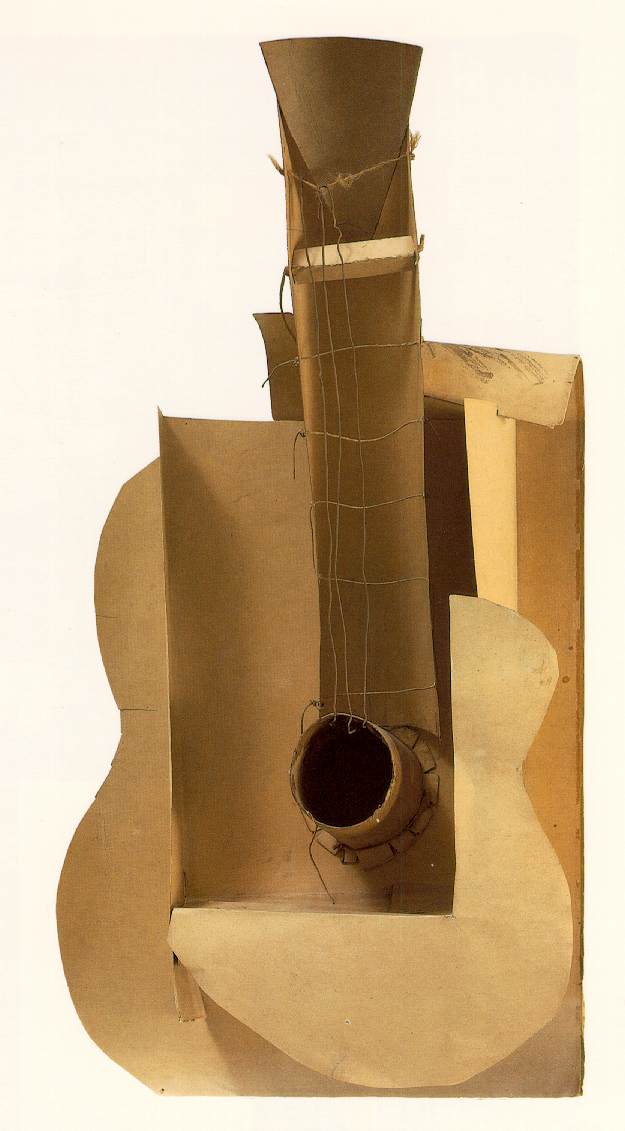
- Maquette for Guitar (1912)
- - Synthetic Cubism (1912) - Objects and shapes cut from paper/other materials - Represent parts of a subject to play visual games - Variations on illusion and reality --cutaway view, allows viewer to see surface and interior space, both mass and void
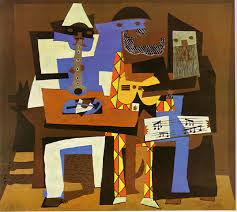
- Three Musicians (1921)
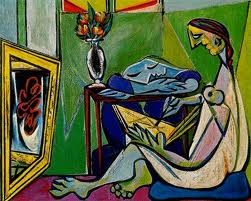
- Two Women (La Muse) (1935)
- Girl With a Mandolin (1910)
- - Analytical Cubism (1907 - 12) - Every possible vantage point into a pictorial whole - Concerned with pure form, not color, texture, character, or representation
- George Braque
- The Portuguese (1911)
- - use of stencilled text draws attention to the canvas itself - fragmentation as a strategy to display all angles and aspects of the subject on a static canvas
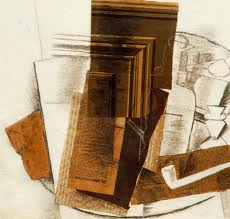
- Bottle, Newspaper, Pipe, and Glass (1913)
- -paper colle- "stuck paper" -charcoal shows surface as well as transparency -paper with printed wood grain -first to use materials not considered 'high art' materials
- The Portuguese (1911)
- Robert Delaunay
- Champs de Mars (The Red Tower)
- multiple viewpoints, rhythmic fragmentation, and strong color contrasts
- Champs de Mars (The Red Tower)
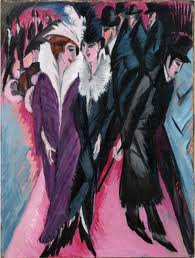
- Die Bruke
- - Formed in 1905 - "The Bridge" - Founder: E L Kirchner - Artists formed a guild and lived together - Idea of man in nature - Revival of graphic arts
- Ernst Ludwig Kirchner
- Street, Berlin (1913)
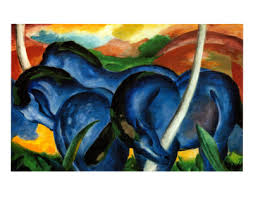
- Der Blau Reiter
- - Formed in 1911 - Founders: Kadinsky and Marc - Later members: Rousseau, klee - Influenced Abstract Expressionism
- Franz Marc
- The Large Blue Horses (1911)
- - absence of a rider is in keeping with Marc's own belief in the supremacy of animal spirituality over that of humans
- The Large Blue Horses (1911)
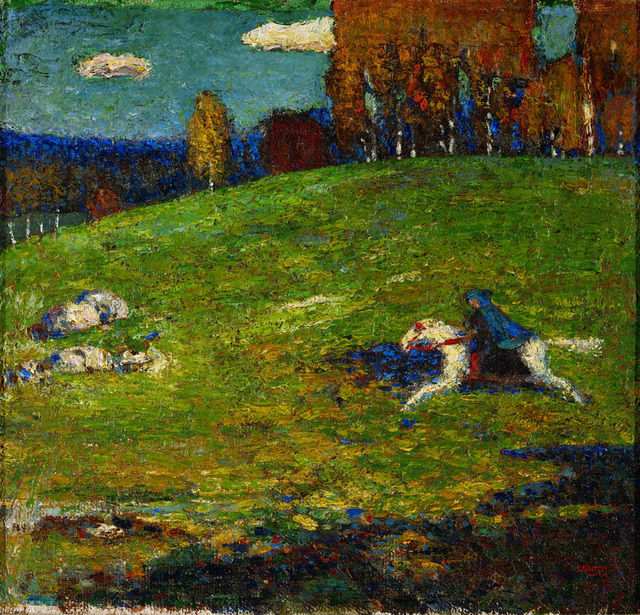
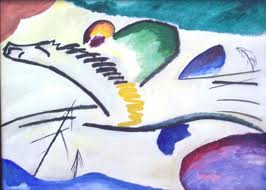
- Wassily Kandinsky
- - Interested in Theosophy (belief system with links to Buddhism and mysticism) - Explored paint through new theories of atomic structures, concluded that material objects had no real substnace
- Improvisation 6 (1909)
- - "African"
- The Blue Rider (1903)
- Lyrical (1911)
- Composition VIII (1923)
- Context
- 1905 Salon d'Autumne
- Andre Derain
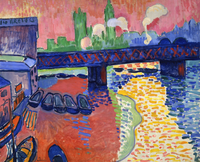
- Charing Cross Bridge, London (1906)
- Maurice de Vlaminck
- - Ignored details - Violent color and brushwork - Declared that he "loved van Gogh that day more than my own father" after exhibition - From 1908 his palette grew more monochromatic (Cezanne's influence) - Later work displayed a dark palette, punctuated by heavy strokes of contrasting white paint.
- The River Seine at Chatou (1906)
- Henri Matisse
- - French - Believed that color plays a primary role in conveying meaning - "The chief function of color should be to serve expression as well as possible" - Sold his wife's engagement ring to buy Cezanne's 'Three Bathers'
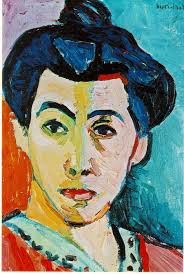
- Portrait of Madame Matisse (1905)
- - "The green stripe" - Warm and cool - Japanese influence?
- Woman with a Hat (1905)
- - Simultaneously a wild expression of colors and a cold, calculated reduction of the subject - Vehement criticism from Symbolists
- The Red Room (1908 - 09)
- - Decorative interior - Patterning
- Blue Nude II (1952)
- - Part of his Jazz Series - Paper cutout - Stylized
- Context
- French literary movement in the 1880s
- Edvard Munch
- - Norwegian - Painter/Printmaker - Influenced German expressionism - "The angels of fear, sorrow and death stood by my side since the day I was born" - "I do not believe in the art which is not the compulsive result of Man's urge to open his heart" - "My art is really a voluntary confession and an attempt to explain to myself my r/s with life - it is, therefore, actually a sort of egoism, but I am constantly hoping that through this I can help others achieve clarity"
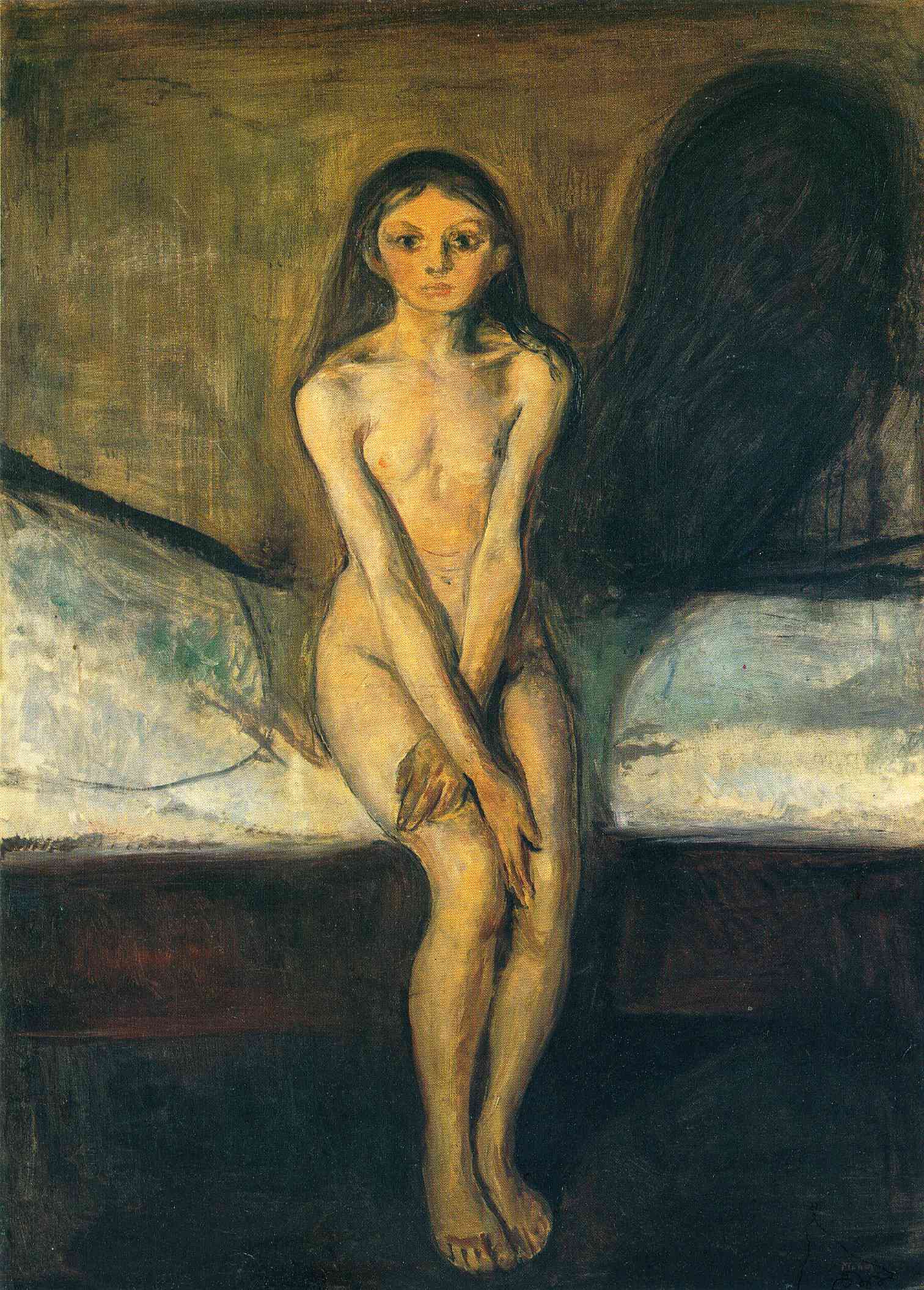
- Puberty (1894 - 95)
- - Strange shadow - Red face, awkward - Elongated legs - Black tones
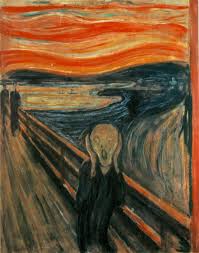
- The Scream (1893)
- - Sunken/lightbulb head - Swirling sky - Complementary colors - Emotional distres - Discordance - Ghoulish - Highly simplified - Juxtaposition of figures, 2 people in background seem oblivious and distant - Sudden depression that descended upon him at a fjord
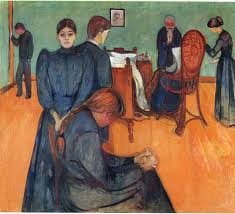
- Death in the Sickroom (1895)
- - SIster's death - Small head- Flat- Solemn- Muted colors- Rigid- No interaction/movement- Pallid blue-grey
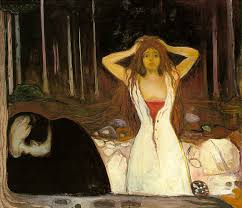
- Ashes (1894)
- - His relationship with a woman - Distress - Stringy hair - High contrast - Gradation, but flat forms - Exasperation - Black vs White - Background: hollowness, mystery, endless void
- Gustave Klimt
- - Austrian - Female body, eroticism - Use of gold leaf similar to Byzantine religious art - Flattened images
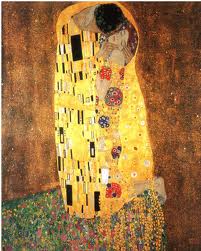
- The Kiss (1907 - 08)
- - Couple is intertwined on a meadow, wrapped in full gilded clothing. - Cape: mosaic, black and white rectangles for man, coloured circles and the flowers for woman. - Intimacy: union of heads and hands - Couple is insulated in sublimation, oblivious to outside world
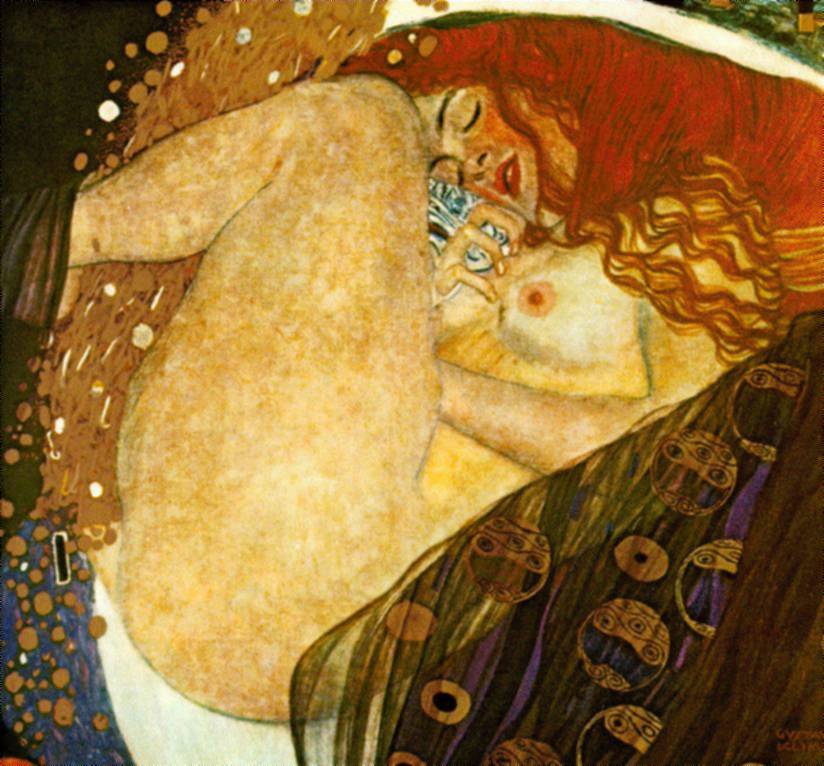
- Danae (1907 - 08)
- - Symbol of divine love, transcendence, sensational beauty - Raised leg: tribute to Titian series of paintings of same name. - Story: Danae was imprisoned by father. Visited by Zeus in form of golden rain flowing between her legs. Soon after, Danae was pregnant with Perseus.
- Context
- - No common artistic goal, merely a bidirectional reaction against Impressionism
- Paul Cezanne
- - Father of modern art - Greatly influenced Matisse/Picasso - "I want to make of Impressionism something solid and durable, like the art of the museums" - Early work imitated Courbet: thick paint with palette knife - Use of color to construct form - Worked slowly and methodically, studied subjects for a long time - Preoccupied with underlying geometry
- Table Corner ( 1985 - 1900)
- - Use of multiple perspectives - Precursor to cubism
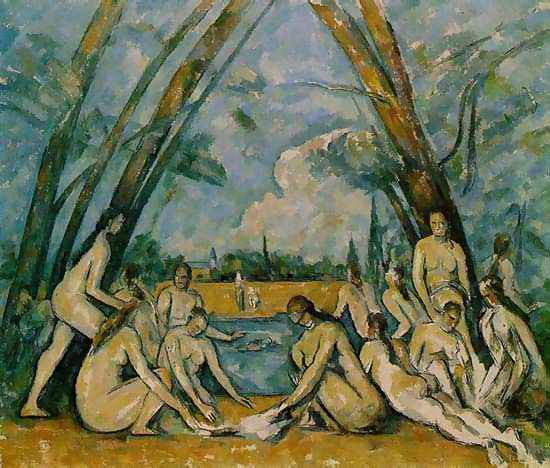
- The Large Bathers (1898 - 1905)
- - Bipyramidal composition -
- Georges-Pierre Seurat
- - Neo-impressionist - Oranization of color on canvas - Static, unmoving quality - Pointilism, optical mixing
- A Sunday on La Grand Jatte (1884 - 86)
- - Stylized - Ambiguous, anonymous - Not about social commentary
- Bathers at Asnieres (1884)
- - Workmen taking leisure by the river - Moment in time captured forever, as if in stone -Enormous amount of labour - Not pointilist, but reworked with dots of contrasting colour - Figures in profile, may have been influenced by Egyptians
- Vincent van Gogh
- - Insane dude - Quarrelled with Gaugin, cut off own ear, presented it to a prostitute named Rachel. - Admitted to Saint-Remy asylum - Borrowed a gun, shot himself, bled in cornfield for 3 days, refused medical assistance
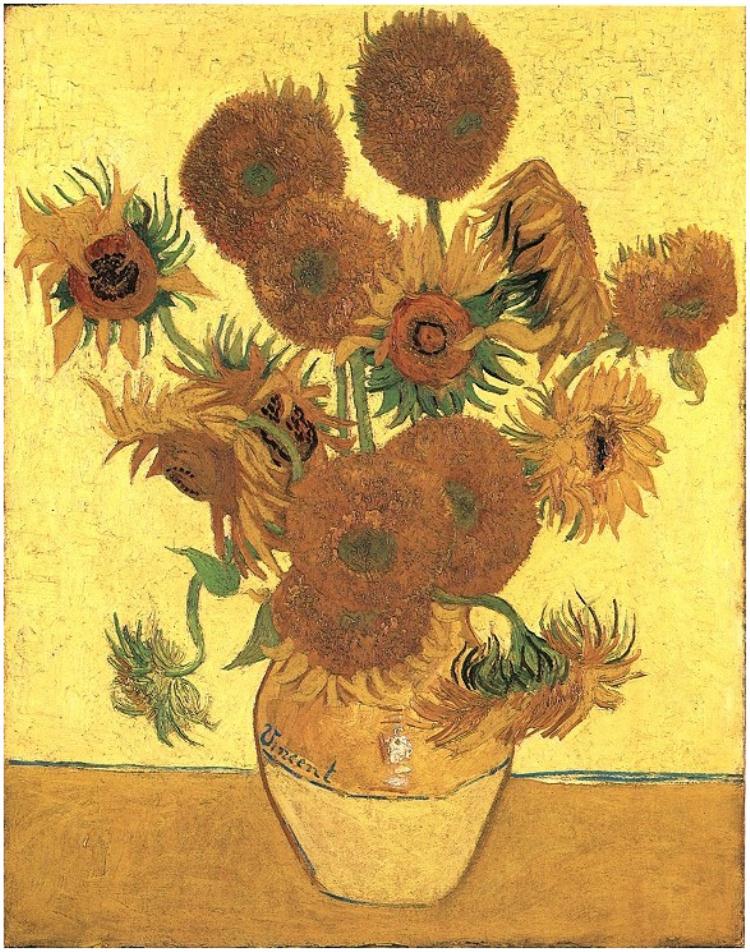
- The Sunflowers (1889)
- - Influence of Japanese prints - Omission of shadows- Broad areas of color-Thick outlines - Lack of perspective - Compositional freedom
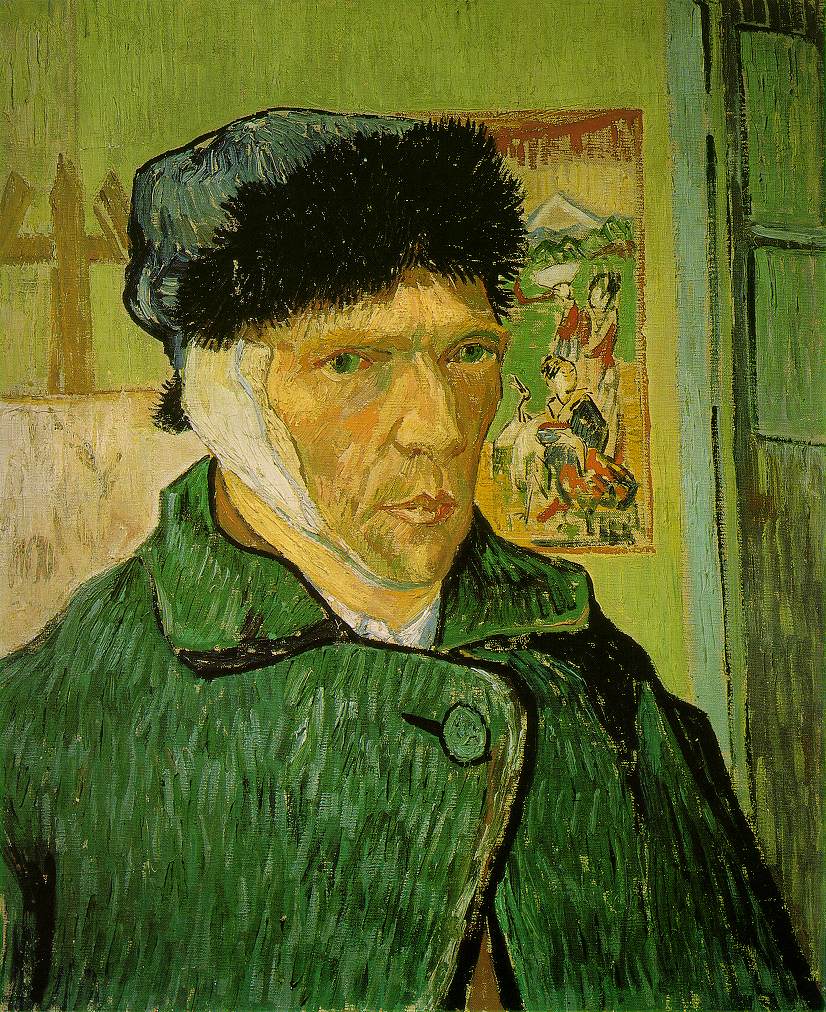
- Self Portrait with Bandaged Ear (1889)
- - Personal catastrophe - Easel in the background - Linking his suffering to his art - Japanese prints in background - Vulnerable yet steady gaze - Looking but not seeing -Contemplation of anguish
- Starry Night (1889)
- - Imaginary church - Contours and lines to capture shapes and movement of night - Thick impasto, choppy, heavy strokes of wavy ribbons - Dramatic use of of color/texture - Simplified forms - Rhythmic, different halo sizes, swirling clouds and stars - Directional strokes for wind - Stood up three nights in a row to paint
- Paul Gauguin
- - Spiritual truth of subject matter - Flat colors - Went to tahiti because he viewed it as exotic and mysterious
- Yellow Christ (1889)
- - Traditional Mary replaced by Breton women with headdresses - Christ with Gauguin's face - Cross in Brittany - No perspective or modelling - Blue outlines
- Where Do We Come From? What Are We? Where Are We Going? (1897)
- - Symbolizes various stages of life and questions of destiny - Baby & 3 young women - (Middle) 2 Women talk about destiny - Puzzled/half-aggressive man - (Middle) youth plucking fruit of experience. Eats fruit, overlooked by remote presence of an idol (spiritual need) - (Left) Woman broods, old woman prepares to die. White bird as symbol of afterlife
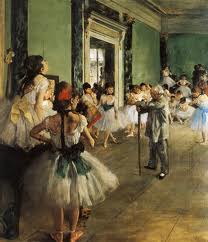
- Edgar Degas
- - Circus, opera, women at work, nudes, contemporary life - BALLERINAS - Off-center figures, cropped at edge of canvas - Empty spaces, clustered figures - Unplanned, spontaneous scenes - Did not paint outdoors - No interest in landscapes or light - Used pastels
- The Dance Class (1873 - 76)
- Edouard Manet
- - Bridge between Realism and Post-impressionism - Strong outlines, use of black
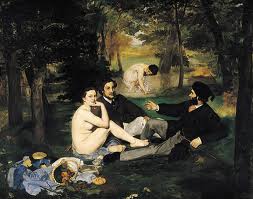
- Lunch on the Grass (1863)
- - Ordinary people as subject matter - Acknowledgement of viewer - Pointed finger at audience - Unidealized nude - Public only accepted nudes if they represented goddesses or idealized beauty
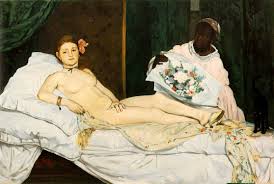
- Olympia (1863)
- -Boldly gazing at viewer - Gift from admirer - Not fully nude - Seen as disrespectful parody of the old masters' work
- Pierre-Auguste Renoir
- - Women, flowers, children, sunny outdoor scenes - "Why shouldn't art be pretty? There are enough unpleasant things in the world." - Refused to use black, "it is not a color" - Pals with Monet!
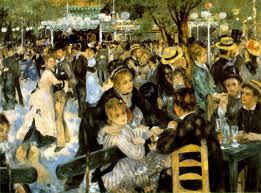
- Le Moulin de la Galette (1876)
- - Forms fragmented into patches of colour to give impression of flickering light through leaes - Quick, short, loose brushwork - Sense of constant movement to capture the dance - Abrupt cropping suggests it is a part of a bigger whole - Photo-like composition - Unposed, candid. Back view of some subjects
- Context
- - Recovery from economic/spiritual depression + new inventions - Portability of paint + cameras - Salon of Refusals in 1863 - Japonisme - Color theory - - No use of black (not a colour) - Optical mixing instead of smooth blending
- Japonisme
- -Japanese aesthetic - Spatial organisation - Flat shapes, unmodelled colour areas - Decorative quality - Patterning - Odd cropping - Beauty in asymmetry/imperfection
- Claude Monet
- - Sight began to fail in his last years, but continued painting - About Japonisme: "I like the suggestive quality of their aesthetic, which evokes presence by a shadow and the whole by a part"
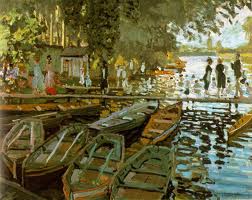
- La Grenouillere (1869)
- - Jabbing of brush - Textures through brushstrokes and not linework - Vertical strokes of boat contrasting with horizontal strokes of water
- Impression: Sunrise (1872)
- - Shown at 1st impressionist exhibition - Purpose was to be entirely faithful to reality in tone/color- Spawned the movement name
- Gare St Lazare (1877)
- - snapshot-like - Rule of thirds focal point - Urbaniastion: movement towards a sense of the city - Impasto/dry brush: smoke - Flickering effect on surface of painting - Muted colours - No delineation of forms
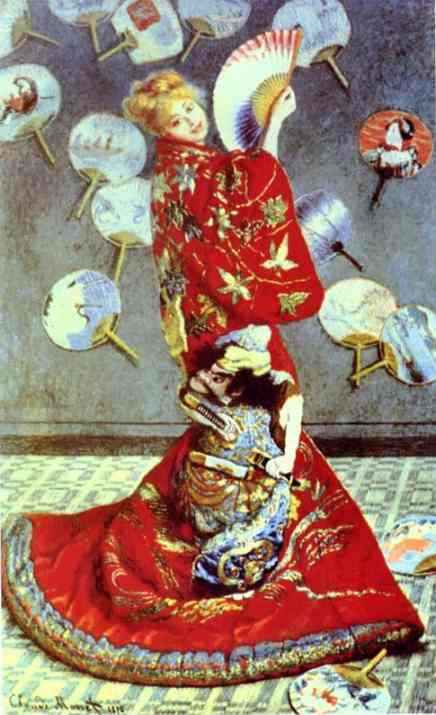
- Madam Monet in a Japanese Costume (1875)
- Impressionism 1862 - 1868
Bilder und Dateien der Mindmap










































Informationen
- Beschreibung
- SOVA, Art History
- Erstellt von
- Gelöschter Nutzer · Sep 2016
- Aktualisiert
- 5 Jan 2017
- Aufrufe
- 37
- Tags
- Verlauf
-
- Erstellt von Julia Lee · 18 Sep 2013
- Kopiert von Grace Heath · 29 Sep 2016
- Bewertung