
Quiz
W6: Vision
Erstelle ein kostenloses Konto, um dieses Quiz zu beenden
Speichere deinen Fortschritt und sieh dir dein Endergebnis an.
oder mit deiner E-Mail registrieren
Schon ein Konto? Anmelden
Fragen in diesem Quiz (53)
1The cornea is an adjustable structure in the eye that focuses light
- ARichtig
- BFalsch
2Light from the right side of the world stokes the left side of the retina
- ARichtig
- BFalsch
3Cones are essential for colour vision
- ARichtig
- BFalsch
4Photopigments are stable in the dark
- ARichtig
- BFalsch
5The retinex theory accounts for the principle of colour constancy
- ARichtig
- BFalsch
6Some people with damage to area V1 show a surprising phenomenon called blindsight
- ARichtig
- BFalsch
7A person with prosopagnosia cannot recognise voices
- ARichtig
- BFalsch
8Damage to area V4 would likely cause problems with colour constancy
- ARichtig
- BFalsch
9Movement of the eyes suppresses activity in the visual cortex for a brief moment
- ARichtig
- BFalsch
10Infants are born with the ability to control their visual attention
- ARichtig
- BFalsch
11In humans as in other species, the visual cortex is more plastic early in life
- ARichtig
- BFalsch
12The law of specific nerve energies states that:
- AAny stimulation above the threshold produces an action potential
- BEvery stimulation of the optic nerve is perceived as light
- CPerception of a repeated stimulus fades
- DThe speed of action potentials varies depending on the strength of the stimulus
13In what order does visual information pass through the retina?
- ABipolar cells, receptor cells, ganglion cells
- BGanglion cells, bipolar cells, receptor cells
- CReceptor cells, ganglion cells, bipolar cells
- DReceptor cells, bipolar cells, ganglion cells
14The optic nerve is composed of axons from which kind of cell?
- AGanglion cells
- BBipolar cells
- CRods and cones
- DHorizontal cells
15Which of the following characterises the fovea?
- AIt has more rods than cones
- BIt surrounds the point of exit of the optic nerve
- CIt has the greatest perception of detail
- DIt falls in the shadow cast by the pupil
16Which receptors are responsible for the perception of colour?
- AHorizontal and amacrine cells
- BRods
- CCones
- DBoth rods and cones
17Which theory emphasises the idea that colour vision depends on the relative responses of three kinds of cones?
- AVolley theory
- BOpponent-process theory
- CYoung-Helmholtz theory
- DRetinal theory
18Colour constancy is the ability to:
- ARecognise the colour of an object despite changes in lighting
- BSee colour, even in very faint light
- CPerceive all wavelengths as the same colour
- DDifferentiate among many colours and hues
19The enhancement of contrast at the edge of an object is the result of:
- AThe colour of the object
- BThe diffraction of light from the edge's surface
- CLateral inhibition in the retina
- DFatigue of the rods and cones
20In the vertebrate retina, which cells are responsible for lateral inhibition?
- AGlial cells
- BGanglion cells
- CHorizontal cells
- DBipolar cells
21Which ganglion cells, if any, are located mostly in or near the fovea?
- AThey are all distributed equally
- BMagnocellular
- CParvocellular
- DKoniocellular
22Visual information from the lateral geniculate area goes to the:
- AHypothalamus
- BPrimary visual cortex
- CRetina
- DThalamus
23Once within the cerebral cortex, the magnocellular pathway continues as a pathway sensitive to:
- AMovement
- BDepth
- CDetails of shape
- DVisual memories
24Damage to the dorsal stream may interfere with:
- AReaching out to grasp an object
- BPerceiving the movement of an object
- CDescribing what is seen
- DRemembering something seen at a previous time
25Which of the following would most strongly excite a simple cell in the primary visual cortex?
- ASquare picture frame
- BDoughnut
- CLoud sound
- DDiffuse light throughout the visual field
26What is one way to determine whether a given cell in the primary visual cortex is "simple" or "complex"?
- AWhether it is sensitive to the orientation of the stimulus
- BWhether its receptive field is monocular or binocular
- CThe shape of its receptive field
- DWhether it can respond equally to lines in more than one location
27An inability to recognise objects despite otherwise satisfactory vision is called:
- AHemianopsia
- BBlindsight
- CVisual agnosia
- DProsopagnosia
28Colour perception depends mostly on:
- ALateral geniculate
- BParvocellular pathway
- CMagnocellular pathway
- DSuperior colliculus
29The ability that you have to determine that your eyes are moving instead of the room that you are in is a function of which brain area?
- AArea MST
- BPrimary visual cortex
- CMT
- DInferior temporal cortex
30Most of the neurons in the visual cortex of very young kittens respond to:
- ABoth eyes, and continues that way
- BOne eye, and continue that way
- COne eye, but later develop binocular control
- DBoth eyes, but later fine tune to only one
31Children with strabismus fail to develop:
- AAny kind of depth perception
- BThe ability to recognise faces
- CPerception of movement
- DStereoscopic depth perception
32Light from the left half of what world strikes what part of the retina?
- AThe left half
- BThe right half
- CThe whole retina equally
- DIt depends on the wavelength
33In what order does visual information pass through the retina?
- AReceptor cells, ganglion cells, bipolar cells
- BGanglion cells, bipolar cells, receptor cells
- CReceptor cells, bipolar cells, ganglion cells
- DBipolar cells, receptor cells, ganglion cells
34The optic nerve is composed of axons from which kind of cell?
- ARods and cones
- BBipolar cells
- CHorizontal cells
- DGanglion cells
35According to the trichromatic theory of colour vision
- AThere are only three rods and three cones in each eye
- BThere are only three colours of light in the world
- CRods are important for perception of light colours
- DOur perception of colour depends on the relative activity of three types of cones
36The enhancement of contrast at the edge of an object is the result of:
- ALateral inhibition in the retina
- BThe diffraction of light from the edge's surface
- CFatigue of the rods and cones
- DThe colour of the object
37The pathway associated with integrating vision and movement progresses from the occipital cortex to the
- ATemporal cortex
- BParietal cortex
- CVisual cortex
- DFrontal lobe
38An individual suffers damage to the parietal cortex, but maintains an intact temporal cortex. This may result in an inability to:
- ADescribe the size of objects
- BDescribe the shape of objects
- CDescribe the colour of objects
- DReach out and grasp and object
39What is one way to determine whether a given cell in the primary visual cortex is "simple" or "complex"?
- ACompare the shape of its receptive field
- BDetermine whether its receptive field is monocular or binocular
- CDetermine whether it can respond equally to lines in more than one location
- DDetermine whether it is sensitive to the orientation of the stimulus
40A man has suffered brain damage that has left him unable to recognise the faces of his wife and children, although he can identify them by their voices. What is his condition?
- AAphasia
- BProsopagnosia
- CNeglect
- DMotion blindness
41Which of the following is the correct order of visual information passing though the retina?
- Aa. Photoreceptors, bipolar cells, ganglion cells
- Bb. Bipolar cells, photoreceptors, ganglion cells
- Cc. Ganglion cells, photoreceptors, bipolar cells
- Dd. Bipolar cells, ganglion cells, photoreceptors
42What is the pathway from the eye through the brain to the thalamus?
- Aa. Optic nerve, optic chiasm, lateral geniculate nucleus, ganglion cells
- Bb. Ganglion cells, optic chiasm, optic nerve, lateral geniculate nucleus
- Cc. Ganglion cells, optic nerve, lateral geniculate nucleus, optic chiasm
- Dd. Ganglion cells, optic nerve, optic chiasm, lateral geniculate nucleus
43The lateral geniculate nucleus is found in the:
- Aa. Thalamus
- Bb. Hypothalamus
- Cc. Hippocampus
- Dd. Caudate nucleus
44To where in the brain do most axons of the LGN cells project?
- Aa. Area V1
- Bb. Primary visual cortex
- Cc. Striate cortex
- Dd. All of the above
45What type of ganglion cell has small receptive fields in or near the fovea, responds to colour and has a high sensitivity to detail?
- Aa. Magnocellular neurons
- Bb. Parvocellular neurons
- Cc. Koniocellular neurons
- Dd. Lateral neurons
46What type of ganglion cell has larger cell bodies and receptive fields, are distributed evenly throughout the retina and responds strongly to movement?
- Aa. Magnocellular neurons
- Bb. Parvocellular neurons
- Cc. Koniocellular neurons
- Dd. Lateral neurons
47What is the theory that we perceive colour in terms of opposites as an attempt to explain negative colour after image and other phenomena?
- Aa. Retinex theory
- Bb. Young-Helmholtz theory
- Cc. Opponent-process theory
- Dd. Trichromatic theory
48What is the theory that explains colour constancy, the ability to recognise colours, despite changes in lighting?
- Aa. Retinex theory
- Bb. Young-Helmholtz theory
- Cc. Opponent-process theory
- Dd. Trichromatic theory
49A man with a stroke who couldn’t read, recognise faces, identify objects by sight, could reach out to grab objects and to shake hands. Where is he likely to have received damage?
- Aa. Damaged parietal cortex, sparing his temporal cortex
- Bb. Damaged temporal cortex, sparing his parietal cortex
- Cc. Damaged temporal and parietal cortex
- Dd. Damaged occipital and frontal cortex
50The ventral stream is known as the ______ pathway and is specialised for __________
- Aa. “What”; locating objects
- Bb. “Where”; locating objects
- Cc. “Where”; identifying objects
- Dd. “What”; identifying objects
51Some people who can read and recognise objects in detail, can have trouble locating objects and running into things. They are likely to have:
- Aa. Damage to the dorsal stream in the parietal cortex
- Bb. Damage to the ventral stream in the temporal cortex
- Cc. Damage to the dorsal stream in the temporal cortex
- Dd. Damage to the ventral stream in the parietal cortex
52Some people with damage to the primary visual cortex (V1) have:
- Aa. Prosopagnosia
- Bb. Blindsight
- Cc. Colour blindness
- Dd. A lazy eye
53Below this question are depicted several kinds of receptive fields. In these diagrams white areas correspond to regions where exposure to light results in excitation; dark areas correspond to regions where exposure to light results in inhibition. Which kinds of receptive fields would respond best to a circular beam of light with a ring of darkness around it?
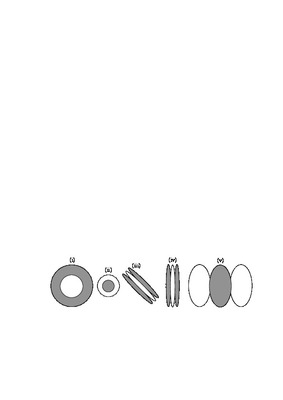
- Ai
- Bii
- Ciii
- Div
Informationen
- Beschreibung
- HPS775 (Week 06: Vision) Quiz am W6: Vision, erstellt von wadey am 10/10/2014.
- Autor
- wadey
- Sprache
- English
- Aufrufe
- 69
- Verlauf
- Erstellt am 10 Okt 2014 · aktualisiert am 19 Feb 2016
- Schlagwörter
- Bewertung
- 5,0 von 5 · 1 Bewertung Bewerte dieses Quiz